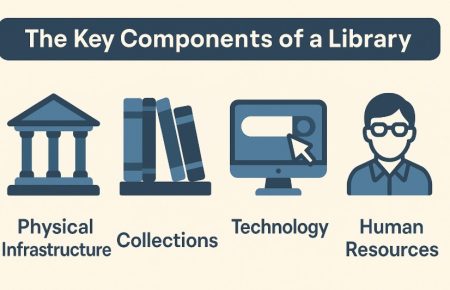
A library is a vital institution that serves as a reservoir of knowledge, ideas, and information, catering to the intellectual, educational, and cultural needs of society. It is more than just a building filled with books – it is an organized system designed to collect, preserve, and disseminate information in various formats, including print, digital, and multimedia. For example, a university library like the North South University Library provides students and researchers with access to books, journals, databases, and research support services essential for academic success. Similarly, a public library, such as the Dhaka Public Library, offers community members access to reading materials, newspapers, and cultural programs that promote literacy and lifelong learning.
The primary purpose of a library is to support learning, research, and the pursuit of knowledge by providing free and equitable access to information resources. Over time, the nature of libraries has evolved from being mere repositories of printed materials to dynamic learning hubs where users interact with digital databases, e-books, and online platforms like Research4Life, JSTOR, or ProQuest. Modern libraries also offer digital literacy training, research support services, and technological tools, such as computers, Wi-Fi, and self-check machines, to enhance the user experience.
Libraries now play a central role in promoting literacy, fostering lifelong learning, and bridging the information divide in the community. For instance, school libraries nurture reading habits among students, special libraries in hospitals or industries provide subject-specific information, and national libraries preserve cultural heritage for future generations. Whether academic, public, special, or digital, every library reflects the intellectual growth of civilization and remains an indispensable part of modern education, research, and knowledge dissemination.
The Nature of a Library
The library is one of humanity’s oldest and most enduring institutions, serving as a bridge between knowledge and people. Its nature extends far beyond being a mere collection of books; it represents a living, dynamic, and evolving system devoted to the preservation, organization, and dissemination of information. Libraries have always reflected the intellectual, cultural, and technological development of civilizations, evolving from clay tablets and manuscripts to vast digital repositories accessible from anywhere in the world.
- Social and Educational Nature: At its core, a library is a social institution designed to serve the educational and informational needs of the community. It acts as a center for learning, research, and cultural exchange. Libraries nurture reading habits, promote literacy, and foster lifelong learning among users of all ages. For instance, public libraries such as the Dhaka Public Library in Bangladesh provide free access to books, newspapers, and multimedia materials to help citizens enhance their knowledge and skills. Similarly, academic libraries, such as the North South University Library, play a crucial role in supporting teaching, learning, and research by providing access to scholarly resources and research databases.
- Service-Oriented Nature: The nature of a library is inherently service-driven. Unlike commercial organizations, libraries are established not for profit but to ensure equitable access to information. Their goal is to provide the right information to the right user at the right time. Librarians, as information professionals, act as mediators who guide users in locating and evaluating resources effectively. Services such as book lending, reference assistance, interlibrary loans, and research support exemplify the library’s dedication to user satisfaction. With the advancement of technology, many libraries now offer digital reference services and online catalogues to meet the changing needs of users.
- Organizational and Systematic Nature: Another defining feature of a library’s nature is its systematic organization. Information in a library is arranged in a structured manner using standardized systems such as the Dewey Decimal Classification (DDC) or the Library of Congress Classification (LCC). Catalogues, indexes, and databases make it easy for users to locate materials efficiently. This organized structure distinguishes libraries from mere collections, transforming them into functional systems for managing knowledge. For example, academic libraries maintain online public access catalogues (OPACs) that allow users to search and locate resources instantly.
- Dynamic and Technological Nature: The nature of libraries has undergone a significant transformation with the emergence of Information and Communication Technology (ICT). Today’s libraries are no longer confined to physical spaces—they have become digital, hybrid, or virtual libraries. Users can access e-books, online journals, and databases, such as Research4Life, Scopus, or JSTOR, from anywhere and at any time. Tools such as RFID-based circulation systems, AI chatbots, and institutional repositories have revolutionized library operations, making them more efficient and user-friendly. This dynamic shift illustrates how libraries continually adapt to technological advancements while maintaining their core mission of disseminating knowledge.
- Democratic and Inclusive Nature: A library embodies the principles of democracy and inclusivity. It provides equal access to information for all members of society, regardless of age, gender, education, or social status. By offering free and open access to knowledge, libraries promote intellectual freedom, encourage independent thinking, and empower individuals to make informed decisions. Public libraries, in particular, play a crucial role in bridging the information gap between privileged and underprivileged communities, ensuring that knowledge remains a universal right.
- Preservative and Cultural Nature: Beyond serving present needs, libraries have a preservative function—they safeguard the intellectual and cultural heritage of humanity. National and special libraries preserve rare manuscripts, historical documents, and archival materials for future generations to access. For example, the Bangladesh National Library houses invaluable collections that represent the nation’s literary and historical legacy. By preserving such materials, libraries maintain the continuity of knowledge and cultural identity over time.
The nature of a library is multifaceted- social, educational, service-oriented, organizational, technological, democratic, and preservative. It embodies humanity’s quest for knowledge, equality, and progress. In the digital age, the library’s form may change, but its essence remains constant: to connect people with information, nurture learning, and preserve the collective wisdom of humankind. Whether it is a small community library or a vast digital knowledge hub, the library remains a pillar of enlightenment and a beacon of intellectual freedom in every society.