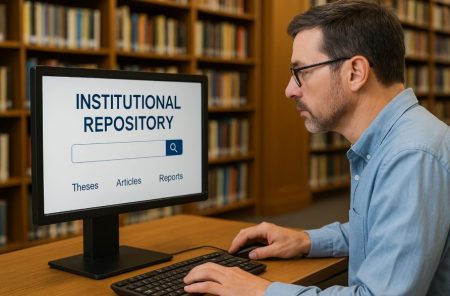
Self-archiving enhances the visibility and accessibility of research by allowing authors to deposit digital copies of their scholarly work in online repositories that readers can access for free. These materials may include journal articles, conference papers, theses, dissertations, research reports, book chapters, and datasets. Once deposited in an institutional or subject-based repository, the work can be discovered by individuals beyond the author’s own university. For example, a lecturer may upload an accepted manuscript of a journal article to a university repository, enabling students and researchers worldwide to find and read it without needing a journal subscription.
Visibility improves because repositories provide descriptive metadata, such as the title, author name, abstract, keywords, subject, and publication date. Search engines, Google Scholar, repository directories, and academic discovery tools can index this information, making it easier for people to locate the work. A researcher searching for topics such as digital libraries, information literacy, or open access may discover an archived paper even if the original article is published in a subscription-only journal. Persistent links and author profiles in repositories also facilitate easier citation, sharing, and revisiting of research.
Self-archiving improves accessibility by eliminating financial and geographical barriers to information. Many researchers and students struggle to access all subscription-based journals due to limited library budgets at their institutions. An openly archived copy offers them a legal, free alternative when the publisher allows deposit. For instance, a student at a small university may download the author’s accepted manuscript from an institutional repository, avoiding the inability to read an article behind a paywall.
Self-archiving also supports long-term access and preservation. Repository staff maintain digital files, organize them with metadata, and provide stable access links. This ensures that research remains available even when an author changes institutions, a personal webpage is deleted, or a publisher alters its platform. Therefore, self-archiving expands the audience for research, makes scholarly works easier to discover, reduces access barriers, and promotes wider knowledge sharing.