
Knowledge Management (KM) in libraries refers to a systematic and strategic approach to identifying, capturing, organizing, sharing, and effectively using both explicit and tacit knowledge within…
Knowledge Management (KM) in libraries refers to a systematic and strategic approach to identifying, capturing, organizing, sharing, and effectively using both explicit and tacit knowledge within…
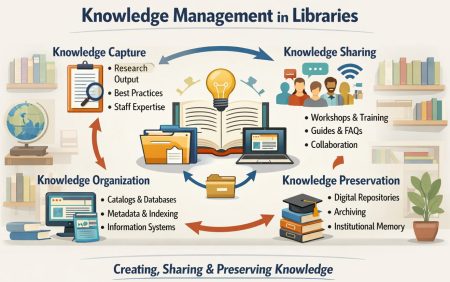
What Is Knowledge Management and Why Is It Important in Modern Libraries? Knowledge Management (KM) refers to the systematic process of identifying, capturing, organizing, sharing, and…

Knowledge Management (KM) is a strategic organizational practice aimed at maximizing the value of knowledge as a critical resource. The core objectives of Knowledge Management focus…
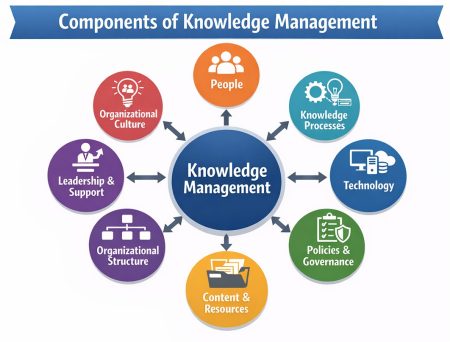
Knowledge Management (KM) is a comprehensive approach that enables organizations to systematically handle knowledge as a strategic asset. It is not a single activity or tool…
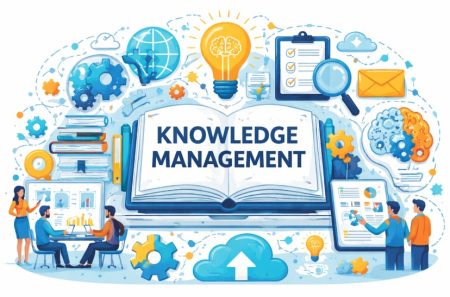
Why Is It Important to Understand Knowledge Management Processes in Organizations? Understanding Knowledge Management (KM) processes is critically important for organizations because knowledge has become one…

Imagine walking into a vast library filled with thousands of books—each containing critical information necessary for your projects at work. However, there is no catalogue or system…

Imagine a world where every piece of valuable information and insight is effortlessly shared and accessed, transforming how we work, learn, and innovate. This is the…

The concepts of Knowledge Management (KM) revolve around understanding how knowledge is created, shared, stored, and used to achieve organizational goals. At its core, KM recognizes…

In today’s interconnected world, the dissemination of knowledge plays a pivotal role in shaping the trajectory of human progress and innovation. As the global community strives…