Knowledge Management (KM) is a comprehensive approach that enables organizations to systematically handle knowledge as a strategic asset. It is not a single activity or tool but a combination of interrelated components that work together to create value from knowledge. Understanding the key components of Knowledge Management is essential for designing effective KM practices in organizations such as libraries, educational institutions, corporate enterprises, and research organizations. The major components of Knowledge Management are discussed below.
- People: People are the most critical component of Knowledge Management because knowledge originates, resides, and is applied by individuals. Employees, experts, managers, and leaders contribute their experience, skills, insights, and creativity to the organizational knowledge base. Tacit knowledge—such as problem-solving ability, professional judgment, and practical know-how—exists primarily in people’s minds. Knowledge Management depends heavily on employees’ willingness to share knowledge, collaborate with others, and participate in learning activities. Leadership support, motivation, trust, and a knowledge-sharing mindset are therefore essential for successful KM initiatives.
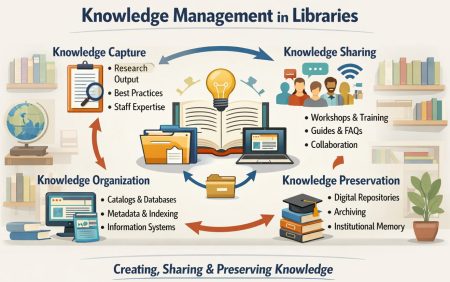
- Knowledge Processes: Knowledge processes form the operational core of Knowledge Management. These processes include knowledge creation, acquisition, capture, organization, storage, sharing, and application. Knowledge is created through learning, research, innovation, and experience, while it is captured through documentation, interviews, and observation. Organized and stored knowledge—such as policies, reports, and best practices—can then be shared through formal and informal channels. The ultimate goal of these processes is knowledge application, where knowledge is used to improve decision-making, solve problems, and enhance organizational performance.
- Technology: Technology is an enabling component of Knowledge Management that supports the storage, retrieval, and dissemination of knowledge. Knowledge Management systems, digital repositories, databases, intranets, collaboration platforms, and content management systems help organizations manage large volumes of information efficiently. Technology makes knowledge accessible across time and location, enabling employees to find relevant information quickly. However, technology alone cannot ensure effective Knowledge Management; it must be aligned with organizational needs and supported by human participation and appropriate processes.
- Organizational Culture: Organizational culture plays a decisive role in the success of Knowledge Management. A culture that values learning, openness, collaboration, and trust encourages employees to share their knowledge freely. In contrast, a culture characterized by competition, secrecy, or fear may hinder knowledge sharing. Knowledge-friendly cultures promote teamwork, recognize contributions, and view knowledge sharing as a collective responsibility. Cultural support ensures that Knowledge Management becomes an everyday practice rather than a formal requirement.
- Leadership and Management Support: Leadership is a key component that drives Knowledge Management initiatives. Leaders and managers set the vision, provide strategic direction, and allocate resources for KM activities. Their commitment signals the importance of knowledge sharing and learning within the organization. Effective leadership also involves establishing policies, incentives, and governance structures that support Knowledge Management. Without strong managerial support, KM initiatives often fail to gain acceptance or long-term sustainability.
- Organizational Structure: The structure of an organization influences how knowledge flows across departments and teams. Flexible and collaborative structures facilitate communication and knowledge exchange, while rigid hierarchies may create barriers. Knowledge Management benefits from cross-functional teams, communities of practice, and networks that connect individuals with shared interests or expertise. An appropriate organizational structure helps break down silos and promotes the integration of knowledge across the organization.
- Content and Knowledge Resources: Content refers to the organization’s actual knowledge assets, such as documents, manuals, research outputs, policies, databases, and multimedia resources. These knowledge resources must be accurate, relevant, up to date, and well-organized to be useful. Classification systems, metadata, indexing, and quality control mechanisms help ensure that content can be easily discovered and reused. Managing content effectively is essential for maintaining the value and reliability of organizational knowledge.
- Policies and Governance: Policies and governance frameworks provide guidelines for how knowledge is created, shared, and protected. Knowledge Management policies address issues such as intellectual property, data privacy, access rights, and ethical use of information. Governance structures define roles, responsibilities, and accountability for KM activities. Clear policies ensure consistency, protect sensitive knowledge, and promote responsible knowledge sharing within the organization.
The components of Knowledge Management—people, processes, technology, culture, leadership, structure, content, and governance—are deeply interconnected and mutually reinforcing. Successful Knowledge Management requires a balanced integration of all these components rather than an overreliance on any single element. By effectively aligning these components, organizations can transform individual knowledge into collective intelligence, enhance learning and innovation, and achieve sustainable organizational success in the knowledge-driven world.