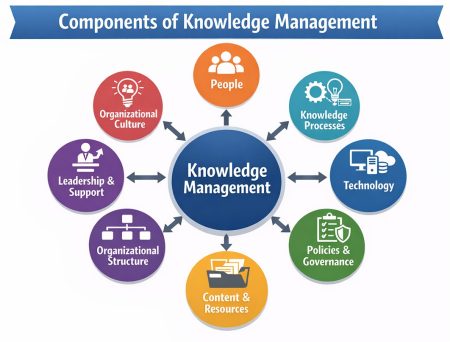
Knowledge Management (KM) is a strategic organizational practice aimed at maximizing the value of knowledge as a critical resource. The core objectives of Knowledge Management focus on ensuring that knowledge is effectively created, shared, preserved, and applied to support organizational goals. These objectives guide KM initiatives in organizations such as libraries, academic institutions, corporate enterprises, and research organizations. The major core objectives of Knowledge Management are discussed below.
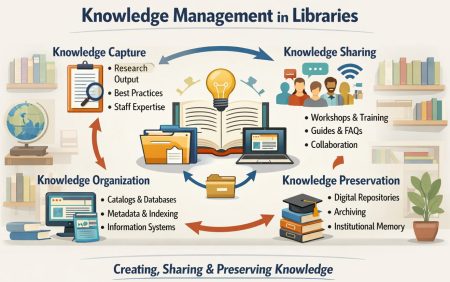
- To Identify and Capture Organizational Knowledge: A fundamental objective of Knowledge Management is to identify and capture the knowledge that exists within an organization before it is lost or overlooked. Organizations generate large amounts of knowledge through daily operations, problem-solving, research, and experience. This knowledge may remain undocumented, especially when it is tacit in nature. Knowledge Management seeks to systematically identify who holds critical knowledge and how it can be captured through documentation, interviews, mentoring, and storytelling. Capturing knowledge ensures that valuable expertise is preserved and made available beyond individual employees.
- To Organize and Store Knowledge Systematically: Capturing knowledge alone is not sufficient unless it is properly organized and stored. Knowledge Management aims to structure knowledge so it is easy to locate, understand, and use. This involves classification, indexing, metadata creation, and the use of standardized formats. Organized knowledge repositories, such as databases or digital libraries, prevent information overload and confusion. By storing knowledge systematically, organizations can ensure consistency, accuracy, and long-term accessibility of their knowledge assets.
- To Promote Knowledge Sharing and Collaboration: One of the central objectives of Knowledge Management is to encourage the sharing of knowledge among individuals and teams. Knowledge often becomes more valuable when it is shared, discussed, and refined collectively. Knowledge Management promotes collaboration through formal mechanisms such as training sessions, workshops, and communities of practice, as well as informal interactions. By breaking down organizational silos, KM helps create a collaborative culture where employees learn from one another and work together to solve complex problems.
- To Support Effective Decision-Making: Knowledge Management plays a crucial role in improving the quality of decisions at all organizational levels. Decision-making is more effective when it is based on reliable information, past experiences, and expert insights. KM ensures that decision-makers have access to relevant knowledge, such as best practices, performance data, and lessons learned. This reduces uncertainty, minimizes risks, and helps organizations make informed and timely decisions that align with strategic objectives.
- To Enhance Organizational Learning and Skill Development: Another important objective of Knowledge Management is to support continuous learning and skill development. By providing access to shared knowledge resources, KM enables employees to learn from documented experiences and expert knowledge. This learning-oriented approach helps employees adapt to new technologies, processes, and roles. Knowledge Management also supports formal and informal learning, creating an environment where continuous improvement and professional development are encouraged.
- To Encourage Innovation and Knowledge Creation: Knowledge Management seeks not only to manage existing knowledge but also to stimulate the creation of new knowledge. Innovation often arises from the combination and reinterpretation of existing knowledge. By encouraging knowledge sharing and collaboration, KM creates opportunities for creative thinking and experimentation. Organizations that effectively manage knowledge are better positioned to generate innovative ideas, develop new services or products, and respond to changing environments.
- To Preserve Organizational Memory: Preserving organizational memory is a critical objective of Knowledge Management, especially in organizations with high staff turnover. Organizational memory includes documented policies, procedures, decisions, and experiences accumulated over time. Knowledge Management ensures that this memory is captured and maintained through knowledge repositories and documentation practices. Preserved organizational memory helps organizations avoid repeating mistakes and supports continuity in operations and planning.
- To Improve Organizational Performance and Efficiency: Knowledge Management aims to enhance organizational performance by enabling employees to work more efficiently and effectively. Access to relevant knowledge reduces time spent searching for information and prevents duplication of effort. Employees can rely on established best practices and guidelines to perform tasks consistently and accurately. This objective contributes to higher productivity, better service quality, and improved organizational outcomes.
- To Create and Sustain Competitive Advantage: A strategic objective of Knowledge Management is to create and sustain competitive advantage. Knowledge is a unique and difficult-to-replicate resource that can differentiate one organization from another. By effectively managing and applying knowledge, organizations can respond more quickly to changes, innovate continuously, and deliver superior value. Knowledge Management transforms individual expertise into a collective capability that supports long-term success and sustainability.
The core objectives of Knowledge Management emphasize the strategic use of knowledge to support learning, decision-making, innovation, and performance. By identifying, organizing, sharing, and applying knowledge effectively, organizations can transform dispersed individual knowledge into a shared organizational resource. Achieving these objectives enables organizations to remain adaptive, competitive, and resilient in an increasingly knowledge-driven world.