Verifying the accuracy of knowledge in an academic or professional context means carefully examining information to ensure it is correct, reliable, and supported by credible evidence before using or sharing it. This involves checking facts, reviewing original sources, and comparing data across multiple trusted references. For example, a student writing a research paper must verify that statistics taken from an online article align with the official data available in academic databases or government reports. In academia, this verification is crucial because scholarly work depends on truth and evidence; using incorrect information, such as misquoting a study’s findings, can mislead readers and weaken the overall research. Similarly, in a professional setting, a librarian preparing a workshop or policy document must ensure that all details are accurate, such as database subscription information, copyright guidelines, or institutional procedures, to avoid giving users incorrect instructions.
Why Is It Important to Verify the Accuracy of Knowledge Before Sharing It?
In today’s fast-paced world, where information spreads rapidly, it is essential to verify the accuracy of knowledge before sharing it. This responsibility applies to academic writing, research communication, library services, and everyday digital interactions. The reliability of the information we share shapes our understanding, influences our decisions, and affects the credibility of individuals and institutions. Verifying information is not an option; it is crucial for maintaining trust, protecting others from misinformation, and upholding ethical standards.
- Protecting the Integrity of Academic and Professional Work: In academic and professional contexts, accuracy forms the foundation of credible knowledge. Students, researchers, teachers, librarians, and professionals depend on trustworthy information to build arguments, conduct analyses, and make informed decisions. Sharing unverified information, such as incorrect statistics, misquoted studies, or outdated policies, can weaken an entire research paper or lead to serious misunderstandings.
For example, a student citing an outdated WHO health statistic without verifying recent updates may produce an inaccurate conclusion. Similarly, a librarian preparing a workshop must double-check details about database access, copyright policies, or reference management tools to provide accurate guidance to participants. - Preventing the Spread of Misinformation: Misinformation spreads rapidly, particularly in digital environments where content is shared with a single click. Incorrect information often gains visibility before corrections can catch up. When individuals share unverified knowledge, they contribute intentionally or unintentionally to this cycle of misinformation.
Consider how quickly false claims about scientific research or public health guidelines circulated during the COVID-19 pandemic. Many individuals shared unverified posts believing them to be helpful, but the consequences included confusion, panic, and harmful behaviors. Verifying information is therefore essential not only for personal accuracy but also for protecting the public. - Enhancing Critical Thinking and Information Literacy Skills: Verification requires active analysis, cross-checking, and evaluation of sources-skills at the core of information literacy. By verifying knowledge, individuals learn to ask important questions such as:
- Who is the author, and are they credible?
- Is this information based on evidence?
- Is the source current and relevant?
- Do multiple reliable sources confirm the same information?
For example, a researcher reviewing a journal article may compare it with additional peer-reviewed studies to ensure the findings are consistent and credible. This process strengthens one’s ability to think critically and make evidence-based judgments.
- Supporting Ethical and Responsible Communication: Sharing Information Carries Ethical Responsibilities. Inaccurate information can mislead readers, distort understanding, and damage trust. Verifying knowledge before sharing helps uphold professional ethics and ensures respect for the audience.
For instance, academic institutions expect students and researchers to reference only verified and credible sources. Similarly, libraries have ethical obligations to guide users toward accurate, authoritative information-especially when advising on research, copyright, or scholarly communication. - Protecting Personal and Institutional Credibility: An individual’s reputation is closely tied to the reliability of the information they share. Sharing inaccurate or unverified content can harm one’s credibility and weaken trust among peers, colleagues, or students.
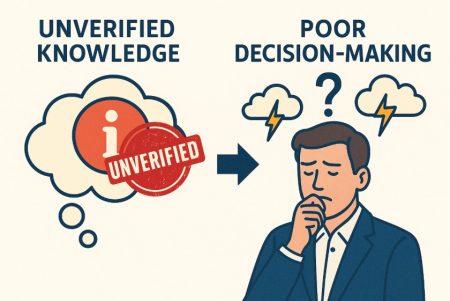
For example, if a faculty member shares outdated admission requirements or incorrect referencing rules, students may lose confidence in their guidance. Likewise, if an institution shares inaccurate policy updates, it risks public criticism and reputational damage. Verifying information ensures that one’s credibility remains strong and dependable. - Ensuring Better Decision-Making: Accurate information is the foundation of sound decision-making. Whether in educational settings, professional environments, or personal contexts, decisions informed by incorrect data can lead to negative outcomes.
A practical example is a researcher selecting journals for publication. If they rely on unverified information about journal rankings or open-access policies, their submission may be misaligned or rejected. Similarly, university administrators rely on verified data to inform policy, budget, and planning decisions. - Encouraging Responsible Use of Digital Communication: In today’s digital landscape, dominated by social media, instant messaging, and user-generated content, information spreads rapidly without filters. This environment increases the risk of sharing unverified claims, edited visuals, or misleading opinions disguised as facts.
Verifying information before sharing acts as a safeguard. For instance, before reposting a viral news story, users can check credible news outlets, fact-checking platforms, or official government sources to verify the information. This responsible behavior helps create a healthier digital information ecosystem.
Verifying the accuracy of knowledge before sharing it is a vital practice in academic, professional, and digital environments. It protects individuals from misinformation, strengthens credibility, supports ethical communication, and contributes to a more informed society. In libraries, universities, research institutes, and workplaces, promoting information verification is central to building a culture of trust and responsible knowledge sharing.
In a world where information is abundant but not always accurate, verification is both a skill and a responsibility, one that ensures the knowledge we share is not only useful but also truthful, ethical, and impactful.
How Can Sharing Inaccurate Information Harm Students, Researchers, or the General Public?
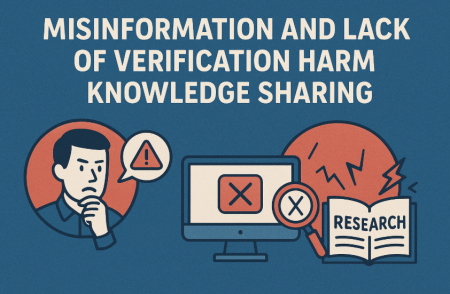
Sharing inaccurate information can cause significant harm to students, researchers, and the general public by misleading them, distorting their understanding, and affecting their decision-making. For students, incorrect facts or unreliable sources can lead to poor academic performance, misconceptions, and weakened critical-thinking skills. When students base their assignments, presentations, or exam preparations on inaccurate information, for example, outdated statistics or fabricated historical data, their overall learning suffers, and the quality of their academic work declines. Researchers, who depend heavily on verified and credible information, face even greater risks. Inaccurate data or misinterpreted studies can lead to flawed research findings, wasted resources, and damaged scholarly reputations. A single error in citing unreliable sources can undermine years of professional effort and hinder scientific progress, as future researchers may unknowingly build upon false assumptions.
The general public is also vulnerable to the consequences of shared misinformation, especially in digital environments where false claims spread rapidly. Unverified health advice, misleading news, or rumors about social and political issues can create confusion, panic, or harmful behavior. Public trust in institutions and experts can decline when misinformation becomes widespread, making it harder for credible voices to guide communities during critical situations. Additionally, misinformation contributes to social division and conflict, as inaccurate claims about groups or events often fuel misunderstanding and tension.
Ethically, sharing inaccurate information violates the principles of integrity and responsibility expected in academic and professional settings. Students, educators, librarians, and researchers have an obligation to ensure the information they share is accurate, current, and credible. Failure to do so can misguide others and carry professional consequences, especially when decisions or policies rely on the information provided. Over time, the continuous spread of inaccuracies weakens knowledge systems, making it difficult to distinguish truth from falsehood and harder to correct widely accepted misconceptions. Ultimately, verifying information before sharing it is essential for protecting learning, promoting reliable research, supporting informed communities, and maintaining trust in academic and public institutions.
How Does Sharing Unverified Information Affect One’s Credibility and Trustworthiness?
In academic, professional, and social environments, an individual’s credibility is one of their most valuable assets. Credibility is built on consistent accuracy, responsible communication, and sound judgment. Trustworthiness, closely tied to credibility, reflects how reliably others can depend on someone’s words and actions. In an era dominated by rapid information exchange and widespread misinformation, sharing unverified information poses a significant threat to both individuals and organizations. Even a single instance of spreading inaccurate content can weaken others’ confidence, while repeated mistakes may permanently damage one’s reputation.
- Losing the Confidence of Others: When someone shares unverified information, others begin to question their ability to evaluate sources and distinguish facts from falsehoods. Students, researchers, educators, librarians, and professionals are expected to rely on credible evidence when communicating. If an individual repeatedly shares incorrect statistics, misleading claims, or rumors, colleagues may perceive them as careless or uninformed. For example, a student who includes inaccurate data in group assignments may lose the trust of peers, while a researcher referencing unreliable studies may face skepticism about the quality of their work. As confidence erodes, people may hesitate to seek guidance or collaborate with that individual.
- Appearing Unprofessional and Careless: Sharing unverified information can create an impression of poor judgment. Professional communication, whether in emails, presentations, reports, workshops, or academic papers, requires accuracy. When someone spreads incorrect information, such as outdated institutional policies, misinterpreted research findings, or unsupported claims, it reflects negatively on their professionalism. A librarian who provides users with incorrect database access instructions, or a faculty member who shares an unverified announcement, may unintentionally mislead others. Even if the mistake is later corrected, the impression of carelessness can linger.
- Damaging Academic and Professional Reputation: In academic and research settings, credibility is closely monitored. Institutions emphasize accuracy, evidence-based practice, and intellectual honesty. Sharing unverified information can lead to serious consequences, such as rejection of academic work, questioning of research integrity, or loss of respect among peers. Mistakes in scholarly communications, such as citing unreliable studies or misreporting findings, may diminish the perceived rigor of one’s research. This reputational damage can be difficult to repair, particularly when it affects published work or formal academic records.
- Undermining Authority in Digital Spaces: The impact of sharing unverified information becomes even more visible in the digital world. Social media platforms amplify both accurate and inaccurate information at high speed. When someone shares false or misleading content online, followers or readers may quickly lose trust in their posts. This affects not only personal reputation but also professional credibility, especially for educators, librarians, researchers, or institutional representatives who communicate online. A single poorly verified post can lead others to question every future statement from that individual.
- Increasing the Risk of Misinforming Others: People often rely on trusted individuals to share accurate updates, insights, or recommendations. When someone shares unverified information, they inadvertently contribute to misinformation, potentially causing confusion, anxiety, or harmful actions among others. Once trust is broken due to misinformation, restoring it is a challenge. Individuals who repeatedly share unverified content may be excluded from discussions, overlooked in collaborative opportunities, or perceived as unreliable sources of knowledge.
- Ethical Implications and Long-Term Consequences: Sharing Information Carries Ethical Responsibilities. Individuals who communicate without verifying the accuracy of their information may be perceived as lacking integrity or failing to uphold academic and professional standards. In educational and research environments, accuracy is not optional—it is a core value. The long-term consequence of sharing unverified information is damaged trust, which can affect one’s relationships, academic progress, and career opportunities. Credibility, once lost, takes considerable effort to rebuild; in some cases, it may never fully recover.
Sharing unverified information significantly undermines one’s credibility and trustworthiness by signaling a lack of judgment, poor professionalism, and disregard for accuracy. Trust is built on consistent and responsible communication; therefore, individuals must verify information before sharing it, whether in academic writing, professional updates, or online platforms. By ensuring accuracy, individuals safeguard their reputation, support informed decision-making, and make positive contributions to academic and public discourse. In a world filled with abundant information but uneven reliability, maintaining credibility through verification is not just an advantage, it is a necessity.