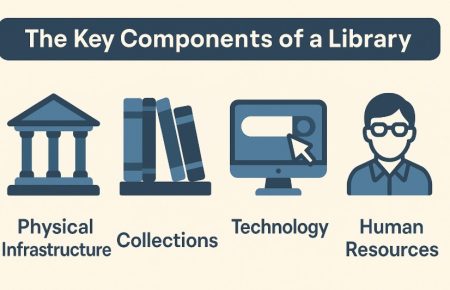
Academic libraries serve as the beating heart of any educational institution, embodying its mission and vision in tangible ways that reverberate throughout campus and beyond. Far from being mere repositories of books and journals, these dynamic spaces are vibrant hubs of learning, innovation, and collaboration. They are integral in advancing the institution’s overarching goals by supporting teaching, research, and scholarship, fostering information literacy, promoting diversity and inclusion, and enhancing the overall student experience. As the academic landscape continues to evolve in response to technological advancements and changing societal needs, libraries remain steadfast in their commitment to excellence, serving as vital partners in pursuing knowledge, academic success, and societal impact.
1.1 Role of Academic Libraries in the overall mission and vision of the Institution.
Often perceived solely as repositories of books and resources, academic libraries play a far more significant role in the fabric of their institutions. They act as symphonic partners in pursuing the institution’s mission and vision. They serve as cornerstones of knowledge access, information literacy champions, research catalysts, architects of learning environments, innovation hubs, and community outreach champions. The academic library plays a crucial role in supporting and advancing the overall mission and vision of an institution in several ways:
- Supporting Teaching and Learning: At the forefront of its mission, the academic library empowers students and faculty to pursue knowledge and academic excellence. With its vast collections of scholarly resources, including textbooks, journals, databases, and multimedia materials, the library is a vital resource hub for academic inquiry. Librarians, with their expertise in information literacy and research methodologies, provide invaluable support to patrons, guiding them in navigating complex information landscapes and honing their research skills. Through instructional sessions, workshops, and one-on-one consultations, libraries equip students with the tools they need to succeed in their academic endeavors, thus supporting the institution’s mission of fostering student success and academic achievement.
- Fostering Research and Scholarship: In research and scholarship, academic libraries serve as catalysts for innovation and discovery. With their extensive collections of scholarly literature, archival materials, and special collections, libraries provide researchers with a wealth of resources to advance their inquiries. Librarians collaborate with faculty and researchers to acquire relevant materials, offer expert assistance in navigating research databases, and facilitate access to specialized resources and services. Moreover, libraries often serve as incubators for interdisciplinary collaboration and scholarly communication, hosting conferences, symposiums, and research forums that foster dialogue and exchange of ideas. By supporting a vibrant research culture, libraries contribute to the institution’s mission of advancing knowledge and addressing complex societal challenges through scholarly inquiry.
- Promoting Information Literacy and Critical Thinking: In an era of information overload and misinformation, academic libraries promote information literacy and critical thinking skills among their patrons. Through instructional programs, online tutorials, and interactive workshops, libraries empower students to evaluate information critically, navigate digital resources ethically, and engage in evidence-based research practices. Librarians collaborate with faculty to integrate information literacy instruction into the curriculum, ensuring students develop the skills they need to thrive in today’s information-rich environment. By promoting information literacy, libraries support the institution’s mission of producing informed and engaged citizens capable of navigating a complex and rapidly changing world.
- Preserving Institutional Knowledge and Cultural Heritage: As custodians of institutional memory and cultural heritage, academic libraries play a crucial role in preserving and sharing the intellectual legacy of their institutions. Through their archives, repositories, and special collections, libraries document the academic community’s history, achievements, and contributions. Librarians work to collect, organize, and preserve a wide range of materials, including scholarly publications, institutional records, historical documents, and cultural artifacts. Moreover, libraries digitize and make these materials accessible online, ensuring they are available to researchers, educators, and the public for future generations. By preserving institutional knowledge and cultural heritage, libraries contribute to the institution’s mission of fostering a sense of identity, continuity, and pride within the academic community.
- Fostering Inclusivity, Diversity, and Equity: Central to its mission is promoting inclusivity, diversity, and equity within the academic community. Academic libraries strive to create welcoming and inclusive spaces that reflect the diversity of their patrons and support their diverse needs and experiences. Libraries actively acquire materials from diverse perspectives, ensuring their collections represent various voices and viewpoints. Moreover, libraries offer programming and initiatives that celebrate diversity, promote cultural understanding, and advance social justice. Librarians advocate for equitable access to information and services, removing barriers to participation and advocating for policies and practices that promote diversity and inclusion. By fostering an inclusive and equitable environment, libraries support the institution’s mission of creating a diverse and inclusive community where all members feel valued, respected, and empowered to succeed.
- Fostering Global Engagement and Cultural Exchange: Academic libraries serve as portals to global knowledge and cultural exchange in an interconnected world. Through their collections of international literature, language resources, and global studies materials, libraries provide students and faculty with access to diverse perspectives and worldviews. Moreover, libraries often host international exchange programs, guest lectures by visiting scholars, and cultural events celebrating the rich tapestry of global cultures. By fostering cross-cultural understanding and dialogue, libraries promote global citizenship and prepare students to thrive in an increasingly diverse and interconnected world.
- Advocating for Intellectual Freedom and Academic Freedom: At the heart of its mission, the academic library stands as a bastion of intellectual and academic freedom. By defending the principles of free inquiry, open access, and freedom of expression, libraries ensure that all academic community members have the right to explore ideas, engage in debate, and pursue knowledge without censorship or constraint. Moreover, libraries advocate for policies and practices that uphold these fundamental freedoms, challenging attempts to restrict access to information or suppress dissenting viewpoints. By championing intellectual and academic freedom, libraries uphold the institution’s commitment to pursuing truth, knowledge, and the free exchange of ideas.
- Empowering Lifelong Learning: The academic library catalyzes lifelong learning, extending its resources and services to alumni, community members, and lifelong learners beyond the traditional student body. Through initiatives such as community outreach programs, continuing education workshops, and public lectures, libraries offer opportunities for intellectual growth and personal enrichment to individuals of all ages and backgrounds. By fostering a culture of curiosity and exploration, the library becomes a hub for lifelong learners seeking to expand their horizons and deepen their knowledge throughout their lives.
- Fostering Digital Literacy and Innovation: The academic library is crucial in fostering digital literacy and innovation in an increasingly digital world. From providing access to cutting-edge technologies and software to offering workshops on digital research methods and data visualization, libraries empower students and faculty to navigate the digital landscape confidently and skillfully. Moreover, libraries often serve as incubators for digital scholarship and innovation, supporting digital humanities projects, data mining research, and open-access publishing initiatives. By embracing digital tools and platforms, libraries remain at the forefront of innovation, driving forward the institution’s mission of excellence in research and scholarship.
- Cultivating a Culture of Sustainability: As stewards of information and resources, academic libraries are increasingly committed to promoting sustainability and environmental stewardship. Libraries strive to minimize their environmental footprint and promote eco-friendly practices through initiatives such as green building design, energy conservation measures, and recycling programs. Moreover, libraries often champion sustainability initiatives through their collections and programming, raising awareness of environmental issues and inspiring action for positive change. By integrating sustainability principles into their operations and outreach efforts, libraries contribute to the institution’s social responsibility and environmental stewardship mission.
- Enhancing the Student Experience: Beyond its academic functions, the library enhances the overall student experience, serving as a hub of activity and engagement. With its welcoming ambiance, cozy reading nooks, and bustling study spaces, it becomes a second home for students—a place to study, socialize, and seek solace. Through its myriad events, exhibitions, and cultural programs, it fosters a sense of belonging and community, enriching the tapestry of campus life. In this way, the library becomes an academic resource and a vibrant hub of student life, nurturing holistic development and well-being.
- Research Support System: Libraries play a pivotal role as a research support system within academic institutions, offering a wide array of services designed to facilitate and enhance the research process for students and faculty. One of the key aspects of this support system is the provision of research assistance services. Librarians with specialized knowledge and expertise in information retrieval and research methodologies offer personalized reference consultations to help individuals navigate the vast landscape of scholarly resources effectively. Through one-on-one consultations, librarians can assist researchers in formulating research questions, identifying relevant databases and sources, and developing effective search strategies tailored to their needs. Additionally, libraries conduct workshops and offer online tutorials to equip students and faculty with essential research skills and tools. These workshops cover database searching techniques, citation management software, literature review methodologies, and critical evaluation of sources. By imparting these skills and techniques, libraries empower individuals to conduct rigorous and effective research, fostering a culture of scholarly inquiry and intellectual curiosity within the academic community.
The academic library is a multifaceted institution that contributes to the overall mission and vision of the institution in myriad ways. From supporting teaching and learning to fostering research and innovation, from promoting information literacy to preserving institutional memory, from empowering lifelong learning to championing sustainability and global engagement, the library serves as a dynamic hub of knowledge, creativity, and community. As we celebrate the invaluable role of the academic library in the academic enterprise, let us recognize its enduring impact on the pursuit of excellence, diversity, and intellectual freedom within our institutions and beyond.