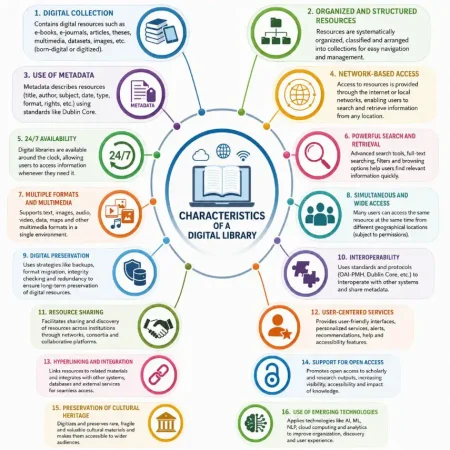
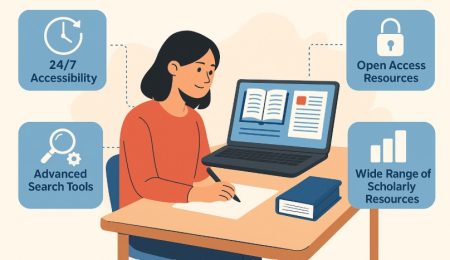
Artificial intelligence (AI) and machine learning (ML) are rapidly transforming the digital library landscape, redefining how users access, explore, and interact with information. As academic institutions shift toward digital-first learning environments, libraries are increasingly adopting intelligent technologies to enhance service quality, streamline operations, and meet the evolving expectations of their users. For example, AI-powered search engines such as semantic search tools in Scopus or Google Scholar can understand user intent rather than relying solely on keywords, enabling faster and more accurate information retrieval. Machine learning algorithms now support automated cataloging and metadata creation. Tools like OCLC’s SmartCataloging and deep-learning-based OCR systems can classify documents, extract titles, or recognize handwritten texts with remarkable accuracy, thereby reducing the manual workload for librarians.
AI-driven recommendation systems, much like the “You May Also Like” suggestions in digital repositories, help users discover relevant books or articles they may not have explicitly searched for. Libraries are also implementing AI chatbots, such as Google Dialogflow-based virtual assistants, to provide 24/7 guidance, answer FAQs, help users navigate databases like JSTOR or ACM Digital Library, and offer personalized support when human staff are unavailable. In the areas of digitization and preservation, AI tools such as Tesseract OCR and image recognition algorithms help convert fragile manuscripts, photographs, and archival materials into searchable digital formats. Meanwhile, predictive models can identify files at risk of corruption and recommend preservation actions.
Beyond these practical applications, AI and ML offer transformative opportunities for enhancing research support through tools such as Turnitin’s AI writing detection, Zotero’s AI-based recommendation plugins, and automatic citation generators. However, these advancements also bring important challenges related to data privacy, transparency, and the need for librarians to develop new technical skills.
How AI Will Reshape the Future Role of Digital Libraries in Higher Education Institutions
Artificial intelligence (AI) is redefining the future of digital libraries in higher education by transforming how information is discovered, accessed, and supported across academic communities. As universities shift toward digital learning environments, AI is enabling libraries to evolve from traditional information centers into intelligent, user-focused knowledge ecosystems. AI-powered search tools that utilize natural language processing and semantic analysis now enable students and researchers to retrieve information more accurately, even when queries are unclear or incomplete. This makes the research process more intuitive and reduces the frustration often associated with conventional keyword-based searches. At the same time, AI-driven virtual assistants and chatbots are reshaping user support by offering instant, 24/7 help with accessing databases, navigating library resources, or resolving technical issues. These automated services reduce repetitive workloads for librarians, allowing them to focus on advanced reference work, research consultations, and the development of digital literacy skills.
Behind the scenes, machine learning is streamlining core library operations by automating cataloging tasks, generating metadata, classifying digital resources, and improving the digitization of rare materials through advanced OCR and image recognition tools. These technologies accelerate digital collection development and preserve fragile archives in more accessible formats. AI is also enhancing personalization within digital libraries by analyzing user behavior to recommend relevant books, articles, or databases, much like commercial recommendation systems, but tailored for academic needs. This level of customization supports students’ learning journeys and helps faculty discover resources that complement their teaching and research.
In research support, AI tools such as automated plagiarism detection, citation generators, literature summarizers, and data analysis applications are strengthening academic integrity and improving research efficiency. Libraries are increasingly adopting these technologies to help scholars manage information more effectively. However, the growing influence of AI also presents challenges related to data privacy, the ethical use of algorithms, and the need for new professional skills among librarians. Ensuring transparency, safeguarding user data, and addressing potential bias are becoming essential responsibilities in AI-driven library environments. Ultimately, AI will not replace librarians but will expand their capabilities, enabling digital libraries to become smarter, more proactive, and more deeply integrated with the academic mission of higher education institutions.
In What Ways Can AI Enhance User Experience and Satisfaction in Digital Library Platforms?
Artificial intelligence (AI) is reshaping digital library platforms by making them more intuitive, responsive, and user-centered. As academic environments become increasingly digital, users expect seamless access to information and personalized support- needs that AI technologies are uniquely positioned to meet. One of the most important enhancements brought by AI is the improvement of search and discovery. Unlike traditional keyword-based systems, AI-powered search tools use natural language processing and semantic understanding to interpret the meaning behind user queries. This enables students and researchers to find accurate and relevant information, even when they are unsure of exact terms, thereby significantly reducing search frustration and improving overall satisfaction.
AI also transforms the digital library experience through personalization. By analyzing a user’s search history, reading habits, academic interests, and frequently accessed materials, machine learning algorithms recommend books, articles, databases, and resources tailored to individual needs. These academic recommendation systems resemble the personalized suggestions found on commercial platforms but are designed to guide users toward high-quality scholarly content. This not only enhances user satisfaction but also helps students discover new knowledge and supports faculty members in staying current with the latest research.
Another major improvement comes from AI-driven virtual assistants and chatbots, which provide instant, 24/7 support. These intelligent tools can answer common questions, assist with navigating databases, help troubleshoot access issues, and offer citation guidance. Students working late at night or researchers across different time zones can receive immediate assistance without depending on staff availability. This consistent support builds user confidence and ensures smooth interaction with digital library services.
AI also strengthens accessibility and inclusivity within digital library platforms. Features such as text-to-speech, speech-to-text, automated translation, and image recognition enable individuals with disabilities or those facing language barriers to fully engage with digital content. AI-powered OCR technology converts scanned or handwritten documents into searchable text, making rare and archival materials more accessible to all users. These functionalities remove barriers and ensure equal access to knowledge. Furthermore, AI enhances the organization and usability of digital library collections. Automated metadata generation, smart classification systems, and duplicate detection improve the structure and quality of digital resources, allowing users to navigate more efficiently. Predictive analytics enable libraries to understand user needs and behaviors, helping them design intuitive interfaces, acquire relevant resources, and optimize services based on real usage patterns. In addition, AI-assisted tools such as plagiarism detectors, citation generators, literature summarizers, and research assistants simplify complex academic tasks, improve research quality, and increase user satisfaction by minimizing manual effort.
How Might Machine Learning Help Libraries Personalize Services Based on User Behavior and Preferences?
Machine learning (ML) offers powerful opportunities for libraries to transform user experiences by delivering personalized, data-driven services. By analyzing user behavior and preferences, ML enables libraries to provide tailored recommendations, adaptive search results, targeted communication, and more intuitive digital interactions. The following points highlight how machine learning can reshape library personalization in higher education settings.
- Personalized Resource Recommendations: Machine learning algorithms can analyze individual user activity—such as search history, frequently accessed subjects, borrowed books, and academic courses—to recommend books, articles, journals, and multimedia content.
- A student researching public health may receive suggestions for new e-books or recently added articles.
- Faculty members can be alerted about the latest research in their discipline.
This reduces search time and helps users discover relevant materials they may not find independently.
- Adaptive and User-Specific Search Results: ML-enhanced discovery systems can modify search result rankings based on user profiles or past usage habits.
- Engineering students may be more inclined to prioritize technical papers.
- Business students might be shown relevant management or finance resources.
Over time, the system learns from click patterns, making the search experience more accurate and intuitive for each user.
- Predictive Academic Support and Learning Assistance: Machine learning models can identify user needs and proactively offer academic support.
- Users repeatedly accessing research methodology papers may be recommended for research workshops.
- Students struggling with citation styles can receive suggestions for guides or referencing tools.
This enhances learning by connecting users with relevant support services at the right time.
- Targeted Notifications and Personalized Alerts: Instead of sending broad, generic announcements, libraries can use ML to deliver personalized updates.
- Fiction lovers may receive alerts about new novels.
- Researchers can get notifications about newly subscribed databases or journals in their field.
This targeted communication prevents information overload and increases user engagement.
- Data-Driven Service Design and User Experience Improvements: ML-powered analytics help libraries understand user behavior trends across the entire system.
- Libraries can identify peak usage times or heavily accessed subject areas.
- Patterns in user frustration, such as repeated failed searches, help refine interfaces and improve user guidance.
These insights support more effective service planning and resource allocation.
- Enhanced Accessibility and Inclusive User Profiles: Machine learning also supports personalized accessibility features tailored to individual user needs.
- Systems can automatically adjust display preferences, font sizes, languages, and reading modes.
- AI-driven OCR and text-to-speech tools make content more accessible for users with visual or reading difficulties.
This ensures that digital library platforms remain inclusive and user-friendly for all.
- Personalized Research and Writing Tools Integration: Machine learning enhances academic workflows by supporting the integration of research tools.
- Plagiarism detection systems adapt to user writing patterns.
- AI-assisted citation managers offer tailored suggestions and corrections.
- Research summarizers help users stay updated with relevant literature.
These tools streamline research tasks and improve user satisfaction.
- Strengthening User Engagement and Long-Term Learning: By consistently learning from user interactions, ML systems create meaningful, individualized learning journeys.
- Personalized reading lists support semester-long study patterns.
- Customized resource pathways strengthen independent learning skills.
As users feel more supported, their engagement with digital library resources increases significantly.
Machine learning empowers libraries to deliver highly personalized, intuitive, and user-friendly services. By leveraging user behavior patterns, ML allows libraries to anticipate needs, simplify research processes, and enhance digital interactions. This transformation positions libraries as intelligent learning ecosystems that adapt to individual users rather than offering one-size-fits-all services. Rather than replacing librarians, machine learning complements their expertise, strengthening their ability to guide users more effectively in the digital age.
What AI Tools Can Reduce the Workload of Librarians in Managing Large Digital Archives?
Artificial intelligence (AI) is becoming an essential asset for libraries managing large and complex digital archives, significantly reducing the workload of librarians while improving efficiency and accuracy. As academic institutions produce growing volumes of digital content, ranging from theses and dissertations to research reports, multimedia files, and historical collections, the need for intelligent automation has become increasingly urgent. AI-powered Optical Character Recognition (OCR) tools such as Google Cloud Vision, ABBYY FineReader, and Tesseract are among the most transformative technologies in this area. They can automatically convert scanned documents, manuscript images, or handwritten materials into fully searchable and editable text, eliminating the need for time-consuming manual transcription. Modern OCR systems also detect languages, identify complex document layouts, and extract key information, greatly accelerating digitization processes.
AI further supports librarians through automated metadata generation, which remains one of the most demanding aspects of digital archiving. Tools like Clarifai, Amazon Rekognition, and Google Vision AI can analyze images, text, and videos to automatically generate metadata, assign keywords, and identify subjects or objects with high accuracy. This automation ensures consistency, reduces human error, and makes large collections easier to navigate. Machine learning models also play a crucial role in automated classification and clustering. Systems such as AutoML, spaCy, and fastText can categorize documents according to themes, subjects, or academic disciplines without manual sorting. These tools can even detect duplicate files, outdated content, or misclassified items, helping librarians maintain clean, well-organized repositories.
AI also enhances long-term digital preservation by monitoring file formats, predicting risks, and recommending preservation actions. Preservation tools like Preservica and Archivematica use machine learning capabilities to detect file corruption, format obsolescence, or structural deterioration before they become critical problems. This proactive approach ensures that digital archives remain accessible for future generations without requiring constant human oversight. Intelligent search systems powered by natural language processing (NLP), such as Elasticsearch or Algolia, improve user access by understanding the context behind search queries and delivering more relevant results. This reduces the number of basic search questions librarians receive and empowers users to locate materials independently.
Another valuable application of AI is the use of virtual assistants and chatbots built with platforms like Google Dialogflow or IBM Watson. These tools can answer common questions about the archive, guide users through search processes, assist with logging in, or help retrieve files, providing instant, 24/7 support. AI-driven quality control tools also play a role in reducing workload. Applications like QCTools for audiovisual material utilize machine learning to detect noise, color distortion, or technical defects in videos, eliminating the need for librarians to manually review every frame.