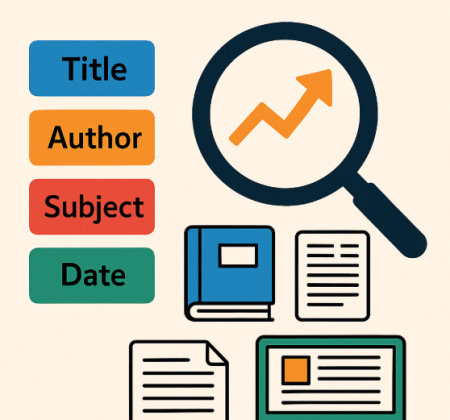
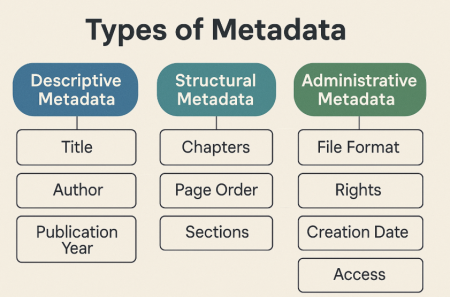
Metadata can be described as “data about data,” a structured way of describing and providing context to information so that it can be better understood, organized, and retrieved. In simple terms, metadata explains what a particular piece of data is, how it was created, when it was produced, who created it, and how it can be used. For example, the details attached to a photograph, such as the date it was taken, the camera settings, and the photographer’s name, are all metadata. Similarly, when you download a music file, the information about the artist, album, genre, and duration of the song represents metadata.
In libraries, research, and digital repositories, metadata plays a vital role in categorizing and organizing books, articles, and digital files. For instance, a library catalog entry for a book usually contains the title, author, subject, publication date, and call number, all of which are metadata that guide users to find the exact resource they need. In academic databases like Scopus or Emerald, metadata includes information such as author names, journal titles, abstracts, and keywords, which help researchers quickly discover relevant articles.
Beyond discovery, metadata also ensures the long-term preservation of digital resources by documenting technical and administrative details. For example, metadata might include the file format, software used, and copyright information for a digital thesis stored in an institutional repository. In today’s information-driven world, metadata has become indispensable for enabling search engines, databases, and library systems to deliver accurate results, thus acting as the backbone of knowledge organization and access.
What is Metadata?
Metadata is commonly defined as “data about data,” but in practice, it is much more than a simple definition. It refers to the structured information that describes, explains, or gives context to a resource, making it easier to identify, locate, manage, and use. For instance, when we search for a book in a library catalog, the details we see, such as the title, author, subject, publisher, publication date, and call number, are all examples of metadata. These pieces of information do not represent the content of the book itself but describe it in a way that makes it searchable and accessible. Similarly, in digital contexts, metadata might include the file size, format, and date of creation for a document, or the keywords and abstract attached to a research article. Even a simple photograph stored on a smartphone contains metadata such as the date it was taken, the camera model, the image resolution, and sometimes even the GPS location. In short, metadata provides the essential descriptive and contextual framework that turns raw data into usable information. Without it, vast collections of physical and digital resources would remain disorganized, hidden, and difficult to retrieve.
How is Metadata Different from Data Itself?
Metadata and data are closely related, yet they serve very different purposes in the management of information. Data refers to the actual content or primary information, such as the text of a research article, the content of a video, or the numbers in a spreadsheet. Metadata, in contrast, is the descriptive layer that provides context about that data, including details like who created it, when it was created, what format it is in, and how it can be used. For instance, in a Word document, the paragraphs of text are the data, while the author name, creation date, and file size represent metadata.
Another key difference lies in content versus description. Data is the subject matter itself, such as the words written in a novel, while metadata describes that novel through details like the author’s name, publication year, ISBN, and genre. Without metadata, users would need to scan entire texts to identify relevant works, which would make the process of discovery slow and inefficient. In this way, metadata provides the essential framework for understanding and navigating data. Metadata also plays a critical role in structuring and organizing information. In libraries, books are the data, but they are arranged and accessed through catalog records, classification numbers, and subject headings, all of which are metadata. Similarly, in a digital music file, the audio track is the data, while the track title, artist, album, and duration are the metadata that help users search, browse, and build playlists.
Beyond organization, metadata is vital for retrieval and preservation. Search engines rely on metadata such as titles, tags, and keywords to deliver accurate results, while digital repositories use metadata to ensure long-term access by recording details like file formats, version numbers, and rights information. For example, a thesis uploaded to an institutional repository is the data, but the author name, department, supervisor, and keywords are metadata that make it discoverable and usable in the future.
Everyday Examples of Metadata We Use Without Realizing It
Metadata surrounds us in our daily lives, often in ways we hardly notice. It quietly organizes, describes, and guides us to the right information, making both digital and physical resources easier to find and use. Every time we send an email, browse the internet, take a photo, or listen to music, we are interacting with metadata without even realizing it.
For instance, when we send or receive an email, the content of the message is the actual data, while the sender’s name, recipient’s address, subject line, timestamp, and attachment size are_metadata. These details help us organize our inbox, sort messages by date or sender, and quickly identify important communications. Similarly, every photo taken with a smartphone or digital camera contains_metadata such as the date and time it was captured, the camera model, resolution, file size, and sometimes even GPS coordinates. This information allows us to organize photos chronologically, sort them by location, and use tools like Google Photos to automatically group them into albums.
Music and video files also rely heavily on metadata. While the audio or video content is the data, the title, artist, album name, genre, duration, and release year are all metadata that make browsing and playlist creation possible on platforms like Spotify or YouTube. The same applies to websites and search engines, where metadata in the form of titles, descriptions, tags, and keywords determines how results are ranked and displayed. Without these descriptive elements, search engines would not be able to deliver accurate or relevant results.
Libraries also make extensive use of metadata. A book is the data, but its catalog entry—which includes the title, author, subject headings, ISBN, and call number- is metadata that allows users to locate it quickly and discover related works. Even social media platforms rely on metadata to function effectively. Posts, photos, or videos are the data, but usernames, hashtags, location tags, and timestamps are metadata that make content searchable, filterable, and organized by trends.
In essence, metadata is present in nearly every digital or physical interaction we have with information. From emails and photos to music, websites, library catalogs, and social media, metadata ensures that data is not just stored but also accessible and meaningful. Without it, our daily digital experiences would be far more confusing and disorganized.
Why Do We Need Metadata?
Metadata is vital because it provides the structure and context that raw data lacks. While data is the core information, metadata describes, organizes, and explains it, making it usable for both humans and machines. In a world overflowing with information, metadata acts as a roadmap, guiding us to the right resources, ensuring long-term accessibility, and supporting knowledge creation. The following points discuss in detail why metadata is indispensable.
- Improving Discoverability and Access: One of the most important roles of metadata is to make information easier to find. Whether in a library, a digital repository, or on the internet, metadata works as an indexing tool that allows users to search efficiently. For example, when a student looks for a specific book in a library catalog, metadata such as the title, author, and subject headings help pinpoint its location. Similarly, when searching online, search engines like Google rely on page titles, tags, and descriptions, forms of metadata, to display the most relevant results. Without metadata, finding information would require manually scanning through large amounts of data, making the process slow and ineffective.
- Organizing and Managing Information: Metadata also helps in systematically organizing information so it can be managed effectively. Libraries use catalog records, call numbers, and classification systems, which are forms of metadata, to arrange books and journals in a logical order. This allows users to not only find a specific book but also discover other resources on similar subjects nearby. In digital environments, metadata enables files to be sorted by attributes such as date created, file type, or author, making it possible to manage huge collections of documents, music, or photos. For instance, a smartphone photo gallery uses metadata like date and location to group pictures into albums automatically, helping users access memories more easily.
- Supporting Research and Academic Work: For scholars and researchers, metadata is a cornerstone of effective academic work. Research databases such as Scopus, PubMed, or JSTOR rely heavily on metadata fields like author names, keywords, abstracts, and DOIs to index and retrieve scholarly articles. This allows researchers to identify relevant studies quickly, trace citations, and build accurate bibliographies. Reference management tools like Mendeley or EndNote also depend on metadata to automatically generate citations and organize academic resources. Without consistent metadata, academic research would be disorganized, time-consuming, and prone to errors.
- Ensuring Preservation and Long-Term Access: Metadata is not just useful for discovery but also for preserving resources over time. Digital information is vulnerable to technological changes- file formats may become obsolete, and storage systems may fail. Preservation metadata records critical details such as file formats, version history, software requirements, and copyright information. For example, in an institutional repository, a thesis is stored along with metadata that ensures it remains accessible in the future, even if the original software changes. This guarantees that future generations can still read, cite, and build upon today’s research outputs.
- Enabling Interoperability and Data Sharing: In today’s interconnected world, metadata allows information systems to communicate and share data with each other. Using standardized metadata formats such as MARC in libraries or Dublin Core in digital repositories ensures that information can be exchanged across platforms and institutions. For example, a university library catalog can share its metadata with a global union catalog, allowing researchers worldwide to locate and access resources. Similarly, open data projects and collaborative research initiatives rely on standardized metadata to connect datasets across different organizations. This interoperability makes knowledge sharing and global collaboration possible.
Metadata is more than just an accessory to data- it is the foundation that makes information discoverable, organized, preserved, and shareable. It enables us to navigate vast amounts of knowledge quickly and reliably, supports the integrity of academic research, ensures the survival of digital resources, and promotes collaboration across institutions and systems. Without metadata, data would remain scattered and unmanageable, losing much of its value. In essence, metadata is what transforms data into meaningful information that can serve education, research, and society.