What Is Digital Humanities, and How Does It Intersect With Academic Library Services?
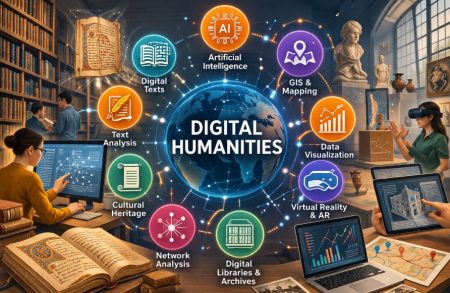
Digital Humanities (DH) is an interdisciplinary field that combines digital technologies with traditional humanities disciplines, such as history, literature, linguistics, and cultural studies. It involves using tools like text mining, data visualization, digital mapping, and online archives to analyze, interpret, and present research in innovative ways. For instance, scholars can apply text analysis tools to examine thousands of literary works at once, allowing them to identify patterns in language use, themes, or authorship. Similarly, digital mapping platforms, such as ArcGIS, enable historians to visualize historical events in a spatial context, while digital archives like Omeka facilitate the creation of interactive exhibits showcasing cultural heritage materials. Digital Humanities does not replace conventional methods; rather, it enhances them by allowing scholars to work with large datasets, uncovering patterns, and creating multimedia forms of knowledge dissemination.
The intersection between Digital Humanities and academic library services highlights the evolving role of libraries as active partners in research, rather than passive repositories of information. Academic libraries provide the essential infrastructure required for Digital Humanities projects, including access to digitized collections, institutional repositories, metadata frameworks, and preservation systems. For example, a library may digitize rare manuscripts and make them available through a digital repository, enabling researchers worldwide to analyze them without needing physical access. Libraries also support tools such as Voyant Tools for textual analysis or Gephi for visualizing relationships within historical or literary datasets. In many universities, libraries have established Digital Humanities labs where researchers receive hands-on support, training, and consultation in using these technologies.
Moreover, academic libraries play a critical role in ensuring the sustainability and accessibility of Digital Humanities outputs. They support long-term digital preservation, promote open access initiatives, and facilitate interdisciplinary collaboration among scholars, technologists, and information professionals. For instance, libraries often host institutional repositories where DH projects—such as digitized oral histories or interactive timelines—can be preserved and shared. They may also organize workshops on tools like Zotero for managing research data or provide guidance on data curation and metadata standards. By doing this, libraries enhance research support services and redefine their institutional identity as hubs of innovation. This convergence of Digital Humanities and library services represents a shift toward a dynamic, technology-enabled research environment where libraries actively contribute to both knowledge creation and dissemination.
Academic Libraries as Key Stakeholders in Digital Humanities Initiatives
Academic libraries are key stakeholders in Digital Humanities (DH) initiatives, positioned uniquely at the intersection of information management, technology, and scholarly communication. Traditionally responsible for organizing, preserving, and providing access to knowledge, libraries have naturally extended these roles into the digital realm. In the context of Digital Humanities, they offer critical infrastructure, including digitized collections, institutional repositories, metadata standards, and digital preservation systems. For example, libraries often lead projects to digitize rare manuscripts, historical documents, and cultural artifacts, making them accessible for computational analysis and global research collaboration. This foundational role places libraries at the core of DH ecosystems, supplying both the data and systems required for digital scholarship.
Beyond their infrastructural contributions, academic libraries also provide significant human expertise. Librarians possess specialized skills in information organization, metadata creation, data curation, and research support, which are essential for the success of DH projects. They often collaborate directly with faculty and researchers to design research workflows, select appropriate digital tools, and ensure proper documentation and preservation of project outputs. For instance, a librarian may assist a researcher in applying text analysis tools to a corpus of literary works or help structure a digital archive using standardized metadata practices. This collaborative role transforms librarians from mere service providers into active research partners, thus strengthening the interdisciplinary nature of Digital Humanities.
Academic libraries play a strategic role in promoting accessibility, sustainability, and innovation within DH initiatives. They advocate for open access to digital research outputs, ensuring that DH projects reach a broader audience beyond institutional boundaries. Libraries also implement long-term preservation strategies to protect digital content against technological obsolescence. In addition, many libraries establish Digital Humanities labs, organize workshops, and provide training programs that empower scholars and students to engage with digital methodologies. Through these efforts, academic libraries not only support DH initiatives but also shape their direction, making them indispensable stakeholders in the evolving landscape of digital scholarship.
Roles of Academic Libraries in Supporting Digital Humanities Research Projects
Academic libraries play a crucial and increasingly strategic role in supporting Digital Humanities (DH) research projects by acting as providers of infrastructure, collaborative research partners, educators, and stewards of digital scholarship. At the foundational level, libraries provide access to digitized collections, institutional repositories, and specialized digital platforms that form the backbone of DH research. For example, libraries often lead digitization initiatives involving rare manuscripts, archival records, and cultural heritage materials, enabling researchers to analyze these resources using digital tools. They also offer platforms such as Omeka for creating digital exhibits and DSpace for managing and preserving research outputs. This infrastructural support ensures that scholars have reliable, well-organized, and accessible data for their projects.
In addition to providing resources, academic libraries serve as active research partners by offering technical and intellectual support throughout the research lifecycle. Librarians collaborate with faculty and students in project design, data management planning, and tool selection. For instance, they may assist researchers in utilizing tools like Voyant for textual analysis or Gephi for visualizing complex relationships within datasets. This collaborative engagement reflects a shift from traditional service roles to embedded partnerships, where librarians contribute directly to the creation and interpretation of digital scholarship.
Academic libraries also play an educational role by developing digital literacy and methodological skills among researchers. They organize workshops, training sessions, and consultations on topics such as data visualization, text mining, metadata standards, and digital preservation. Through these initiatives, libraries empower scholars—especially those from non-technical humanities backgrounds—to engage confidently with digital tools and approaches. For example, training on reference management software like Zotero or on data organization practices can significantly enhance the quality and efficiency of DH projects.
Finally, libraries act as custodians of sustainability and accessibility in Digital Humanities research. They ensure the long-term preservation of digital outputs through curated repositories, standardized metadata, and adherence to best practices in digital archiving. Libraries also promote open access, enabling DH projects to reach wider audiences and contribute to global knowledge sharing. By combining infrastructure, expertise, education, and preservation, academic libraries position themselves as indispensable partners in advancing Digital Humanities research, transforming both the scope and impact of scholarly work.
Essential Digital Humanities Services Academic Libraries Should Provide
As Digital Humanities (DH) continues to transform scholarly research, academic libraries are evolving into vibrant centers of digital scholarship and innovation. They are no longer confined to traditional roles of collection management; instead, libraries are now actively supporting research that merges technology with the humanities. To effectively contribute to this transformation, academic libraries must provide a diverse range of Digital Humanities services that encompass the entire research lifecycle, from data creation to dissemination and preservation. The following key service areas illustrate how libraries can position themselves as vital partners in Digital Humanities initiatives.
- Digitization and Digital Collection Development: Digitization is the foundation of most Digital Humanities projects. Academic libraries should systematically convert rare books, manuscripts, archival records, photographs, and other cultural materials into high-quality digital formats. This process involves scanning, image processing, optical character recognition (OCR), and quality control. In addition to simply digitizing materials, libraries must ensure proper organization, metadata tagging, and online accessibility. For example, a collection of historical newspapers can be digitized and made searchable, allowing researchers to analyze trends, language usage, or public opinion over time. This service not only enhances accessibility but also helps protect fragile physical materials from deterioration.
- Digital Repository and Content Management Services: Academic libraries should develop strong digital repositories to store and manage Digital Humanities outputs, including datasets, digital exhibits, and multimedia projects. These repositories play a crucial role in ensuring that research outputs are preserved and remain accessible over time. Libraries are responsible for key tasks such as assigning metadata, indexing, managing version control, and regulating user access. Furthermore, they should support interoperability standards to facilitate the sharing of content across various platforms. A well-managed repository enables a researcher’s digital project—such as an online archive or interactive timeline—to be preserved, cited, and reused by others, thereby enhancing its scholarly impact.
- Research Data Management and Curation: Digital Humanities research often involves the collection and analysis of large datasets, which can include texts, images, audio, and geospatial data. Libraries play a crucial role in helping researchers manage this data effectively. Their support includes assisting with data management plans, particularly for funded projects, systematically organizing files, documenting datasets with clear metadata, and ensuring data quality. Data curation also involves cleaning and transforming raw data into usable formats. For example, a librarian might help structure a dataset of literary texts for use in computational analysis. Proper data management is essential for ensuring that research is reproducible, transparent, and sustainable.
- Digital Tools and Technical Support: Academic libraries should offer access to a wide variety of Digital Humanities tools and provide technical support for their use. This includes tools for text mining, network analysis, data visualization, GIS mapping, and digital storytelling. Libraries should not only provide access to these tools but also assist researchers in selecting the most suitable options for their projects. Technical support may include troubleshooting, software training, and help with data processing. For instance, a researcher analyzing social networks in historical documents may need guidance on using visualization tools effectively. By offering this support, libraries can reduce technological barriers and foster innovation.
- Digital Scholarship Labs and Collaborative Spaces: Establishing dedicated Digital Humanities (DH) labs or innovation hubs within libraries can greatly enhance research productivity. These spaces are equipped with advanced hardware, specialized software, and collaborative work environments, allowing researchers, students, and librarians to collaborate on interdisciplinary projects. DH labs may include facilities for multimedia production, data visualization, and digital project development. For example, a DH lab can support a team working on a virtual exhibition by providing both the necessary technical infrastructure and a collaborative space. These environments promote creativity, experimentation, and the exchange of knowledge.
- Training, Workshops, and Capacity Building: Many humanities researchers often lack the technical expertise needed to effectively use digital tools and methodologies. Academic libraries should address this gap by offering regular training sessions, workshops, and seminars. These programs can cover essential topics such as text analysis, basic coding, data visualization, metadata standards, and digital publishing. It is important for training to be practical and hands-on, so participants can directly apply what they learn to their research. For example, a workshop focused on data visualization can teach researchers how to present complex findings in more engaging and easily understandable ways. Continuous capacity building ensures that users can fully utilize the resources available in the Digital Humanities.
- Project Consultation and Research Collaboration: Academic libraries should go beyond merely supporting roles and become active collaborators in Digital Humanities (DH) projects. Librarians can offer assistance at every stage of a project, from initial concept development to the final output. This support includes helping researchers design project workflows, choose appropriate methodologies, and identify relevant tools and resources. Additionally, librarians can contribute to grant proposals and project documentation. For instance, a librarian might help structure a digital archive project to ensure proper metadata and long-term usability. This collaborative approach enhances the quality and success of DH initiatives.
- Digital Publishing and Scholarly Communication Support: Digital Humanities projects often result in non-traditional research outputs such as interactive websites, digital exhibits, and multimedia publications. Academic libraries should support these forms of scholarly communication by providing publishing platforms and guidance. This includes assisting with website development, digital storytelling, and content dissemination. Libraries should also promote open access publishing to increase the visibility and accessibility of research. For instance, a digital exhibit hosted by the library can reach a global audience, enhancing the impact of the research.
- Metadata and Standards Development: Metadata is essential for organizing, discovering, and preserving digital content. Academic libraries have expertise in creating and applying metadata standards that ensure consistency and interoperability. Librarians must select appropriate metadata schemas, define descriptive elements, and ensure accurate tagging of digital resources. For example, a digital archive of historical photographs requires detailed metadata to make each item searchable and meaningful. Proper metadata enables efficient retrieval, data sharing, and long-term preservation of Digital Humanities projects.
- Digital Preservation and Sustainability: One of the biggest challenges in Digital Humanities is ensuring that digital projects remain accessible over time. Academic libraries play a crucial role in implementing preservation strategies to protect digital content from becoming obsolete due to changing technology. These strategies include regular backups, format migration, and adherence to established preservation standards. Additionally, libraries must plan for the long-term sustainability of projects, which involves securing funding and arranging for ongoing maintenance. For example, a digital archive created today should still be accessible decades from now, regardless of future technological advancements. Effective preservation ensures the lasting value of digital scholarship.
- Ethical Guidance and Copyright Support: Digital Humanities projects often involve complex ethical and legal considerations, such as copyright, intellectual property, and data privacy. Academic libraries should provide guidance to researchers to help them navigate these issues responsibly. This includes advising on fair use, available licensing options, and proper attribution. Libraries can also assist in obtaining permissions for the use of copyrighted materials. For example, a project that involves digitizing literary works must comply with copyright laws to avoid legal complications. Providing ethical guidance ensures that research is conducted responsibly and in accordance with legal standards.
Academic libraries are essential in promoting Digital Humanities by providing a wide range of services that foster innovation, collaboration, and sustainability. They offer support in areas such as digitization, data management, training, and digital publishing, which empower researchers to explore new methodologies and push the limits of humanities scholarship. By continuously adapting to new technologies and the needs of users, academic libraries can establish themselves as vital hubs for research and development in Digital Humanities.
Emerging Skill Sets for Librarians in Supporting Digital Humanities
As Digital Humanities (DH) continues to transform scholarly research, librarians must develop a diverse set of skills that go beyond traditional expertise in cataloging, reference services, and collection management. One of the most essential areas for growth is digital literacy and technical proficiency. Librarians need to be familiar with tools for text mining, data visualization, geographic information systems (GIS), and digital publishing. This includes proficiency in platforms such as Voyant Tools for textual analysis and Gephi for visualizing complex data relationships. A basic understanding of programming languages like Python or R, along with knowledge of web technologies such as HTML and content management systems, can significantly enhance their ability to support digital projects.
In addition to technical skills, expertise in data management and curation has become increasingly important. Digital Humanities projects often involve large and varied datasets, requiring librarians to assist in organizing, documenting, and preserving data effectively. This encompasses developing data management plans, applying metadata standards, and ensuring data quality and interoperability. Librarians must also be well-versed in data ethics, privacy, and intellectual property issues to guide researchers responsibly. Their traditional strengths in information organization position them well for these expanded responsibilities in the digital environment.
Another critical area of competency is collaborative and research support skills. Librarians are no longer just service providers; they are active partners in research projects. This role requires strong communication skills, the ability to work in interdisciplinary teams, and an understanding of research methodologies in the humanities. Librarians must be capable of consulting on project design, recommending appropriate tools, and contributing to grant proposals or project documentation. For instance, they may collaborate with faculty members to design a digital archive or support the development of an interactive research project. Furthermore, instructional and training skills are essential as librarians increasingly take on the role of educators in the Digital Humanities. They must be able to design and deliver workshops, tutorials, and training sessions that help researchers and students learn new digital tools and methods. This requires not only technical knowledge but also the ability to translate complex concepts into accessible learning experiences. By fostering digital literacy among users, librarians facilitate broader participation in Digital Humanities initiatives.
Finally, strategic thinking and adaptability are crucial in a rapidly evolving technological landscape. Librarians must stay informed about emerging trends such as artificial intelligence, machine learning, and digital preservation technologies. They need to evaluate new tools, develop innovative services, and align Digital Humanities initiatives with institutional goals. This forward-looking approach ensures that libraries remain relevant and continue to play a central role in supporting research. Collectively, these new skill sets empower librarians to act as facilitators, collaborators, and innovators in the growing field of Digital Humanities.