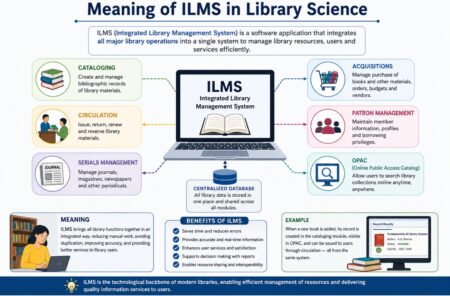
Circulation service ensures the smooth flow of library resources to users by functioning as the central mechanism through which materials are borrowed, renewed, reserved, and returned. For example, when a student borrows a textbook for a class, the circulation desk not only records the transaction but also assigns a clear due date, allowing the library to maintain order and accountability. If another student needs the same textbook, the circulation staff or the automated system can place a “hold” on the item so that it becomes available to them as soon as it is returned. Similarly, faculty members who require multiple books for research can request extended borrowing privileges, while the system ensures these resources are tracked accurately. The timely return and re-shelving of books- such as returning a popular novel for literature students or a reference book for thesis writing-guarantees that the material is ready for the next user without unnecessary delay. Even fines or reminder notices serve as mechanisms to keep the flow moving and discourage long-term withholding of resources. By streamlining these processes and maintaining proper records, circulation service prevents bottlenecks, reduces waiting times, and ensures that both academic and recreational materials are continuously available to meet the diverse needs of users. This structured management allows the library to fulfill its mission of providing seamless, equitable, and timely access to knowledge and information.
Why Is Circulation Service Considered the Backbone of Library Operations?
Circulation service is widely recognized as the backbone of library operations because it ensures that library resources move smoothly between the collection and the users. Without this vital function, books and other materials would remain idle on the shelves, and the library would fail to achieve its primary mission of providing equitable access to knowledge. By managing the borrowing, renewal, reservation, and return of materials, circulation service creates a continuous cycle of resource sharing that benefits the entire user community. For example, when a student borrows a textbook and returns it on time, another student can access the same book without delay. In this way, circulation keeps the collection active and relevant to the needs of users.
Another reason circulation is considered the backbone of library operations is because it serves as the first point of contact for most users. Whether it is a student checking out a book, a faculty member placing a reserve on a textbook, or a community member paying fines, the circulation desk is often where library interactions begin. This makes circulation service not only a functional necessity but also a crucial factor in shaping user experience. A smooth and user-friendly circulation system fosters satisfaction and trust, while inefficiencies can quickly create frustration and discourage library use.
Circulation service also plays an essential role in supporting academic and research needs. Faculty members often rely on circulation staff to manage reserve collections so that all students in a class can access required materials within a limited time frame. Researchers may need extended borrowing privileges or interlibrary loans, and circulation ensures that these processes are well-coordinated. Moreover, circulation services maintain accountability and security of resources by recording every transaction. This allows libraries to track borrowed items, send reminders for overdue returns, and ensure that high-demand materials, such as course textbooks or reference works, are returned promptly for others to use.
Equally important is the role of circulation in ensuring fairness and equitable access. Services such as reservations, recalls, and holds prevent any single user from monopolizing resources. If two students need the same book, one can borrow it while the other places a hold to guarantee priority access once it is returned. This system reflects the library’s commitment to fairness in resource distribution. Furthermore, circulation connects other library departments, such as acquisitions, cataloging, and reference, by acting as the operational link that delivers their work to the end user. Without circulation, the collective efforts of these departments would remain incomplete.
In addition to facilitating access and fairness, circulation service significantly enhances the overall user experience. The introduction of technologies such as self-checkout machines, RFID-based systems, and book-drop facilities has made borrowing and returning resources more convenient. Users can now renew materials or place holds online, which reduces waiting times and makes the service more user-centric. Circulation data also provides valuable insights into usage patterns, helping libraries make informed decisions about acquisitions, reserve collections, or weeding underused items.
Ultimately, circulation service sustains the very mission of the library. By ensuring that resources are in constant use and available to those who need them, it transforms the library from a mere storehouse of books into a dynamic hub of knowledge exchange. Without circulation, the library would lose its vitality and fail to serve its community effectively. For this reason, circulation service is rightly considered the backbone of library operations, as it safeguards access, accountability, and efficiency while fostering user satisfaction and supporting academic and community engagement.