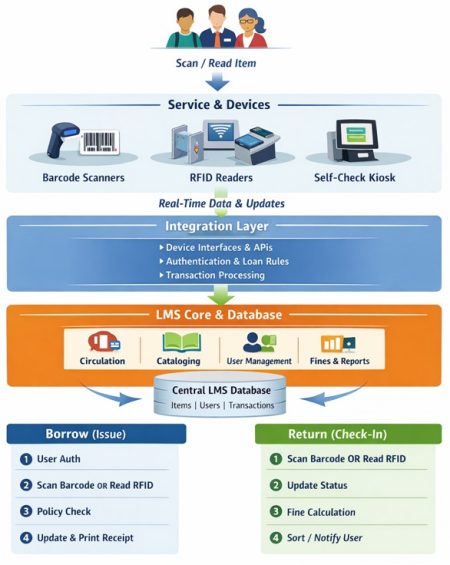
The principles of library management form the foundation for the effective administration and operation of library services. These principles are drawn from general management theories and are adapted to suit the unique environment of libraries, where the primary focus is on providing equitable access to information and supporting learning, teaching, and research. Library management involves a systematic process that includes planning, organizing, staffing, directing, coordinating, and controlling all activities to achieve the library’s goals. Each principle plays a vital role in ensuring that library resources—whether human, physical, or informational—are utilized efficiently and responsibly.
For example, through careful planning, libraries can develop long-term strategies for resource acquisition, technological upgrades, and user engagement. Organizing helps structure departments and workflows so that services are delivered efficiently and without duplication of effort. Effective staffing ensures that competent personnel are recruited, trained, and retained to meet the evolving needs of users. Leadership and direction provide motivation and guidance to staff, promoting teamwork and continuous improvement. Coordination ensures that all departments work together harmoniously, while control involves monitoring performance and implementing necessary changes to maintain quality standards.
In today’s information-driven world, these principles are even more critical as libraries face growing demands for digital access, user-centered services, and technological innovation. By adhering to sound management principles, libraries can remain dynamic, relevant, and responsive institutions committed to lifelong learning and knowledge dissemination.
Key Principles That Guide Effective Library Management
Effective library management is crucial for ensuring that libraries fulfill their core mission: supporting education, research, and the dissemination of knowledge. In the modern era, where technology and user needs are rapidly evolving, effective management practices are more critical than ever. Libraries must balance the traditional role of information custodians with the demands of a digital and increasingly globalized environment. Below are the key principles that guide effective library management, helping libraries navigate challenges and continue to thrive as vital resources within their communities.
- User-Centered Approach: At the heart of effective library management is the principle of placing users’ needs at the center of operations. Libraries are meant to serve a diverse community, including students, faculty, researchers, and the general public. A user-centered approach ensures that libraries are responsive to their patrons’ expectations and preferences. This approach involves actively seeking feedback through surveys, focus groups, and direct interaction with users to better understand their needs.
For example, if users express a demand for more online resources, libraries might focus on expanding their digital collections, offering e-books, or providing remote access to academic journals. In turn, libraries can create tailored services that provide value to patrons and increase library engagement. - Effective Leadership and Strategic Management: Strong leadership is essential for guiding libraries toward long-term success. Library managers and directors must have a clear vision for the library’s role within the institution or community, along with the ability to execute a strategic plan. Effective library management involves balancing administrative duties, including budgeting, policy development, and resource allocation, with the responsibility to create a positive organizational culture.
A library’s leadership team should also be adaptable and able to respond to changing needs, such as shifts in educational trends or new technological innovations. They must promote staff development, invest in technology, and ensure that all aspects of library operations align with the broader goals of the institution. - Resource Organization and Accessibility: One of the core tasks of library management is to ensure that resources, whether physical or digital, are organized in a way that is accessible to all users. Proper cataloguing, classification, and metadata are essential for easy retrieval of materials. This requires the use of standardized systems like the Dewey Decimal or Library of Congress classification systems, which help structure collections efficiently. Additionally, with the growing reliance on digital materials, libraries need to ensure that electronic resources are not only available but also easy to access. This includes providing remote access to databases and e-journals through platforms like OpenAthens or library management systems (LMS). Libraries that invest in digital infrastructure and make use of integrated systems are better positioned to serve a diverse range of users across geographical boundaries.
- Financial Stewardship and Resource Allocation: Library managers must exercise sound financial stewardship to ensure the sustainability and growth of library services. Budgeting for acquisitions, staff salaries, technology upgrades, and infrastructure maintenance must be done with foresight and responsibility. Effective resource allocation means making strategic decisions about where to invest funds based on the library’s goals and the needs of its users.
For example, if a library observes that digital resources are in high demand, it may allocate a larger portion of the budget toward purchasing e-books or subscribing to online journals. Libraries can also explore additional funding sources through grants, partnerships, and collaborations with publishers or educational institutions to diversify their financial base. - Technology Integration and Innovation: Technology plays an increasingly significant role in the way libraries operate. From cataloguing systems to digital archives, and even artificial intelligence (AI) for personalized user services, libraries must embrace technological tools to enhance efficiency and provide better services. An effective library management strategy includes investing in new technologies, such as cloud storage, RFID systems for inventory management, or AI-driven cataloguing tools.
The use of technology also extends to user engagement. Many libraries are implementing digital platforms where users can reserve books, renew materials, and access databases remotely. Furthermore, libraries must be forward-thinking and continuously explore innovative technologies that may improve access to information, enhance user experience, and simplify library management. - Staff Training and Development: A well-trained staff is the backbone of a successful library. Library professionals must possess the skills necessary to navigate the complexities of modern library systems, assist users with research, and manage digital collections. Continual professional development is key to ensuring that library staff remain current with emerging trends, technologies, and user expectations.
For instance, libraries can provide staff with training in information literacy, customer service, database management, and new technologies. This investment in staff not only improves library operations but also ensures that patrons receive the best possible service. Additionally, libraries can promote leadership development by encouraging staff members to pursue higher education and certifications in library science. - Collaboration and Partnerships: Effective library management extends beyond the library’s internal operations; it also involves building partnerships and collaborations with other libraries, academic institutions, publishers, and local communities. Partnerships can help libraries share resources, collaborate on research initiatives, and offer programs that benefit the community.
For instance, many university libraries collaborate with other academic libraries to share digital resources, such as journal databases, which expands the range of accessible materials. Libraries can also work with faculty to ensure that library resources support curricular needs and academic goals, fostering a strong academic partnership. Such collaborations allow libraries to enhance their offerings while managing their resources more efficiently. - Ethical Practices and Legal Compliance: Libraries must adhere to ethical standards and legal regulations, especially in terms of privacy, copyright, and intellectual property. It is crucial for library managers to stay up to date with changes in copyright law, digital rights management, and data protection regulations. The library must also ensure that its practices align with the ethical principle of intellectual freedom, allowing users to access a wide range of information without censorship.
Moreover, libraries play a key role in promoting information literacy. Educating users on ethical issues, such as plagiarism, copyright infringement, and responsible use of information, is an important aspect of library services. By guiding patrons in ethical information use, libraries contribute to a knowledgeable and responsible community of learners. - Assessment and Continuous Improvement: Effective library management requires ongoing assessment to ensure that library services meet the evolving needs of its users. Library managers should regularly review library programs, resources, and technologies to evaluate their effectiveness. User feedback, usage statistics, and performance metrics are all important tools for assessing library operations.
Continuous improvement involves implementing changes based on feedback and assessment data. For example, if the library finds that a particular database or service is underused, it may consider adjusting its offerings, improving user education, or integrating new tools to make that service more accessible.
Libraries that embrace a culture of assessment and improvement ensure that they remain relevant, responsive, and capable of adapting to the ever-changing landscape of education, technology, and community needs.
Effective library management is a multifaceted endeavor that requires strategic vision, leadership, and ongoing investment in resources, technology, and staff development. By focusing on principles such as a user-centered approach, strong leadership, resource accessibility, and financial stewardship, libraries can continue to thrive as essential institutions of learning and community engagement. In a rapidly changing world, libraries must remain adaptable, embracing technological advancements and fostering collaborations to meet the diverse needs of their users. By adhering to these key principles, libraries can ensure their continued relevance and success in the future.
How the Principles of Library Management Impact the Quality of Library Services
The quality of library services is deeply intertwined with the principles that guide library management. These principles not only shape the operations of a library but also directly influence its ability to meet the needs of its users. As libraries continue to evolve in response to technological advancements, shifting user expectations, and changing educational landscapes, effective management practices become critical for ensuring that libraries provide valuable and relevant services. Let’s explore how key principles of library management directly impact the quality of library services.
- User-Centered Approach: Enhancing Relevance and Satisfaction
The user-centered approach is fundamental to improving library service quality. By focusing on understanding and addressing the needs and preferences of patrons, libraries are better positioned to offer services that resonate with their audience. This approach involves engaging with users through surveys, feedback mechanisms, and regular consultations, ensuring that the library adapts to their changing needs.
For example, a library that actively listens to students and faculty about the resources they require can curate its collection to include more e-books, journals, or specialized resources that support academic work. Libraries that prioritize the user experience—whether through intuitive library layouts, easy-to-use online catalogues, or tailored support services—create a welcoming environment that enhances overall satisfaction. As a result, the quality of services improves, as users find it easier to access relevant materials and receive the support they need in their educational or research pursuits. - Effective Leadership and Strategic Planning: Fostering a Vision for Excellence
Leadership plays a pivotal role in shaping the quality of library services. Strong, visionary leadership ensures that library operations align with institutional goals, such as supporting student learning, research, and community engagement. Effective library leaders are skilled in strategic planning, which involves allocating resources, setting clear objectives, and fostering an environment that encourages innovation and service excellence.
Library leaders who prioritize clear communication, staff development, and performance evaluation help ensure that all aspects of library operations are functioning optimally. For instance, by promoting professional growth opportunities for library staff, leaders enhance the skillset of the team, which in turn improves service delivery. This structured leadership framework contributes to a high level of service, as library staff is equipped with the knowledge and resources necessary to provide comprehensive and up-to-date assistance to users. - Resource Organization and Accessibility: Ensuring Efficiency and Usability
One of the most direct ways library management impacts service quality is through the effective organization and accessibility of resources. Libraries that implement well-structured classification systems and cataloguing practices ensure that users can quickly locate the materials they need. Well-organized resources save time, enhance productivity, and reduce frustration, all of which are vital for high-quality service delivery.
Moreover, accessibility is an important factor. Libraries that make use of integrated library management systems (ILMS) and offer online access to digital resources enable users to access materials remotely, at any time. This convenience significantly improves the quality of services, as users are not restricted by library hours or physical space. Libraries that invest in remote access tools—such as e-journals, e-books, and digital archives—empower users to continue their research and learning without the constraints of location. - Financial Stewardship and Resource Allocation: Maximizing Impact with Limited Resources
Effective financial management and resource allocation are crucial to maintaining and enhancing the quality of library services. Libraries are often working within tight budget constraints, so it is essential for library managers to make strategic decisions about how resources are spent. This includes prioritizing investments in collections, technology, staff, and infrastructure that will yield the greatest benefit to users.
For example, a library that allocates a significant portion of its budget to acquiring academic databases or subscribing to digital resources can offer users access to a broader range of research materials. Similarly, libraries that invest in cutting-edge technologies—such as self-checkout systems or RFID inventory management—enhance user convenience, reduce wait times, and improve overall service quality. Proper financial stewardship ensures that library services are not only sustainable but also continuously improved to meet evolving user needs. - Technology Integration: Streamlining Services for Efficiency
The integration of technology in library management is a key factor in improving service quality. Libraries that embrace technological tools—such as automated cataloguing systems, digital archives, and e-learning platforms—can provide users with fast, accurate, and efficient services. Technology streamlines workflows, reduces manual tasks, and helps manage large amounts of data, which can enhance service delivery.
For instance, libraries that offer online booking systems, digital reserves, and remote access to journals provide users with greater convenience and flexibility. The adoption of AI-driven chatbots for answering common queries is another example of how technology can enhance user service. Through these technological advancements, libraries can offer a higher level of service that meets the expectations of today’s tech-savvy patrons. - Staff Training and Development: Strengthening Service Quality Through Knowledge and Skills
Library staff are the cornerstone of service delivery. Their expertise and professionalism directly impact the quality of services provided to users. Libraries that prioritize staff training and development ensure that their team remains knowledgeable about current trends in information management, new technologies, and best practices in customer service.
Staff development also ensures that library employees can effectively assist users with a variety of needs, from research assistance to information literacy training. As staff gain proficiency in new systems, such as integrated management tools or digital repositories, they are able to offer more efficient and helpful support. By investing in continuous staff training, libraries enhance the overall service experience for users, improving the library’s reputation and fostering a culture of excellence. - Collaboration and Partnerships: Expanding Service Offerings
Collaboration and partnerships extend the reach and scope of library services. By collaborating with other libraries, academic institutions, and publishers, libraries can offer users expanded access to resources, programs, and research support services. These partnerships allow libraries to share resources, increase their offerings, and strengthen their position within the academic and research communities.
For instance, consortia-based resource-sharing arrangements allow libraries to provide users with access to materials that may not be available within their own collections. Libraries that form partnerships with faculty members to support research initiatives or curriculum development can also ensure that their resources align with academic needs, further enhancing the relevance and quality of their services. - Ethical Practices and Legal Compliance: Building Trust and Credibility
Libraries are trusted institutions, and maintaining ethical standards is fundamental to ensuring the quality of their services. Ethical practices, including the responsible management of user data, adherence to copyright laws, and the promotion of intellectual freedom, help libraries maintain their credibility and trustworthiness. By adhering to ethical guidelines, libraries create an environment where users feel confident that their privacy is respected and that the materials they access are legitimate and properly sourced. Additionally, libraries that promote information literacy and educate users about ethical research practices—such as proper citation and avoidance of plagiarism—help foster a culture of responsibility and integrity among users, further enhancing the overall quality of the library’s service. - Assessment and Continuous Improvement: Responding to User Needs
A commitment to assessment and continuous improvement is a key driver of high-quality library services. Libraries that regularly assess their programs, resources, and services can identify areas for improvement and implement changes based on user feedback and performance metrics. This ensures that libraries remain responsive to evolving user needs and technological advancements.
For example, if user surveys reveal that patrons are dissatisfied with the library’s online access system, the library can take steps to streamline the interface or introduce new digital tools. By continuously evaluating services and implementing improvements, libraries can ensure that they maintain a high standard of service delivery and remain relevant to their users.
The principles of library management are integral to shaping the quality of services provided by libraries. By focusing on user needs, effective leadership, resource accessibility, financial stewardship, and technological integration, libraries can ensure they offer relevant, efficient, and high-quality services. Through continuous staff development, ethical practices, and a commitment to collaboration, libraries can maintain their role as indispensable resources for education, research, and community engagement. Ultimately, effective library management creates a positive feedback loop that drives service quality, ensuring that libraries remain valuable assets to their users for years to come.
How the Principle of User-Centered Service Influences Library Management Decisions
The principle of user-centered service is a cornerstone of effective library management, as it emphasizes the library’s responsibility to meet the evolving needs and expectations of its users. This principle directs libraries to focus on providing services that are relevant, accessible, and tailored to the specific needs of their diverse user base, whether students, faculty, researchers, or the community. It impacts library management decisions by prioritizing user feedback and satisfaction in the decision-making process. For instance, library leaders may choose to introduce new technologies or platforms, such as digital resources or online reference tools, based on user preferences and usage patterns.
In practical terms, this principle influences decisions such as the selection of resources, development of library programs, and the design of physical spaces. Libraries may invest in creating comfortable, quiet study areas or enhance their online presence to support remote learning. Moreover, user-centered service can lead to the adoption of personalized services, where library staff engage directly with users to assist in research and resource discovery. Additionally, by continually assessing user satisfaction through surveys or direct communication, libraries can refine their offerings to ensure that they remain relevant and effective in serving their clientele. Thus, the principle of user-centered service directly guides library management to create an environment that is adaptable, inclusive, and focused on meeting the needs of its users.
How the Principles of Management Apply Specifically to Library Settings
The principles of management, which are foundational in any organization, also apply to library settings in unique and essential ways. These principles, including planning, organizing, leading, and controlling, guide the efficient and effective operation of libraries, ensuring that they can meet the needs of their users while maintaining sustainability and relevance in a rapidly changing information landscape. Below is an overview of how these principles apply specifically to library settings:
- Planning: Aligning Library Goals with User Needs
Planning is the first and most critical principle of management, setting the foundation for the library’s activities and objectives. In the context of a library, planning involves identifying the needs of the users, setting clear objectives, and determining the best strategies to meet these goals. A library must assess both immediate and long-term needs—whether related to acquiring new resources, upgrading technology, expanding physical spaces, or offering additional services like digital literacy training.
For example, if a library identifies that students require greater access to online learning materials due to an increase in remote learning, management might plan to expand digital collections, invest in e-book subscriptions, and enhance online database access. Planning also involves forecasting future trends, such as the growing demand for digital archives and online reference services, and ensuring that the library’s resources align with these anticipated needs.
Effective planning ensures that the library remains relevant to its user community, strategically positioning it to support educational and research goals. It also helps manage resources more efficiently, guiding decision-making in areas like staffing, budgeting, and service delivery. - Organizing: Structuring Resources and Operations
Organizing is the process of arranging resources and tasks in a way that maximizes efficiency and effectiveness. In a library, organizing includes managing physical and digital collections, staff roles, and workflows to achieve the library’s objectives. Organizing library resources means ensuring that books, journals, and other materials are properly catalogued and classified, often using systems like the Dewey Decimal or Library of Congress classification systems. This systematization allows users to quickly locate materials, improving service delivery and user satisfaction.
Organizing also involves structuring the library staff into specialized teams that manage specific functions, such as acquisitions, circulation, reference services, and digital resources. Each team must be organized to ensure that tasks are completed efficiently and that responsibilities are clearly defined. For example, a library may organize its staff into groups based on their expertise—such as reference librarians, technical services staff, and customer service teams—ensuring that each group is focused on delivering high-quality service in its respective area. Additionally, organizing includes managing the physical space of the library. By designing flexible spaces for individual study, group work, and community engagement, the library can meet the diverse needs of its users. Organizational decisions around space management ensure that the library is an inviting and functional environment for everyone who uses it. - Leading: Motivating and Guiding Library Staff
Leading, or leadership, refers to the ability of library managers to guide and inspire their staff toward achieving library goals. In libraries, leadership is about more than administrative oversight; it is about creating a culture of excellence, collaboration, and responsiveness to user needs. Effective leaders in libraries motivate their staff, encourage professional development, and create an environment where innovation is fostered.
Library leaders must also ensure that staff members are well-trained and equipped with the necessary skills to meet the needs of users in a constantly changing environment. Leadership in the library involves setting clear expectations, maintaining open lines of communication, and empowering staff to make decisions that benefit the users. For instance, library managers may organize training programs on new technologies, information literacy techniques, or customer service best practices to ensure that staff members can deliver the highest quality service. Additionally, library leaders advocate for the library within the larger institution, securing resources, building relationships with faculty, and ensuring that library services are aligned with institutional goals. A library manager’s ability to communicate the value of the library to administrators and stakeholders is critical for securing funding and support. - Controlling: Monitoring Performance and Adapting to Change
Controlling involves monitoring and evaluating library performance against established goals, then making necessary adjustments to improve services. In a library, controlling is essential for ensuring that resources are being used effectively and that library services are meeting user needs. This principle involves gathering and analyzing data on library usage, resource allocation, and user feedback to assess how well services are being delivered.
For example, a library may track circulation data to determine which books and resources are most popular, which services are being utilized the most, and where there are gaps in service. If user surveys indicate dissatisfaction with certain library services, such as limited access to digital resources or inadequate study spaces, library management can take corrective action by reallocating resources, improving services, or adjusting policies.
Controlling also requires libraries to stay flexible and adaptable in the face of change. For example, libraries have increasingly embraced digital services and online learning platforms in response to shifts in educational practices. By continuously evaluating and adjusting services based on feedback and data, libraries can remain responsive to the evolving needs of users and ensure that their services remain relevant. - Innovation and Adaptability: Responding to Emerging Trends
In addition to the core principles of planning, organizing, leading, and controlling, innovation and adaptability are crucial to library management. Libraries are not static entities—they must continuously evolve to meet the changing needs of their users. Management must stay attuned to emerging trends in technology, education, and user behavior and be willing to adapt library services accordingly.
For example, as digital content and remote learning have become more prevalent, many libraries have expanded their e-resource collections and enhanced their virtual services. Libraries have also embraced new technologies like self-checkout systems, RFID inventory management, and AI-driven chatbots to improve efficiency and user engagement. By fostering a culture of innovation and staying flexible, library managers can ensure that the library remains a vital resource for users, adapting to their needs in a rapidly changing world.
The principles of management—planning, organizing, leading, and controlling—are as essential in library settings as they are in any organization. By applying these principles effectively, library managers can ensure that their libraries remain efficient, adaptable, and responsive to the needs of users. Strategic planning ensures libraries are aligned with user expectations, while effective organizing and leadership foster a positive and productive environment for staff and patrons alike. Through ongoing performance monitoring and the willingness to innovate and adapt, libraries can continue to provide essential services that support education, research, and community engagement in the digital age.
Applying Fayol’s Principles of Management to Modern Library Systems
Henri Fayol’s 14 principles of management, developed in the early 20th century, continue to serve as a foundation for effective management in various organizational settings, including libraries. While these principles were originally intended for industrial management, they are highly relevant in modern library systems. Library managers can adapt Fayol’s principles to improve efficiency, service delivery, and staff management in today’s rapidly evolving library environments. Let’s explore how library managers can apply each of Fayol’s principles to modern library systems to optimize operations and provide enhanced services to users.
- Division of Work: Specializing Tasks for Efficiency
Fayol’s principle of division of work suggests that tasks should be divided and assigned to employees based on their expertise to improve efficiency. In modern libraries, this principle can be applied by organizing staff into specialized teams or departments, each focusing on specific areas such as acquisitions, reference services, cataloging, digital resources, and customer service. By assigning tasks according to staff strengths and skills, libraries can operate more efficiently and provide higher-quality services to users.
For example, a library might create separate teams to manage digital collections, physical collections, and user support. Each team focuses on a specific aspect of library management, ensuring that each area receives the attention and expertise it requires, ultimately improving the overall service quality. - Authority and Responsibility: Clear Roles and Accountabilities
Fayol emphasized that authority and responsibility must go hand in hand. In a library setting, this means that managers must empower staff with the authority to make decisions within their roles while holding them accountable for their responsibilities. This principle can be applied by ensuring that staff at all levels of the library have clear responsibilities and the authority to carry out tasks related to their roles.
For example, reference librarians should have the authority to assist users with research and manage the library’s databases, while circulation staff should be responsible for managing checkouts and returns. This distribution of authority ensures that decisions can be made quickly and efficiently, improving the overall user experience. Managers must also ensure that there is a clear line of responsibility, where each staff member understands their specific duties and the impact of their work on the library’s goals. - Discipline: Maintaining Professionalism and Adherence to Policies
Discipline, according to Fayol, refers to ensuring that employees follow established rules and procedures. In libraries, this can be applied by maintaining clear policies and procedures for staff and users, such as rules on borrowing, conduct within the library, and the handling of materials. Managers should create a professional environment where staff adhere to these policies while ensuring that patrons also understand and follow library rules.
For example, library managers might enforce a policy on returning materials on time or establish clear guidelines for using library computers or study spaces. At the same time, they should provide staff with ongoing training to ensure adherence to professional standards and expectations, fostering a disciplined and productive work environment. - Unity of Command: Clear Reporting Lines
Fayol’s principle of unity of command suggests that each employee should report to only one manager to avoid confusion and conflicting instructions. In modern libraries, this principle can be applied by establishing a clear organizational structure with defined reporting lines. Library staff should know who they report to and who is responsible for guiding their tasks.
For example, in a library with multiple departments (e.g., digital services, circulation, and acquisitions), each department should have a supervisor or team leader to whom staff report. This avoids confusion and ensures that everyone understands their role and responsibilities within the larger organization. Unity of command also ensures that managers can provide clear guidance and support, leading to smoother operations. - Unity of Direction: Aligning Efforts toward Common Goals
Fayol’s unity of direction principle emphasizes that everyone in an organization should work toward the same objectives. In libraries, this means ensuring that all staff members align their efforts with the library’s mission and goals. Library managers must communicate the library’s objectives clearly and ensure that all activities—from acquisitions to user services—are focused on achieving those objectives.
For instance, if a library’s goal is to improve access to digital resources, all staff members should be involved in this initiative, whether they work in reference services, acquisitions, or IT support. Unity of direction ensures that the library is not fragmented and that all efforts are coordinated toward achieving common goals, which ultimately improves service delivery and efficiency. - Subordination of Individual Interests to General Interests: Prioritizing Library Needs
Fayol’s principle of subordination of individual interests to general interests asserts that the needs of the organization should take precedence over individual desires. In a library setting, this means that staff members should prioritize the overall goals of the library over personal preferences or interests. This principle encourages collaboration, as staff work together to achieve collective goals.
For example, a library manager might prioritize enhancing user experience by upgrading the library’s technology infrastructure, even if this means temporary disruptions to certain staff roles or workflows. Managers must communicate the importance of these changes to staff, ensuring that everyone understands the broader impact on library services and the need for cooperation to achieve the organization’s objectives. - Remuneration: Fair Compensation for Staff
Fayol emphasized the importance of fair compensation for employees, as it contributes to job satisfaction and motivation. In modern libraries, this principle can be applied by ensuring that staff receive competitive salaries and benefits that reflect their skills, expertise, and responsibilities. This helps retain talented employees and fosters a positive work environment.
Library managers can also implement non-monetary forms of compensation, such as professional development opportunities, recognition programs, or flexible work arrangements, to motivate staff and enhance job satisfaction. Fair and equitable compensation is key to maintaining staff morale and ensuring that the library attracts and retains skilled personnel. - Centralization: Balancing Decision-Making Authority
Centralization refers to the extent to which decision-making authority is concentrated at the top levels of the organization. In modern library systems, the principle of centralization can be applied by determining which decisions should be made centrally and which should be delegated to staff at lower levels. For example, strategic decisions about the library’s mission and long-term goals are typically made by senior management, while decisions regarding day-to-day operations, such as scheduling or resource allocation, may be delegated to department heads or team leaders.
The balance between centralization and decentralization is crucial to ensuring that libraries remain responsive to user needs while maintaining clear oversight and control over important decisions. Managers must carefully assess when to centralize decision-making for consistency and efficiency and when to decentralize to allow for quicker responses and innovation. - Scalar Chain: Establishing Clear Hierarchical Structure
Fayol’s principle of scalar chain involves maintaining a clear chain of authority and communication within the organization. In libraries, this principle can be applied by ensuring that all staff members understand their place within the library’s hierarchy and have clear channels of communication with their superiors.
For example, the head librarian or library director may set strategic goals, while department managers oversee their specific teams, and front-line staff execute daily tasks. This clear hierarchical structure ensures smooth communication and decision-making throughout the organization, helping to avoid confusion and overlap in responsibilities. - Order: Organizing Resources Efficiently: Fayol’s principle of order relates to the proper arrangement of resources—both human and physical—in an organization. In libraries, this means ensuring that library materials are systematically organized for easy access and that staff roles and workflows are clearly defined. Libraries must ensure that both physical and digital collections are properly cataloged and categorized, and that resources are allocated efficiently to meet user needs.
Library managers can apply this principle by ensuring that library spaces are organized logically, with clear signage and user-friendly navigation. Additionally, staff should be trained to follow standardised procedures to maintain order in workflows, ensuring that tasks such as cataloguing, shelving, and processing materials are carried out efficiently.
Fayol’s principles of management provide a valuable framework for managing modern library systems. By applying these principles, library managers can optimize operations, enhance service delivery, and create a positive work environment for staff. Whether it’s through planning resources strategically, organizing staff into specialized teams, providing clear leadership, or ensuring that user needs are prioritized, Fayol’s principles remain highly relevant in today’s dynamic and evolving library landscape. By adapting these timeless principles to modern library management, libraries can continue to serve their communities effectively and efficiently, ensuring their long-term sustainability and success.
The Influence of Ranganathan’s Five Laws of Library Science on Library Management Practices Today
S.R. Ranganathan’s Five Laws of Library Science, introduced in 1931, continue to have a profound impact on library management practices around the world. These laws, which emphasize the importance of service, access, and resource utilization, form the foundation for how libraries are managed and how they serve their communities. While Ranganathan’s laws were conceived in the early 20th century, they remain remarkably relevant today, guiding library management in an era of digital transformation, user-centered services, and community engagement. This article explores how each of Ranganathan’s Five Laws influences contemporary library management practices.
- Books are for Use: Maximizing Resource Accessibility
Ranganathan’s first law, “Books are for use,” underscores the fundamental purpose of libraries: to ensure that their collections are accessible and usable by patrons. This law directly influences modern library management practices by guiding how libraries curate, organize, and make their resources available. In today’s digital age, this law has expanded to encompass both physical and electronic resources, with libraries emphasizing the importance of ensuring that both traditional materials (books, journals) and digital assets (e-books, online databases) are easily accessible.
Libraries today focus on optimizing user access through a variety of mechanisms, including integrated library management systems (ILMS), which facilitate seamless browsing and borrowing of materials. For example, many libraries now offer remote access to e-books and databases, ensuring that users can access materials anytime and anywhere. Self-checkout systems, RFID technology for efficient resource tracking, and online cataloguing also exemplify how the law’s principle of “use” has been translated into practice. These innovations ensure that library resources are not just available, but actively used by patrons, maximizing their value. Furthermore, libraries today also work toward ensuring that materials are accessible to a diverse range of users, including those with disabilities, by implementing assistive technologies, such as screen readers and adaptive devices. The law’s influence extends to fostering inclusivity, ensuring that library services meet the needs of all users. - Every Reader His or Her Book: Personalizing Library Services
The second law, “Every reader his or her book,” emphasizes the importance of providing resources that meet the individual needs of each user. In today’s library management, this law has led to the development of personalized services and user-centric approaches. Libraries are no longer simply repositories of information; they have become facilitators of personalized learning, research, and exploration.
Modern library management practices use data-driven approaches to understand user needs and preferences. This is evident in the rise of recommendation systems, where libraries offer personalized book suggestions or tailored research materials based on users’ borrowing history or interests. Many libraries also have subject librarians or research support services to help users find resources specific to their needs, whether in a particular academic discipline or personal interest area. Moreover, the growth of digital services, such as e-books and online journals, has enabled libraries to offer readers the freedom to access content on-demand, fulfilling Ranganathan’s vision of matching every reader with the right material at the right time. Today’s library management practices also extend beyond books to include digital resources, podcasts, videos, and other media types, ensuring that every patron can find something relevant to their needs. - Every Book Its Reader: Ensuring Resource Relevance and Accessibility
“Every book its reader,” the third law, stresses the importance of matching library resources with the right audience. This principle has had a lasting influence on library collection development practices. Library managers today carefully consider which materials will be most relevant and beneficial for their users, selecting resources that align with the educational, research, and informational needs of their community.
This law’s influence is visible in the modern practice of conducting regular user surveys and analyzing borrowing trends to ensure that library collections reflect the evolving needs of the community. For example, academic libraries may focus on building collections that support current research projects or curricular needs, while public libraries might prioritize materials that serve the interests of local patrons.
Digitalization has also brought the application of this law into new dimensions. Libraries now curate digital collections—e-books, audiobooks, and multimedia content—that appeal to a variety of users, ensuring that resources are not only available but also accessible to those who will benefit from them the most. Cataloguing and classification systems, such as the Dewey Decimal Classification or Library of Congress system, are continually refined to enhance discoverability, ensuring that each resource can easily reach the readers it was intended for. - Save the Time of the Reader: Enhancing User Experience and Efficiency
The fourth law, “Save the time of the reader,” directly impacts library management by emphasizing the importance of efficiency and user experience. In a world where users increasingly demand faster access to information, modern libraries have adapted by implementing systems and technologies that make it easier for patrons to find and access the resources they need.
This principle is reflected in the shift from traditional card catalogues to integrated digital catalogues that provide instant access to a library’s entire collection. Additionally, libraries have adopted self-service technologies, such as self-checkout stations and online reservation systems, which allow users to borrow materials and manage their accounts without waiting in line. Moreover, libraries today increasingly offer streamlined services like virtual reference desks, where users can get immediate answers to questions through chat or email, reducing the time spent searching for information. Many libraries also offer curated, pre-packaged research guides for specific subjects or assignments, saving students and researchers time by helping them navigate vast amounts of information more efficiently. Additionally, libraries have embraced mobile technology, offering apps that allow users to search the catalogue, renew items, and access digital resources from their smartphones. The goal is to make library services as accessible and convenient as possible, saving users time and improving their overall experience. - The Library is a Growing Organism: Embracing Change and Innovation
The final law, “The library is a growing organism,” is perhaps the most forward-looking of Ranganathan’s principles. It emphasizes that libraries must evolve and adapt to changing societal needs, technological advancements, and user expectations. This principle has shaped the modern approach to library management, encouraging flexibility, innovation, and continuous development.
In today’s libraries, this law is reflected in the embrace of new technologies and service models. Libraries have adopted digital and electronic systems to manage resources and services, enabling users to access materials and information remotely. The concept of the library as a “growing organism” is also evident in the expansion of library services beyond traditional book lending to include digital content, community outreach programs, workshops, and maker spaces.
Libraries today are more than just places for borrowing books—they are community hubs that offer a wide range of educational and cultural services. The law has inspired libraries to remain responsive to societal changes, such as offering programs that address digital literacy, job skills, and health education. As the needs of users evolve, libraries continue to adapt, ensuring they remain relevant and vital in a rapidly changing world.
Ranganathan’s Five Laws of Library Science continue to serve as guiding principles for modern library management. These laws emphasize accessibility, user-centered services, relevant resources, efficiency, and adaptability—values that are as relevant today as they were in the early 20th century. By applying these principles, libraries can effectively serve their communities, ensuring that their collections and services evolve with the changing needs of users. The influence of Ranganathan’s laws can be seen in the digitalization of libraries, the personalization of services, and the ongoing commitment to making library resources accessible, efficient, and responsive to the needs of readers. As libraries continue to grow and adapt, Ranganathan’s principles remain an enduring foundation for library science and management practices.
Reference Articles:
- Ashikuzzaman, M. (2013, September 18). Five Laws of Library Science by Ranganathan. Library & Information Science Education Network. https://www.lisedunetwork.com/five-laws-of-library-science/
- Babu, B. R. (2011). Relevance of Five Laws of Library Science in the Contemporary Library World. Journal of the Korean Society for Library and Information Science, 45(4), 253–269. https://doi.org/10.4275/KSLIS.2011.45.4.253
- Bright, D. S., Cortes, A. H., Hartmann, E., Parboteeah, K. P., Pierce, J. L., Reece, M., Shah, A., Terjesen, S., Weiss, J., White, M. A., Gardner, D. G., Lambert, J., Leduc, L. M., Leopold, J., Muldoonc, J., & O’Rourke, J. S. (2019). Principles of Management. OpenStax.
- Brophy, P. (2006). Measuring Library Performance: Principles and Techniques. Facet Publishing.
- Islam, M., Hossain, M., Ameen, M., Mustafi, M., Moshiuddullah, A. B. M., Haque, H., Haque, U., & Sultana, R. (2022). Henri Fayol’s 14 Principles of Management: Implications for the Private Commercial Banks (PCBs) in Bangladesh. 5, 82–89.
- Jones-Washington, M. (n.d.). Master of Public Administration, in Public Sector Management and Leadership.
- Leiter, R. A. (2003). Reflections on Ranganathan’s Five Laws of Library Science. Law Library Journal, 95, 411.
- Parker, S. (2006). Principles and Practice. IFLA Journal, 32(3), 179–180. https://doi.org/10.1177/0340035206070163
- Safii, M. (2019). Redefining The Five Laws of Library Science in the Digital Age. 24–27. https://doi.org/10.2991/icclas-18.2019.7
- Tofiq, R. Z., Oqlu, M. M. A., & Kazimi, P. F. O. (2022). Some Questions of the Application of Library Management. Technium Social Sciences Journal, 37, 774.
- Uzuegbu, C. P., & Nnadozie, C. O. (2015). Henry Fayol’s 14 Principles of Management: Implications for Libraries and Information Centres. Journal of Information Science Theory and Practice, 3(2), 58–72. https://doi.org/10.1633/JISTaP.2015.3.2.5