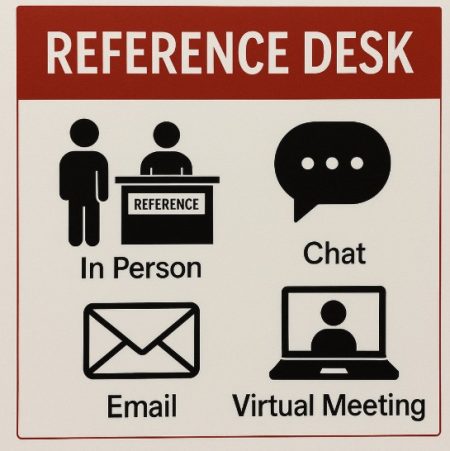
The reference desk serves as the central point of guidance and support in any library, connecting users with the information they need quickly and effectively. Its primary purpose is to assist patrons in navigating the library’s vast range of resources by offering expert help from trained librarians. For example, a student who cannot remember how to search for peer-reviewed articles in an online database can approach the reference desk for step-by-step guidance. Similarly, someone unsure about locating a book by call number, such as QA276.12 .M67 2017, can receive direct assistance on where to find it on the shelves. At the reference desk, librarians also conduct brief “reference interviews” to clarify users’ needs; for instance, a user asking for “books on climate” may actually need scholarly articles on climate change impacts in South Asia. Beyond answering questions, the reference desk teaches users essential information literacy skills, such as evaluating credible sources or forming effective search strategies for assignments and research.
Main Functions of the Reference Desk in a Library
The reference desk is one of the most essential service points in any library, serving as a hub where users receive guidance, support, and expert assistance. Its primary function is to help library patrons navigate the entire information landscape, whether print, digital, or multimedia, with confidence and efficiency. At the reference desk, trained librarians respond to a wide range of queries, from simple factual questions to complex research needs. For example, a student seeking scholarly articles on environmental policy can receive assistance in selecting the appropriate database, identifying relevant keywords, and evaluating credible sources. This direct assistance ensures that users do not feel overwhelmed by the vast amount of information available.
Another important function of the reference desk is to assist users in locating resources within the library. Librarians guide patrons in using the Online Public Access Catalog (OPAC), interpreting call numbers, and finding items on the shelves. For instance, a user struggling to locate a book with the call number HD30.28 .K45 2021 can receive step-by-step instructions on where to find it. The reference desk also plays a vital instructional role by promoting information literacy. Librarians teach users how to search effectively, assess the credibility of sources, cite references properly, and avoid plagiarism, skills especially crucial for students and researchers. Additionally, the reference desk supports users through the reference interview process, a conversational technique used to clarify their exact information needs. This helps librarians provide precise, tailored assistance. For example, a student who asks for “books on psychology” might be guided to clarify whether they need material for a class assignment, personal reading, or academic research.
Beyond direct assistance, the reference desk connects users to broader services within the library. When specialized help is needed, librarians provide referrals to subject specialists, research support staff, or external institutions. The reference desk also contributes to user training and orientation by introducing new students to library resources, digital tools, and research strategies.
In essence, the reference desk functions as the library’s central gateway to knowledge. It supports academic success by helping users discover reliable information, develop essential research skills, and utilize all available library services effectively. Through personalized guidance, resource navigation, and continual support, the reference desk plays a crucial role in fulfilling the library’s mission of promoting learning, research, and informed inquiry.