Disposal (Weeding) of Library Materials
Disposal, commonly known as weeding, is a systematic and planned process for evaluating and removing library materials that are no longer relevant, useful, or in acceptable physical condition. This process involves identifying outdated, damaged, duplicate, or rarely used items and making decisions about whether they should be withdrawn from the collection. For instance, an old computer science textbook published in 2005 might be removed because its content is no longer aligned with current technologies. Similarly, multiple copies of a low-demand title may be reduced to free up shelf space. Books with torn pages, missing sections, or poor binding may be discarded if they cannot be repaired. Additionally, outdated medical or legal texts may be removed to prevent users from accessing inaccurate information.
The purpose of weeding is not just to discard materials but to ensure that the library collection remains current, accurate, and aligned with the evolving needs of its users. By removing obsolete or unused resources, libraries can create space for new acquisitions, improve the visibility of relevant materials, and enhance user satisfaction. For example, replacing old editions of textbooks with updated versions or removing rarely used print journals that are now available in digital format helps maintain a more efficient and accessible collection.
Weeding is typically guided by established policies and professional criteria, such as circulation statistics, subject relevance, publication date, and physical condition. This ensures that the process remains objective, consistent, and supportive of the library’s mission to provide effective information services.
Importance of Disposal (Weeding) in Library Collection Management
Disposal, commonly known as weeding, is a crucial aspect of library collection management. It ensures that the collection remains relevant, accurate, and responsive to the evolving needs of users. Libraries are dynamic institutions where information quickly becomes outdated, particularly in fields like science, technology, medicine, and law. Without regular weeding, library shelves can become overcrowded with obsolete, damaged, or rarely used materials, making it challenging for users to locate current and useful resources. For instance, retaining outdated medical textbooks could mislead students with incorrect information, while keeping multiple unused copies of the same title unnecessarily occupies valuable space that could be utilized for newer materials.
Weeding also enhances the overall quality, accessibility, and usability of the collection by highlighting relevant resources and reducing clutter. It enables librarians to replace old editions with updated ones, incorporate new formats such as digital resources, and align the collection with academic curricula and research priorities. For example, removing print journals that are now accessible through online databases can streamline access and improve user convenience. Furthermore, disposal supports efficient space management and better organization, creating a more user-friendly library environment. Guided by clear policies and professional criteria, the weeding process ensures that collection development remains balanced, purposeful, and aligned with the library’s mission to provide reliable and up-to-date information services.
Factors to Consider Before Discarding Library Materials
Weeding, or discarding library materials, is an important and delicate aspect of collection management. It involves more than just removing books from shelves; it requires informed decisions to maintain the quality, relevance, and usability of the library’s collection. To ensure that valuable resources are not lost and that the collection continues to meet the needs of its users effectively, librarians must take several key factors into account before discarding any materials.
- Relevance and Accuracy of Content: The first and most important factor to consider is whether the content is still relevant and accurate. In rapidly evolving fields such as medicine, information technology, and law, information can become outdated quickly. Therefore, materials containing obsolete or misleading information should be considered for removal. For instance, an old computer science book that discusses outdated software or a medical text with obsolete treatments may no longer be suitable. However, in subjects like history or literature, older materials may still hold value and should be evaluated carefully.
- Usage and Circulation Statistics: Usage data is valuable for librarians as it reveals how often resources are accessed or borrowed. If certain materials have not been used for an extended period, it may suggest low demand, making them candidates for disposal. For example, a book that hasn’t been checked out in several years might no longer be relevant to users. However, low usage should not be the sole reason for removal, particularly for specialized or research-oriented materials that, while infrequently used, are still important.
- Physical Condition of Materials: The condition of library materials plays a crucial role in weeding decisions. Damaged, worn-out, or missing page books can lead to decreased user satisfaction and negatively impact the library’s reputation. If repairing or rebinding these materials is not practical or cost-effective, they may need to be discarded. For instance, a heavily damaged textbook with loose pages might be removed and replaced with a new copy or an updated edition.
- Duplication of Copies: Libraries frequently keep several copies of popular books to satisfy high demand. However, as demand decreases over time, it becomes unnecessary to hold onto all copies. By evaluating duplication, librarians can determine how many copies are truly needed and remove any excess. For instance, if the usage of a textbook has declined, a library might decide to cut down from five copies to just two.
- Availability in Alternative Formats: As digital resources continue to expand, many printed materials are now accessible in electronic formats, including e-books, online journals, and databases. If reliable digital access is available, print versions may be considered for removal. For example, print journals that are fully accessible through subscribed databases can be withdrawn, as long as the digital access is stable and long-term.
- Historical, Cultural, or Research Value: Some materials hold long-term significance that extends beyond their current use. Rare books, local history collections, institutional publications, and archival documents often have enduring research or cultural value. For instance, a book that chronicles the early history of a university or a region should be preserved, even if it is not frequently accessed. Such materials should not be discarded without thoughtful consideration.
- Legal and Ethical Considerations: Librarians must consider legal and ethical issues before discarding materials. Donor agreements, institutional policies, and copyright considerations may limit the disposal of certain items. Transparency in the weeding process is crucial to maintaining trust among users and stakeholders.
- Possibility of Replacement: Before discarding an item, librarians should assess whether a newer or better version is available. Replacing outdated editions with updated ones ensures that users have access to accurate and relevant information. For instance, swapping out an old edition of a textbook for the latest version enhances the overall quality of the collection.
Discarding library materials is a complex and responsible process that involves careful evaluation of several factors. By considering content relevance, usage, physical condition, duplication, format availability, historical value, alignment with policies, user needs, costs, and ethical responsibilities, libraries can maintain a dynamic and high-quality collection. Effective weeding enhances both accessibility and usability, ensuring that the library continues to meet the evolving needs of its users.
Role of Library Policies in Guiding the Disposal Process
Library policies play a crucial role in guiding the weeding (disposal) process by providing a structured, consistent, and transparent framework for decision-making. Typically outlined within the collection development policy, these guidelines establish clear criteria for selecting, retaining, and discarding materials, ensuring that the process is not arbitrary or subjective. By defining standards such as relevance, accuracy, usage, physical condition, and alignment with institutional goals, policies help librarians make informed and balanced decisions. For example, a policy may stipulate that outdated materials in rapidly evolving fields like medicine or technology should be regularly reviewed and removed, while rare or archival materials must be preserved regardless of usage.
Additionally, library policies promote consistency across different departments and staff members, preventing personal bias from influencing disposal decisions. They enhance accountability by requiring proper documentation and approval procedures before materials are withdrawn. For instance, some libraries may necessitate review committees or departmental recommendations before discarding academic resources. Policies also outline acceptable methods of disposal, such as donation, recycling, or sale, ensuring that removed materials are handled responsibly and ethically.
These policies help libraries align their collections with user needs and institutional priorities. They ensure that weeding supports current curricula, research trends, and community interests while maintaining the overall quality and relevance of the collection. Importantly, clear policies enhance transparency, allowing users and stakeholders to understand why certain materials are removed, thereby reducing potential criticism or misunderstanding. In this way, library policies serve as a guiding framework that ensures the disposal process is systematic, fair, and aligned with the library’s mission.
Common Methods Used for Disposing of Library Materials
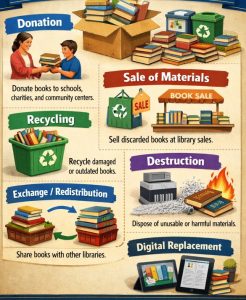 The disposal of library materials, often referred to as weeding, is an essential process for keeping a collection relevant, organized, and user-focused. When materials are identified as outdated, damaged, duplicated, or no longer necessary, libraries must select appropriate methods for responsible removal. Instead of simply discarding these items, libraries employ several structured methods aimed at maximizing value, supporting sustainability, and adhering to ethical practices. Below are the most common disposal methods discussed:
- Donation: Donation is one of the most widely used and socially responsible methods of disposal. Libraries often donate withdrawn materials to schools, community libraries, non-profit organizations, or rural institutions that may benefit from them. For example, textbooks that are no longer used in a university curriculum can still serve students in smaller institutions. This method extends the life of materials and promotes access to knowledge in under-resourced communities.
- Sale of Materials Libraries often hold book sales where they sell discarded materials at low prices to students, staff, and the general public. This practice helps recover some of the library’s investment while making books more affordable for users. For example, duplicate copies of novels or general reading books can be sold during library fairs. The proceeds generated from these sales are typically reinvested in purchasing new materials.
- Recycling: Recycling is an environmentally friendly process used for materials that are damaged or no longer usable. Books that are torn, outdated, or in poor condition can be sent for paper recycling. For instance, heavily worn-out books with missing pages may not be suitable for donation or sale, but they can be recycled to help reduce environmental waste. This approach supports sustainability and promotes responsible resource management.
- Destruction (Discarding): In certain situations, materials must be permanently destroyed or discarded. This approach is used for items that are completely unusable, contain misleading or harmful information, or cannot be reused in any form. For instance, outdated medical or legal books that might offer incorrect guidance should be destroyed to prevent their misuse. Although this is the least preferred option, it is essential for maintaining the reliability of the library collection.
- Exchange or Redistribution: Libraries can exchange or distribute materials with other libraries or departments. Items that are no longer needed by one institution may still be valuable to others. For example, surplus academic books can be shared with departmental libraries or partner institutions. This practice encourages collaboration and promotes the efficient use of resources.
- Digital Replacement: As digital resources become more widely available, libraries often replace print materials with electronic versions. Print books or journals may be removed if they are accessible online through reliable databases or e-book platforms. For instance, print journals that are available in full-text databases can be discarded to save space and improve accessibility. However, libraries must ensure that stable and long-term digital access is in place before discarding print copies.
The disposal of library materials involves various methods, each selected based on the item’s condition, relevance, and potential value. By utilizing approaches such as donation, sale, recycling, destruction, exchange, and digital replacement, libraries can effectively and responsibly manage their collections. These methods help maintain a high-quality and up-to-date collection while also promoting sustainability, community engagement, and efficient use of resources.