What is a Digital Library?
A digital library is an organized collection of information resources that are created, stored, managed, preserved, and made accessible in digital form through computers and communication networks. In simple terms, it is a library in which a significant portion of the collection is available electronically, and users can search for, retrieve, and access these resources using computers, smartphones, or other digital devices. However, a digital library is not merely a collection of PDF files, scanned books, or electronic documents placed on a website. Like a traditional library, its resources are systematically selected, organized, described, preserved, and managed so that users can easily discover and use them.
The concept of a digital library can also be understood as an extension of the traditional library into the digital environment. A traditional library collects and organizes physical materials such as books, journals, newspapers, reports, and manuscripts, and provides users with access to them. A digital library performs essentially the same information-management functions but deals primarily with resources in digital formats. For example, instead of keeping only a printed copy of a university thesis on a library shelf, the library may preserve its electronic PDF version in an online repository where students and researchers can search for and access it.
A digital library may contain a variety of information resources, including e-books, e-journals, research articles, theses and dissertations, conference papers, reports, photographs, maps, newspapers, manuscripts, audio recordings, videos, datasets, and other multimedia materials. These resources can be either born digital or digitized. Born-digital materials are created originally in electronic form, such as an electronic journal article published online or a thesis submitted as a PDF. On the other hand, digitized materials originate from physical or analog forms and are converted into digital format. For example, when a library scans a rare manuscript or an old newspaper and makes the scanned copy available online, it becomes part of a digitized collection.
An essential aspect of a digital library is its organization. A website containing thousands of randomly uploaded documents does not qualify as a proper digital library. Digital resources are typically described using metadata, which provides information about each resource, including its title, author, subject, publication date, keywords, format, language, and rights information. For instance, a digital thesis record might include the thesis title, author’s name, department, supervisor, year, abstract, and keywords. This structured information allows users to efficiently search, browse, identify, and retrieve relevant materials.
Another important feature of digital libraries is that information is generally accessed through digital and network technologies. Depending on copyright and access conditions, users can access resources from anywhere, at any time, without physically visiting the library. For example, a researcher can search a university’s institutional repository from home and download an openly accessible research paper or thesis. This capability for remote access is a significant difference between digital and traditional physical collections.
Digital libraries also focus on the long-term preservation of digital information. Their aim is not just to make electronic resources temporarily available but, when appropriate, to maintain them for future users. For instance, a university may preserve electronic copies of its theses and dissertations in an institutional repository to ensure they remain part of the institution’s scholarly record. Digital preservation practices such as backups, file integrity checks, appropriate file formats, and data migration help ensure continued access to these materials.
A practical example of a digital library is a university’s institutional repository. Universities can utilize repository software, such as DSpace, to collect and provide access to various scholarly materials, including theses, dissertations, faculty publications, conference papers, and research reports. Similarly, the Library of Congress offers extensive access to digitized collections of manuscripts, photographs, maps, newspapers, recordings, and other historical materials. These examples illustrate that a digital library can cater to a specific institution, a particular subject community, or even a broader national or international audience.

Characteristics of a Digital Library
A digital library is much more than a collection of electronic documents stored on a computer or website. It is an organized information system in which digital resources are systematically selected, acquired, or created, and then organized, described, stored, preserved, searched for, retrieved, and made accessible to users through digital technologies. Digital libraries retain many of the fundamental principles of traditional librarianship while using information and communication technologies to overcome limitations of physical location, storage, and access. The major characteristics of a digital library are discussed in detail below.
- Digital Collection: The most fundamental characteristic of a digital library is the presence of a digital collection. Unlike a traditional library, where the collection primarily consists of physical books, journals, newspapers, and other printed materials, a digital library stores information in electronic formats. Its collection may include e-books, e-journals, research articles, theses and dissertations, conference papers, reports, photographs, maps, manuscripts, audio recordings, videos, datasets, and other digital objects. Digital collections generally contain two types of materials: born-digital resources and digitized resources. Born-digital resources are originally created in digital form, such as an electronic thesis submitted as a PDF, an online journal article, or a research dataset. Digitized resources are created by converting physical or analogue materials into digital formats. For example, a library may scan a rare book, historical newspaper, photograph, or manuscript and include the resulting digital copy in its digital library. Thus, digital collections can provide access to both contemporary electronic information and valuable historical materials.
- Organized and Structured Resources: A digital library is characterized by the systematic organization and management of its resources. Simply uploading thousands of PDF files to a website or storing them on a server does not constitute a proper digital library. Digital objects must be selected, arranged, described, categorized, and managed according to established library and information-management principles. Collections may be organized according to subject, department, document type, author, date, institution, or other appropriate categories. For example, a university institutional repository may contain separate communities for different schools or faculties and separate collections for theses, dissertations, faculty publications, conference papers, and research reports. Such systematic organization creates a logical structure within the digital library and makes it easier for users to navigate large collections. It also helps librarians manage resources consistently and efficiently.
- Use of Metadata: Metadata is one of the essential characteristics that distinguishes a properly managed digital library from an ordinary collection of electronic files. Metadata can be described simply as data about data, as it provides structured information about a digital resource. A digital library may record metadata elements such as title, author or creator, subject, keywords, abstract, publisher, publication date, language, resource type, format, identifier, rights information, and access conditions. For example, a digital thesis may contain metadata identifying the thesis title, the student’s name, the supervisor, the department, the degree, the submission year, the abstract, the keywords, and the location of the full-text file. Metadata standards such as Dublin Core help institutions describe resources consistently. Good metadata improves resource discovery, facilitates searching and browsing, supports interoperability between systems, and assists in the long-term management and preservation of digital objects.
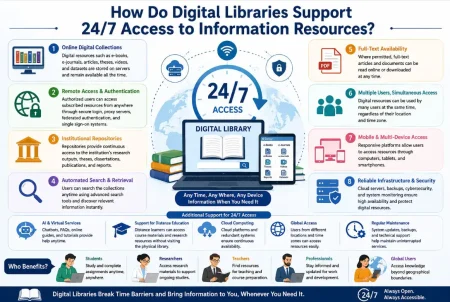
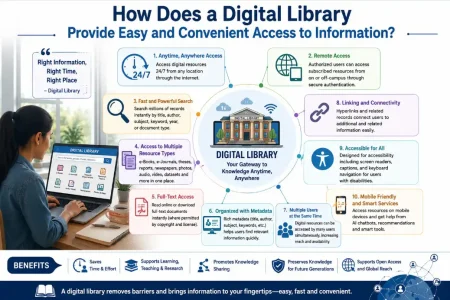
- Network-Based and Remote Access: Another major characteristic of digital libraries is their ability to provide network-based and remote access. Users do not necessarily need to visit the physical library building to use digital resources. Instead, resources can be accessed through the internet, an institutional network, or other communication technologies. This feature removes geographical barriers and enables users to obtain information from their homes, offices, classrooms, or even while traveling. For example, a university student living far from campus may search the university’s institutional repository and download an openly available thesis without visiting the library. Similarly, universities may provide authenticated remote access to licensed databases and electronic journals through systems such as proxy servers, federated authentication, or other institutional access mechanisms. Remote access has become particularly important for distance education, online programs, international research collaboration, and users who cannot easily visit a physical library.
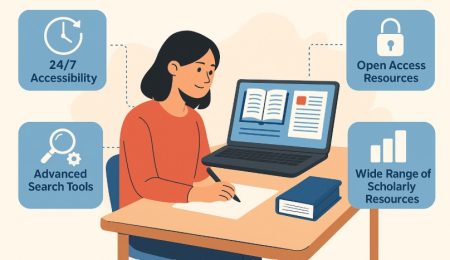
- Continuous Availability: Digital libraries can provide continuous access to information, often described as 24/7 availability. Traditional libraries generally operate according to established opening and closing hours, whereas online digital collections can remain accessible beyond those hours as long as the technological infrastructure is functioning. A student preparing an assignment late at night, for example, may still be able to search an institutional repository, read an electronic thesis, or access an openly available digital book. This flexibility allows users to obtain information at the time that best suits their individual needs. However, continuous availability depends on reliable servers, internet connectivity, system maintenance, authentication services, and other technical infrastructure. Therefore, digital libraries must maintain stable systems and appropriate technical support to ensure dependable access.
- Powerful Search and Information Retrieval: A major strength of digital libraries is their ability to offer advanced search and information retrieval capabilities. In a traditional library, users may need to search a catalogue and then physically locate materials on shelves. A digital library can allow users to search across thousands or millions of records within seconds. Searching may be performed using title, author, subject, keyword, publication year, document type, language, or other metadata fields. Some digital library systems also support full-text searching, which allows users to search for particular words or phrases appearing within documents. For example, a researcher studying artificial intelligence in academic libraries may enter relevant keywords and immediately retrieve matching theses, articles, reports, and conference papers. Search filters, Boolean operators, faceted browsing, sorting options, and relevance ranking can further improve information retrieval and help users narrow large sets of results.
- Support for Multiple Formats and Multimedia Resources: Digital libraries can store and provide access to a wide range of formats and media. They are not limited to textual documents such as books and journal articles. Digital collections may contain PDF documents, JPEG or TIFF images, MP3 audio files, video files, spreadsheets, datasets, maps, presentations, and various other digital formats. This multimedia capability is particularly useful for museums, archives, cultural heritage institutions, and educational organizations. For example, a digital heritage collection might contain scanned historical manuscripts, photographs of archaeological objects, recorded oral histories, traditional music, historical maps, and documentary videos. By integrating different forms of media within the same information environment, digital libraries can support a wider range of learning, teaching, research, and cultural preservation activities.
- Simultaneous and Global Access: Digital libraries can provide wide and geographically distributed access to information. A physical book can normally be used by only one borrower at a time, whereas many digital resources—particularly open-access materials—can potentially be accessed by numerous users from different locations at the same time. For example, an openly available research report stored in a university repository may simultaneously be viewed by researchers in Bangladesh, India, the United States, and the United Kingdom. This significantly increases the visibility and potential impact of institutional and scholarly resources. However, simultaneous access to commercially licensed e-books and databases may still be restricted by subscription agreements, user limits, or copyright conditions. Therefore, the extent of simultaneous access depends on the legal and licensing status of individual resources.
- Digital Preservation: A digital library is concerned not only with providing immediate access to information but also with ensuring its long-term preservation and accessibility. Digital materials face risks that are different from those affecting physical materials. Files may become corrupted, storage devices may fail, software may become obsolete, and older file formats may no longer be supported by modern systems. Digital libraries, therefore, need preservation strategies such as maintaining multiple backups, monitoring file integrity through checksums, using sustainable file formats, migrating files when necessary, maintaining preservation metadata, and storing copies in geographically separate locations. For example, if a university stores thousands of electronic theses on only one server, a serious hardware failure could result in substantial information loss. Maintaining redundant copies and regular backups greatly reduces this risk. Digital preservation is particularly important for institutional research output, rare collections, government records, and cultural heritage materials that must remain available for future generations.
- Interoperability: Interoperability refers to the ability of different digital library systems to communicate, exchange information, and work with one another. Since digital resources are often distributed among many institutions and platforms, interoperability allows users and systems to discover resources beyond a single repository. Digital libraries achieve interoperability through common metadata standards, protocols, identifiers, and technical frameworks. One important example is OAI-PMH (Open Archives Initiative Protocol for Metadata Harvesting), which enables external systems to harvest metadata from participating repositories. For example, if several universities maintain separate institutional repositories, an aggregator can harvest metadata from each repository and create a centralized discovery service. Users can then search for resources from multiple institutions through a single interface rather than searching each repository individually.
- Resource Sharing: Digital libraries facilitate resource sharing and collaboration among institutions. In the physical environment, sharing information may require transporting books, photocopying documents, or using traditional interlibrary loan services. Digital technologies can make certain forms of sharing and discovery faster and more efficient, subject to copyright and licensing restrictions. Libraries can collaborate by developing shared repositories, digitization projects, metadata networks, and consortial discovery systems. For example, several universities may contribute their theses and research publications to a common discovery portal, allowing researchers to identify scholarly materials produced across participating institutions. Resource sharing reduces unnecessary duplication, increases the visibility of collections, and supports wider access to knowledge.
- User-Centered Services: An effective digital library is designed according to the needs, abilities, and information-seeking behavior of its users. User-centered design means that the system should be easy to navigate, searchable, accessible, responsive, and understandable. Digital libraries may provide simple and advanced search options, browsing by subject or collection, filtering, downloading, citation information, accessibility features, help pages, online reference services, and personalized functions. For example, a university repository may allow a student to browse theses by department, year, author, subject, or degree program. Some digital libraries may also provide saved searches, alerts, recommendations, usage statistics, or multilingual interfaces. The objective is not merely to store information but to make that information easy for users to discover, access, understand, and use.
- Hyperlinking and Integration: Digital libraries are characterized by extensive use of hyperlinks and integration with other information systems. Digital objects can be connected with related resources, allowing users to move quickly between different types of information. For example, the record of a research article may link to the full-text document, the author’s profile, related research datasets, cited publications, or other works on the same subject. Digital libraries can also be integrated with library catalogues, discovery systems, learning management systems, research information systems, DOI services, and external databases. Such integration creates an interconnected information environment and enables users to move between related resources more efficiently.
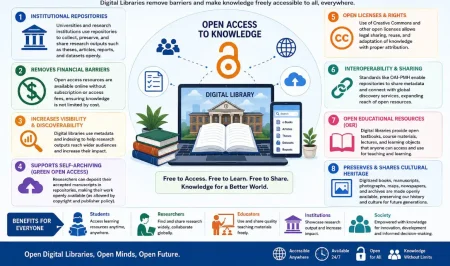
- Support for Open Access and Scholarly Communication: Many digital libraries, particularly institutional repositories, play an important role in supporting open access and scholarly communication. Open access aims to make scholarly information freely accessible online where copyright and other legal conditions permit. Universities may use digital repositories to preserve and disseminate theses, dissertations, conference papers, research reports, datasets, and permitted versions of faculty publications. For example, when a researcher deposits an eligible version of an article in an institutional repository according to the publisher’s policy, researchers elsewhere may be able to access it without a subscription. Digital libraries, therefore, help increase the visibility, discoverability, accessibility, and potential impact of scholarly work while supporting the broader dissemination of knowledge.
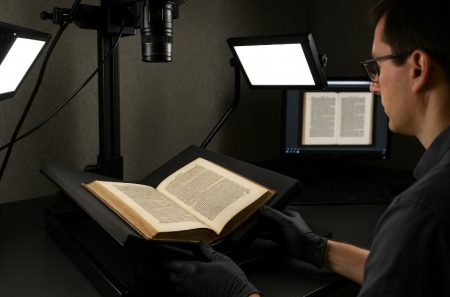
- Preservation and Access to Cultural Heritage: Digital libraries are also important tools for the preservation and dissemination of cultural heritage. Libraries, archives, museums, and cultural organizations possess rare books, manuscripts, newspapers, photographs, maps, artworks, recordings, and historical documents that may be fragile, unique, or geographically inaccessible. Digitization enables institutions to create high-quality digital representations of these materials and make them accessible to wider audiences while reducing unnecessary handling of the originals. For example, an old handwritten manuscript that is too fragile for regular physical use can be digitized and made available to researchers online. Projects such as Europeana demonstrate how digital technologies can bring together cultural heritage resources from many different institutions and make them discoverable through a common platform.
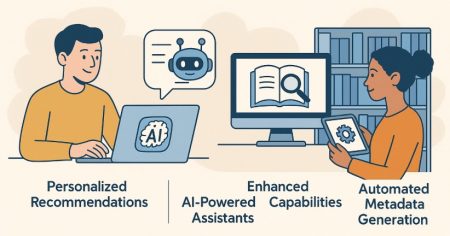
- Application of Emerging Technologies: Digital libraries continuously evolve with advances in information and communication technologies. Technologies such as artificial intelligence (AI), machine learning, natural language processing, semantic technologies, cloud computing, and conversational systems are increasingly being explored for digital library applications. AI can assist librarians with automatic metadata generation, document classification, subject identification, improved information retrieval, recommendation systems, and analysis of large digital collections. For example, an AI-supported system may analyze the content of a newly uploaded research paper and suggest appropriate keywords or subject terms for the metadata record. Similarly, a library chatbot can answer routine questions, guide users to appropriate collections, or explain how to locate electronic theses. These technologies can improve efficiency and user experience, although libraries must also carefully consider accuracy, privacy, copyright, transparency, bias, and other ethical issues.
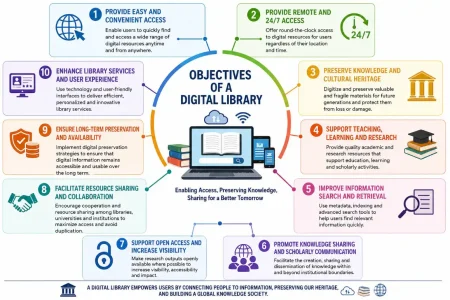
The major characteristics of a digital library demonstrate that it is much more than a collection of electronic documents. A true digital library combines digital collections, systematic organization, metadata, advanced information retrieval, remote access, multimedia resources, digital preservation, interoperability, resource sharing, user-centered services, open access, and appropriate technological infrastructure. At the same time, it applies established principles of librarianship to the digital environment. These characteristics enable digital libraries to overcome many geographical and physical limitations of traditional information services while expanding opportunities for education, research, scholarly communication, and cultural preservation.