
Automatic indexing is the process of assigning index terms to documents using computer-based algorithms rather than relying on human judgment. With the rapid growth of digital information, manual indexing has become increasingly time-consuming, costly, and challenging to scale. Automatic indexing addresses these issues by analyzing document content to identify significant words and phrases that represent their subject matter. Common techniques used for this purpose include term frequency analysis, statistical weighting, and natural language processing, which help extract and prioritize indexing terms. As a result, documents can be indexed quickly and consistently, allowing for faster organization and retrieval of large volumes of information.
In modern information retrieval systems, automatic indexing plays a crucial role in digital libraries, online databases, and institutional repositories. It enhances efficient searching by improving recall, enabling users to find relevant documents based on keywords and concepts present in the text. Although automatic indexing may not provide the same depth of analysis as professional indexers, ongoing advancements in artificial intelligence and machine learning have significantly improved its accuracy and contextual understanding. Consequently, automatic indexing is widely regarded as an essential component of contemporary information management systems, complementing traditional indexing methods and supporting scalable, user-centered access to information.
What is Automatic Indexing?
 Automatic indexing is the process of generating index terms for documents using computer-based systems, without direct human intervention. Instead of relying on professional indexers to read and analyze a document, automatic indexing employs algorithms to examine the text and identify significant words, phrases, or concepts that accurately represent its content. These systems typically use statistical techniques, such as term frequency analysis and TF-IDF weighting, along with natural language processing, to determine which terms are most relevant.
The selected terms are then assigned as index entries, allowing the document to be effectively organized and retrieved within an information retrieval system. Automatic indexing has become increasingly important in the digital era, where the volume of electronic documents far exceeds the capacity of manual indexing processes. It is widely used in digital libraries, online databases, search engines, and institutional repositories to enable fast, scalable access to information.
While automatic indexing may not fully replicate the intellectual depth of human indexing, modern advancements in artificial intelligence and machine learning have significantly enhanced its ability to recognize patterns, context, and semantic relationships. As a result, automatic indexing plays a crucial role in ensuring timely, consistent, and cost-effective access to large collections of digital information.
How Does Automatic Indexing Differ from Manual Indexing?
Automatic and manual indexing differ primarily in method, speed, consistency, and depth of analysis. Manual indexing is performed by trained human indexers who read and interpret a document to assign subject headings or keywords based on intellectual understanding. The indexer evaluates context, identifies implicit themes, resolves ambiguity, and selects standardized terms-often guided by controlled vocabularies or classification schemes. This process ensures high semantic accuracy and conceptual depth, but it is time-consuming, costly, and difficult to scale when dealing with large volumes of digital content.
In contrast, automatic indexing relies on computer algorithms to analyze textual content and extract significant terms without human intervention. It uses statistical techniques, pattern recognition, and natural language processing to identify frequently occurring or contextually important words and phrases. While automatic indexing offers speed, scalability, and consistency, making it highly suitable for digital libraries, online databases, and search engines, it may lack the nuanced interpretation and subject expertise of human indexers. Therefore, the key difference lies in intellectual judgment versus algorithmic processing, with manual indexing emphasizing conceptual understanding and automatic indexing focusing on efficiency and large-scale information management.
Objectives of Automatic Indexing
Automatic indexing has become a crucial technique in contemporary information management systems, particularly in digital libraries, online databases, institutional repositories, and search engines. As electronic information continues to grow rapidly, traditional manual indexing methods are no longer adequate for efficiently managing and retrieving large volumes of data. Automatic indexing tackles this challenge by employing computer algorithms to analyze the content of documents and assign appropriate index terms. The primary objectives of automatic indexing are outlined below:
- To Enhance Information Retrieval: The foremost objective of automatic indexing is to improve the efficiency and effectiveness of information retrieval. By extracting significant keywords and concepts from documents, the system ensures that user queries are accurately matched to relevant content. This facilitates faster access to needed information.
- To Handle Large Volumes of Data: In the digital era, institutions generate and store enormous quantities of documents daily. Automatic indexing enables systems to process and organize large collections of information quickly and systematically, which would be impractical through manual methods alone.
- To Ensure Consistency and Standardization: Manual indexing may vary depending on the experience and interpretation of individual indexers. Automatic indexing applies predefined algorithms and rules uniformly across all documents, ensuring consistency and reducing subjective variation.
- To Reduce Time and Operational Costs: Manual indexing requires trained professionals and considerable time investment. Automatic indexing significantly reduces labor requirements and speeds up the indexing process, making it more cost-effective for large-scale information systems.
- To Improve Search Precision and Recall: By systematically analyzing text and identifying key terms, automatic indexing enhances the relevance of search results. It helps improve precision (retrieving relevant documents) and recall (retrieving all relevant documents), thereby increasing overall user satisfaction.
- To Support Continuous and Real-Time Updates: Modern digital systems require constant updating as new documents are added. Automatic indexing enables real-time indexing, ensuring that newly uploaded content becomes searchable immediately.
- To Integrate with Advanced Technologies: Automatic indexing supports integration with technologies such as artificial intelligence, machine learning, and natural language processing. These advanced methods enhance contextual understanding and allow for more intelligent and semantic-based searching.
- To Complement Human Indexing: Although automatic indexing cannot fully replace intellectual analysis performed by professional indexers, it serves as a supportive tool. In many systems, automatic indexing provides preliminary indexing that can later be refined by human experts.
The primary goals of automatic indexing are to enhance efficiency, scalability, consistency, and accessibility in information retrieval systems. As digital collections grow, automatic indexing is essential for allowing users to quickly and effectively access relevant information. It has become a fundamental part of modern library and information management systems, supporting technological advancements and user-centered service delivery.
In Which Fields Is Automatic Indexing Commonly Used?
Automatic indexing is widely used across fields that require effective organization, search, and retrieval of large volumes of textual information. As digital content continues to grow rapidly, many sectors rely on automatic indexing to facilitate structured access to information. The following are some of the fields that commonly employ automatic indexing:
- Digital Libraries and Institutional Repositories: Digital libraries and institutional repositories use automatic indexing to organize electronic books, journal articles, theses, and research reports. By automatically extracting keywords and subject terms, these systems allow users to quickly and effectively retrieve academic materials. This feature is particularly valuable as thousands of new documents are added regularly.
- Online Databases and Academic Search Engines: Scholarly databases and research platforms use automated indexing to categorize articles and improve search accuracy. This enables efficient keyword-based searching, filtering, and ranking of academic content, which is crucial for multidisciplinary databases containing millions of research publications.
- Web Search Engines: Search engines rely heavily on automated crawling and indexing to discover and analyze web pages across the internet. Algorithms extract relevant terms and metadata from web content to ensure users receive search results that are pertinent to their queries.
- Publishing and Media Industry: In digital publishing, automatic indexing helps classify articles by topic, keywords, and themes. This improves content discoverability and enhances user navigation within extensive media collections.
- E-commerce Platforms: Online marketplaces use automatic indexing to categorize products based on their descriptions, features, and specifications. This functionality allows customers to efficiently search for and filter products by specific keywords and attributes.
- Legal and Government Information Systems: Legal databases and government document repositories apply automatic indexing to manage statutes, case laws, reports, and policy documents. Accurate indexing supports the quick retrieval of relevant legal information for professionals and researchers.
- Healthcare and Biomedical Databases: Medical research databases utilize automatic indexing to classify research articles, clinical reports, and patient records. Given the massive volume of biomedical literature published regularly, automatic indexing is essential for timely access to medical knowledge.
- Corporate Knowledge Management Systems: Organizations implement automatic indexing in internal knowledge bases, document management systems, and enterprise search platforms. This helps employees efficiently retrieve reports, policies, and project documents within the organization.
- Social Media and Big Data Analytics: Automatic indexing is also used to analyze social media posts, blogs, and user-generated content. It assists in trend analysis, sentiment analysis, and information categorization within large datasets.
Automatic indexing is utilized across a wide range of fields where efficient information organization and retrieval are critical. From academic libraries and web search engines to healthcare databases, it plays a fundamental role in managing digital information. Its capability to process large volumes of content quickly and consistently makes it indispensable in today’s information-driven society.
Why Is Automatic Indexing Important in Digital Libraries?
Automatic indexing is crucial for digital libraries because it efficiently organizes and retrieves large collections of electronic resources. Unlike traditional libraries, which systematically arrange physical materials on shelves, digital libraries can hold thousands-or even millions- of documents in electronic format. Managing such a vast amount of information manually is time-consuming and impractical. Automatic indexing solves this problem by using algorithms to analyze document content and assign relevant keywords or index terms, making resources searchable and easily accessible to users.
Another important aspect of automatic indexing is its scalability. Digital libraries continually expand as new research articles, theses, e-books, and reports are added. Automatic indexing allows newly uploaded materials to become searchable almost instantly, facilitating real-time access. Moreover, it promotes consistency in indexing by uniformly applying the same rules and techniques to all documents. This reduces variation and enhances the reliability of search results. Additionally, automatic indexing significantly improves the overall user experience by increasing search precision and recall. Users can quickly retrieve relevant documents through keyword-based searches, filters, and ranking systems. In an era of immediate access to information, automatic indexing plays a vital role in maintaining the efficiency, responsiveness, and sustainability of digital library services.
Methods of Automatic Indexing
Automatic indexing is a fundamental technique used in modern information retrieval systems, especially within digital libraries, online databases, and institutional repositories. This process employs computational methods to analyze document content and assign index terms without requiring direct human involvement. Over the years, various methods of automatic indexing have been developed, ranging from basic statistical approaches to advanced artificial intelligence techniques. The main methods are discussed below.
- Keyword Extraction Method: This is one of the earliest and simplest techniques used in automatic indexing. In this approach, the system scans a document’s entire text and identifies frequently occurring words, assuming that repetition indicates importance. Before selecting keywords, the system usually removes stop words—common words such as “the,” “and,” or “is” that do not add meaningful subject information. It may also apply stemming or lemmatization to reduce words to their root forms, ensuring that variations like “computing,” “computer,” and “computation” are treated as related terms. While this method is efficient and suitable for processing large collections of text, it primarily focuses on surface-level word occurrence and does not deeply analyze contextual meanings or conceptual relationships within the text.
- Statistical and Frequency-Based Methods: Statistical indexing methods enhance simple keyword extraction by employing mathematical models to assess the importance of terms within a document and across a collection of documents. One of the most widely used techniques is Term Frequency-Inverse Document Frequency (TF-IDF). Term frequency measures how often a word appears in a document, while inverse document frequency reduces the weight of terms that are commonly found across many documents. This approach ensures that frequently used but less informative words receive lower priority. Statistical methods improve retrieval precision by ranking terms based on their significance, making them highly effective in search engines and digital repositories. However, these methods still rely primarily on numerical patterns rather than semantic understanding.
- Linguistic or Natural Language Processing (NLP) Methods: Linguistic methods provide deeper analysis by incorporating NLP techniques. Instead of simply counting words, NLP-based indexing examines grammatical structures and sentence composition. The system uses part-of-speech tagging to identify nouns and noun phrases, which often represent key subjects in academic texts. It can also recognize compound terms like “information retrieval system,” rather than indexing each word separately. By analyzing syntactic relationships and context, NLP methods generate more meaningful and accurate index terms. These techniques are particularly valuable in scholarly environments where precise subject representation is critical. However, they require more computational resources and sophisticated programming.
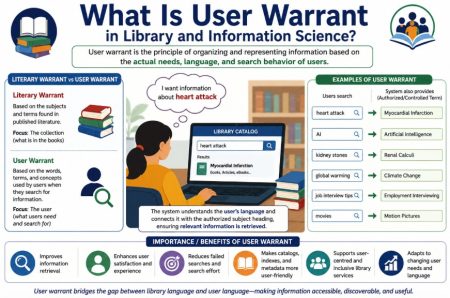
- Controlled Vocabulary-Based Indexing: Controlled vocabulary-based indexing combines automated processing with standardized subject terms. In this approach, extracted keywords are matched against an established thesaurus, subject heading list, or classification scheme. Instead of using unrestricted free-text terms, the system assigns approved descriptors from a predefined vocabulary. This method enhances consistency and minimizes issues caused by synonyms, spelling variations, or ambiguous terminology. For example, terms like “heart attack” and “myocardial infarction” can be linked under a standardized heading. Controlled vocabulary indexing is widely used in academic and specialized databases, where subject precision is essential. However, it relies on well-developed vocabularies and may need periodic updates to accommodate new terminology.
- Machine Learning-Based Methods: Machine learning-based indexing represents a more advanced and adaptive approach. In this method, the system is trained using labeled datasets in which documents are already categorized or indexed. The algorithm learns patterns from the training data and applies this knowledge to new, unseen documents. Supervised learning models classify documents into predefined categories, while unsupervised methods identify patterns without predefined labels. Deep learning techniques can analyze complex textual structures and detect subtle contextual relationships. Over time, machine learning systems improve their accuracy as they process more data. Although highly effective, these methods require substantial amounts of training data, computational power, and technical expertise.
- Semantic and Concept-Based Indexing: Semantic indexing goes beyond individual keywords to focus on a document’s meaning and conceptual structure. Instead of relying solely on word frequency, this method aims to identify underlying themes and the relationships between concepts. It can recognize synonyms, related terms, and contextual variations, enabling searches based on concepts rather than just simple keyword matches. For example, a search for “higher education” may return documents indexed under “university education” because of their semantic relationships. This approach enhances the recall and user satisfaction in large digital collections. However, achieving true semantic understanding remains a complex challenge and often relies on advanced artificial intelligence technologies.
- Hybrid Methods: Hybrid methods combine two or more indexing techniques to maximize effectiveness. For instance, a system may start with statistical keyword extraction and then refine the results using natural language processing (NLP) or machine learning algorithms. Controlled vocabulary matching can also be integrated to ensure standardization. This layered approach balances speed, scalability, and accuracy. Hybrid systems are particularly useful in digital libraries and institutional repositories, where large volumes of content need to be indexed quickly while maintaining subject relevance. By integrating multiple techniques, hybrid indexing offers a more comprehensive and reliable solution than using a single method.
The evolution of automatic indexing methods showcases the increasing complexity of digital information systems. These methods have progressed from simple frequency-based approaches to more advanced semantic and machine learning techniques, each playing a unique role in enhancing information retrieval efficiency. In contemporary digital libraries and academic databases, hybrid approaches are becoming increasingly popular because they merge computational efficiency with a deeper contextual understanding. As artificial intelligence continues to advance, we can expect automatic indexing methods to become even smarter, more adaptive, and more focused on user needs.
How Does Automatic Indexing Work in an Information Retrieval System?
Automatic indexing operates within an information retrieval (IR) system by systematically analyzing document content and converting it into searchable index terms that can be matched to user queries. The process begins when a document, such as a research article, report, or web page, is added to the system.
The indexing module first performs text preprocessing, which involves cleaning the text, removing stop words (e.g., “and,” “the,” “of”), and applying stemming or lemmatization to reduce words to their base forms. This step ensures that only meaningful and standardized terms are considered for indexing.
After preprocessing, the system identifies significant terms using statistical techniques such as term frequency (TF) or weighting schemes like TF-IDF. These methods determine which words are most important within and across the entire document collection. In more advanced systems, natural language processing (NLP) techniques are utilized to recognize noun phrases, detect contextual relationships, and extract meaningful multi-word expressions. Some systems also employ controlled vocabularies or subject thesauri to align the extracted terms with standardized descriptors.
Once relevant terms are selected, they are stored in an inverted index—a specialized data structure that links terms to the documents in which they appear. This structure enables the system to quickly retrieve documents when a user submits a search query. During the search process, the query undergoes a similar analysis as the documents, allowing the system to match the query terms against the indexed terms. The documents are then ranked based on relevance scores calculated through algorithms such as vector space models or probabilistic ranking methods.
How Does Machine Learning Improve Automatic Indexing?
Machine learning significantly enhances automatic indexing by enabling systems to move beyond simple word counting and statistical methods toward a more intelligent, adaptive understanding of textual content. Traditional automatic indexing methods often depend on term frequency or predefined rules, which may not capture the deeper contextual meaning of texts. In contrast, machine learning models are trained on large datasets of previously indexed documents. Through this training process, the system learns patterns, subject relationships, and term associations, enabling it to predict appropriate index terms for new documents with greater accuracy.
One of the main advantages of using machine learning in automatic indexing is its ability to recognize complex relationships between words and concepts. Instead of treating terms in isolation, machine learning models analyze the broader context in which words appear. For instance, they can differentiate between different meanings of the same word based on its usage, thereby reducing ambiguity. Supervised learning models classify documents into subject categories based on learned patterns, while unsupervised learning models identify clusters of related documents without predefined labels. Deep learning techniques further enhance this capability by uncovering semantic structures and conceptual similarities within texts.
Another important benefit of machine learning is its adaptability. As new terminology, research areas, and subject trends emerge, machine learning systems can be retrained or continuously updated to reflect these changes. This makes automatic indexing more dynamic and responsive compared to static rule-based systems. Additionally, machine learning improves the consistency and scalability of indexing, particularly in large digital libraries and institutional repositories where thousands of documents are added regularly.
How Is Automatic Indexing Used in OPAC Systems?
Automatic indexing is essential to the efficient operation of Online Public Access Catalog (OPAC) systems, as it facilitates searching and retrieval of library resources. In an OPAC environment, bibliographic records—which include titles, authors, subjects, abstracts, and keywords—are automatically processed to create searchable index entries. The system analyzes various metadata fields and, when available, full-text content to extract significant terms that accurately represent the intellectual content of each resource. These extracted terms are then organized into a structured index, typically in the form of an inverted index that links terms directly to their corresponding records.
When a user submits a search query in the OPAC, the system matches the query terms with the indexed terms stored in the database. Because automatic indexing has already structured and organized these terms, the OPAC can quickly retrieve relevant records. Modern OPAC systems may utilize weighting algorithms to rank results by relevance, ensuring that the most pertinent materials are displayed first. Some systems also implement stemming and synonym recognition to enhance search flexibility, allowing users to find materials even if they do not use the exact indexed terms.
Automatic indexing improves consistency and efficiency within OPAC systems. It reduces reliance on manual subject assignment and enables large collections to be processed systematically. In libraries with constantly expanding collections, automatic indexing guarantees that newly cataloged materials become instantly searchable. Ultimately, it enhances the discoverability of library resources, improves user satisfaction, and supports faster, more accurate information retrieval within the catalog system.
1 Comment
What is electronic indexing in library information science how to find to read and learn please tell me.