

What Is a “See” Reference in Library Cataloging and Indexing?
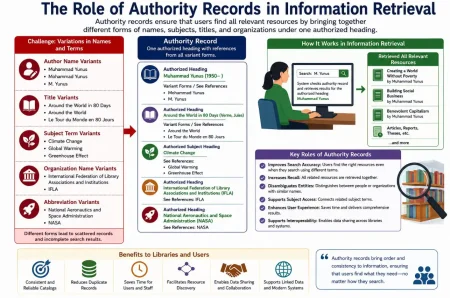
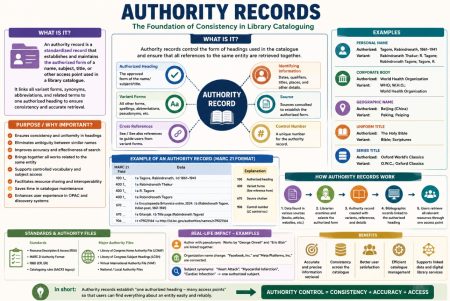
A “See” reference is a type of cross-reference used in library cataloging, indexing, and authority control to direct users from a non-preferred term (also known as an unauthorized, variant, or alternate term) to the preferred or authorized term under which library resources are cataloged or indexed. Instead of creating separate entries for different words or phrases that represent the same concept, a “See” reference points users to a single standardized heading. This approach ensures consistency in the organization of bibliographic records and allows users to retrieve all relevant materials through one authorized access point.
“See” references are particularly helpful for managing synonyms, abbreviations, acronyms, alternative spellings, old and new terminology, and various forms of personal or corporate names. As a result, they enhance search accuracy, reduce confusion, and facilitate efficient information retrieval in both traditional library catalogs and modern Online Public Access Catalogs (OPACs).
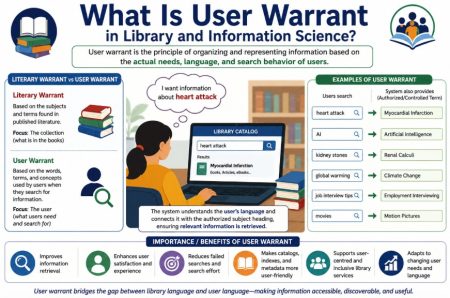
For example, if a user searches for “Cell Phones,” the catalog may display “Cell Phones — See Mobile Phones,” indicating that all related materials are cataloged under the authorized subject heading “Mobile Phones.” Similarly, a search for “Heart Attack” might direct users to “Myocardial Infarction,” while “Global Warming” might point to “Climate Change” if that is the preferred heading adopted by the cataloging authority. In library science, a search for “Cataloging” may lead users to “Cataloguing” (or vice versa) depending on the spelling standard followed by the institution.
Personal names often utilize “See” references as well. For instance, “Twain, Mark — See Clemens, Samuel Langhorne” directs users from the well-known pen name to the authorized form of the author’s name, if that is the established heading. Likewise, “IBM — See International Business Machines Corporation” guides users from the commonly used abbreviation to the organization’s official name.
These references are widely used in authority files, subject heading lists, bibliographic indexes, thesauri, and library catalogs to maintain uniformity and prevent duplicate or fragmented access points. By directing users to the correct authorized heading, “See” references simplify the search process and ensure that all relevant resources can be retrieved through a single, standardized entry. This makes them an essential component of effective cataloging, indexing, authority control, and knowledge organization in libraries and information centers.
What Is a “See Also” Reference?
A “See Also” reference is a type of cross-reference used in library cataloging, indexing, and authority control. It directs users from one authorized term to other related terms that may be relevant to their information needs. Unlike a “See” reference, which redirects users from a non-preferred term to a preferred or authorized term, a “See Also” reference does not replace the original heading. Instead, it encourages users to explore additional topics that are conceptually related, thereby broadening or refining their search.
This feature enhances information discovery by helping users identify associated subjects, broader concepts, narrower topics, or closely related fields that they might otherwise overlook. For example, a user searching for “Artificial Intelligence” may encounter references such as “See Also Machine Learning,” “Expert Systems,” and “Neural Networks,” directing them to related subjects that provide additional perspectives on the topic. Similarly, the subject heading “Libraries” may include “See Also Digital Libraries,” “Academic Libraries,” and “Library Automation,” enabling users to explore specialized aspects of librarianship. Searches for “Climate Change” may include “See Also Global Warming,” “Environmental Pollution,” and “Sustainable Development,” while “Diabetes” may lead users to related headings such as “Insulin,” “Blood Glucose,” and “Endocrine Diseases.”
“See Also” references are commonly found in library catalogs, subject heading lists, thesauri, bibliographic indexes, and authority records. They play an important role in improving information retrieval by revealing meaningful relationships between concepts and encouraging users to explore related areas of knowledge. In online public access catalogs (OPACs) and digital library systems, these references support more comprehensive literature searches, facilitate subject exploration, and enhance the overall user experience.
Where Are “See” and “See Also” References Commonly Used?
“See” and “See Also” references are commonly used in library cataloging, indexing, and knowledge organization systems to help users find information more accurately and efficiently. These cross-references appear whenever standardized vocabularies and authority control are used to arrange information resources. A “See” reference directs users from a non-preferred or alternative term to the authorized term, while a “See Also” reference connects users with related authorized terms that can further expand their search. Together, these references improve navigation, reduce confusion caused by varying terminologies, and enhance the overall effectiveness of information retrieval.
One of the most common places for these references is in library catalogs, especially in Online Public Access Catalogs (OPACs). For instance, if a user searches for “Motion Pictures,” they may be directed to “Films” if that is the authorized subject heading used by the library. Similarly, while searching for “Renewable Energy,” the catalog may display “See Also Solar Energy,” “Wind Energy,” and “Hydroelectric Power,” prompting users to explore related topics that may contain additional relevant resources.
Another important application is in subject heading lists, where controlled vocabularies ensure consistent indexing of library materials. These lists use “See” references to guide users from alternative expressions to standardized headings and “See Also” references to establish connections between related subjects. For example, the non-preferred term “Senior Citizens” might include the instruction “See Older People,” while the authorized heading “Nutrition” may include “See Also Diet Therapy,” “Food Habits,” and “Public Health.” Such references help users discover materials, even when they search using different terminology.
Authority files also extensively use these references to standardize personal names, corporate names, and uniform titles. For example, an author who has written under multiple names may have a “See” reference directing users from a pseudonym to the authorized form of the name. Similarly, a government agency that has changed its official name over time may include a “See” reference from the former name to the current authorized heading, ensuring that all publications remain accessible through a single entry.
Cross-references are equally valuable in indexes, abstracting services, and bibliographic databases. A printed index may include an entry such as “Bird Flu. See Avian Influenza,” directing readers to the standardized medical term. An online database may list “Renewable Resources” with “See Also Environmental Conservation” and “Sustainable Development,” allowing researchers to broaden their literature review by exploring related concepts. Additionally, “See” and “See Also” references are frequently found in encyclopedias, dictionaries, thesauri, glossaries, and digital repositories. For example, an encyclopedia entry for “Volcanoes” might include “See Also Earthquakes” and “Plate Tectonics,” while a thesaurus may direct users from “Automobiles” to the preferred term “Motor Vehicles.” These references encourage readers to explore related concepts and ensure that information can be found regardless of the terminology used.
1 Comment
Informative article for aLL LIS students and researchers.