What Is a Preferred Term?
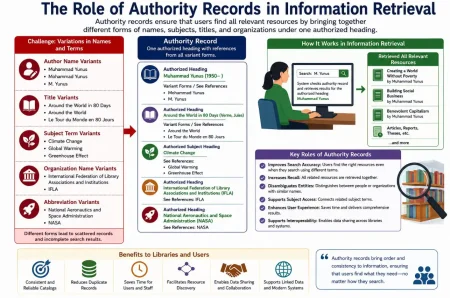
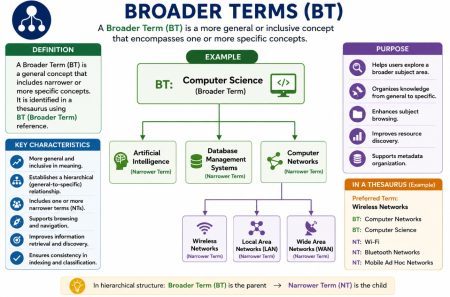
 A preferred term is a standardized or authorized word or phrase selected from among two or more synonymous or closely related terms to represent a specific concept within a controlled vocabulary, thesaurus, subject heading list, taxonomy, or other knowledge organization systems. It serves as the official term that catalogers, indexers, and information professionals consistently use when describing, organizing, and retrieving information resources. While multiple words may share similar meanings, only one is chosen as the preferred term to ensure uniformity and eliminate ambiguity. All alternative expressions, synonyms, abbreviations, variant spellings, and outdated terms are considered non-preferred terms and are linked to the preferred term through cross-references, often using a “Use” reference. For instance, if “Automobiles” is designated as the preferred term, users searching for “Cars” or “Motor Cars” will be directed to “Automobiles.” Similarly, “Cellular Telephone” may be selected as the preferred term, with “Cell Phone” and “Mobile Phone” treated as non-preferred terms.
The primary purpose of a preferred term is to enhance the consistency and accuracy of information organization and retrieval. Without standardized terminology, the same subject might be indexed under different names, making it challenging for users to locate all relevant resources. By assigning a single authorized term to represent each concept, libraries, databases, digital repositories, and search systems can retrieve all related records, regardless of which synonym a user initially searches for. For example, one book on climate change might be indexed under “Global Warming,” while another is indexed under “Climate Change.” If these terms are not standardized, a user searching for only one of them may overlook relevant materials. By selecting “Climate Change” as the preferred term and linking “Global Warming” as a non-preferred term, all related resources can be retrieved through the authorized heading.
Preferred terms are widely utilized in subject indexing, library cataloging, thesaurus construction, metadata creation, authority control, and digital information retrieval systems. For example, in a university library catalog, all books about heart diseases may be indexed under the preferred term “Cardiovascular Diseases,” instead of using separate terms like “Heart Diseases” or “Heart Disorders.” In an agricultural database, “Maize” may be chosen as the preferred term, while “Corn” is treated as a non-preferred term, depending on the adopted standard. This consistent use of authorized terminology allows users to retrieve all relevant records with a single search.
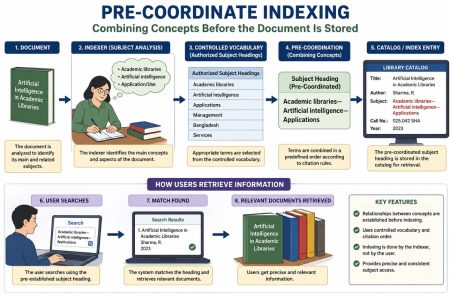
Preferred terms form the foundation of controlled vocabularies by ensuring that each concept is represented consistently across records, regardless of who performs the indexing. This standardization reduces duplication, improves search precision and recall, facilitates resource discovery, and supports interoperability between different information systems. As language evolves and new concepts emerge, preferred terms may be revised or replaced to reflect current usage while maintaining links to older or alternative terminology. For instance, many modern vocabularies now prefer “Artificial Intelligence” over older or less commonly used expressions like “Machine Intelligence” when representing the broader field. Consequently, preferred terms remain an essential component of modern knowledge organization, enabling users to locate information more efficiently, accurately, and consistently across both traditional libraries and digital information systems.
Why Are Preferred Terms Important in Knowledge Organization?
Preferred terms are essential for knowledge organization because they provide a standardized and consistent method for representing concepts across library catalogs, databases, digital repositories, and other information systems. In any collection of information, multiple words or phrases may refer to the same concept. If different catalogers or indexers use varying terms for the same subject, users may struggle to find all relevant resources. Preferred terms address this issue by establishing a single authorized term for each concept, linking all synonymous or variant expressions to that term. This standardization ensures that information is organized uniformly, regardless of who creates the bibliographic or metadata records.
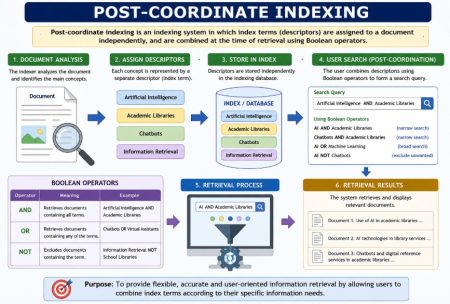
One primary advantage of preferred terms is the improvement in information retrieval. When all resources on the same subject are indexed under a single authorized term, users can locate relevant materials more efficiently without needing to search through multiple synonyms. For example, a controlled vocabulary may designate “Motion Pictures” as the preferred term, considering “Movies” and “Films” as non-preferred terms. A user searching for any of these expressions will be directed to the preferred term, ensuring that all related resources are retrieved through a single search.
Preferred terms also reduce ambiguity by clearly distinguishing between concepts that share the same word or phrase. Some words have multiple meanings depending on the context, which can cause confusion during indexing and searching. For instance, the word “Mercury” may refer to a chemical element, the planet, or the Roman deity. A controlled vocabulary assigns a distinct preferred term to each concept, allowing catalogers to describe resources accurately and helping users retrieve the information they need.
Another important role of preferred terms is maintaining consistency in cataloging and indexing. Libraries, archives, and information centers often have multiple professionals creating bibliographic records over many years. Without standardized terminology, similar resources may be described using different subject terms. For example, one cataloger might use “Electronic Books,” while another opts for “E-books.” By selecting one preferred term and requiring all catalogers to use it, the catalog remains consistent, making it easier for users to browse and search the collection.
Preferred terms also facilitate resource sharing and interoperability among different information systems. Libraries frequently exchange bibliographic records through national and international cataloging networks. When institutions adopt the same controlled vocabulary, records can be integrated and searched more effectively. For instance, if multiple libraries use “Renewable Energy Sources” as the preferred subject term instead of alternatives like “Green Energy” or “Clean Energy,” users searching across union catalogs or shared databases will receive more comprehensive and consistent results.
Another significant benefit is that preferred terms support user navigation by connecting related concepts through cross-references. When users search using a non-preferred term, the system can redirect them to the authorized term, reducing frustration and enhancing the search experience. For example, a user searching for “Garbage Disposal” may be directed to the preferred term “Waste Management,” enabling access to a broader and more organized collection of relevant resources. Additionally, preferred terms improve the quality of metadata and bolster the performance of modern information retrieval systems. Search engines, digital libraries, institutional repositories, and discovery platforms rely on standardized subject terminology to accurately group related resources and deliver precise search results. For example, a digital repository may use “Distance Education” as the preferred term to organize research articles, while linking alternative expressions like “Online Learning,” “Remote Learning,” and “Virtual Education” through cross-references. This approach ensures that users can discover all relevant materials, even when they search using different terminology.