What Is a Non-Preferred Term?
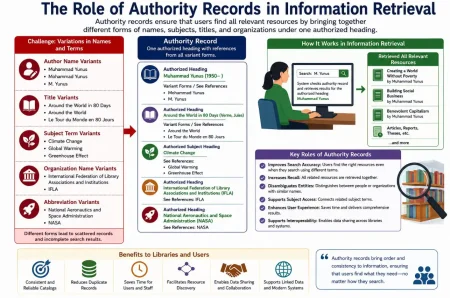
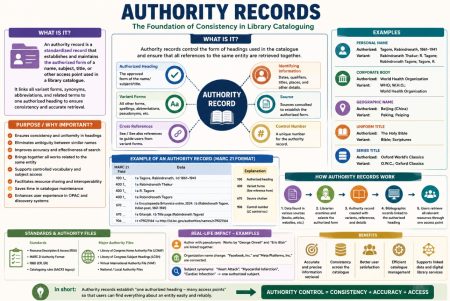
A non-preferred term is a word or phrase that is not officially designated as the authorized term to represent a concept in a controlled vocabulary, thesaurus, subject heading list, taxonomy, or other knowledge organization system. While a non-preferred term may have the same or very similar meaning as the authorized concept, it is not used for indexing, cataloging, or creating metadata. Instead, it serves as an alternative access point, directing users to the corresponding preferred term through a cross-reference, typically indicated by a “Use” reference. This system ensures that all resources related to a particular subject are organized under one standardized term while still allowing users to search using familiar or alternative expressions.
 Non-preferred terms include synonyms, abbreviations, acronyms, variant spellings, outdated terminology, colloquial expressions, and alternative names that users might commonly use when searching for information. For example, if “Periodicals” is chosen as the preferred term in a controlled vocabulary, alternative expressions such as “Magazines,” “Serial Publications,” and “Journals” (when used in the same general context) may be classified as non-preferred terms linked to the authorized heading. Similarly, a vocabulary might designate “Faculty Members” as the preferred term, while “Teachers,” “Lecturers,” and “Academic Staff” are recorded as non-preferred terms if they represent the same concept within that system. These relationships help maintain consistency while accommodating the various terms that users may employ.
The primary purpose of non-preferred terms is to enhance information retrieval by leading users from the terms they enter into the search system to the standardized terminology used for indexing. Users often search using everyday language, regional expressions, abbreviations, or older terminology instead of the exact authorized subject heading. Non-preferred terms serve as navigation tools that bridge this gap. For instance, if a user searches for “Blood Pressure,” they may be redirected to the preferred term “Hypertension” if the controlled vocabulary has defined the latter as the authorized subject for that concept. Similarly, someone searching for “TV” may be directed to the preferred term “Television.” This means users can access all relevant resources without needing to know the exact terminology adopted by the information system.
Non-preferred terms are also crucial for maintaining consistency across library catalogs, bibliographic databases, institutional repositories, and digital libraries. Since multiple catalogers and indexers may describe similar resources over many years, using a single preferred term while recording alternative expressions as non-preferred terms prevents inconsistent indexing and duplicate subject headings. For example, rather than indexing some records under “E-mail” and others under “Electronic Mail,” the controlled vocabulary designates one as the preferred term and treats the other as a non-preferred term. This practice ensures that all related resources are grouped together, making searching and browsing more effective.
Another important role of non-preferred terms is to enhance the usability of controlled vocabularies by reflecting the diversity of language. Terminology evolves over time as new concepts emerge, professional practices change, and society adopts new expressions. Words that were once commonly used may become outdated, while new synonyms and abbreviations become popular. Instead of removing these familiar expressions, controlled vocabularies retain them as non-preferred terms and link them to the current preferred term. This approach enables users with different backgrounds, levels of expertise, or regional language preferences to successfully locate information, regardless of the terminology they use.
In modern knowledge organization systems, non-preferred terms are essential for supporting subject indexing, authority control, metadata quality, semantic searching, and information retrieval. They help reduce ambiguity, improve search precision and recall, and create a user-friendly search experience by connecting users’ language with standardized indexing terminology. Together with preferred terms, non-preferred terms ensure that information is organized consistently while remaining accessible through multiple linguistic pathways. Consequently, they are a fundamental component of controlled vocabularies and play a vital role in making library catalogs, digital repositories, and other information systems more accurate, efficient, and user-centered.
How Are “Use” and “Used For (UF)” References Associated with Non-Preferred Terms?
“Use” and “Used For (UF)” references are crucial cross-reference tools in controlled vocabularies, thesauri, and subject heading lists. They define the relationship between preferred terms and non-preferred terms, guiding users to the authorized terminology used for indexing and cataloging. These references promote consistency in knowledge organization and facilitate information retrieval for users who may search using alternative words, synonyms, abbreviations, or outdated terms.
A “Use” reference accompanies a non-preferred term and instructs users to search using the corresponding preferred term. It informs users that the term they entered is not the authorized term and provides the correct term instead. For example, if “Smartphones” is the preferred term, a user searching for “Mobile Phones” may see the instruction:
- Mobile Phones → Use Smartphones
Other examples include:
- College Libraries → Use Academic Libraries
- Web Pages → Use Websites
- Distance Learning → Use Distance Education
These references ensure that all resources related to a concept are indexed under one standardized heading, preventing the creation of duplicate or fragmented subject entries.
Conversely, a “Used For (UF)” reference appears with the preferred term and lists all the non-preferred terms that point to it. It informs users and catalogers which alternative expressions, synonyms, abbreviations, or variant spellings have been replaced by the authorized term. For example, the preferred term may appear as follows:
Smartphones
- UF Mobile Phones
- UF Cell Phones
- UF Mobile Devices (when specifically referring to smartphones)
Another example is:
- Academic Libraries
- UF College Libraries
- UF University Libraries (treated as synonymous within a particular vocabulary)
Similarly:
- Websites
- UF Web Pages
- UF Internet Sites
The UF references show that several alternative expressions represent the same concept and should be indexed under a single preferred term.
Together, “Use” and “Used For (UF)” references create a two-way navigation system within a controlled vocabulary. The “Use” reference directs users from a non-preferred term to the preferred term, while the “UF” reference indicates which alternative expressions correspond to the preferred term. This reciprocal relationship benefits both users and information professionals. Users can easily find the correct subject heading, even if they search using everyday language or outdated terminology, while catalogers and indexers can consistently apply authorized terms across all records.
These references also enhance search precision and recall in library catalogs, bibliographic databases, digital repositories, and discovery systems. For instance, a researcher searching for “Online Shopping” may be redirected through a “Use” reference to the preferred term “Electronic Commerce.” Once the preferred term is identified, the UF references reveal other alternative expressions like “E-commerce” and “Internet Commerce.” Consequently, all resources related to the concept are retrieved together, regardless of the initial search term used.
In internationally recognized controlled vocabularies, such as the Library of Congress Subject Headings (LCSH) and Medical Subject Headings (MeSH), “Use” and “Used For (UF)” references play a central role in maintaining standardized terminology and supporting efficient information retrieval. They reduce ambiguity, prevent inconsistent indexing, enhance metadata quality, and improve interoperability among information systems. By linking non-preferred terms with their corresponding preferred terms, these cross-references ensure that users can quickly and accurately discover relevant information while preserving consistency throughout the knowledge organization system.