Library Without Walls in the Digital Age
The term “Library Without Walls” in the digital age refers to a modern library model that transcends physical buildings and geographical boundaries by delivering information and services through digital platforms. Traditionally, libraries were defined by their walls-printed collections, reading rooms, fixed service hours, and in-person assistance. In contrast, a library without walls operates beyond these limitations, providing 24/7 access to electronic books, online journals, institutional repositories, multimedia resources, and virtual reference services. Through internet connectivity, remote authentication systems, and cloud-based library management tools, users can access scholarly content from home, the workplace, or any location worldwide.
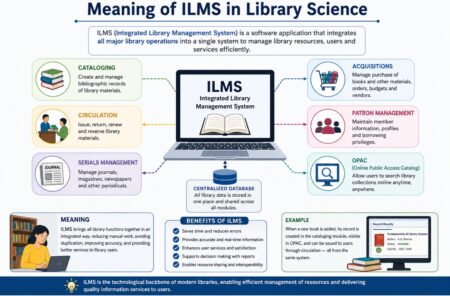
In this context, the library becomes less about a physical space and more about an integrated digital ecosystem. Technologies such as discovery tools, online public access catalogs (OPAC), artificial intelligence–powered chatbots, and remote learning platforms enable seamless information retrieval and user support. The concept also emphasizes inclusivity and accessibility, ensuring that distance learners, researchers in remote areas, and individuals with mobility challenges can equally benefit from library resources. However, the idea does not necessarily eliminate physical libraries; rather, it expands their reach and impact. A library without walls represents the evolution of librarianship-maintaining its fundamental mission of providing equitable access to knowledge while adapting to technological advancements and changing user expectations in the digital era.
Evolution from Traditional Library to a Virtual or Borderless Model
The concept of a traditional library has gradually evolved from a primarily physical, location-bound institution into a dynamic, virtual, and borderless knowledge environment. Historically, libraries were defined by tangible collections: printed books, bound journals, card catalogues, and reference desks that required users to be physically present within the building. For example, students once had to visit the library to search a card catalog, locate a call number, and manually retrieve a book from the shelves. Interlibrary loan requests were processed through paper forms, and reference assistance was available only during service hours. The library experience was therefore closely tied to its physical walls.
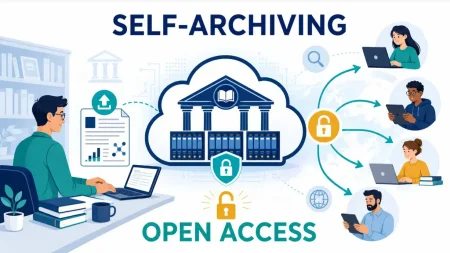
With the introduction of computerized catalog systems and Online Public Access Catalogs (OPACs), libraries began shifting toward digital access. Users could search holdings electronically rather than browse drawers of catalog cards. The next major transformation occurred with the growth of electronic journals and e-books. Instead of consulting printed volumes of academic journals, researchers can access databases and online scholarly platforms from any internet-enabled device. Remote authentication systems further strengthened this evolution by allowing students and faculty to log in from home or abroad and access subscribed resources without being on campus. Institutional repositories provide another clear example of this shift, as universities now archive theses, dissertations, and research articles online, making them globally accessible rather than confined to physical archives.
More recently, the integration of artificial intelligence and cloud-based technologies has reinforced the borderless model. Virtual reference services, email consultations, and AI-powered chatbots enable users to receive assistance at any time, even outside regular service hours. Digital document delivery services allow requested articles to be sent electronically instead of requiring physical collection. Additionally, virtual workshops, online information literacy sessions, and video tutorials have replaced many in-person training programs.
In this evolved framework, libraries are no longer constrained by geography or time. While physical spaces still play a crucial role in fostering collaboration, study, and community engagement, the modern library increasingly operates as a hybrid knowledge hub. This means it combines traditional services with digital infrastructure, ensuring seamless and equitable access to information beyond its physical walls.
Is a Library Without Walls a Physical Transformation, a Technological Shift, or Both?
A Library Without Walls is best understood as both a physical transformation and a technological shift, rather than solely one or the other. On the technological side, the concept is driven by advancements such as digital collections, cloud-based library systems, remote authentication tools, artificial intelligence applications, and online discovery platforms. For example, the transition from printed journals to electronic databases allows users to access scholarly materials from any location with an internet connection. Virtual reference services, AI-powered chatbots, institutional repositories, and digital document delivery systems further demonstrate how technology enables libraries to extend services beyond their physical buildings. In this sense, technology forms the backbone of the borderless library model.
However, the transformation is also physical and structural. As digital access expands, the role of the physical library building evolves. Instead of functioning primarily as a storage space for printed collections, the library increasingly becomes a collaborative learning environment, technology hub, and community space. Many libraries have reduced print stacks to create study zones, group discussion rooms, multimedia labs, and innovation spaces. This redesign reflects a shift in how space is utilized, aligning physical infrastructure with changing user needs.
Therefore, a library without walls represents a dual transformation. Technologically, it removes geographical and temporal barriers to information access. Physically, it redefines the purpose of library spaces within academic and public institutions. Together, these changes create a hybrid model in which libraries maintain their foundational mission of providing equitable access to knowledge while adapting to the demands of a digitally connected world.
How Does This Model Redefine The Role Of Librarians?
The Library Without Walls model significantly redefines the role of librarians, expanding their responsibilities beyond the management of physical collections into digital facilitation, technological innovation, and user-centered knowledge support. In traditional library settings, librarians were primarily engaged in cataloging, shelving, circulation management, and providing face-to-face reference services. While these duties remain important, the shift toward digital platforms has repositioned librarians as active mediators between users and complex online information systems.
In a borderless library environment, librarians serve as digital research consultants, assisting users in navigating electronic databases, institutional repositories, and discovery tools. For example, rather than simply guiding a student to a specific shelf, a librarian may now help refine advanced search strategies, recommend suitable academic databases, provide training on citation management software, or support remote access authentication. They increasingly design and deliver virtual information literacy sessions, webinars, and online tutorials to ensure users can effectively evaluate and use digital resources.
The integration of artificial intelligence, automated catalog systems, and virtual reference services requires librarians to take on roles in system management, data analysis, and knowledge base development. They are involved in designing content for chatbots, managing digital preservation initiatives, and ensuring compliance with copyright and licensing agreements. In this evolving landscape, librarians are not just service providers; they are strategic partners in research, digital scholarship, and academic innovation. As a result, the concept of a “library without walls” enables librarians to become technologically skilled information professionals who blend traditional expertise with digital competencies, thereby supporting equitable and seamless access to knowledge.