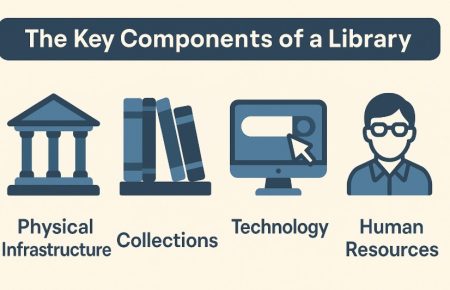
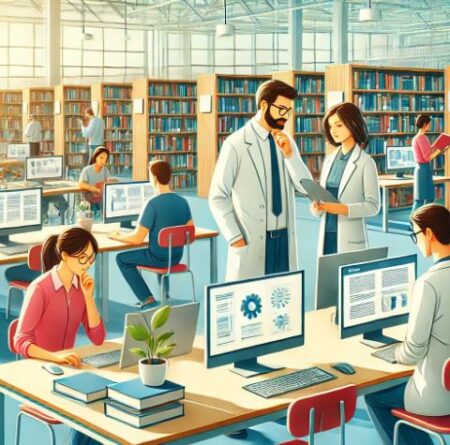
Modern libraries function as dynamic knowledge hubs in the digital era by blending traditional information services with advanced technologies to support lifelong learning, research, and community engagement. Instead of serving merely as repositories of books, today’s libraries operate as interconnected platforms where information is created, shared, preserved, and accessed in multiple formats. They provide seamless access to vast digital resources, including e-journals, e-books, online databases, institutional repositories, and multimedia collections, ensuring that users can retrieve information at any time and from anywhere. Libraries also integrate innovative tools, such as AI-driven chatbots, RFID-based self-service systems, digital archives, and virtual reference services, to enhance the user experience and streamline operations. Furthermore, they offer interactive learning spaces, maker labs, digital commons, and research support centers that encourage collaboration and knowledge creation. Through workshops, training sessions, and community programs, libraries promote digital literacy, research skills, and critical thinking, enabling users to navigate the complexities of the digital world. By upholding principles of open access, inclusivity, and ethical information use, modern libraries ensure that knowledge remains accessible and trustworthy. In these ways, libraries in the digital era transcend physical boundaries and become vibrant knowledge hubs that connect people, ideas, and technology to strengthen society.
Libraries as Knowledge Hubs
Libraries today have transformed into dynamic knowledge hubs that play a central role in strengthening education, research, and community development. Unlike their earlier identity as quiet repositories of books, modern libraries operate as multifunctional ecosystems where knowledge is created, organized, preserved, and shared across diverse platforms. This transformation is driven by rapid technological advancements and changing user expectations. Libraries now integrate digital tools, such as online databases, institutional repositories, AI-powered chatbots, and virtual learning platforms to provide seamless access to information beyond physical boundaries. Users can explore e-books, scholarly journals, multimedia resources, and open educational materials from anywhere and at any time, making libraries essential pillars of digital learning environments.
As knowledge hubs, libraries emphasize user-centered services that respond to the evolving academic and social needs of their communities. They offer personalized research consultations, literacy workshops, reference services, and training programs that empower individuals to navigate complex information landscapes. These initiatives not only support academic success but also strengthen skills such as critical thinking, media literacy, and responsible information use; competencies that are vital in an era marked by misinformation and data overload. Libraries also foster collaborative learning by providing meeting rooms, research commons, makerspaces, and digital labs where students, faculty, and community members can work together, share ideas, and create new knowledge.
Another defining element of libraries as knowledge hubs is their unwavering commitment to inclusivity and equitable access to information. They remove financial and technological barriers by offering free access to information resources, high-speed internet, and digital tools that many individuals may not otherwise have access to. Public libraries often bridge the digital divide by offering community ICT training, while academic libraries support research visibility through open-access repositories and publishing assistance. These efforts ensure that knowledge is not restricted to privileged groups but is shared broadly to uplift society. In addition to supporting learning and innovation, libraries play a crucial role in preserving cultural heritage and institutional memory. Through digitization projects, archives, and special collections, libraries safeguard rare manuscripts, historical documents, and local knowledge that contribute to the preservation of identity and continuity. Their stewardship ensures that valuable information remains accessible to future generations while supporting research, teaching, and cultural awareness in the present.
Overall, libraries serve as powerful knowledge hubs by integrating technology, fostering community collaboration, and promoting ethical and inclusive access to information. They empower individuals, enhance educational outcomes, and strengthen the social fabric by ensuring that knowledge flows freely across communities. In the digital era, their importance is greater than ever, as they provide guidance, resources, and learning opportunities that help individuals navigate an increasingly complex world. Through their evolving roles, libraries continue to stand as trusted institutions that connect people with ideas, technology, and one another, ultimately contributing to a more informed and resilient society.