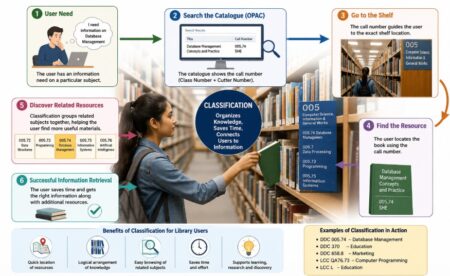
Library classification is essential for helping users find resources quickly and efficiently by organizing library materials based on their subject content. Rather than simply arranging books…
Library classification is essential for helping users find resources quickly and efficiently by organizing library materials based on their subject content. Rather than simply arranging books…
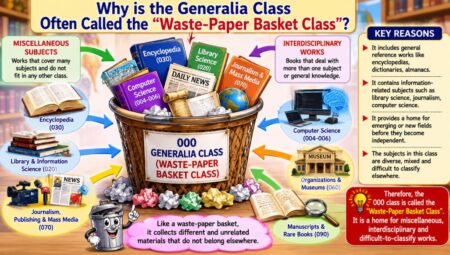
The Generalia Class (000–099) in the Dewey Decimal Classification (DDC) system is often referred to as the “Waste-Paper Basket Class.” This term reflects its role as…

What is Library Classification? Library classification is the process of organizing library materials based on their subject matter and assigning specific class numbers or symbols. This…
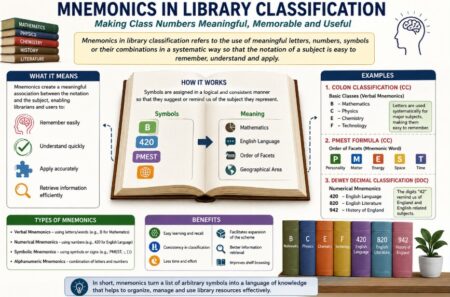
Mnemonics in Library Classification Mnemonics in library classification refer to techniques or devices used to make classification notations easier to remember, understand, and apply. The term…
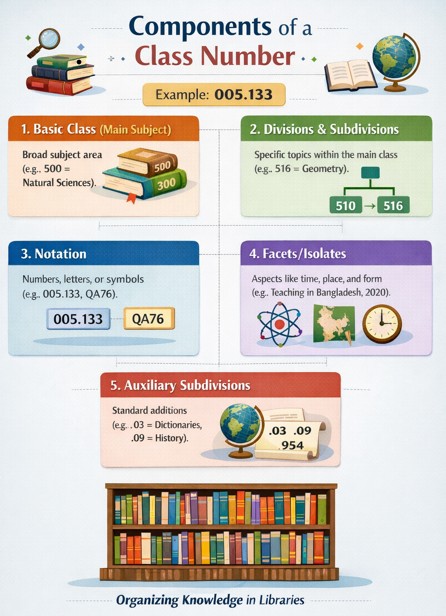
What is a Class Number in Library Classification? A class number is a fundamental element of library classification that represents the subject or topic of a…

Library Classification System A library classification system is a methodical approach to organizing library resources- including books, journals, and digital materials- into structured categories based on…

The absence of call numbers would severely disrupt the systematic arrangement of library materials, as call numbers provide a structured framework for organizing resources according to…

What is Subject-Based Arrangement in a Library Collection? Subject-based arrangement in a library collection refers to the systematic organization of library materials according to their subject…
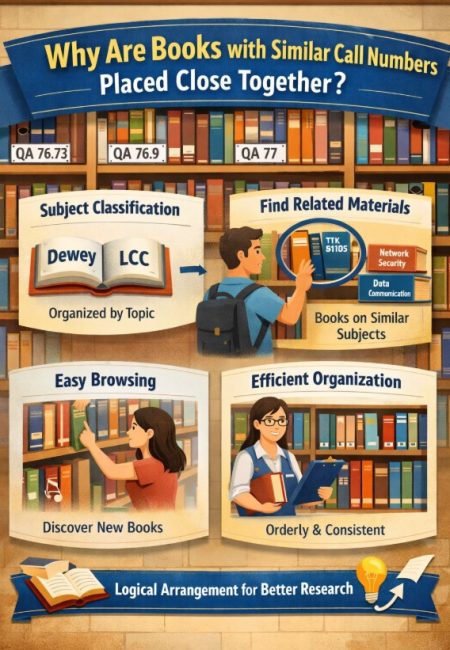
Why Are Books with Similar Call Numbers Placed Close Together? Books with similar call numbers are placed close together in a library because call numbers reflect…
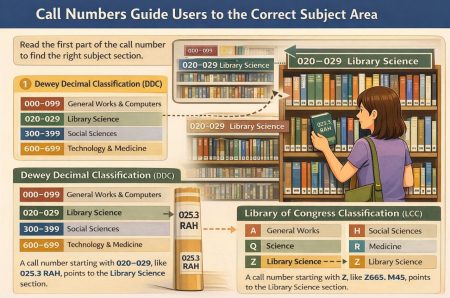
How Does the Call Number Guide Users to the Correct Subject Area? A call number guides users to the correct subject area by encoding the subject…