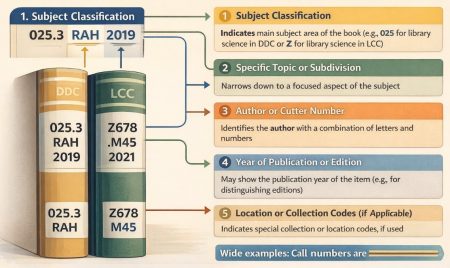
A call number is more than just a label on a book spine; it is a carefully structured code that conveys multiple layers of information about…
A call number is more than just a label on a book spine; it is a carefully structured code that conveys multiple layers of information about…
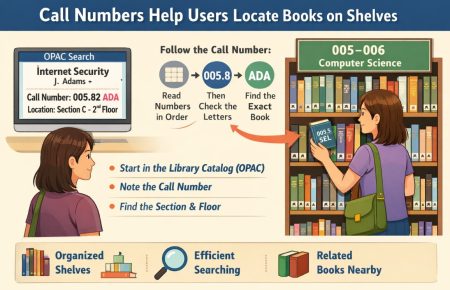
What Is a Call Number in a Library System? A call number is a unique alphanumeric code assigned to each item in a library collection to…
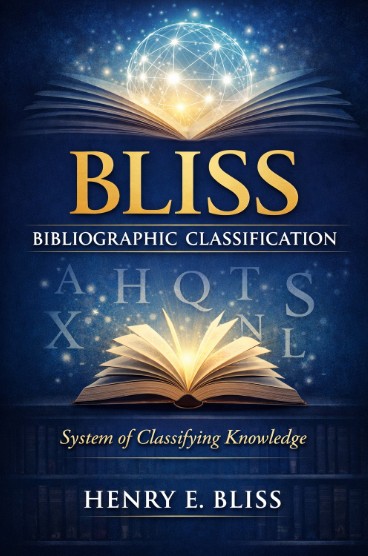
Bliss Bibliographic Classification (BBC) Bliss Bibliographic Classification (BBC) is a subject-based library classification system developed by the American librarian and classification theorist Henry Evelyn Bliss in…
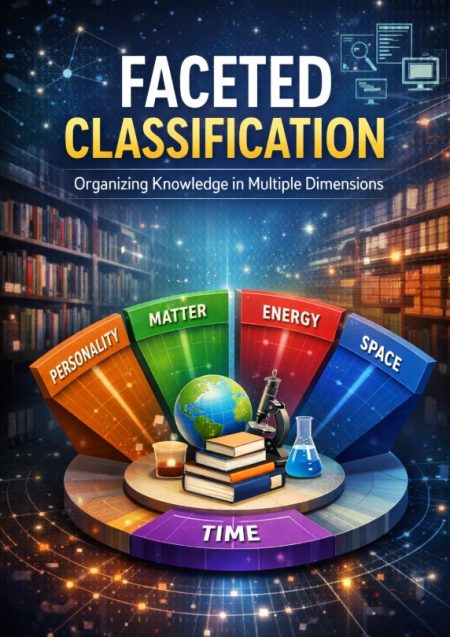
What is Faceted Classification? Faceted classification is a systematic method of organizing knowledge in which a subject is analyzed into several clearly defined and mutually exclusive…
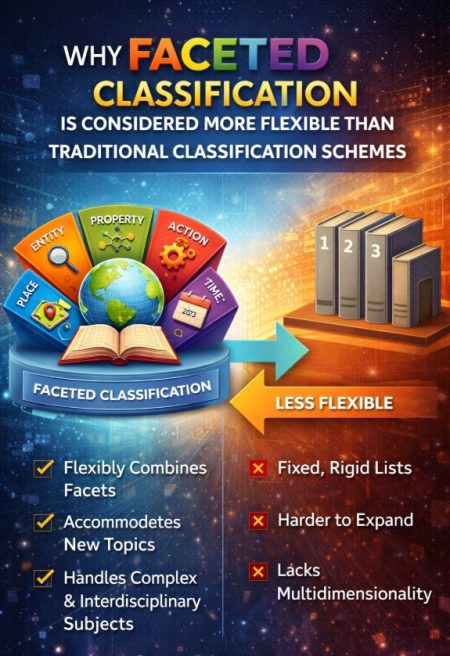
Faceted classification is widely regarded as more flexible than traditional classification schemes because it is designed to accommodate the dynamic, complex, and evolving nature of knowledge.…
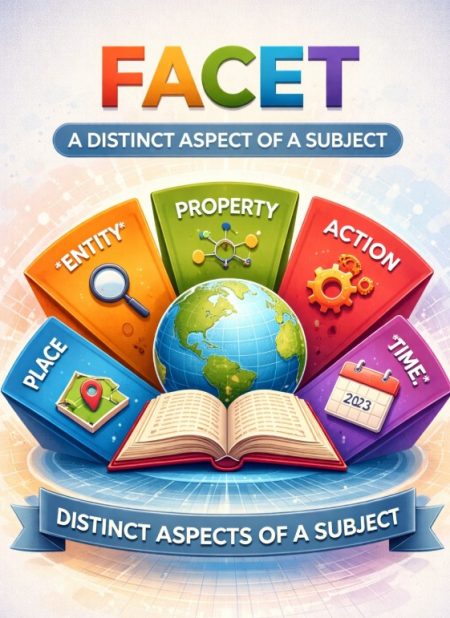
In library classification, a facet refers to a clearly defined and mutually exclusive aspect or component of a subject that represents one particular characteristic or dimension…
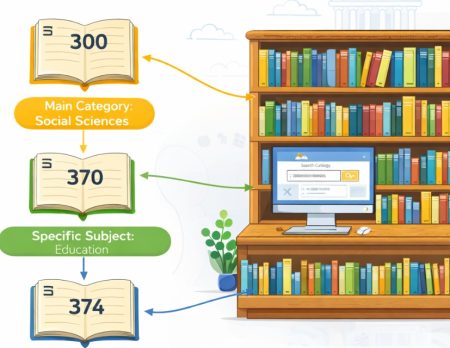
Hierarchical classification is a fundamental approach to organizing knowledge in which subjects are arranged in a systematic order from broader concepts to more specific topics. This…

PMEST is a theoretical framework introduced by S. R. Ranganathan for subject analysis in library classification, especially in faceted classification and Colon Classification. PMEST stands for…
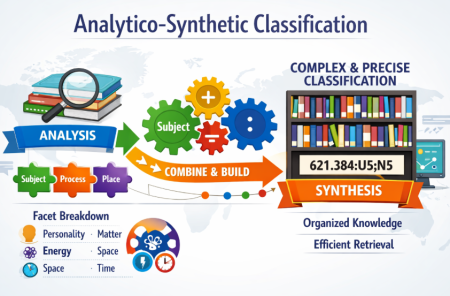
Analytico-Synthetic Classification is a fundamental approach to knowledge organization in library and information science that emphasizes systematic subject analysis and logical construction of class numbers. Unlike…
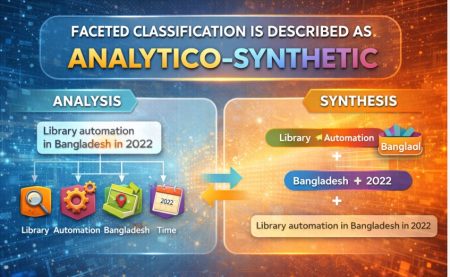
Faceted classification is described as an analytico-synthetic system because it is built upon two interrelated and systematic processes: subject analysis and subject synthesis. This dual approach…