A call number is more than just a label on a book spine; it is a carefully structured code that conveys multiple layers of information about a library item. Its primary purpose is to help users and library staff identify the subject of a book and locate it precisely on the shelves. Although the exact format of a call number depends on the classification system used, most call numbers contain several common informational elements.
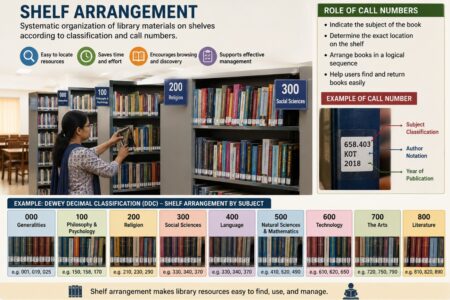
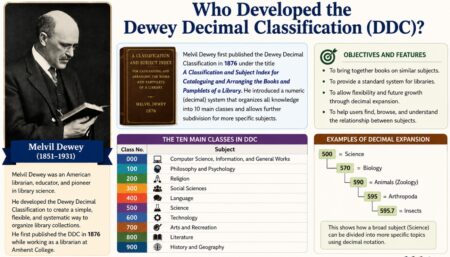
1. Subject Classification Information: The first and most important part of a call number indicates the subject area of the book. This portion is derived from a recognized classification system, such as the Dewey Decimal Classification (DDC) or the Library of Congress Classification (LCC).
-
- In DDC, this is usually a numerical value (e.g., 500 for natural sciences, 025 for library operations).
- In LCC, it often begins with one or two letters representing a broad subject area (e.g., Q for science, Z for library science).
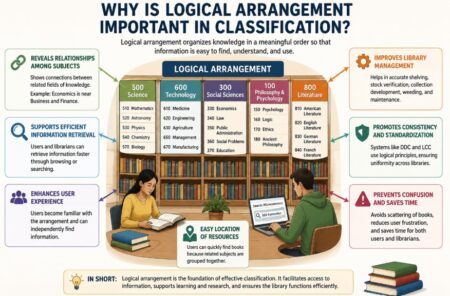
This subject-based information ensures that books on similar topics are grouped together on the shelves, supporting both systematic organization and subject browsing.
2. Specific Topic or Subdivision: Following the main subject class, the call number often includes decimals or additional numbers that further narrow down the topic. These subdivisions represent more specific aspects of a subject. For example, within a general class like computer science, decimal extensions may distinguish between networking, databases, or cybersecurity. This level of detail helps users move from a broad subject area to a very specific topic within that discipline.
-
- DDC Example: 025.3 refers specifically to cataloging within library science.
- LCC Example: Z678 focuses on library automation.
3. Author or Cutter Number: Another key component of a call number is the author identifier, commonly known as the Cutter number. This part is usually a combination of letters and numbers derived from the author’s surname (or sometimes the title). Its function is to arrange books alphabetically by author within the same subject area. As a result, multiple books on the same topic can be shelved in a consistent and logical order.
-
- Example (DDC): 025.3 RAH — “RAH” represents an author whose surname begins with Rah.
- Example (LCC): Z678 .M45 — “.M45” corresponds to an author whose name starts with M.
4. Year of Publication or Edition (Optional): In many libraries, especially those using the Library of Congress Classification system, the call number may include the year of publication or edition. This information helps distinguish between different editions of the same work or multiple books by the same author on the same subject. Including the year allows newer and older editions to be arranged chronologically, which is useful for academic research.
-
- Example: Z678 .M45 2021 — indicates a book published in 2021.
5. Location or Collection Codes (If Applicable): Some libraries add prefixes or suffixes to call numbers to indicate special locations or collections, such as reference sections, reserve shelves, or special collections. These additions inform users whether an item is for in-library use only or belongs to a specific area of the library.
-
- Example: REF 025.3 RAH — “REF” shows the book is part of the reference collection and may not be borrowed.
- Example: RES QD31 .A23 2020 — “RES” indicates a reserve collection item.
A call number usually contains subject information, topic subdivisions, author identification, and sometimes publication details or location codes. Together, these elements transform the call number into a powerful tool for organizing knowledge and guiding users efficiently from the library catalog to the exact book on the shelf. Understanding what information a call number contains enhances users’ ability to navigate library collections independently and confidently.