What is Library Classification?
 Library classification is the process of organizing library materials based on their subject matter and assigning specific class numbers or symbols. This systematic arrangement allows for easy location and retrieval of materials. It is a crucial technical process in library and information science, as it provides a logical structure for organizing the vast amounts of knowledge contained in books, journals, reports, digital resources, and other information materials. By grouping documents with similar subjects together and separating those on different subjects, classification helps users find information efficiently and enables libraries to manage their collections effectively.
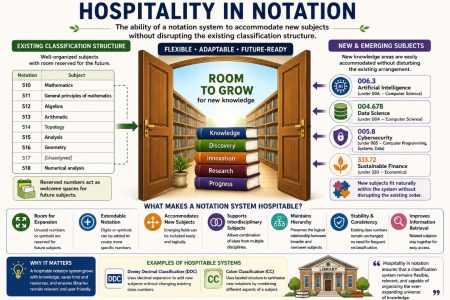
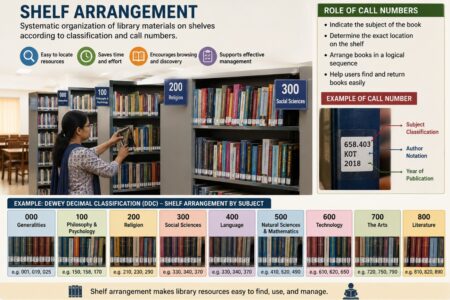
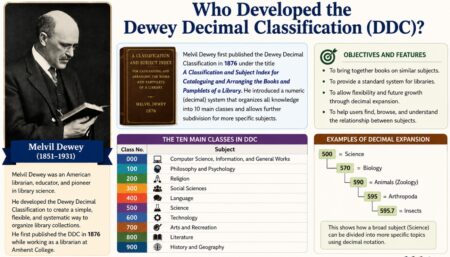
The concept of library classification is based on the principle that knowledge can be divided into broad subject areas and further subdivided into specific topics. Classification schemes like the Dewey Decimal Classification (DDC), Universal Decimal Classification (UDC), and Colon Classification (CC) offer standardized methods for organizing these subjects. For instance, in the DDC system, books on computer science are generally classified under the 000 class, books on social sciences under the 300 class, and books on literature under the 800 class. By assigning classification numbers to documents, libraries create an organized system that reflects the relationships among different fields of knowledge.
Library classification serves both intellectual and practical purposes. Intellectually, it represents the subject content of documents and shows how various branches of knowledge are interconnected. Practically, it determines the placement of materials on library shelves and how users can locate them. For example, a student seeking books on mathematics can go directly to the section designated for materials classified in the 510s, rather than searching through the entire collection. Likewise, researchers can browse a classified section and uncover additional resources on related topics.
In modern libraries, classification extends beyond physical bookshelves. It also plays an essential role in online public access catalogs (OPACs), digital libraries, institutional repositories, and other information systems. Classification numbers help organize electronic resources and enhance subject-based searching and browsing capabilities. As libraries continue to expand their collections in both print and digital formats, library classification remains an essential tool for organizing knowledge, retrieving information, and efficiently managing library resources. Thus, library classification can be described as the systematic arrangement of knowledge that enables users to access information quickly, accurately, and effectively.
Importance of Library Classification in Modern Libraries
Library classification is a fundamental aspect of modern library operations, providing a systematic method for organizing, managing, and retrieving information resources. As libraries expand their collections in both print and digital formats, the need for an effective organizational system becomes increasingly important. Library classification addresses this need by arranging materials according to their subjects and assigning unique classification numbers that facilitate easy access. Without an effective classification system, libraries would become disorganized repositories of information, making it difficult for users to locate relevant resources and for librarians to manage collections efficiently.
One of the most significant contributions of library classification is its role in information retrieval. Modern libraries often contain thousands or even millions of resources covering diverse subjects. Classification enables users to find materials quickly by grouping documents on similar topics together and assigning them specific shelf locations. For example, a student searching for books on computer science can go directly to the designated section instead of wading through the entire library collection. This systematic arrangement saves time, improves user satisfaction, and enhances the overall effectiveness of library services.
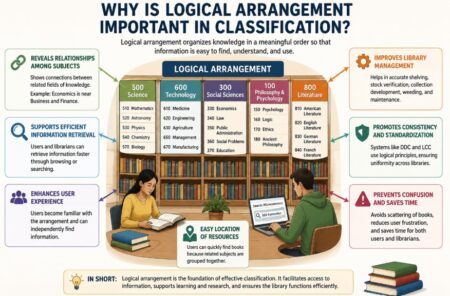
Library classification also supports knowledge organization by reflecting the structure and relationships among different disciplines. Classification schemes such as the Dewey Decimal Classification (DDC), Universal Decimal Classification (UDC), and Colon Classification (CC) divide knowledge into broad subject categories and further subdivide them into more specific topics. This arrangement helps users understand how various fields of knowledge connect. For instance, books on economics, finance, and business management are often located near one another due to their intellectual relationships. Such organization encourages interdisciplinary learning and research by allowing users to discover related resources while browsing.
Another significant aspect of library classification is its contribution to collection management. Librarians use classification systems to assess the strengths and weaknesses of library collections, identify gaps in subject coverage, and make informed decisions regarding acquisitions and weeding. By examining the distribution of materials across classification numbers, librarians can determine whether certain subject areas require additional resources. This systematic approach ensures balanced collection development and supports the educational and research needs of library users.
Classification is also essential for maintaining order and efficiency in library operations. It facilitates shelving, shelf reading, stock verification, and inventory control by ensuring that materials are arranged in a consistent sequence. Misplaced or missing items can be identified more easily when resources are systematically organized. Furthermore, classification enhances other library functions such as cataloging, circulation, and reference services, enabling library staff to provide faster and more accurate assistance to users.
In the digital age, the importance of library classification extends beyond physical collections. Digital libraries, institutional repositories, online databases, and Online Public Access Catalogs (OPACs) rely on classification principles to organize electronic resources and improve information retrieval. Classification numbers and subject categories help users browse digital collections and discover relevant materials more effectively. Even with the advancement of search engines and keyword-based searching, classification remains valuable because it provides a structured and logical framework for organizing knowledge.
How Does Library Classification Benefit Library Users?
Library classification offers numerous benefits to users by organizing information resources in a systematic and logical manner. It forms the foundation for efficient information retrieval, enabling users to quickly and accurately locate books, journals, and other materials. By assigning classification numbers based on the subject content and arranging materials accordingly, libraries create an organized environment that allows users to navigate collections with ease. Without classification, users would face significant challenges in finding relevant resources, leading to frustration and wasted time. Consequently, classification plays a vital role in improving the accessibility and usability of library collections.
One of the most significant advantages of library classification is that it accelerates the process of information retrieval. Each document is assigned a unique classification number that indicates its subject and shelf location. Users can search for a resource in the library catalog or OPAC (Online Public Access Catalog) and then use the classification number to find it directly on the shelf. For example, a student looking for books on mathematics can go straight to the section where materials classified under the 510s are organized, rather than sifting through the entire library. This systematic arrangement saves time and enhances the user experience.
Library classification also facilitates the discovery of related materials on the same or similar subjects. Since books covering related topics are placed together, users can easily browse nearby resources and access a broader range of information. For instance, a user searching for a book on artificial intelligence may also find books on machine learning, robotics, data science, and computer programming in the same area. This feature encourages exploration, broadens knowledge, and supports more comprehensive learning and research.
Another important benefit of classification is that it reveals the subject content of documents. Classification numbers often indicate the general topic of a resource, helping users understand what a document is about before examining it in detail. This capability allows users to identify relevant materials more effectively and make informed decisions about which resources best meet their information needs. This is particularly valuable in academic and research settings, where users need to quickly identify authoritative sources within a specific subject area. Furthermore, library classification supports independent learning by enabling users to navigate the collection without constant assistance from library staff. Once users understand the basic structure of the classification system, they can locate materials, browse subject areas, and explore related topics on their own. This independence enhances users’ confidence in utilizing library resources and promotes self-directed learning. Additionally, it reduces the workload of librarians by allowing users to perform many information-seeking activities independently.
In modern libraries, classification benefits users not only in physical collections but also in digital environments. Online Public Access Catalogs (OPACs), digital repositories, and electronic databases often utilize classification principles to organize resources by subject. This aids users in conducting subject-based searches, browsing digital collections, and discovering relevant materials more efficiently. As a result, classification continues to play an essential role in improving access to information in both traditional and digital library settings.