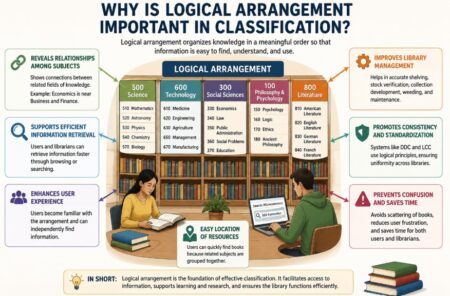
Why Are Books with Similar Call Numbers Placed Close Together?
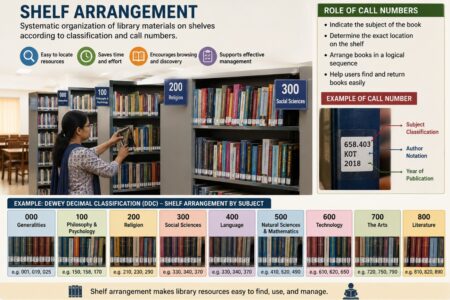
Books with similar call numbers are placed close together in a library because call numbers reflect the subject content of books, not merely their physical position on the shelves. Library classification systems such as the Dewey Decimal Classification (DDC) and the Library of Congress Classification (LCC) divide knowledge into subject-based categories. When books share similar call numbers, it means they discuss related topics, and shelving them together creates a logical and systematic subject arrangement.
This subject-based placement helps users locate related materials easily and efficiently. Once a user finds one relevant book, nearby books are likely to cover the same or closely related subjects. For example, in the Dewey Decimal system, books classified under 370 (Education) are placed together. A student searching for a book on teaching methods may also find books on curriculum development or educational psychology on the same shelf without searching elsewhere.
Placing books with similar call numbers together also supports browsing and discovery, which is particularly helpful for students and researchers exploring a topic. Many users prefer scanning shelves to discover additional resources. For instance, in the Library of Congress Classification system, books with call numbers beginning with TK5105 relate to computer networking. A student studying wireless networking may find books on data communication, internet technologies, and network security placed next to each other, enabling a broader understanding of the subject.
From a library management perspective, this arrangement ensures order and simplifies shelf maintenance. Librarians can easily identify misplaced items and organize new arrivals within the correct subject area. For example, if a new book on environmental economics is classified under HC79.E5, it can be placed alongside existing books on sustainability and economic policy, maintaining consistency across the collection.
What Is the Relationship Between Call Numbers and Subject Classification?
The relationship between call numbers and subject classification is fundamental to how libraries organize and provide access to information. Subject classification is the process of grouping books and other materials based on their subject content, while call numbers are the practical tools that represent this classification and indicate where an item is physically located on the shelves. In essence, subject classification determines the subject category of a book, and the call number translates that subject into a structured code used for shelving and retrieval.
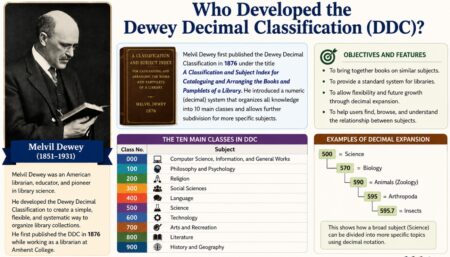
Library classification systems such as the Dewey Decimal Classification (DDC) and the Library of Congress Classification (LCC) assign specific numbers or letter–number ranges to broad and narrow subject areas. The first part of a call number usually represents the main subject of the book. For example, in the Dewey system, books classified under 500 belong to natural sciences, while 600 represents technology. A book on microbiology may be assigned a call number beginning with 579, clearly linking it to its subject classification within biological sciences.
Call numbers also show subject relationships and hierarchy. Subjects are arranged from general to specific, and this structure is reflected in the call number sequence. For instance, in the Library of Congress system, books with call numbers starting with QA relate to mathematics, while QA76 narrows the subject to computer science. This means that by reading the call number, a user can understand not only where a book is located but also how specific its subject focus is.
This close relationship benefits users by making subject-based searching and browsing easier. When books on similar subjects share similar call numbers, they are shelved together, allowing users to find multiple relevant resources in one place. For example, a student researching education will find books on teaching methods, curriculum design, and educational psychology grouped together under related call numbers, supporting efficient research and deeper exploration.
How Does Placing Books with Similar Call Numbers Together Help Users Find Related Materials?
Placing books with similar call numbers together helps users find related materials because call numbers are based on subject classification, not random order. In library classification systems such as the Dewey Decimal Classification (DDC) and the Library of Congress Classification (LCC), each call number represents a specific subject area. When books share similar call numbers, it means they cover related topics, and shelving them side by side creates a subject-focused arrangement that naturally guides users to additional relevant resources.
This arrangement makes research more efficient and user-friendly. Once a user locates one useful book, nearby books are likely to discuss similar themes, reducing the need to conduct multiple catalog searches. For example, a student looking for books on education under Dewey number 370 may also find books on teaching strategies, curriculum development, and educational psychology on the same shelf. This proximity allows users to gather multiple sources quickly and compare different perspectives on a topic.
Placing similar call numbers together also encourages browsing and discovery, which is especially helpful for users who are exploring a subject for the first time. Many users discover valuable materials by scanning shelves rather than searching for specific titles. When related books are grouped together, users may find additional resources they did not initially consider. For instance, in the Library of Congress system, books classified under TK5105 relate to computer networking, enabling a student studying wireless networks to easily discover books on data communication and internet technologies nearby.