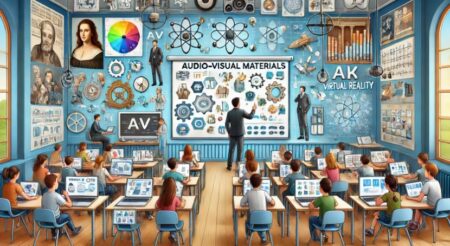
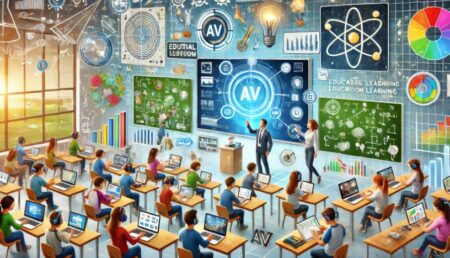
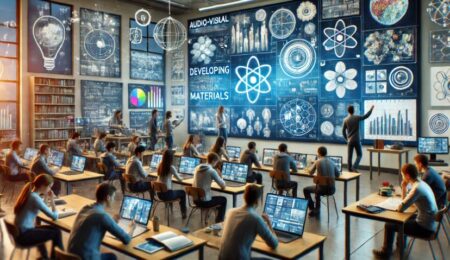
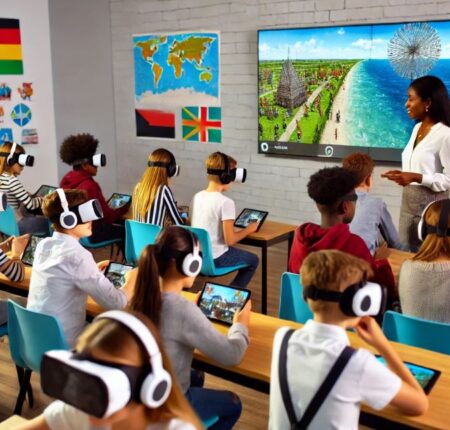
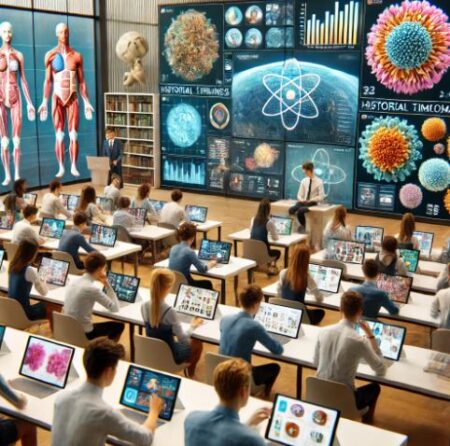
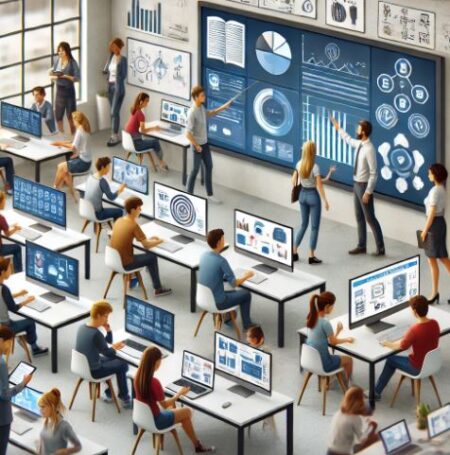
In today’s rapidly evolving educational landscape, the use of audio-visual (AV) aids has become increasingly prevalent in classrooms across the globe. These tools, which combine sound and visual elements, have proven to be more than just supplementary resources—they have become integral components of the learning process. From interactive whiteboards and educational videos to virtual simulations and presentations, AV aids create a dynamic and engaging learning environment that enhances the overall academic experience. Impacts of Audio-Visual Aids
While the immediate benefits of AV aids, such as increased engagement and better comprehension, are well-documented, their long-term impacts on students’ academic performance are equally significant. Over time, the consistent use of AV aids helps students develop stronger cognitive skills, enhances memory retention, and fosters critical thinking and problem-solving abilities. Moreover, AV aids cater to diverse learning styles, ensuring that students with different preferences—whether visual, auditory, or kinesthetic—can access and absorb information more effectively. This personalized approach to learning boosts short-term academic performance and has lasting effects on students’ ability to excel in future educational and professional pursuits.
What are the Long-Term Impacts of Audio-Visual Aids on Students’ Academic Performance?
The integration of audio-visual (AV) aids in education has transformed how students engage with content and how teachers deliver lessons. Tools like videos, interactive whiteboards, simulations, and multimedia presentations have made learning more dynamic, personalized, and accessible. While the immediate benefits of using AV aids—such as increased engagement and comprehension—are evident, their long-term impacts on students’ academic performance are even more significant. These tools enhance students’ ability to retain knowledge and shape critical thinking, collaboration, creativity, and technological proficiency over time. Let’s explore the key long-term impacts of using audio-visual aids in education on students’ academic performance.
- Improved Knowledge Retention: Audio-visual aids are highly effective at improving knowledge retention. By engaging multiple senses—such as sight and hearing—AV tools make information more memorable. Studies have shown that students who learn through both visual and auditory means are better able to recall information in the long term. When AV aids like videos, diagrams, and animations are used, students can associate the content with strong visual and auditory cues, making it easier for them to remember the material later.
- Example: A student learning about the water cycle through an animated video that shows evaporation, condensation, and precipitation in real time is more likely to remember the process during an exam or class discussion. The visual and auditory reinforcement helps embed the concept in the student’s memory, improving long-term retention.
- Impact: Improved retention over time leads to better performance in assessments, enhanced ability to apply knowledge in future subjects, and a more solid foundation for academic growth.
- Enhanced Critical Thinking and Problem-Solving Skills: Interactive AV tools, such as simulations, problem-solving apps, and educational games, encourage students to engage with the content rather than passively absorb information actively. These tools often require students to analyze situations, test hypotheses, and make decisions based on the information they’ve learned. Over time, these activities develop students’ critical thinking and problem-solving skills.
- Example: In a science class, students might use a simulation to explore how changes in temperature affect the state of matter (e.g., solid, liquid, gas). By manipulating variables and observing the results, they develop a deeper understanding of cause and effect while also practicing critical thinking.
- Impact: Students with well-developed critical thinking skills are more prepared to tackle complex academic challenges. These skills are transferable to subjects like math, science, and even the humanities, leading to sustained academic success across various disciplines.
- Catering to Diverse Learning Styles: Students learn in different ways, and traditional methods like lectures or textbooks often fail to meet the needs of all learners. AV aids cater to a broad spectrum of learning styles, including visual, auditory, and kinesthetic learners, by offering information in multiple formats. This ensures that students can engage with the material in ways that suit their individual learning preferences.
- Example: A visual learner might grasp historical timelines better through interactive maps or documentaries, while an auditory learner may benefit from listening to a podcast that explains historical events. Kinesthetic learners can use interactive tools to engage with the content in a more hands-on manner.
- Impact: Over time, this personalized approach to learning leads to better academic performance, as students who are typically left behind by traditional methods are now given the chance to excel.
- Increased Engagement and Motivation: AV aids make learning more enjoyable and relatable for students by presenting content in engaging formats. Whether through videos, animations, or interactive apps, AV tools stimulate curiosity and make students more enthusiastic about learning. This increased motivation can have long-term effects on academic performance, as students who are engaged are more likely to participate actively, complete assignments, and take ownership of their learning.
- Example: A student who watches an engaging video about ecosystems in a biology class might be more motivated to explore the subject further, participate in classroom discussions, and take more interest in environmental science.
- Impact: Increased motivation and engagement lead to long-term academic success because students are more likely to stay committed to their studies, attend classes regularly, and perform well in assessments.
- Development of Digital Literacy Skills: Using AV aids in the classroom helps students develop essential digital literacy skills. As education becomes more technology-driven, students are increasingly required to navigate digital platforms, analyze multimedia content, and create digital projects. By regularly interacting with AV tools, students become more proficient in using technology—a skill critical in higher education and the workforce.
- Example: A student using PowerPoint to create a presentation for a history project not only learns how to structure a clear and compelling argument but also gains experience in using digital tools to communicate information effectively.
- Impact: Students with strong digital literacy skills are better prepared for higher education, where technology is integral to research and learning. They are also more competitive in the job market, where digital proficiency is increasingly necessary.
- Better Collaboration and Communication Skills: AV aids often involve collaborative activities like group projects or interactive discussions. By working together on AV-driven tasks, students learn how to communicate their ideas clearly, listen to others, and collaborate to achieve a common goal. Over time, these experiences help develop essential communication and teamwork skills critical for academic and professional success.
- Example: In a geography class, students might work in groups to create an interactive digital map that traces historical migration patterns. This project taught them to divide responsibilities, share information, and present their findings to the class.
- Impact: Collaboration skills developed through AV tools translate into improved academic performance, as students are better able to work on group assignments, participate in discussions, and complete collaborative projects.
- Greater Ability to Understand Complex Concepts: Some subjects involve abstract or difficult-to-understand concepts, especially in STEM fields. AV aids help simplify these ideas by providing visual representations, simulations, or animated explanations. Over time, students who regularly engage with AV tools develop the ability to grasp complex concepts more easily, which leads to improved academic performance in challenging subjects.
- Example: A physics student might use a simulation to visualize how gravitational forces affect objects in space, making the concept of gravity more understandable than reading about it in a textbook.
- Impact: Understanding complex concepts improves performance in difficult subjects like math and science and builds students’ confidence, encouraging them to tackle more advanced topics.
- Improved Creativity and Innovation: AV aids foster creativity and innovation by allowing students to explore topics imaginatively. Digital storytelling, video creation, and multimedia presentations provide students with creative outlets that traditional methods may not offer. Over time, these creative experiences help students think more critically and come up with innovative solutions to academic challenges.
- Example: A literature student might use video editing software to create a modern adaptation of a Shakespearean play. This enhances their understanding of the play and develops their creative and technical skills.
- Impact: Developing creativity and innovation enhances academic performance, particularly in subjects that require imaginative thinking, such as the arts, literature, and design.
The long-term impacts of using audio-visual aids in education are far-reaching and transformative. Improving knowledge retention, fostering critical thinking, catering to diverse learning styles, and increasing engagement, AV aids significantly enhance students’ academic performance. Additionally, they equip students with essential digital literacy skills, improve collaboration and communication, and help them confidently tackle complex concepts. Over time, AV aids help students excel in their studies and prepare them for the demands of the 21st-century workforce, making them a valuable investment in the future of education.