What Is an RFID Book Drop System and How Does It Work in Modern Libraries?
An RFID book drop system is an automated library return solution that allows users to return borrowed materials quickly and conveniently, often outside regular service desk hours. It uses Radio Frequency Identification (RFID) technology to identify library items automatically when they are placed into a designated book drop slot. Each library item is fitted with an RFID tag containing a unique identifier linked to the library management system (LMS). When a user inserts a book into the RFID-enabled book drop, the system instantly reads the tag without requiring manual scanning or staff intervention.
In modern libraries, the RFID book drop system works by combining RFID readers, sensors, sorting mechanisms, and software integration with the LMS. As soon as an item is deposited, the RFID reader detects the tag and automatically updates the item’s status from “checked out” to “returned” in real time. This process immediately clears the user’s account of responsibility for the item, reducing disputes related to late returns. Some advanced systems also activate automated sorting, directing returned items to separate bins based on criteria such as item type, location, or reshelving priority.
Beyond operational efficiency, RFID book drop systems significantly enhance user convenience and service accessibility. They support 24/7 book return services, minimize queues at circulation desks, and ensure faster check-in accuracy. For library staff, these systems reduce repetitive manual tasks, lower the risk of human error, and free up time for more value-added services such as user assistance, research support, and collection development.
Why Is Automating Book Returns Becoming Essential in Today’s Academic and Public Libraries?
Automating book returns has become increasingly essential in today’s academic and public libraries due to the growing demand for faster, more flexible, and user-centered library services. Modern library users—students, researchers, and general readers alike—expect services that align with their busy schedules and digital lifestyles. Automated book return systems, particularly those based on RFID technology, allow users to return materials quickly without waiting in line or depending on staff availability. For example, a student finishing exams late in the evening can return borrowed books using an automated book drop even when the library service desk is closed, ensuring timely returns and avoiding overdue fines.
Another key reason for automating book returns is the significant improvement in operational efficiency and accuracy. Manual check-in processes are time-consuming and prone to human error, especially during peak periods such as semester ends or public holidays. Automated systems instantly identify returned items and update their status in the library management system in real time. For instance, during high-volume return periods, an automated book drop can process hundreds of items continuously, reducing backlogs and ensuring that returned materials are quickly made available to other users.
Automation also plays a vital role in optimizing library staff workload and resource allocation. By reducing repetitive and routine tasks such as manual scanning and check-in, library staff can focus more on value-added services like research support, user training, and collection development. In practice, many academic libraries report that after introducing automated book returns, circulation staff spend less time handling returns and more time assisting users with information literacy and research queries.
From a strategic perspective, automating book returns supports the broader goal of developing smart and sustainable libraries. Automated systems contribute to better inventory control, improved data accuracy, and more efficient use of physical and human resources. For example, real-time return data can help library management analyze circulation patterns and make informed decisions about staffing, shelving priorities, and collection usage. Overall, automating book returns is no longer just a technological upgrade; it has become a necessary component of modern library services that enhances user satisfaction, operational efficiency, and long-term sustainability.
What Role Does RFID Technology Play in Transforming Library Circulation Services?
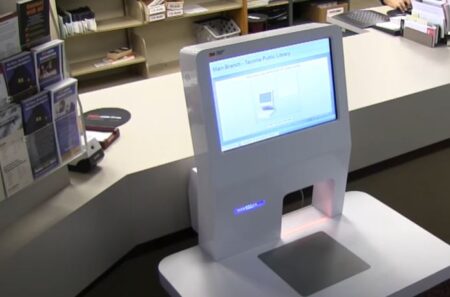
RFID (Radio Frequency Identification) technology plays a transformative role in modern library circulation services by automating routine processes and significantly improving speed, accuracy, and user convenience. By embedding RFID tags in library materials, libraries enable contactless identification of items without the need for manual barcode scanning or line-of-sight alignment. This allows multiple items to be processed simultaneously, reducing transaction time at circulation desks. For example, a student borrowing several books can check them out at an RFID self-check kiosk within seconds, a task that would otherwise require individual barcode scanning by staff.
One of the most impactful contributions of RFID technology is the shift toward self-service circulation models. RFID-enabled self-check and self-return systems empower users to manage borrowing and returning materials independently, often beyond regular service hours. For instance, an academic library equipped with RFID self-check stations and automated book drops can offer uninterrupted circulation services during evenings, weekends, and examination periods. This flexibility not only improves user satisfaction but also aligns library services with the expectations of digitally accustomed users.
RFID technology also enhances the accuracy and reliability of circulation data. Each RFID tag carries a unique identifier linked directly to the library management system, ensuring real-time updates of item status during check-out and return processes. This minimizes human error, prevents misidentification, and improves record accuracy. For example, returned items are instantly marked as available in the system, enabling other users to place holds or locate them more efficiently through the library catalog.
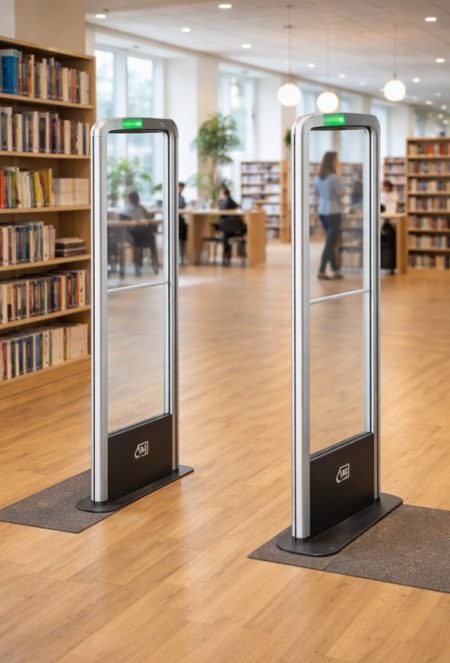
Beyond user-facing services, RFID transforms back-end circulation management by strengthening inventory control and security. RFID-based systems support rapid shelf scanning, automated sorting, and integration with security gates to reduce loss and misplacement of materials. In practice, libraries using RFID can conduct inventory checks in a fraction of the time required by traditional methods, allowing staff to focus on higher-level services such as research support and collection development.
How Does an RFID Book Drop System Integrate with a Library Management System (LMS)?
An RFID book drop system integrates with a library management system (LMS) by creating a seamless, real-time communication link between the physical return point and the library’s circulation database. Each library item is embedded with an RFID tag that stores a unique identifier corresponding to a bibliographic and item record in the LMS. When a user places a book into the RFID-enabled book drop, the system’s RFID reader instantly captures the tag information and transmits it to the LMS through dedicated middleware or application programming interfaces (APIs). This integration allows the LMS to automatically recognize the returned item and update its circulation status without any manual intervention.
In practice, the integration operates as a continuous, automated workflow. Once the RFID tag is read, the LMS immediately changes the item status from “checked out” to “returned” and records the exact return date and time. This real-time synchronization is especially important for accurate fine calculation and user account management. For example, if a book is returned just before the due deadline through an RFID book drop, the LMS records the precise timestamp, ensuring that no overdue fine is charged even when the circulation desk is closed.
Many RFID book drop systems also support advanced LMS functionalities such as automated item sorting, hold processing, and circulation reporting. Based on predefined rules in the LMS, returned items can be flagged for reshelving, transfer to another branch, or placement on hold for the next user. For instance, a returned reserve book may be automatically marked as “priority” in the LMS, prompting staff to process it quickly so it becomes available for short-term loan again. This tight integration enhances operational efficiency and improves turnaround time for high-demand materials.
How Does an RFID Book Drop System Improve User Convenience and Satisfaction?
An RFID book drop system significantly improves user convenience by making the book return process fast, simple, and independent of library service desk hours. Users no longer need to wait in line or adjust their schedules to match the circulation desk’s hours. Instead, they can return books at any time by placing them into the RFID-enabled book drop, where the system automatically processes the return. For example, a working student or faculty member can return borrowed materials early in the morning or late at night and still have the items instantly recorded as returned in the library system.
User satisfaction is further enhanced through the system’s speed and accuracy. RFID technology allows items to be identified immediately upon insertion, eliminating delays caused by manual scanning or staff availability. The real-time update of the return status reassures users that their responsibility for the item has ended. For instance, users can feel confident that a returned book will not mistakenly appear as overdue in their account, reducing stress and disputes related to fines or penalties.
Another important factor contributing to user satisfaction is the transparency and reliability of the return process. Many RFID book drop systems provide visual or digital confirmation—such as a screen message or system-generated record—that the item has been successfully returned. In practical terms, this immediate confirmation builds trust in library services, especially during busy academic periods when users are more concerned about due dates and deadlines.
In What Ways Does Automated Book Return Support 24/7 Library Services?
Automated book return systems play a crucial role in supporting 24/7 library services by eliminating the need for staff presence and fixed service desk hours. With RFID-enabled book drops, users can return borrowed materials at any time of the day or night, including weekends, holidays, and semester breaks. This flexibility is particularly valuable in academic libraries, where students often study late into the night and may finish using materials outside regular operating hours. Automated returns ensure that users can fulfill their borrowing responsibilities without worrying about service availability.
Another important way automated book return supports round-the-clock services is through real-time system updates. As soon as an item is dropped into the automated return unit, the system instantly updates the library management system, marking the item as returned with an exact timestamp. This immediate processing is essential for 24/7 services because it allows returns to be officially recognized even when the library is unstaffed. Users benefit from accurate due-date handling and reduced risk of overdue fines, while the library maintains consistent and reliable circulation records at all hours.
Automated book return systems also help libraries manage high-volume returns efficiently during off-hours. During peak academic periods such as examinations or assignment deadlines, many users prefer to return books late at night or early in the morning. Automated systems can continuously accept and process returns without congestion or delays. This uninterrupted operation ensures smooth circulation workflows and prevents backlogs that would otherwise accumulate overnight and burden staff the next working day.
How Does Automating Book Returns Reduce Routine Workload for Library Staff?
Automating book returns significantly reduces the routine workload of library staff by eliminating repetitive manual tasks involved in traditional check-in processes. In a manual system, staff members must individually receive returned items, scan barcodes, update records, and often handle user queries related to return confirmation. With RFID-enabled automated book return systems, these steps are completed automatically as soon as a book is placed into the return unit. This automation removes the need for constant staff supervision at return counters, especially during peak hours, allowing daily operations to run more smoothly.
Another key way automation reduces staff workload is by minimizing errors and follow-up tasks. Manual check-ins can sometimes result in missed scans or incorrect timestamps, leading to disputes over overdue fines or misplaced items. Automated book return systems update the library management system in real time with high accuracy, ensuring that items are properly recorded as returned. As a result, staff spend less time resolving user complaints, correcting records, or searching for items that were returned but not properly checked in.
Automation also streamlines back-end processing and material handling. Many RFID book return systems are integrated with automated sorting mechanisms that categorize returned items based on location, collection type, or circulation priority. This reduces the manual effort required to sort materials for reshelving or transfer. For library staff, this means fewer physically demanding tasks and more efficient workflows, particularly in large academic or public libraries with high circulation volumes.