Audio-visual (AV) materials have become an essential component of modern library collections, supporting teaching, learning, research, and cultural preservation. These materials include a wide range of formats such as audio cassettes, VHS tapes, CDs, DVDs, film reels, and born-digital files like MP3 and MP4 recordings. For instance, a university library may preserve recorded lectures in MP4 format for student access, while also maintaining older VHS tapes of seminars or institutional events as part of its archival collection. Unlike traditional print resources, AV materials are highly sensitive to environmental conditions, physical handling, and technological changes, making their management more complex and demanding. Over time, factors such as heat, humidity, dust, improper handling, and the rapid obsolescence of playback devices can significantly degrade these resources or render them inaccessible. For example, scratches on a DVD can disrupt playback, while exposure to high humidity may cause mold growth on magnetic tapes, permanently damaging their content. Similarly, many libraries today hold valuable instructional materials stored on VHS tapes or audio cassettes but struggle to access them due to the unavailability of compatible playback equipment. Therefore, proper care, handling, and storage of audio-visual materials are crucial to ensure their longevity and continued usability. This article aims to provide a comprehensive overview of best practices and practical strategies that libraries can adopt to preserve and manage their AV collections effectively in both physical and digital environments.
Types of Audio-Visual Materials in Libraries
Audio-visual (AV) materials in libraries include a wide range of formats that convey information through sound, images, or a combination of both. These materials can be categorized based on their format and technological characteristics into three main types: analog, optical, and digital. Understanding these categories is crucial for effective management, preservation, and user access.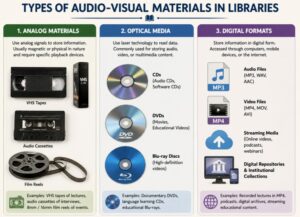
- Analog materials are among the earliest forms of AV resources and are often found in archival and special collections. This category includes formats such as VHS tapes, audio cassettes, and film reels. They store information using magnetic or physical methods and require specific playback devices. For instance, a library might hold historical recordings of university events on VHS tapes or oral history interviews on cassette tapes. While these analog materials are valuable, they are highly susceptible to environmental damage and technological obsolescence, as the equipment needed to access them is becoming increasingly rare.
- Optical media are another significant category and include CDs, DVDs, and Blu-ray discs. These formats use laser technology to store data and are commonly used for educational videos, software, and audio recordings. For example, a library might offer language learning CDs or documentary films on DVDs for students. Although optical media is generally more durable than some analog formats, they can still be damaged by scratches, dust, and improper handling, which can affect their readability.
- Digital formats, often referred to as born-digital or digitized materials, are now the most prevalent in modern libraries. This category includes files like MP3 audio, MP4 videos, streaming media, and content stored in institutional repositories or cloud-based systems. Libraries may provide access to recorded lectures, webinars, or digital archives through their websites or learning management systems. Digital formats offer significant advantages in terms of accessibility, storage efficiency, and ease of duplication. However, they also require ongoing management, including file format migration, backup, and protection against data loss.
In many libraries, these three categories coexist, reflecting both historical collections and contemporary information needs. A single institution may manage legacy VHS recordings, DVD collections, and a growing repository of digital media simultaneously. Therefore, recognizing the characteristics and requirements of each type is essential for ensuring their proper care, handling, and long-term preservation.

Common Risks and Causes of Deterioration of Audio-Visual Materials
Audio-visual (AV) materials are inherently fragile and require careful management to prevent deterioration. Unlike printed materials, they are highly sensitive to environmental, physical, and technological factors. Understanding the common risks that affect these materials is essential for ensuring their long-term preservation and usability in libraries.
- Environmental Factors: Environmental conditions play a critical role in the longevity of AV materials.
- Temperature: Excessive heat can warp CDs and DVDs, while magnetic tapes may lose signal quality.
- Humidity: High humidity encourages mold growth, especially on tapes and film reels, whereas very low humidity can make materials brittle.
- Light Exposure: Prolonged exposure to sunlight or UV light can degrade film and optical media.
Example: A DVD stored near a window may gradually become unreadable due to heat and sunlight exposure.
- Physical Damage and Improper Handling: Improper use and handling are among the most common causes of damage.
- Scratches and Fingerprints: Touching the surface of discs can leave marks that interfere with playback.
- Dust and Dirt: Accumulation of dust can affect both media and playback equipment.
- Mechanical Stress: Dropping or bending discs and tapes can permanently damage them.
Example: A CD handled without care may develop scratches, causing skipping or complete playback failure.
- Magnetic and Chemical Deterioration: Certain AV materials degrade due to internal chemical or magnetic changes.
- Magnetic Decay: Audio and video tapes gradually lose recorded signals over time.
- Binder Hydrolysis (“Sticky Shed Syndrome”): Magnetic tapes can become sticky and unplayable due to chemical breakdown.
- Oxidation: Film and tape materials may deteriorate due to exposure to air and pollutants.
Example: Old cassette tapes may produce distorted sound or stop working entirely due to magnetic signal loss.
- Technological Obsolescence: Rapid technological advancement makes many AV formats and devices outdated.
- Unavailable Playback Devices: VHS players and cassette decks are now rare.
- Outdated File Formats: Some digital files may become inaccessible if software support is discontinued.
Example: A library may own valuable VHS recordings but cannot access them due to the lack of functioning VCRs.
- Poor Storage Practices: Improper storage significantly accelerates deterioration.
- Horizontal Stacking: Can warp discs over time.
- Overcrowded Shelving: Leads to physical stress and accidental damage.
- Inadequate Protective Cases: Exposes materials to dust and physical harm.
Example: DVDs stacked without cases may develop scratches and become unusable.
- Biological Factors: Biological agents can damage AV materials, especially in uncontrolled environments.
- Mold and Fungi: Thrive in humid conditions and can destroy tapes and film.
- Pests and Insects: May damage storage materials and cases.
- Example: Film reels stored in damp areas may develop mold, permanently damaging visual content.
- Human Negligence and Lack of Awareness: Lack of training and awareness can lead to unintentional damage.
- Improper Cleaning Methods: Using rough cloths or chemicals can harm surfaces.
- Unauthorized Use: Mishandling by users unfamiliar with proper procedures.
Example: Cleaning a CD with tissue paper instead of a soft cloth may create fine scratches.
- Data Loss and Digital Risks: Digital AV materials also face specific risks.
- File Corruption: Due to software errors or hardware failure.
- Lack of Backup: Permanent loss if files are not duplicated.
- Cyber Threats: Viruses or hacking can compromise digital collections.
Example: A library’s digital archive stored on a single hard drive may be lost if the device fails without backup.
The deterioration of audio-visual materials is often the result of multiple interacting factors rather than a single cause. By identifying and understanding these risks, libraries can adopt preventive strategies to protect their valuable AV collections and ensure continued access for future users.
Best Practices for Handling Audio-Visual Materials
Proper handling of audio-visual (AV) materials is crucial for preventing physical damage, maintaining playback quality, and extending the lifespan of library collections. Many AV formats—such as CDs, DVDs, magnetic tapes, and film reels—are highly sensitive to touch, dust, and mechanical stress. Therefore, even minor negligence can result in permanent loss of information. The following best practices offer practical guidance for library staff and users.
- Handle Materials with Care: Audio-visual materials should always be handled with extreme care, as they are easily damaged by pressure, bending, or accidental drops. Discs such as CDs and DVDs must be held by their edges or the center hole to prevent contact with the sensitive playing surface, which can be easily scratched or contaminated. Magnetic tapes and film reels also require careful support, as improper handling may stretch or tear the tape or damage the reel structure. For example, if a library staff member bends a DVD slightly while removing it from a case, it may cause invisible cracks that later result in playback errors. Therefore, gentle and mindful handling is the first step in preserving AV materials.
- Maintain Clean Hands and Use Protective Measures: Cleanliness plays a crucial role in the handling of AV materials. Hands should always be clean and dry before touching any item, as dirt, sweat, or oil from the skin can leave residues that affect playback quality. In the case of rare or archival materials, such as old film reels or fragile tapes, the use of lint-free gloves is highly recommended to prevent contamination. Even small traces of oil from fingerprints can accumulate over time and lead to long-term damage. For instance, repeated handling of CDs with unclean hands may gradually reduce their readability due to residue buildup.
- Avoid Touching Playback Surfaces; The playback surfaces of AV materials are extremely sensitive and should never be touched directly. For optical discs, the shiny underside contains the data layer that is read by a laser, and any fingerprint, smudge, or scratch can interfere with this process. Similarly, the exposed magnetic tape inside cassettes or reels should not be touched, as it can easily be damaged or contaminated. For example, a fingerprint on a CD may not seem significant, but it can disrupt the laser reading process, causing skipping or failure during playback. Proper handling techniques significantly reduce such risks.
- Keep Materials Away from Food, Liquids, and Dust: Audio-visual materials must be protected from environmental contaminants such as food particles, liquids, and dust. These elements can cause irreversible damage if they come into contact with the material. Liquids may seep into cassette housings or damage electronic components, while dust particles can accumulate on surfaces and interfere with playback. For example, if a user spills a drink near a DVD, even a small amount of liquid can render it unusable. Maintaining a clean, controlled environment and enforcing no-food policies in AV areas are effective preventive measures.
- Use Proper Cleaning Techniques: Cleaning AV materials requires careful attention, as improper methods can cause more harm than good. Discs should be cleaned using a soft, lint-free cloth, wiping gently from the center outward in straight lines rather than circular motions, which may create scratches that affect multiple data tracks. Harsh chemicals, solvents, or abrasive materials should never be used, as they can damage the surface permanently. For instance, using a rough cloth or tissue paper may create fine scratches that are not immediately visible but can significantly affect playback over time. Proper cleaning techniques help maintain the integrity of AV materials.
- Operate Playback Equipment Correctly: The correct use of playback equipment is essential to avoid damaging both the AV materials and the devices themselves. Equipment should be regularly cleaned and maintained to ensure smooth operation. Users should be instructed to insert and remove discs or tapes carefully, without forcing them into the device. Mechanical errors, such as misalignment or dirt inside the player, can scratch discs or damage tapes. For example, inserting a cassette improperly into a player may cause the tape to jam or tear. Therefore, proper training and equipment maintenance are necessary for safe handling.
- Rewind and Return Materials Properly: After use, AV materials should be properly prepared for storage. Magnetic tapes, such as audio and video cassettes, should be rewound fully to prevent uneven tension that may weaken or stretch the tape over time. Discs should be removed from playback devices promptly and returned to their protective cases to prevent dust accumulation and accidental damage. For example, leaving a tape partially wound may cause stress on certain sections, leading to distortion or breakage. Proper post-use handling ensures that materials remain in good condition for future use.
- Label and Mark Materials Carefully: Labeling AV materials must be done with caution to avoid physical or mechanical damage. Adhesive labels should generally be avoided on discs, as they can create an imbalance during rotation and lead to playback errors or even damage the player. Instead, non-permanent markers should be used on designated labeling areas, such as the inner ring of a disc. Improper labeling can also affect the longevity of the material. For example, placing a heavy sticker on a CD may cause uneven spinning, which can reduce its lifespan. Careful labeling practices help maintain both identification and usability.
- Train Staff and Educate Users: Effective preservation of AV materials depends largely on awareness and proper training. Library staff should be trained in handling techniques, cleaning procedures, and equipment use, while users should be guided on how to handle materials responsibly. Instructional posters, orientation sessions, or brief demonstrations can significantly reduce misuse. For instance, a simple visual guide near the multimedia section showing how to handle a DVD can prevent many common mistakes. Education ensures that both staff and users contribute to the preservation process.
- Limit Unnecessary Handling: Minimizing physical handling is one of the most effective ways to preserve AV materials. Frequent use increases the risk of wear and damage, especially for fragile or rare items. Libraries should consider restricting access to such materials and providing digital copies whenever possible. Digitization not only reduces handling but also improves accessibility for users. For example, instead of allowing repeated use of a rare VHS tape, a library can offer a digitized version for regular viewing while preserving the original. This approach balances access and preservation effectively.
Adopting proper handling practices is one of the most effective ways to preserve audio-visual materials in libraries. By ensuring careful use, cleanliness, and user awareness, libraries can significantly reduce the risk of damage and extend the usability of their valuable AV collections.
Storage Guidelines for Audio-Visual Materials in Libraries
Proper storage of audio-visual (AV) materials is essential for preserving their physical condition and ensuring long-term accessibility. Unlike printed materials, AV resources such as CDs, DVDs, magnetic tapes, and film reels are sensitive to environmental conditions, storage orientation, and protective enclosures. Therefore, libraries must adopt well-planned storage practices that address both environmental control and physical organization to minimize deterioration.
One of the most important aspects of AV storage is maintaining appropriate environmental conditions. Temperature and humidity levels must be carefully controlled, as fluctuations can cause significant damage. Ideally, AV materials should be stored in a cool, dry environment with stable conditions—generally around 18–22°C (64–72°F) and relative humidity between 30–50%. Excessive heat can warp optical discs and accelerate chemical degradation in tapes, while high humidity can encourage mold growth and damage magnetic coatings. Additionally, AV materials should be kept away from direct sunlight and ultraviolet (UV) exposure, as prolonged exposure can fade film and degrade data layers. For instance, storing DVDs near windows or in poorly ventilated rooms may gradually reduce their readability due to heat and light exposure.
Equally important is the use of appropriate storage equipment and protective enclosures. AV materials should always be stored in their original or archival-quality cases, such as jewel cases for CDs, polypropylene cases for DVDs, and acid-free containers for film reels. These enclosures protect materials from dust, physical impact, and environmental contaminants. Magnetic tapes should be stored in sturdy, well-fitted cases to prevent deformation, while film reels should be placed in ventilated archival cans to avoid moisture buildup. For example, a cassette tape stored without a case is more likely to accumulate dust and suffer mechanical damage compared to one kept in a protective enclosure.
The physical arrangement and shelving of AV materials also play a crucial role in their preservation. Discs and tapes should be stored vertically, similar to books, to prevent warping and uneven pressure. Horizontal stacking, especially over long periods, can lead to bending or distortion of discs and tapes. Shelves should not be overcrowded, as tight packing may cause physical stress or make it difficult to remove items safely. Implementing proper labeling and classification systems is also essential to ensure easy retrieval without unnecessary handling. For example, DVDs neatly arranged in labeled sections allow users to locate materials quickly, reducing the risk of accidental damage during searches. In addition to general storage practices, libraries should provide special storage conditions for rare, fragile, or archival AV materials. Such items may require restricted access areas, climate-controlled rooms, or specialized cabinets to ensure their preservation. Security measures, including monitored access and proper inventory control, are also important to prevent loss or misuse. For example, rare film reels documenting historical events may need to be stored in a controlled archive rather than on open-access shelves.
Finally, regular monitoring and maintenance are essential components of effective storage. Libraries should conduct periodic inspections to identify signs of deterioration, such as mold, warping, or data loss, and take immediate corrective actions. Cleaning storage areas, maintaining equipment, and updating storage policies based on new technologies and standards are also necessary. By implementing these comprehensive storage guidelines, libraries can significantly extend the lifespan of their audio-visual materials and ensure that valuable information remains accessible for future users.
Preservation and Maintenance Techniques for Audio-Visual Materials
Effective preservation and maintenance of audio-visual (AV) materials require a systematic and proactive approach. Since these materials are susceptible to both physical damage and technological obsolescence, libraries must implement a combination of preventive and corrective measures. The following key techniques are outlined below, along with practical examples.
- Regular Inspection and Condition Assessment: Regular inspections are essential for identifying early signs of deterioration, which helps prevent further damage. Libraries should periodically examine AV materials for issues such as scratches, mold growth, warping, signal loss, or playback problems. This process allows libraries to prioritize items that need immediate attention or preservation actions. For instance, if a DVD has minor scratches, it may still be cleaned and restored. However, detecting mold on a magnetic tape early can prevent it from spreading to other materials. Maintaining consistent inspection schedules ensures that no item is neglected over time.
- Proper Cleaning Techniques: Cleaning AV materials is a delicate process that must be performed using appropriate tools and methods. Optical discs should be cleaned with soft, lint-free cloths, gently wiping from the center outward to avoid damaging data tracks. Magnetic tapes and film materials require specialized cleaning procedures and should be handled carefully to prevent physical stress. Improper cleaning—such as using rough cloths, tissues, or chemical solvents—can cause permanent damage. For example, a CD cleaned with tissue paper may develop fine scratches that affect playback quality. Therefore, employing correct cleaning techniques is crucial for maintaining usability.
- Format Migration and Digitization: Format migration is one of the most important preservation strategies, particularly for obsolete or deteriorating media. This process involves transferring content from older formats, such as VHS tapes or audio cassettes, into modern digital formats like MP4 or MP3. Digitization not only preserves the content but also enhances accessibility and reduces handling of fragile originals. For example, converting a collection of VHS-based academic lectures into digital files allows students to access them online while protecting the original tapes from further wear. This process is essential for addressing both physical degradation and technological obsolescence.
- Backup and Duplication Strategies: Creating backup copies is critical for protecting AV content from accidental loss. Digital materials should be stored in multiple locations, such as external drives, institutional servers, and cloud storage systems. This redundancy ensures that data can be recovered in the event of hardware failure, corruption, or disasters. For physical materials, libraries may create duplicate copies for user access while preserving the original in controlled storage. For instance, a rare audio recording can be digitized and shared with users, while the original cassette is securely stored. Effective backup strategies significantly reduce the risk of permanent loss.
- Environmental Control and Preventive Care: Maintaining appropriate environmental conditions is a key preventive measure in AV preservation. Stable temperature, controlled humidity, and protection from light and dust help slow down the deterioration process. Libraries should ensure that storage areas are clean, well-ventilated, and free from contaminants. For example, keeping magnetic tapes in a cool, dry environment prevents mold growth and signal degradation. Preventive care reduces the need for costly restoration efforts in the future.
- Equipment Maintenance and Proper Use: Playback and digitization equipment must be properly maintained to avoid damaging AV materials during use. Regular cleaning, calibration, and testing of devices such as DVD players, cassette decks, and scanners are essential. Faulty or poorly maintained equipment can scratch discs, stretch tapes, or cause playback errors. For instance, a malfunctioning cassette player may chew the tape, permanently destroying the recording. Ensuring that equipment is in good working condition is a vital part of preservation.
- Controlled Access and Handling: Restrictions Limiting access to fragile or rare AV materials helps reduce physical wear and damage. Libraries may restrict direct handling of original items and instead provide digital or duplicate copies for regular use. Supervised access may also be implemented for valuable collections. For instance, a rare film reel documenting historical events may only be viewed under staff supervision, while a digital version is made available for general users. Controlled access balances preservation with user needs.
- Staff Training and Capacity Building: Preservation efforts depend heavily on the knowledge and skills of library staff. Training programs should be conducted to educate staff about handling techniques, cleaning methods, digitization processes, and equipment use. Well-trained staff can identify risks, apply correct procedures, and guide users effectively. For example, staff trained in digitization can ensure high-quality conversion of analog materials into digital formats without data loss. Continuous capacity building strengthens the overall preservation system.
Preservation and maintenance of audio-visual materials involve a combination of preventive care, technical processes, and organizational strategies. By implementing these techniques systematically, libraries can protect their AV collections from deterioration, ensure long-term accessibility, and preserve valuable knowledge for future generations.
Role of Digitization in Audio-Visual (AV) Preservation
Digitization has become a fundamental aspect of preserving audio-visual (AV) materials in libraries, addressing two major challenges: physical deterioration and technological obsolescence. Many traditional AV formats—such as VHS tapes, audio cassettes, and film reels—are fragile and can degrade over time due to environmental factors and frequent handling. At the same time, the equipment needed to access these materials is becoming increasingly scarce. By converting analog and physical media into digital formats like MP3, WAV, or MP4, libraries can preserve the intellectual content even when the original medium becomes unusable. For example, a collection of academic lectures recorded on VHS can be digitized and stored as video files, allowing continued access without reliance on outdated playback devices.
Another significant benefit of digitization is enhanced accessibility and user convenience. Digital AV materials can be stored in institutional repositories, library databases, or cloud platforms, enabling users to access them anytime and from anywhere. This reduces the need to physically handle original items, thus minimizing wear and tear. For instance, digitized oral history interviews or recorded seminars can be accessed online by researchers and students, eliminating the need to repeatedly use delicate cassette tapes. Additionally, digital files can be enriched with metadata, making them searchable and easier to organize, significantly improving information retrieval compared to traditional formats.
Digitization also strengthens preservation by creating multiple copies and backup systems. Unlike physical AV materials, which often only exist as single copies, digital files can be duplicated and stored in different locations, such as local servers, external storage devices, and cloud-based systems. This redundancy ensures that the content remains safe even in the event of hardware failure, natural disasters, or accidental deletion. For example, a library may keep one copy of a digitized video archive on its internal server while maintaining another copy in secure cloud storage, ensuring long-term protection of valuable content.
However, digitization presents its own set of challenges. The process requires specialized equipment, technical expertise, and financial investment, which may be difficult for some libraries to manage. There are also legal and ethical considerations, particularly regarding copyright restrictions, that may limit the digitization and distribution of certain materials. Additionally, digital preservation is an ongoing process; files must be regularly monitored, migrated to new formats, and safeguarded against corruption or technological obsolescence. For instance, a video file stored in an outdated format may need to be converted again to remain compatible with modern systems.
Library Policies and User Awareness in Managing Audio-Visual Materials
Effective management and preservation of audio-visual (AV) materials in libraries rely not only on technical practices but also on well-defined policies and informed user behavior. Library policies provide a structured framework that guides the acquisition, handling, storage, access, and use of AV resources, ensuring consistency and accountability in their management. These policies typically include rules on borrowing, procedures for handling materials, access restrictions for rare or fragile items, and guidelines for using playback equipment. For instance, a library may implement a policy that restricts the use of original VHS tapes and rare film reels to supervised environments while providing digitized versions for general users. Such policies help minimize physical damage and ensure the long-term preservation of valuable collections.
User awareness is equally important in supporting these policies and reducing the risk of damage caused by improper handling. Many users may not be familiar with the fragility of AV materials or the correct methods for using them. Therefore, libraries must actively educate users through orientation programs, signage, instructional guides, and direct assistance from staff. For example, displaying simple instructions near multimedia sections—such as how to hold a CD by its edges or how to operate playback equipment—can significantly reduce common handling errors. Additionally, librarians can provide brief demonstrations during user interactions, especially when issuing AV materials for the first time.
Library policies should also address issues related to the responsible use and security of AV materials. This includes preventing unauthorized duplication, ensuring the timely return of borrowed items, and protecting digital resources from misuse or piracy. Clear communication of these rules helps users understand their responsibilities and encourages ethical use of library resources. For example, a policy may prohibit copying copyrighted DVDs or downloading restricted digital content without proper authorization. By reinforcing such guidelines, libraries can protect both their collections and intellectual property rights. Furthermore, continuous engagement with users helps build a culture of responsibility and care. Feedback mechanisms, such as user surveys or suggestion boxes, can help libraries identify common issues and improve their policies and services. Training sessions and awareness campaigns can also be organized to keep users informed about new technologies, digitization efforts, and best practices for handling AV materials. For instance, a workshop on accessing digitized media resources can reduce reliance on fragile physical items and promote better preservation practices.