
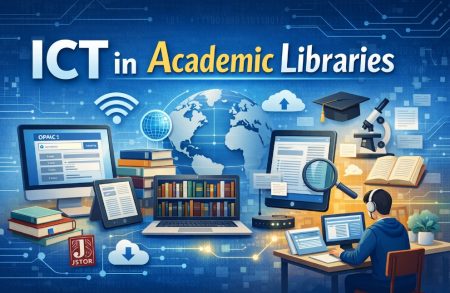
Information and Communication Technology (ICT) has transformed the landscape of academic libraries, providing significant advancements in the way libraries manage, organize, and deliver resources and services. The integration of ICT tools and systems has enhanced library efficiency, making it easier to store, retrieve, and share both physical and digital resources. For instance, Integrated Library Management Systems (ILMS) like Koha and Alma automate cataloguing, circulation, and user management, significantly reducing manual workload and streamlining library operations. In academic libraries, ICT applications span a wide range of services, from automated cataloguing systems to digital repositories, online databases, and virtual reference services. Digital repositories, such as DSpace and Fedora, allow academic institutions to store and manage their research outputs, dissertations, and other scholarly works in an easily accessible online environment. These technological innovations not only improve operational workflows but also enhance user access to library resources. For example, online databases like JSTOR and PubMed provide students and researchers with seamless access to a wide range of academic journals, e-books, and articles.
Furthermore, ICT has enabled academic libraries to offer remote access to resources, making them more accessible to students and faculty, regardless of location. Libraries that use tools like EZproxy or OpenAthens provide users with access to licensed resources from anywhere with an internet connection, enhancing flexibility in academic research. As the use of ICT continues to evolve, academic libraries are better equipped to meet the changing demands of higher education, ensuring that they remain relevant in an increasingly digital world. The applications of ICT in academic libraries also help in streamlining administrative processes, improving the management of digital collections, and facilitating collaborations between institutions, such as through shared catalogues or interlibrary loan systems like OCLC’s WorldShare. All these advancements contribute to enhancing the overall user experience by improving accessibility, collaboration, and resource management.
Main Types of ICT Tools and Services Currently Being Used in Academic Libraries
In the digital age, academic libraries have transformed the way they manage, deliver, and access resources, thanks to the integration of Information and Communication Technology (ICT). These technologies enhance library operations, improve resource management, and provide users with convenient access to materials and services, fostering an enriched learning environment. Academic libraries use a variety of ICT tools and services that address the needs of both library staff and users, ensuring the seamless operation of library systems and facilitating an efficient, user-centred experience. Below is an overview of the key ICT tools and services being used in academic libraries today.
- Integrated Library Management Systems (ILMS): One of the core ICT tools in academic libraries is the Integrated Library Management System (ILMS). These systems automate and integrate several library functions, including cataloguing, circulation, acquisition, and user management. By streamlining administrative tasks, ILMS allows libraries to offer better services and improve operational efficiency. Popular systems like Koha, Alma, and Evergreen enable libraries to manage vast collections of books, journals, and digital resources while keeping track of circulation data and user accounts. These systems also include reporting capabilities that help library staff track resource usage, assess performance, and generate statistical data to inform decision-making.
- Digital Repositories: Digital repositories have become vital for academic libraries to store, manage, and disseminate digital content such as scholarly articles, research papers, theses, dissertations, and multimedia resources. Tools like DSpace, Fedora, and Eprints are used to create institutional repositories where research outputs from faculty and students can be preserved and made openly accessible. These repositories support academic publishing and open access initiatives, making scholarly works available to a global audience. Moreover, digital repositories facilitate long-term preservation and retrieval of academic works, ensuring they remain accessible even as technology evolves.
- Online Databases and Electronic Resources: Access to online databases and electronic resources has become essential in academic libraries, where they serve as critical tools for research and learning. Databases such as JSTOR, ProQuest, ScienceDirect, and PubMed provide users with access to a wide range of scholarly articles, e-books, journals, and other digital content. These resources offer specialized collections in various academic disciplines, making them indispensable for students, faculty, and researchers. Many libraries provide institutional access to these databases, ensuring that users can access valuable resources remotely through authentication services like EZproxy and OpenAthens, which manage off-campus access to licensed materials.
- Discovery Tools and Library Portals: Academic libraries use discovery tools and library portals to enhance the search experience for users. These tools consolidate access to both physical and digital resources in a single search interface. Services like Primo, Summon, and EBSCO Discovery Service enable users to find books, articles, journals, and other library materials from one location. Discovery tools integrate with the library’s catalogue and external databases, ensuring that students and faculty can search the entire collection, including e-books, databases, and institutional repositories, with ease. This single-point access saves time and improves the overall user experience by providing streamlined, relevant search results.
- Virtual Reference Services: Virtual reference services are an essential ICT tool that allows library staff to assist users remotely. These services can include live chat, email, and instant messaging tools that enable users to ask questions, seek guidance, or obtain support with library resources. Platforms like LibAnswers or Ask a Librarian allow users to interact in real-time with librarians, providing immediate assistance for information retrieval, research guidance, and troubleshooting. Virtual reference services extend the reach of academic libraries beyond physical spaces, allowing users from all over the world to receive expert help.
- Cloud-Based Storage and Services: Cloud computing has revolutionized how academic libraries store, manage, and share resources. Cloud-based storage systems like Google Drive, Dropbox, and Amazon Web Services (AWS) allow libraries to store large volumes of digital content without relying on in-house storage infrastructure. Additionally, cloud services facilitate collaboration, enabling users to work together on research, share documents, and access library resources from any location. Cloud technologies also support the scalability of library services, allowing libraries to expand their digital collections while maintaining cost efficiency.
- Learning Management System (LMS) Integration: Learning Management Systems (LMS) are platforms that facilitate the delivery of educational content and student engagement. Many academic libraries integrate their services with LMS platforms like Moodle, Blackboard, and Canvas, enabling students and faculty to access library resources directly from their course interfaces. Through this integration, libraries can provide course-related readings, research guides, and access to digital materials within the context of specific courses. This seamless connection enhances the academic experience by providing easy access to library resources within the learning environment.
- Mobile Applications: As mobile technology continues to dominate, academic libraries are developing mobile applications that provide users with easy access to library services on their smartphones and tablets. These apps, offered by platforms like Koha and Ex Libris, allow users to search the catalogue, check out materials, renew books, and access digital content from anywhere. Library apps often integrate other services like event calendars, study room reservations, and library hours, ensuring that users can manage their library needs wherever they are. By embracing mobile technology, academic libraries make their services more accessible and convenient for users, especially those who prefer using mobile devices.
- Automated Check-Out and Self-Service Stations: Automated check-out systems and self-service stations have become increasingly common in academic libraries. These ICT tools enable users to check out and return library materials independently, reducing wait times and freeing up library staff to focus on other tasks. Technologies like RFID (Radio Frequency Identification) or barcode scanners are often used in self-checkout stations, allowing patrons to borrow books and other materials with minimal interaction. These systems also provide automated reminders about due dates and overdue items, improving the overall user experience and reducing the need for staff intervention.
- Data Analytics and User Engagement Tools: Data analytics tools help academic libraries track user behavior, evaluate the effectiveness of services, and make informed decisions about resource allocation. Libraries use platforms like Google Analytics and library-specific analytics tools to assess website traffic, resource usage, and user engagement. These insights allow libraries to optimize their collections, identify popular resources, and better cater to user needs. Additionally, user engagement tools such as personalized recommendations, surveys, and feedback forms enable libraries to enhance the overall user experience and foster a more interactive relationship between the library and its users.
ICT tools and services have become an essential part of the modern academic library, facilitating not only the efficient management of resources but also enhancing access, engagement, and collaboration among users. From integrated library management systems to cloud-based services and mobile applications, these technologies enable academic libraries to meet the needs of their diverse user communities. As technology continues to evolve, academic libraries will continue to adapt, ensuring they remain at the forefront of digital innovation and continue to support research, education, and learning in an increasingly digital world.
How ICT Enhances the Efficiency of Library Operations and Services
Information and Communication Technology (ICT) has significantly enhanced the efficiency of academic library operations and services, transforming how libraries manage resources, interact with users, and provide services. One of the primary ways ICT improves efficiency is through the automation of core functions using Integrated Library Management Systems (ILMS) like Koha, Alma, and Evergreen. These systems automate cataloguing, circulation, acquisitions, and user account management, reducing the administrative workload and minimizing errors, while also ensuring smoother and more consistent operations. In addition, these systems provide libraries with advanced reporting capabilities, allowing them to track usage, assess performance, and make data-driven decisions about resource allocation.
ICT also improves resource discovery and access. With the implementation of discovery tools like Primo, Summon, and EBSCO Discovery Service, academic libraries integrate multiple databases, catalogues, and repositories into a single search interface. This enables users to quickly locate physical and digital resources, saving time and improving search efficiency. Moreover, the remote access capabilities offered by authentication systems like EZproxy and OpenAthens allow users to access e-books, journals, and databases from anywhere, enhancing the library’s reach and ensuring that resources are available to students, faculty, and researchers regardless of location.
In terms of library administration, ICT streamlines processes such as reporting, data analysis, and resource management. ILMS and analytics tools offer insights into collection usage and user behavior, enabling library staff to make informed decisions about service improvements, collection development, and budget management. Self-service technologies, such as automated check-out and return stations, also improve efficiency by reducing wait times and freeing staff to focus on more complex tasks. These self-service systems, powered by technologies like RFID and barcode scanning, allow users to borrow and return materials independently, enhancing both operational efficiency and user satisfaction.
Cloud computing and collaboration tools further enhance efficiency by allowing libraries to share resources and collaborate on interlibrary loans, collection development, and resource management. Platforms like Google Drive, Dropbox, and WorldShare facilitate seamless resource sharing, enabling libraries to expand access to materials without duplicating resources. Furthermore, virtual reference services, including live chat and instant messaging tools such as LibAnswers and Ask a Librarian, provide users with real-time assistance, improving user support while reducing the demand on in-person reference desks.
Finally, ICT tools play a crucial role in supporting information literacy programs. By integrating library resources into Learning Management Systems (LMS) like Moodle, Blackboard, and Canvas, libraries provide students with direct access to research guides, tutorials, and instructional content. This integration ensures that students develop the skills necessary to navigate library resources effectively, fostering greater engagement and academic success.
Challenges Faced by Academic Libraries When Implementing New ICT Tools and Technologies
The integration of Information and Communication Technology (ICT) in academic libraries has brought numerous benefits, enabling libraries to enhance their services, streamline operations, and improve user experiences. However, the implementation of new ICT tools and technologies in academic libraries also presents several challenges. These challenges can impact the smooth integration, effective usage, and overall success of new systems. Below are some of the key obstacles academic libraries face when adopting new ICT tools
- High Costs and Budget Limitations: One of the most significant challenges academic libraries face when implementing new ICT tools is the cost. The acquisition, installation, and maintenance of new technologies often involve substantial financial investment. Libraries must budget for software licenses, hardware upgrades, training, technical support, and ongoing system maintenance. Many academic libraries, particularly those with limited funding, struggle to allocate sufficient resources for new technology. This financial barrier can delay or prevent the adoption of advanced ICT tools, which could otherwise significantly improve library operations and user services.
- Staff Training and Adaptation: Implementing new ICT tools requires library staff to adapt to new systems and workflows. Without proper training, library personnel may struggle to operate new software effectively, leading to inefficiencies and errors. Staff training is a crucial aspect of successful ICT implementation, but it often comes with its own set of challenges. Libraries may lack the time and resources to provide comprehensive training for all staff members, especially when new systems are complex or frequently updated. Additionally, continuous professional development is needed to ensure staff members remain up-to-date with emerging technologies and best practices.
- Integration with Existing Systems: Academic libraries often use a combination of legacy systems and newer technologies, which can present challenges when integrating new ICT tools. Compatibility issues between new systems and older infrastructure can lead to data migration problems, integration delays, or system failures. For instance, integrating a new digital repository or discovery tool with an existing Integrated Library Management System (ILMS) can be technically challenging, requiring customization or significant adjustments. Such integration hurdles can cause temporary disruptions to library services and can be resource-intensive to resolve, potentially affecting user satisfaction.
- Resistance to Change: Resistance to change is a common issue when academic libraries introduce new technologies. Library staff, accustomed to traditional workflows, may feel apprehensive or skeptical about adopting new systems. This resistance can stem from fear of job displacement, concerns about the usability of new tools, or simply a reluctance to step away from familiar processes. Overcoming this resistance often requires effective leadership, clear communication about the benefits of the new technology, and engaging staff in the decision-making process. Without overcoming this resistance, libraries may face significant delays in the successful implementation and adoption of new ICT tools.
- Data Security and Privacy Concerns: As academic libraries adopt digital technologies, they also face increased risks associated with data security and user privacy. New ICT tools often involve the storage and transmission of sensitive information, including personal data, borrowing histories, and proprietary academic research. Libraries must ensure that their systems are secure and comply with data protection regulations such as the General Data Protection Regulation (GDPR) or similar local laws. Failure to adequately protect user data can lead to breaches of privacy, legal consequences, and a loss of user trust. Ensuring robust security measures, including encryption, regular software updates, and user awareness, is essential to safeguarding library data.
- Technological Infrastructure: Many academic libraries operate with older or inadequate technological infrastructure that may not support the latest ICT tools. Insufficient internet bandwidth, outdated hardware, or limited server capacity can hinder the successful implementation of new technologies. Upgrading infrastructure to meet the demands of modern ICT tools can be expensive and time-consuming. Libraries in institutions with limited budgets may struggle to secure funding for the necessary infrastructure improvements, resulting in a gap between the technological capabilities of the library and the tools needed to enhance services.
- User Acceptance and Adaptability: While new ICT tools may offer improved services, libraries face challenges in ensuring that users—students, faculty, and researchers—are willing to adapt to these tools. Whether it is a new digital repository, an online catalogue, or a virtual reference service, users may resist using unfamiliar technology, particularly if they are accustomed to traditional library systems. Libraries must provide adequate support, training, and guidance to help users understand the value of the new tools. This includes offering tutorials, demonstrations, and personalized assistance to help users transition smoothly. Additionally, libraries need to ensure that new tools are intuitive and user-friendly to encourage their adoption.
- Technical Support and Maintenance: Once new ICT tools are implemented, libraries must ensure that they have access to reliable technical support and maintenance. Many libraries, particularly those with limited IT resources, may struggle to provide consistent and effective support for complex systems. Problems such as system crashes, software bugs, or user errors require prompt attention to avoid service disruptions. Some libraries may need to rely on external vendors for technical support, which can be costly and may not always provide the level of service needed. Regular system updates and patches are also necessary to maintain security and performance, requiring ongoing attention and resources.
- Scalability and Future-Proofing: Academic libraries must ensure that the ICT tools they adopt are scalable and flexible enough to meet future demands. Libraries may face challenges when their existing systems or tools cannot handle increasing volumes of users, resources, or data. As academic environments evolve, libraries must be able to adapt their ICT infrastructure to accommodate growing collections, changing user needs, and new technological developments. The challenge lies in selecting tools and systems that are not only suited to current needs but also capable of expanding and evolving over time without incurring substantial additional costs.
- Vendor Dependence: Many academic libraries rely on third-party vendors to supply ICT tools and technologies, which can create challenges related to vendor dependence. Libraries often purchase proprietary software and systems, which can limit their ability to customize or modify the tools to suit their specific needs. Additionally, if a vendor discontinues a product or service, libraries may face difficulties transitioning to a new system. Vendor lock-in can also lead to ongoing licensing costs, making it challenging for libraries to switch to more cost-effective solutions in the future.
While the adoption of ICT tools in academic libraries can provide significant benefits, it also brings several challenges that need to be carefully managed. From high costs and infrastructure limitations to staff training, data security, and user acceptance, these challenges require thoughtful planning, adequate funding, and ongoing support to overcome. Libraries must take a strategic approach to implement new technologies, ensuring that they are well-integrated into existing systems, meet user needs, and are scalable for the future. By addressing these challenges effectively, academic libraries can maximize the potential of ICT tools to enhance their services and better support the academic community.
How the Integration of ICT Has Transformed Library Management and Cataloguing Systems
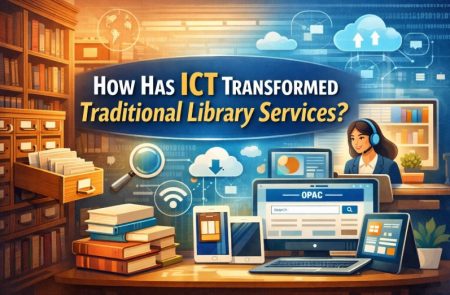
The integration of Information and Communication Technology (ICT) has significantly transformed library management and cataloguing systems, enhancing efficiency, accessibility, and user experience. One of the most notable changes is the automation of core library functions through Integrated Library Management Systems (ILMS) like Koha, Alma, and Evergreen. These systems have streamlined processes such as cataloguing, circulation, acquisitions, and user management, allowing libraries to handle large volumes of materials with greater accuracy and speed. The transition to digital cataloguing has also improved metadata management, enabling libraries to catalogue various materials, including books, e-books, and multimedia content, more efficiently. Furthermore, standardized systems like MARC and RDA ensure consistency in cataloguing, making resources easier to access and share across libraries.
Online Public Access Catalogues (OPACs) have been a game-changer in enhancing accessibility, allowing users to search for and locate materials from anywhere at any time. This shift from card catalogues to online databases has simplified the search process, providing users with real-time availability information and enabling them to reserve or renew items remotely. The introduction of discovery tools like Primo and Summon has further enhanced resource discovery by consolidating access to various library materials—books, journals, e-books, and digital repositories—into a single search interface. These tools make it easier for users to locate relevant resources without navigating multiple systems, improving the overall user experience.
In addition, ICT has empowered libraries to offer self-service options, such as RFID technology and self-checkout stations, which allow users to borrow and return materials independently. This not only reduces the workload on library staff but also increases operational efficiency, allowing staff to focus on more complex tasks like research support and resource management. The ability to manage user accounts online—viewing due dates, tracking borrowing history, and renewing materials remotely—has further enhanced convenience and accessibility for library users.
The adoption of cloud-based systems and digital repositories has enabled libraries to store, manage, and share materials more efficiently, facilitating collaboration between institutions and providing users with access to a wider range of resources. Interlibrary loan systems, powered by ICT tools like WorldShare and ILLiad, have streamlined the process of sharing resources between libraries, ensuring that users have access to a broader array of materials. Additionally, the ability to collect and analyze data in real-time has allowed libraries to monitor resource usage, track user behavior, and make data-driven decisions about collection development, budgeting, and service improvements. This ensures that libraries are constantly aligned with the needs of their users, further enhancing their relevance in an increasingly digital world.
The Role of ICT in Improving User Access to Library Resources, Both Physical and Digital
Information and Communication Technology (ICT) has significantly improved user access to library resources, both physical and digital, transforming the way users interact with libraries. One of the most important contributions of ICT has been the development of Online Public Access Catalogues (OPACs), which allow users to search the entire library collection from anywhere, at any time. These catalogues provide real-time information on resource availability, allowing users to easily check if a book is available, place a hold, or request materials remotely. The introduction of remote access platforms, such as EZproxy and OpenAthens, has also made it possible for users to access e-books, journals, and databases from off-campus, significantly enhancing access for distance learners and faculty working remotely. This has expanded access to library resources beyond the physical confines of the library, ensuring that users can retrieve essential materials regardless of their location.
Moreover, ICT has facilitated the integration of physical and digital collections, making it easier for users to discover and access a wide range of resources. Library management systems like Koha and Alma now allow users to search both physical and digital resources in a single search interface, streamlining the process of finding materials. Discovery tools like Primo and Summon have further improved the search process by aggregating content from various databases, catalogues, and repositories into one unified search, allowing users to locate relevant resources quickly and easily. Additionally, the advent of self-service technologies, such as RFID and barcode scanning, has empowered users to borrow, return, and renew materials independently, enhancing efficiency and convenience while reducing the need for direct interaction with library staff.
The rise of mobile technology has also played a crucial role in improving access. Many academic libraries now offer mobile apps or mobile-optimized websites that allow users to search catalogues, access e-books, renew materials, and manage their library accounts from smartphones or tablets. This flexibility has made library services more accessible, especially for users who may be on-the-go or away from campus. Furthermore, ICT has enabled virtual reference services, allowing users to receive real-time assistance via live chat or email, regardless of their location. These services provide immediate support for research inquiries, troubleshooting, and resource discovery, ensuring that users can access help when needed, without visiting the library in person.
Cloud-based systems have also contributed to improved access by enabling libraries to store and share resources digitally, allowing users to access materials from anywhere. These systems make it easier for libraries to collaborate, share digital resources, and provide users with access to materials through interlibrary loan systems. Overall, the integration of ICT in library operations has not only enhanced access to a diverse range of resources but also empowered users by offering them greater flexibility, convenience, and support. As technology continues to evolve, the role of ICT in libraries will likely expand, further improving the way users access information and engage with library services.
How ICT Can Improve the Research Support Services Provided by Academic Libraries
The integration of Information and Communication Technology (ICT) in academic libraries has fundamentally transformed research support services, enhancing the way libraries assist students, faculty, and researchers throughout the research process. From improving access to resources to offering advanced research tools and facilitating collaboration, ICT enables libraries to offer more efficient, personalized, and accessible services that support academic research in various disciplines. By leveraging technology, libraries can better meet the evolving needs of researchers and contribute to more productive and impactful research outcomes.
- Enhanced Access to Research Resources: One of the most significant ways ICT improves research support services is by expanding access to a wide range of digital resources. Academic libraries now provide access to vast collections of e-books, online journals, databases, and other digital resources through integrated library management systems (ILMS) and online portals. Tools such as Primo, Summon, and other discovery services aggregate content from multiple databases and repositories, allowing users to access scholarly articles, research papers, and other academic materials from a single interface. Furthermore, platforms like EZproxy and OpenAthens ensure remote access to subscription-based resources, enabling researchers to access materials from anywhere, whether they are on or off-campus. This expanded access to digital resources not only improves the efficiency of the research process but also ensures that researchers have access to the most up-to-date and comprehensive information available.
- Support for Information Literacy: ICT tools play a crucial role in enhancing information literacy, a core aspect of research support. Many academic libraries now offer online tutorials, workshops, and research guides that teach students and faculty how to effectively search, evaluate, and use information in their research. These resources are often integrated into learning management systems (LMS) like Moodle or Blackboard, allowing students to access them within their course materials. Additionally, library websites and mobile apps provide access to research guides, citation tutorials, and guides on using academic databases. These resources help users navigate the increasingly complex landscape of scholarly information, ensuring they can find reliable, peer-reviewed sources for their research. By offering these tools, libraries equip researchers with the skills necessary to efficiently locate, assess, and use information to support their academic work.
- Tools and Virtual Research Communities: ICT has also improved research support by facilitating collaboration among researchers. Tools like Google Drive, Dropbox, and cloud-based storage systems allow researchers to work together on documents, share files, and collaborate in real-time, regardless of location. Academic libraries can also leverage these tools to create virtual research communities, where students, faculty, and researchers can share resources, exchange ideas, and collaborate on projects. In addition, libraries provide access to research networking platforms, such as ResearchGate and Academia.edu, where users can connect with other scholars in their field. These platforms foster a collaborative environment and enhance knowledge exchange, ultimately improving the quality of research and fostering interdisciplinary collaboration.
- Advanced Research Tools and Databases: ICT enables libraries to provide access to specialized research tools and databases that support advanced academic research. Many academic libraries now offer access to databases such as EndNote, Zotero, and Mendeley, which help researchers organize, manage, and cite their references. These tools integrate seamlessly with word processing software, streamlining the citation and referencing process and reducing the time spent on administrative tasks. Additionally, libraries often provide access to statistical analysis software like SPSS, R, and NVivo, which support data analysis and qualitative research. By providing access to these tools, libraries enable researchers to conduct more sophisticated analyses and manage complex data more effectively, thereby enhancing the overall quality of their research.
- Virtual Reference and Research Assistance: Virtual reference services powered by ICT are another way academic libraries enhance research support. Tools such as LibAnswers, Live Chat, and email-based reference services enable researchers to seek immediate help with their research questions, access guidance on resource discovery, and receive technical support. These services make library assistance more accessible, allowing researchers to get the help they need at any time, without the need to visit the library in person. Virtual research consultations also enable librarians to provide tailored support, helping researchers refine their research questions, identify appropriate resources, and navigate complex research topics. By offering virtual reference services, libraries can assist researchers at every stage of their research, from initial planning to final submission.
- Data Management and Preservation: As research increasingly involves large datasets, academic libraries are leveraging ICT to provide support for data management and preservation. Libraries offer services to help researchers organize, store, and share their data in compliance with institutional and funding agency requirements. Tools like DSpace and Figshare enable researchers to deposit, share, and preserve their data, ensuring long-term access and reusability. Libraries also provide guidance on best practices for data management, including data storage, organization, and documentation, helping researchers maintain the integrity and accessibility of their datasets. By supporting data management and preservation, libraries contribute to the integrity and reproducibility of research, facilitating future collaboration and enhancing the impact of academic work.
- Support for Open Access and Scholarly Publishing: ICT has also facilitated the rise of open access initiatives, which allow researchers to freely share their work with a global audience. Academic libraries are at the forefront of supporting open access by providing repositories where researchers can deposit their publications, such as institutional repositories and open access journals. By offering these platforms, libraries ensure that research outputs are publicly available, promoting knowledge dissemination and reducing the barriers to accessing scholarly information. Additionally, libraries provide researchers with guidance on publishing in open access journals and navigating copyright issues, enabling them to reach a wider audience and increase the visibility of their research.
The integration of ICT has profoundly enhanced the research support services provided by academic libraries. From improving access to resources and offering advanced research tools to fostering collaboration and supporting data management, ICT enables libraries to provide more effective and personalized services to researchers. As technology continues to evolve, academic libraries will continue to adapt, offering new and innovative ways to support research and contribute to the advancement of knowledge. By embracing ICT, libraries are positioning themselves as integral partners in the research process, supporting academic communities and facilitating the production of high-quality, impactful research.
How Academic Libraries Ensure ICT Tools Are Accessible to All Users, Including Those with Disabilities
Academic libraries are committed to ensuring that ICT tools are accessible to all users, including those with disabilities, by implementing a range of strategies that make their resources and services inclusive. One of the primary methods is adhering to established web accessibility standards, such as the Web Content Accessibility Guidelines (WCAG), which help libraries design websites, catalogues, and digital tools that are usable by people with visual, auditory, motor, and cognitive impairments. These standards ensure that digital content, such as images, videos, and navigation elements, is accessible to assistive technologies like screen readers, while also making websites navigable by keyboard shortcuts for users with mobility impairments. In addition to following these guidelines, many libraries also comply with national and local accessibility regulations, such as the Americans with Disabilities Act (ADA), ensuring that their ICT tools meet legal requirements for accessibility.
To further support accessibility, academic libraries integrate assistive technologies like screen readers, magnification software, speech-to-text tools, and adaptive hardware into their ICT infrastructure. These tools enable users with visual impairments to access text-based content, help those with motor disabilities interact with digital materials through voice commands, and assist individuals with hearing impairments by providing captions for videos. Specialized workstations equipped with a combination of these assistive technologies are often made available to ensure that users with disabilities can effectively use library resources.
Academic libraries also focus on making their websites and digital platforms fully accessible by incorporating features such as clear navigation, resizable fonts, and high contrast text, all of which improve usability for users with disabilities. These websites and platforms are designed to be compatible with screen readers and other assistive technologies, ensuring that all users can easily search for and access resources. In addition, many libraries offer audio descriptions or transcripts for multimedia content, such as instructional videos, to make them accessible to users with hearing impairments. By creating accessible digital platforms, libraries make sure that all users, regardless of their abilities, can efficiently navigate and benefit from library resources.
Training library staff is also an essential part of ensuring accessibility. Library personnel are trained to understand and support the use of assistive technologies and help users with disabilities access resources. This includes providing guidance on operating screen readers, speech-to-text software, and other tools, as well as offering personalized support to help users navigate digital platforms. By investing in staff training, libraries ensure that they provide not only accessible technology but also a supportive and responsive environment for users with disabilities.
To continually improve accessibility, libraries implement feedback mechanisms that allow users with disabilities to provide input on their experiences with library ICT tools. This feedback helps libraries identify areas for improvement and make adjustments to their technology and services. By soliciting input from users and making necessary changes, libraries ensure that their resources remain accessible and responsive to the needs of all users.
Lastly, many academic libraries adopt the principles of universal design, which aims to create ICT tools that are usable by all people, regardless of their abilities. This approach ensures that accessibility is built into the design of digital resources and platforms from the outset, making it easier for all users to interact with library services. By focusing on universal design, libraries can create flexible tools that meet the diverse needs of their user base, promoting an inclusive and equitable academic environment.
Through these strategies—adhering to accessibility standards, integrating assistive technologies, designing accessible digital platforms, training staff, gathering feedback, and applying universal design principles—academic libraries ensure that their ICT tools are accessible to all users, including those with disabilities. These efforts contribute to a more inclusive and supportive learning environment, where all users can engage with library resources and services on equal terms.


2 Comments
Yes , it’s really helpful to me.
This is very satisfying content for me as LIS Educator, i commend the author immensely. look forward for more update from this blog aand possibly emails