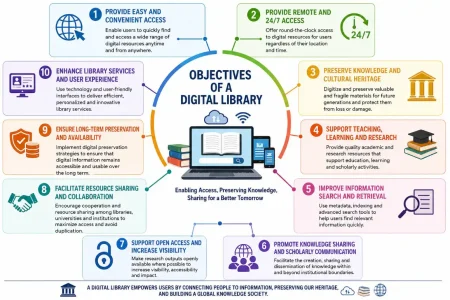
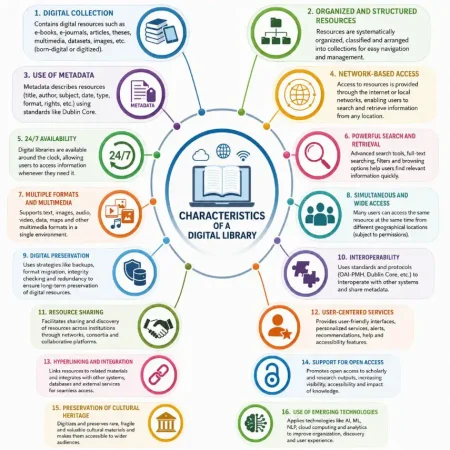
E-resources in higher education refer to a broad range of digital materials, including e-books, online journals, databases, multimedia content, and educational software, which are accessed through electronic devices. These resources have become indispensable tools in modern academic settings, offering significant advantages in terms of accessibility, convenience, and cost-efficiency. For instance, platforms like JSTOR and SpringerLink provide access to thousands of academic journals, enabling students and researchers to access scholarly articles and publications from anywhere in the world. Similarly, tools like Google Scholar and ResearchGate foster global academic collaboration by allowing researchers to share and discover papers across disciplines.
By eliminating the need for physical copies and making content available at the click of a button, e-resources have transformed the way students and faculty interact with information. Online textbooks and learning platforms, such as Coursera and edX, allow students to take courses from renowned institutions, offering the flexibility to learn at their own pace and from anywhere. E-resources also support diverse learning styles, with platforms like Khan Academy and YouTube providing interactive videos and tutorials to complement traditional learning. These platforms encourage self-paced, on-demand access to educational content, making education more inclusive.
Additionally, e-resources provide vast opportunities for collaboration, research, and global networking, as they break down geographical and temporal barriers. Databases such as Scopus and PubMed allow researchers to access the latest research across the globe, facilitating the exchange of knowledge and accelerating academic progress. However, despite their many benefits, the integration and management of e-resources present several challenges. Issues related to copyright, such as licensing agreements for digital textbooks or journals, can hinder access, while the need for digital literacy presents challenges in ensuring that all users can fully utilize these resources. Furthermore, access equity remains a concern, particularly in regions where reliable internet access or technology is limited.
As technology continues to evolve, the future of e-resources in higher education holds exciting possibilities. The expansion of open access initiatives, such as the Directory of Open Access Journals (DOAJ), aims to make academic knowledge freely available to everyone. Additionally, the integration of advanced technologies like artificial intelligence and augmented reality (AR) is shaping the next generation of learning experiences. Tools such as virtual libraries and AR-based simulations in disciplines like medicine or engineering may further enhance the learning process, creating immersive environments that blend traditional education with cutting-edge digital experiences.
How E-Resources Improve Access to Academic Content in Higher Education Institutions
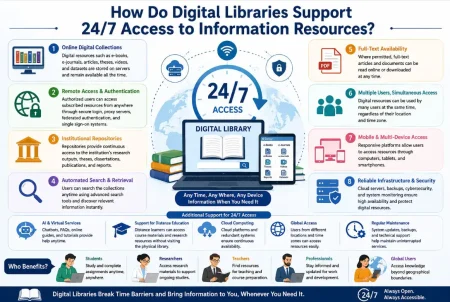
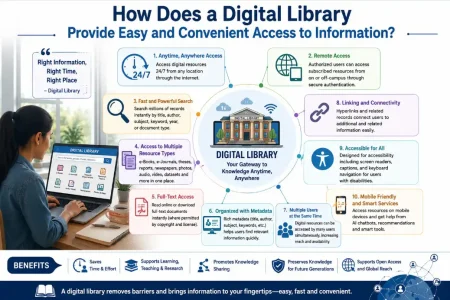
E-resources have fundamentally transformed access to academic content in higher education institutions by offering increased flexibility, affordability, and global accessibility. Traditionally, students and researchers had to rely on physical copies of books, journals, and other academic materials, often requiring a visit to the library or waiting for physical delivery. E-resources, however, provide 24/7 access to a vast array of academic materials, ranging from e-books and online journals to multimedia content and educational databases. Platforms such as JSTOR, SpringerLink, IEEE Xplore, and ProQuest have made it possible for students and faculty to access scholarly articles, research papers, and e-books at any time and from any location, ensuring that academic content is no longer confined to physical spaces. This enhanced accessibility is particularly important for students in remote or underserved areas who may have limited access to traditional library resources.
The flexibility of e-resources has also revolutionized learning by promoting on-demand access to academic content. With digital textbooks, online journals, and platforms like Khan Academy, Coursera, and edX, students can review, study, and revisit materials at their own pace, outside the constraints of traditional classroom settings. This enables learners to better control their educational journey, reinforcing concepts as needed. Furthermore, e-resources have made learning more affordable, reducing the financial burden on students who would otherwise have to purchase expensive textbooks and journals. Many institutions now provide access to a range of digital materials through subscriptions to e-resources platforms, often at no additional cost to students, making academic content more accessible and cost-effective. Open-access initiatives, such as the Directory of Open Access Journals (DOAJ), further reduce costs by providing free access to scholarly articles and research papers.
E-resources also facilitate collaboration and global research by allowing students and researchers to share and access materials from across the world. Digital platforms enable researchers to work together on projects regardless of geographical location, breaking down barriers to academic collaboration. Databases like Scopus, PubMed, and Web of Science offer centralized repositories of research articles, providing access to the latest publications in various academic fields. This capability encourages interdisciplinary research, as e-resources allow easy access to materials across different disciplines, fostering the exchange of ideas and accelerating academic progress.
Another significant advantage of e-resources is their ability to provide real-time access to the latest research. Unlike traditional print publications, which can have long lead times between submission and distribution, e-resources are often updated frequently. Open-access repositories like arXiv and SSRN allow researchers to share their findings with the academic community before undergoing formal peer review, ensuring that students and researchers have access to cutting-edge information. This is particularly beneficial in rapidly evolving fields such as medicine, technology, and environmental science, where timely access to new data is critical for academic and professional advancement.
In addition to providing access to academic content, e-resources support the development of information literacy and research skills. As students navigate databases and evaluate digital resources, they develop essential skills in information retrieval, source evaluation, and citation management. Universities often offer workshops and training sessions to help students become proficient in using e-resources, ensuring that they are not only able to access information but also equipped to use it effectively in their academic work. These skills are not only valuable for academic success but also for future careers, where digital literacy is increasingly essential.
In What Ways Do E-Resources Contribute to the Democratization of Knowledge in Higher Education?
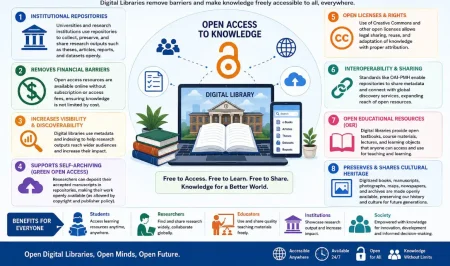
E-resources have played a pivotal role in the democratization of knowledge in higher education by making academic content more accessible, affordable, and inclusive. In traditional educational models, access to scholarly materials was often limited to those who could afford expensive textbooks, subscriptions to journals, or membership in exclusive academic institutions. However, with the rise of digital resources such as e-books, online databases, open-access journals, and multimedia content, the boundaries that once restricted access to knowledge have been significantly reduced. E-resources are fostering a more equitable academic landscape, enabling students, researchers, and educators from diverse backgrounds and locations to access the tools and information needed to succeed.
- Broadening Access to Knowledge: One of the most profound ways e-resources contribute to the democratization of knowledge is by removing geographic and economic barriers. In the past, students and researchers in remote or underserved areas often struggled to access essential academic content. Physical libraries, even with extensive collections, were limited in scope and often lacked access to up-to-date publications. E-resources, however, are available online 24/7 and can be accessed from anywhere with an internet connection. This has leveled the playing field for students and researchers in developing countries or rural areas, where access to physical libraries and resources may be limited. For example, platforms such as Google Scholar, JSTOR, and the Directory of Open Access Journals (DOAJ) provide students and scholars from various parts of the world with the opportunity to access research articles, scholarly books, and educational materials without the need for physical access to libraries.
- Reducing Financial Barriers: The high cost of textbooks, journal subscriptions, and other academic resources has long been a barrier to education, particularly for students from low-income backgrounds. E-resources have significantly reduced these costs by providing many materials online at little to no expense. Open-access journals and repositories, such as PubMed Central and arXiv, offer free access to research papers and scholarly articles, allowing students and researchers to access the latest academic content without paying for expensive subscriptions. Many universities and libraries also provide free access to digital libraries, which include a wide range of academic materials. This reduction in cost ensures that students, regardless of their financial situation, can access the same high-quality academic resources as their peers, contributing to a more equitable educational experience.
- Promoting Inclusivity in Learning: E-resources also contribute to inclusivity by supporting diverse learning styles and needs. Traditional print-based materials often pose challenges for students with disabilities or those who require different formats of learning. E-resources, on the other hand, can be customized to suit individual learning preferences. Digital textbooks, for instance, can be easily adjusted for font size, background color, and text-to-speech options, making them more accessible to students with visual impairments or learning disabilities such as dyslexia. Additionally, multimedia content, such as video lectures, podcasts, and interactive tutorials, provides students with alternative ways to engage with academic material. This flexibility ensures that a broader range of learners can access and benefit from the same academic content, further supporting the goal of equal educational opportunities for all.
- Facilitating Open Access and Knowledge Sharing: The growth of open-access publishing and repositories has been one of the most significant developments in the democratization of knowledge. Open-access initiatives aim to make academic research freely available to everyone, without subscription fees or paywalls. The rise of platforms like OpenDOAR (Directory of Open Access Repositories) and initiatives such as the Budapest Open Access Initiative (BOAI) has allowed researchers to share their findings with a global audience, ensuring that knowledge is not confined to those who can afford to pay for access. These platforms not only give students access to peer-reviewed research but also allow scholars from different parts of the world to contribute their work, regardless of their institution’s financial resources.
Furthermore, e-resources facilitate the sharing of knowledge across borders, enhancing global collaboration and reducing the digital divide. Researchers in developing countries can now collaborate with their peers in more affluent regions, exchanging data, insights, and findings without the constraints of geographical location. This global network of knowledge sharing accelerates the spread of innovation, research, and educational advancements, benefiting societies worldwide. - Supporting Lifelong Learning: E-resources are also contributing to the democratization of knowledge by enabling lifelong learning. In the past, education was often seen as a stage of life that ended with graduation. However, in today’s fast-paced, technology-driven world, the need for continuous learning is more important than ever. E-resources provide adults and professionals the ability to learn new skills, pursue certifications, or continue their academic journey at any stage of life. Online platforms like Coursera, edX, and Khan Academy offer courses from top universities, enabling individuals to access high-quality education regardless of their age or geographical location. By providing a wide range of learning opportunities for everyone, e-resources are empowering individuals to take control of their education, leading to more equitable access to knowledge throughout one’s lifetime.
- Encouraging Collaboration and Cross-Disciplinary Learning: Another significant way e-resources contribute to the democratization of knowledge is by fostering collaboration and cross-disciplinary learning. Digital platforms host vast amounts of research and educational content that spans multiple disciplines. Researchers and students now have access to knowledge from fields outside their own, encouraging the cross-pollination of ideas and the exploration of interdisciplinary approaches. Platforms like ResearchGate and Academia.edu allow researchers to share their work and engage with colleagues in different fields, broadening their understanding of diverse topics. By facilitating this kind of knowledge exchange, e-resources encourage creative problem-solving and innovative thinking, which ultimately leads to more inclusive and comprehensive academic growth.
E-resources have played a crucial role in democratizing knowledge in higher education by breaking down barriers related to geography, cost, inclusivity, and access. By providing free and open access to academic content, reducing financial barriers, and promoting diverse learning experiences, e-resources have made education more equitable and inclusive. Open-access publishing, flexible learning formats, and the ability to collaborate globally have created a more open and collaborative academic environment. As technology continues to evolve, the role of e-resources in further democratizing knowledge will continue to grow, ensuring that academic content is available to everyone, regardless of background or location. Ultimately, e-resources have transformed higher education into a more inclusive, accessible, and global enterprise, ensuring that knowledge is no longer a privilege but a right available to all.
Advantages of Integrating E-Resources into the Curriculum and Teaching Methods
The integration of e-resources into the curriculum and teaching methods offers numerous advantages, transforming how academic content is delivered and engaged with by students. One of the primary benefits is the enhanced accessibility and flexibility that e-resources provide. Unlike traditional textbooks, which may be costly and difficult to obtain, e-resources are available online, allowing students to access them anytime and anywhere with an internet connection. This eliminates the need for physical presence in a library and ensures that all students, regardless of their location or time constraints, can engage with academic materials. Furthermore, e-resources cater to diverse learning styles, offering content in various formats, such as text, video, audio, and interactive elements. This flexibility allows students to engage with materials in ways that best suit their individual learning preferences, whether they are visual, auditory, or kinesthetic learners. For example, visual learners can benefit from infographics and diagrams, while auditory learners can utilize podcasts or narrated lectures.
Additionally, e-resources promote independent learning and critical thinking by providing students with a broad range of materials they can explore outside of traditional class settings. With easy access to online journals, e-books, and databases, students can take ownership of their learning, conduct self-directed research, and delve deeper into subjects of interest. This autonomy fosters critical thinking, problem-solving skills, and intellectual curiosity, as students are encouraged to engage with materials beyond the confines of prescribed textbooks. Moreover, e-resources foster collaboration and knowledge sharing among students. Platforms such as Google Scholar and ResearchGate enable students and researchers to connect with peers globally, exchange ideas, and collaborate on projects, regardless of geographical location. This global collaboration enhances the learning process, promoting diverse perspectives and encouraging interdisciplinary exploration.
E-resources also provide real-time access to the latest academic research, ensuring that students and educators are engaging with up-to-date information. Unlike traditional print-based resources, which can have significant delays between publication and distribution, e-resources are often updated regularly, offering immediate access to new studies and findings. This is particularly valuable in fast-evolving fields such as medicine, technology, and environmental science, where current information is crucial. Furthermore, the integration of e-resources into the curriculum supports inclusivity by providing accessible formats for students with disabilities. Many e-resources include features such as text-to-speech options, adjustable font sizes, and screen readers, allowing students with visual impairments or learning disabilities to access materials on an equal footing with their peers.
In addition to enhancing access and inclusivity, e-resources help reduce costs for both students and institutions. Traditional textbooks can be expensive, and providing copies for an entire class often requires significant financial resources. E-resources, by contrast, are typically more affordable and can be accessed by multiple students simultaneously, reducing the overall financial burden. Many universities provide access to e-resources through institutional subscriptions, ensuring that students can access a wide range of materials without additional costs. This cost-effectiveness benefits both students, who are able to avoid purchasing expensive textbooks, and institutions, which can allocate funds to other educational resources.
How E-Resources Help in Reducing the Cost of Accessing Educational Materials for Students and Institutions
E-resources have fundamentally altered the economics of accessing educational materials in higher education, benefiting both students and institutions. The increasing adoption of digital resources such as e-books, online journals, databases, and multimedia content has led to significant cost savings in various areas of education. Traditional academic resources, particularly physical textbooks and print journals, can be expensive, both for institutions to procure and for students to purchase. The widespread use of e-resources, however, has reduced these costs, offering a more affordable and efficient alternative for accessing academic materials.
- Reduced Material Costs for Students: One of the primary ways e-resources help reduce the cost of accessing educational materials is by providing students with more affordable options than traditional textbooks. Printed textbooks can be prohibitively expensive, often costing hundreds of dollars per semester, and many students struggle to afford these materials. E-resources, in contrast, offer significant cost savings. Many academic institutions subscribe to digital libraries and platforms that provide students with free access to a wide range of e-books, journals, and databases. For example, platforms such as JSTOR, SpringerLink, and ProQuest allow students to access scholarly content without having to purchase individual copies, thus eliminating the financial burden of acquiring expensive textbooks. Moreover, many e-resources are offered in open-access formats, meaning students can access them at no cost, further reducing their financial strain.
Additionally, e-resources often eliminate the need for students to purchase multiple editions of the same textbook, which can be a common requirement in many academic courses. Digital resources are typically updated more frequently, allowing students to access the most current version of the material without the additional costs associated with purchasing the latest print editions. This model also allows for greater flexibility, as students can access a variety of materials online instead of relying on one prescribed textbook, reducing the need for supplementary purchases. - Lower Costs for Academic Institutions: Institutions also benefit financially from the use of e-resources. In the past, universities had to spend significant amounts of money purchasing and maintaining physical collections of books and journals, which required storage space and constant upkeep. With e-resources, these costs are significantly reduced, as digital content does not require physical storage or regular replacements due to wear and tear. By subscribing to digital platforms, institutions can provide their students with access to a broad range of academic content without the need for large physical collections, cutting down on overhead costs associated with printing, storing, and managing physical materials.
Moreover, many e-resources are available through institutional licenses, allowing universities to grant access to a wide variety of students simultaneously. This eliminates the need to purchase multiple copies of books or journals for a class, as the digital format enables unlimited access. For example, when a university subscribes to an academic database like ScienceDirect or Wiley Online Library, thousands of students can access the same content at once, whereas, with print materials, only a limited number of students could access a single copy. This cost-effective distribution model ensures that institutions can provide students with access to a vast array of materials without incurring the high costs associated with traditional print-based resources. - Open Access and Publicly Available Content: The growth of open-access initiatives has further contributed to reducing the cost of accessing educational materials. Open-access journals, repositories, and digital libraries provide free access to research and scholarly articles, removing the barriers associated with subscription fees. Initiatives like the Directory of Open Access Journals (DOAJ), PubMed Central, and arXiv offer an extensive range of academic content that students, researchers, and educators can access without financial barriers. Open-access publications ensure that academic content is not confined to those who can afford expensive subscriptions, democratizing access to knowledge and reducing the overall cost burden for both students and institutions.
Furthermore, many governments and educational institutions are increasingly supporting open-access policies, which require publicly funded research to be made freely available to the public. These initiatives allow universities and students to access high-quality research at no cost, improving the accessibility of academic materials across disciplines. - Increased Efficiency and Reduced Administrative Costs: The use of e-resources also helps reduce administrative costs for institutions. Managing a traditional library collection requires substantial financial and human resources for cataloging, maintaining, and updating physical books and journals. E-resources, however, simplify these processes. Digital content can be easily accessed, tracked, and managed through online systems, reducing the need for physical inventory management. Additionally, e-resources can be integrated into Learning Management Systems (LMS), allowing students and faculty to access materials directly through the platforms they use for course administration. This integration streamlines the process of distributing educational content, saving both time and money.
- Access to Multiple Copies: Another significant cost-saving aspect of e-resources is their scalability. Unlike print materials, which require multiple copies to be purchased for larger classes, e-resources can be accessed by an unlimited number of users simultaneously. This makes them particularly cost-effective for large institutions or courses with high enrollment. For instance, when an academic journal or e-book is available in digital format, an entire class can access it at once, ensuring that every student has equal access to the material. This scalability not only makes e-resources more affordable but also eliminates the logistical challenges associated with distributing and managing physical copies of materials.
- Supporting Long-Term Cost Savings: Finally, e-resources contribute to long-term cost savings for both students and institutions by offering more sustainable and efficient alternatives to traditional educational materials. The digital nature of e-resources means they do not require the same level of physical resources—such as paper, ink, and transportation—that printed materials do. This sustainability is important in a world increasingly concerned with environmental impact and resource conservation. By reducing the need for physical copies and embracing digital alternatives, educational institutions and students contribute to reducing waste, energy consumption, and carbon footprints, all while cutting costs.
E-resources offer a range of financial benefits that significantly reduce the cost of accessing educational materials for both students and institutions. By providing affordable alternatives to expensive textbooks and print journals, e-resources make academic content more accessible and equitable. For institutions, the shift to digital resources helps cut costs related to physical storage, book purchasing, and administrative management. Open-access initiatives and the scalability of digital content further contribute to reducing financial barriers, ensuring that high-quality academic materials are available to all, regardless of financial means. As technology continues to advance, e-resources will play an increasingly central role in reducing the financial burden of education, making learning more accessible and sustainable in the years to come.
Primary Challenges Faced by Universities in Managing E-Resources Effectively
As universities increasingly embrace e-resources to enhance access to educational materials, they are confronted with several challenges in managing these resources effectively. E-resources, which include e-books, online journals, databases, multimedia content, and educational software, have revolutionized higher education by providing students and faculty with 24/7 access to academic content. However, the management of e-resources is not without its complexities. Universities must navigate various obstacles, ranging from technical and financial challenges to issues of accessibility, licensing, and user training. Addressing these challenges is crucial for ensuring that e-resources are used efficiently and equitably, thereby maximizing their potential in supporting academic learning and research.
- Licensing and Copyright Issues: One of the most significant challenges universities face in managing e-resources is dealing with licensing and copyright issues. Unlike physical books, which can be easily purchased and distributed, digital content is often subject to complex licensing agreements that dictate how it can be accessed, shared, and used. Many e-resources are provided under subscription-based models, and institutions must negotiate licensing terms with publishers and content providers. These terms can be restrictive, limiting the number of simultaneous users, the duration of access, or the scope of allowed content usage.
Furthermore, licensing agreements often come with financial costs that can strain university budgets. The need for ongoing renewal of licenses, along with price increases from content providers, makes it challenging for universities to sustain access to e-resources over the long term. For example, digital journals or databases may become prohibitively expensive for institutions, especially smaller universities or those with limited budgets. Additionally, issues related to copyright infringement, such as unauthorized distribution or usage of digital materials, can create legal concerns and ethical dilemmas for universities. - Digital Divide and Access Inequality: While e-resources provide significant benefits in terms of accessibility, they also expose existing disparities in access to technology and the internet. Not all students, particularly those from low-income backgrounds or rural areas, have reliable internet connections or access to modern computing devices. This digital divide creates a barrier to equitable access to e-resources, as students without proper technological infrastructure may be unable to fully utilize online resources.
Universities must ensure that their digital resources are accessible to all students, regardless of their socio-economic status. This often requires providing loaner devices, subsidizing internet access, or offering alternative methods for accessing content. Without addressing these access issues, universities risk exacerbating educational inequalities, particularly in an increasingly digital academic environment. - Technical Challenges and Infrastructure: Another significant challenge is the technical complexity of managing e-resources effectively. The infrastructure required to support the use of digital materials, including servers, databases, and management systems, can be costly and resource-intensive. Universities must ensure that they have the technical infrastructure in place to host, manage, and secure a large volume of digital content. This includes ensuring that the systems used for accessing e-resources are stable, secure, and capable of handling high volumes of users.
Moreover, maintaining the integration of e-resources with existing systems, such as Learning Management Systems (LMS) and library databases, can be technically challenging. Compatibility issues, software bugs, and system failures can disrupt access to resources, frustrating users and hindering the learning process. Universities must also invest in technical support staff to maintain and troubleshoot these systems, which can be an ongoing expense. - User Training and Information Literacy: E-resources require users to develop new skills in order to search, evaluate, and use digital content effectively. Many students and even faculty may not be fully proficient in using digital tools or accessing online resources, particularly when it comes to navigating complex databases or using advanced search functions. The lack of information literacy skills in identifying, evaluating, and using information effectively can limit the benefits of e-resources. If students do not know how to search for academic articles or critically assess digital content, they may struggle to make the most of available resources.
Universities must provide ongoing training and support to help students and faculty build their digital literacy skills. This includes teaching users how to effectively search databases, evaluate online sources for credibility, and use citation management tools. Many universities are incorporating information literacy programs into their curricula, but this requires additional resources, including time, staff, and training materials. - Preservation and Long-Term Access: Another key challenge in managing e-resources is ensuring their long-term preservation and continued access. Unlike physical materials, which can be stored in libraries for decades, digital content is vulnerable to issues like file degradation, obsolescence of software, or changes in licensing agreements. Without proper preservation strategies, e-resources may become inaccessible over time, leading to gaps in academic resources and research.
Universities must invest in digital preservation strategies, including regular backups, data migration, and adherence to digital archiving standards. These strategies ensure that e-resources remain accessible and usable in the future, even as technology evolves. However, the cost and technical expertise required for digital preservation can be substantial, making it a complex challenge for institutions to address. - Overwhelming Volume of Available Resources: The sheer volume of available e-resources presents another challenge for universities. With millions of articles, books, and other materials available online, it can be difficult for students and faculty to sift through the vast amounts of information to find relevant, credible, and high-quality resources. While databases and search engines offer tools to narrow down search results, the process of curating and organizing digital resources is often overwhelming.
Universities must implement effective discovery systems that allow users to easily find and access the most relevant and credible materials. This requires integrating e-resources into a well-organized, user-friendly digital library platform, which can be a technical and financial challenge. Additionally, universities must continuously evaluate the quality of the e-resources they provide to ensure that they align with academic needs and standards. - Vendor Dependence and Lack of Control: E-resources are often provided by third-party vendors, which means universities are dependent on these vendors for the availability and quality of content. Vendor-driven platforms may not always meet the specific needs of users, such as offering content in the right format or supporting particular software systems. Additionally, universities may face difficulties when vendors change pricing models, modify terms of access, or even discontinue resources altogether. This lack of control over e-resources can make it challenging for universities to maintain consistent access to critical materials, particularly if the vendor increases costs or changes policies mid-contract.
The management of e-resources in higher education presents a range of challenges that universities must navigate to maximize the effectiveness of these digital tools. Licensing and copyright issues, access inequality, technical infrastructure, user training, digital preservation, the overwhelming volume of available resources, and vendor dependence all contribute to the complexities of managing e-resources. Addressing these challenges requires significant investment in both technology and human resources. By developing comprehensive strategies that address these obstacles, universities can ensure that e-resources are used effectively to enhance the learning and research experiences of students and faculty, ultimately contributing to the growth of digital scholarship in academia.
The Role of Information Literacy and Digital Skills in the Effective Use of E-Resources in Higher Education
The effective use of e-resources in higher education is crucial for students, faculty, and researchers, and it requires strong information literacy and digital skills. Information literacy refers to the ability to identify, locate, evaluate, and use information effectively, a competency that is essential when navigating the vast amounts of digital content available in online databases, digital journals, and e-books. Students with strong information literacy skills are able to critically assess sources, distinguishing credible academic materials from unreliable ones. This is particularly important when conducting research online, as students must ensure they are using trustworthy sources to support their academic work. Moreover, information literacy includes an understanding of ethical considerations, such as proper citation practices and copyright laws, ensuring that students use digital content responsibly.
In parallel with information literacy, digital skills are also essential for accessing and utilizing e-resources effectively. Digital skills encompass the ability to navigate digital platforms, use search engines and academic databases efficiently, manage digital files, and apply basic computing concepts. For instance, students need to be proficient in using online databases like JSTOR and PubMed, utilizing advanced search functions to refine results and find relevant material. Digital skills also involve managing digital files such as PDFs and references, often using tools like Zotero or EndNote for citation management. In addition, as educational technologies continue to evolve, students must be comfortable using various digital tools such as Learning Management Systems (LMS), video conferencing platforms, and collaborative software to interact with course content and communicate with peers and instructors.
While information literacy and digital skills are distinct, they are closely interconnected. Information literacy provides the critical thinking framework necessary to evaluate digital content, while digital skills enable students to engage with that content in meaningful ways. For example, when conducting research, students need the ability to assess the quality of sources (information literacy) as well as the proficiency to search effectively and organize their findings (digital skills). This combination of competencies ensures that students are not only able to access e-resources but can also use them effectively to support their academic work.
To ensure that students can make the most of e-resources, universities must integrate both information literacy and digital skills training into their curricula. This could involve offering standalone courses focused on research skills, as well as incorporating digital literacy into subject-specific classes. Academic libraries often play a key role in providing this training, offering workshops, tutorials, and one-on-one consultations to help students develop their research and digital skills. By equipping students with these competencies, universities can empower them to navigate the digital academic environment with confidence, making it easier to access, evaluate, and use e-resources effectively.
Cultivating strong information literacy and digital skills brings a range of benefits. Students with these skills are better prepared to succeed academically, as they can conduct thorough research, locate high-quality sources, and produce credible academic work. These skills also have professional applications, as digital literacy and critical thinking are highly valued in the modern workplace. Additionally, by fostering information literacy and digital skills, universities help students develop lifelong learning abilities, ensuring that they can continue to adapt to new technologies and tools throughout their careers. In an increasingly digital world, these competencies are essential for academic success, preparing students for both their professional lives and the challenges of a rapidly changing technological landscape.
Emerging Trends in E-Resource Usage That Higher Education Institutions Should Prepare For
The landscape of higher education is undergoing a significant transformation, largely driven by the increased use of e-resources in teaching, learning, and research. As technology continues to evolve, universities and academic institutions must stay ahead of emerging trends in e-resource usage to ensure they are providing the best possible learning environments and research opportunities for their students and faculty. These trends, ranging from the rise of open-access content to the integration of artificial intelligence (AI) and immersive technologies, are reshaping how academic resources are accessed and utilized. By understanding and preparing for these developments, higher education institutions can maintain their competitive edge and better serve the needs of their academic communities.
- Expansion of Open Access Resources: One of the most significant trends in e-resource usage is the growing emphasis on open-access content. Open access refers to the practice of making academic research and publications freely available to the public without subscription fees. This trend has gained momentum in recent years, as institutions, governments, and funding bodies push for more research to be made openly accessible to promote broader knowledge dissemination. Major initiatives like the Budapest Open Access Initiative and the Directory of Open Access Journals (DOAJ) have contributed to the rise of open-access repositories, enabling students and researchers worldwide to access scholarly articles, journals, and data without financial barriers.
Higher education institutions should prepare for the continued expansion of open access by integrating these resources into their academic frameworks. Universities will need to encourage faculty to publish in open-access journals and provide training to students on how to access and use open-access content effectively. Additionally, institutions may need to adopt new technologies and systems that facilitate the discovery and management of open-access materials. - Integration of Artificial Intelligence (AI) and Machine Learning: Artificial intelligence and machine learning are increasingly becoming integral components of academic research and resource management. AI can significantly enhance the accessibility and functionality of e-resources by improving search algorithms, providing personalized content recommendations, and automating administrative tasks. For example, AI-powered tools can help students discover relevant academic articles by analyzing their search patterns and suggesting materials based on their specific research interests.
In addition, AI is being used to improve the efficiency of academic databases and library systems. Machine learning algorithms can categorize and index vast amounts of research content, making it easier for students and researchers to find relevant materials. As AI continues to evolve, institutions will need to invest in AI technologies that support resource management, content discovery, and data analysis to enhance both teaching and learning experiences. - Increased Use of Multimedia and Interactive Content: The demand for multimedia and interactive content is on the rise, as students and educators increasingly seek dynamic and engaging learning experiences. Video lectures, podcasts, interactive simulations, and virtual labs are becoming essential components of e-resources in higher education. These types of resources cater to different learning styles and provide students with opportunities to engage with content in more diverse and interactive ways.
Higher education institutions should prepare for the growing demand for multimedia content by investing in platforms and technologies that allow for the creation, distribution, and integration of these materials. This may involve integrating video-based learning modules, interactive quizzes, and virtual environments into the curriculum to complement traditional readings and lectures. Additionally, the use of virtual and augmented reality (VR/AR) technologies for immersive learning experiences is an emerging trend that universities may want to explore, particularly in fields like engineering, medicine, and the sciences. - Cloud-Based E-Resource Management: Cloud computing is revolutionizing the way academic resources are stored, accessed, and managed. Cloud-based platforms enable universities to store vast amounts of digital content securely and make it accessible to students and faculty from any device with an internet connection. This eliminates the need for physical storage and provides a scalable solution for managing e-resources, such as digital libraries, research papers, and educational software.
Cloud-based systems also offer benefits in terms of collaboration and sharing, as students and faculty can work on projects and access shared resources in real-time, regardless of their location. As cloud-based technologies continue to improve, higher education institutions will need to adopt and integrate these platforms to streamline e-resource management and enhance collaboration among students and researchers. - E-Resources for Lifelong Learning and Professional Development: As the demand for lifelong learning grows, e-resources are playing an increasingly important role in providing access to educational content beyond traditional degree programs. Online courses, certification programs, and professional development resources are becoming essential for individuals looking to enhance their skills or pivot to new careers. Platforms like Coursera, edX, and LinkedIn Learning are leading the way in offering online courses and certifications in a wide range of fields.
Higher education institutions must adapt to this trend by expanding their offerings to include not only undergraduate and graduate programs but also a broader array of continuing education options. By providing access to e-resources for lifelong learning, universities can serve a wider audience, from working professionals to adult learners seeking to enhance their qualifications or switch careers. - Data-Driven Research and E-Resource Usage Analytics: The use of data analytics is another emerging trend in the management and optimization of e-resources in higher education. Data-driven insights can help universities understand how e-resources are being used, identify patterns in student and faculty engagement, and assess the effectiveness of different resources. By leveraging analytics, universities can make informed decisions about resource allocation, identify gaps in content offerings, and improve user experiences.
E-resource providers are increasingly incorporating usage analytics into their platforms, allowing institutions to track how frequently specific resources are accessed and by whom. This data can inform decisions about renewing licenses, purchasing additional content, and developing new resources. Universities should prepare for the growing importance of data analytics by investing in tools that can track and analyze the usage of e-resources, ensuring that they are effectively meeting the needs of their academic communities. - E-Resource Integration with Learning Management Systems (LMS): The integration of e-resources with Learning Management Systems (LMS) is becoming increasingly common as institutions seek to provide a seamless and centralized platform for accessing educational materials. By integrating e-resources directly into LMS platforms like Blackboard, Moodle, and Canvas, universities can offer students and faculty easy access to course materials, assignments, and assessments in one place. This integration streamlines the learning experience, allowing students to access readings, video lectures, and research articles without having to navigate multiple platforms.
Institutions should prepare for further advancements in LMS integration, ensuring that e-resources are easily incorporated into the learning environment and that the systems are user-friendly. This may involve providing faculty with training on how to incorporate e-resources into their teaching materials and ensuring that LMS platforms are compatible with a wide range of digital content.
The emerging trends in e-resource usage in higher education are reshaping how academic content is delivered and accessed, and institutions must be proactive in preparing for these developments. From the expansion of open access to the integration of AI, multimedia content, and cloud-based systems, universities have numerous opportunities to enhance the educational experience. By staying ahead of these trends and investing in the necessary technologies and infrastructure, higher education institutions can ensure that they continue to provide students and faculty with the tools they need to succeed in a rapidly changing academic landscape. Embracing these trends will not only improve access to resources but will also foster innovation, collaboration, and a more personalized learning experience for students and educators alike.
How AI and Machine Learning Can Enhance the Accessibility and Efficiency of E-Resources in Universities
AI and machine learning are transforming how e-resources are accessed and managed in higher education, offering significant improvements in accessibility and efficiency. One of the key benefits is the ability of AI and machine learning algorithms to personalize content discovery. Traditional search functions often return a large number of irrelevant results, but AI can analyze a user’s search history and academic interests to recommend relevant resources tailored to individual needs. Over time, these systems refine their recommendations, saving students and researchers time while improving the relevance of search results. This personalized approach also ensures that users discover new content aligned with their specific research or learning goals.
Another major improvement comes from AI-powered semantic search capabilities. Unlike traditional keyword-based searches, semantic search understands the context and intent behind a user’s query. This allows students to find resources that are more closely aligned with their research interests, even if the exact keywords are not used. For instance, AI can interpret that a user searching for “sustainable urban development” is looking for materials related to urban planning, policy, and environmental sustainability, returning results that are more relevant and useful.
In addition, AI and machine learning are helping automate content tagging and indexing. This reduces the time spent manually categorizing resources, especially in large digital libraries. AI algorithms can automatically generate tags, keywords, and categories for academic content, improving the organization and discoverability of resources. Over time, as AI systems learn from new materials and user interactions, they become more accurate, ensuring that e-resources are organized in a way that reflects their content and facilitates easier search and navigation.
AI also plays a crucial role in enhancing the accessibility of e-resources, particularly for students with disabilities. Technologies such as text-to-speech and speech-to-text, powered by AI, allow students with visual impairments or reading disabilities to engage with academic texts. Additionally, AI can adjust digital content to meet the needs of students with learning challenges by offering customizable reading modes, such as adjusting font sizes, background colors, or line spacing to improve readability. This ensures that all students, regardless of their needs, can access the same academic materials.
Furthermore, AI can serve as a virtual research assistant, helping students and researchers organize their academic work. These AI tools can assist in tasks such as finding related research, suggesting articles, summarizing content, and managing citations. Virtual research assistants can save researchers time by providing them with curated lists of relevant resources and generating citations in different formats, ensuring that students spend less time searching for materials and more time focusing on their analysis.
AI and machine learning can also optimize the management of e-resources through data-driven insights. By analyzing usage patterns, these technologies can help universities track which resources are most frequently accessed, identify gaps in their collections, and suggest new materials that align with student and faculty research trends. Predictive analytics can even forecast demand for certain resources, allowing universities to better allocate their resources, ensuring that high-demand materials are readily available when needed.
The Potential Impacts of Open Access and Open Educational Resources (OER) on the Future of E-Resources in Higher Education
The future of e-resources in higher education is increasingly shaped by the growth of open access (OA) and open educational resources (OER). Both movements aim to make academic content more accessible, affordable, and equitable by removing the financial and legal barriers traditionally associated with scholarly materials. Open access refers to the practice of making research outputs freely available online to anyone, while open educational resources (OER) are teaching, learning, and research materials that are freely accessible, openly licensed, and can be repurposed. Together, these movements are poised to transform the way academic content is created, shared, and consumed, impacting both students and institutions in profound ways. As universities continue to adopt these models, the landscape of e-resources in higher education will evolve, promoting greater inclusivity, collaboration, and innovation.
- Increased Accessibility to High-Quality Academic Content: One of the most significant impacts of open access and OER is the increased accessibility of academic content. Traditionally, access to academic research has been gated by expensive subscription fees and licensing restrictions, making it difficult for students, particularly those from low-income backgrounds, to access essential scholarly materials. Open-access journals, repositories, and databases break down these barriers by making research freely available to anyone with an internet connection. For instance, platforms like the Directory of Open Access Journals (DOAJ), PubMed Central, and arXiv provide students and researchers worldwide with access to high-quality research without the need for costly subscriptions. Similarly, OER initiatives, such as the Open Textbook Library, offer free educational resources like textbooks, course materials, and multimedia content, reducing the financial burden on students and increasing access to quality learning materials.
For universities, this shift toward openness also has the potential to level the playing field, ensuring that all students have equal access to the resources necessary for their academic success, regardless of their geographic location or financial situation. The widespread availability of OER and open access materials enables students to access the latest research and teaching resources without being restricted by institutional subscriptions or location-based limitations. - Cost Savings for Students and Institutions: Open access and OER are key drivers of cost savings in higher education. Traditional academic resources, particularly textbooks and journal subscriptions, can impose significant financial burdens on students. In many cases, students are required to purchase expensive textbooks for each course, leading to increased educational costs. By adopting OER, universities can eliminate or substantially reduce the cost of textbooks, offering free alternatives that are easily accessible online. This is particularly important for students who may face financial challenges, as it helps ensure they are not excluded from learning opportunities due to the high cost of educational materials.
Additionally, open access research reduces the need for expensive journal subscriptions and licensing agreements, offering institutions the opportunity to redirect funds that would have been spent on purchasing access to proprietary content toward other educational needs, such as faculty development, technology upgrades, or student support services. By promoting the use of open access and OER, universities can contribute to the creation of a more sustainable and affordable educational model that benefits both students and institutions. - Enhanced Collaboration and Global Research Networks: Open access and OER foster enhanced collaboration and knowledge-sharing among scholars, educators, and institutions. With research freely available to anyone, researchers are able to access and build upon the work of others more easily, leading to faster innovation and the development of new ideas. The widespread availability of open-access materials also enables cross-border collaboration, as researchers from different countries and institutions can freely access and contribute to research without being constrained by subscription costs or copyright barriers.
Similarly, OER promotes collaborative teaching and learning. Educators can freely share course materials, teaching strategies, and learning resources with colleagues across the world, helping to create a global network of educators committed to improving teaching and learning. OER allows for the adaptation and remixing of resources to suit local contexts, enabling educators to tailor materials to the specific needs of their students. This open exchange of knowledge and resources has the potential to foster a more interconnected and innovative global educational community. - Empowering Students and Educators: Open access and OER contribute to the empowerment of both students and educators. For students, the availability of freely accessible materials allows them to take control of their own learning. With OER, students can access a wider variety of learning materials, engage with diverse perspectives, and revisit content as needed, fostering a more personalized and self-directed learning experience. This empowers students to be more independent in their studies and take ownership of their learning process.
For educators, OER offers the opportunity to design and deliver more flexible and inclusive courses. By using OER, instructors can customize and adapt teaching materials to better suit the needs of their students, creating a more engaging and effective learning experience. Educators can also share their own materials with the broader academic community, contributing to the collective knowledge base and fostering a culture of collaboration and innovation in teaching. - Long-Term Sustainability and Lifelong Learning: Both open access and OER contribute to the long-term sustainability of e-resources in higher education. With OER, resources are openly licensed and can be freely reused, remixed, and adapted, ensuring that educational materials remain accessible for future generations. The open licensing model used in OER, such as Creative Commons, ensures that resources are continually updated and improved by the academic community, providing long-term value and relevance to students and educators alike.
Open access also supports the growth of lifelong learning by making research and educational content readily available to individuals throughout their careers. Professionals and adult learners can access the latest research, training materials, and educational resources to enhance their skills or pursue further education without the barriers of cost or access restrictions. This contributes to a culture of continuous learning, where individuals can engage with academic materials at any stage of their lives, helping to bridge the gap between formal education and professional development. - Challenges and Considerations for Implementation: Despite the many potential benefits, the widespread adoption of open access and OER comes with its own set of challenges. One of the key obstacles is ensuring the quality and sustainability of open resources. While OER are freely available, ensuring that they meet high academic standards and remain up to date requires significant investment in the creation, review, and maintenance of these resources. Additionally, the transition from traditional publishing models to open access can be challenging for publishers, authors, and institutions, as it requires new business models and funding mechanisms to support the production of high-quality open materials.
Furthermore, the integration of open access and OER into existing university systems may require changes in policies, practices, and infrastructure. Universities must ensure that they have the necessary technical and administrative support to manage open resources, including digital platforms for hosting and sharing materials. Faculty members may also need training and support to transition to OER-based teaching, as adapting course materials to open resources requires new pedagogical approaches and time for development.
The growth of open access and OER is set to have a profound impact on the future of e-resources in higher education. By making academic content more accessible, affordable, and adaptable, these movements are democratizing access to knowledge and fostering greater collaboration among students, educators, and researchers worldwide. As universities continue to embrace open access and OER, they will help create a more inclusive, sustainable, and innovative educational environment that benefits all members of the academic community. While challenges remain, the potential benefits of these movements for students, educators, and institutions are immense, and their continued expansion will undoubtedly shape the future of higher education.
Reference Articles:
- Abuzaid, R. A. S. (2010). Bridging the Gap between the e-learning environment and E-Resources: A case study in Saudi Arabia. Procedia – Social and Behavioral Sciences, 2(2), 1270–1275. https://doi.org/10.1016/j.sbspro.2010.03.186
- Alkhafaji, S., & Sayed Samea, L. (2020). The Opportunities and Challenges of using Electronic Information Resources in Higher Education Teaching and Learning: A Case Study. Shanlax International Journal of Arts, Science and Humanities, 7(4), 19–29. https://doi.org/10.34293/sijash.v7i4.2283
- Ashikuzzaman, M., Islam, M. S., & Islam, M. N. (2025). Open Educational Resources (OER): Enhancing Open Learning Provision in Bangladesh. https://repository.northsouth.edu/handle/123456789/1177
- Buhler, A., & Cataldo, T. (2016). Identifying E-Resources: An Exploratory Study of University Students. Library Resources & Technical Services, 60(1), Article 1. https://doi.org/10.5860/lrts.60n1.23
- Daramola, F. O. (2022). Utilization of E-Resources for Learning Among Undergraduates. Indonesian Journal of Educational Research and Technology, 3(1), 35–44. https://doi.org/10.17509/ijert.v3i1.44731
- Dayakar, G. (n.d.). Use of e-resources in higher education: Advantages and concerns.
- Derkach, T. M., Starova, T. V., & Krajnikov, A. V. (2025). Learning styles-based approach for enhanced e-resource integration in ecological education. CTE Workshop Proceedings, 12, 285–311. https://doi.org/10.55056/cte.802
- Erb, R. A. (2022). Does Artificial Intelligence (AI) Have a Role in E-Resources Licensing? The Serials Librarian, 82(1–4), 83–90. https://doi.org/10.1080/0361526X.2022.2018240
- Faustino, A., & Kaur, I. (2023). The Strengths and Drawbacks of E-resources in Higher Education. Asian Journal of Advanced Research and Reports, 17(8), 1–9. https://doi.org/10.9734/ajarr/2023/v17i8499
- Francis, F. (2023). Usage of E-Resources in Academic Libraries. Journal of Online Engineering Education, 14(2), Article 2.
- Goria, S. (2012). Role of Consortia for Effective Use of e-resources in Higher Education: A Practical Approach in Indian Libraries. International Journal of Information Dissemination & Technology, 2(3), 201–208.
- Injac-Malbaša, V. (2015). Open E-Resources in Libraries. In Open Source Technology: Concepts, Methodologies, Tools, and Applications (pp. 133–160). IGI Global Scientific Publishing. https://doi.org/10.4018/978-1-4666-7230-7.ch008
- Kalbande, D. T., & Shinde, P. A. (n.d.). Use of E-Resources by the Faculty Members: A Case Study.
- Kawooya, D. (n.d.). Copyright and Access to e-Resources in Africa’s Education and R.
- Khogali, S. E. O., Davies, D. A., Donnan, P. T., Gray, A., Harden, R. M., Mcdonald, J., Pippard, M. J., Pringle, S. D., & Yu, N. (2011). Integration of e-learning resources into a medical school curriculum. Medical Teacher, 33(4), 311–318. https://doi.org/10.3109/0142159X.2011.540270
- Kumar, V., Vandana, & Batra, D. K. (2018). Usage pattern of e-resources among management students in Nagpur, Maharashtra (India). The Electronic Library, 36(4), 665–676. https://doi.org/10.1108/EL-04-2016-0088
- Mawere, T., & Sai, K. O. S. (2018). An investigation on e-resource utilisation among university students in a developing country: A case of Great Zimbabwe University. South African Journal of Information Management, 20(1), 1–7. https://doi.org/10.4102/sajim.v20i1.860
- MogakeMasese, J., George, B., Makwae, E. N., & Moenga, N. (n.d.). Strategies to Enhance Access and Use of E-Resources by Postgraduate Students in Selected University Libraries in Kisii County, Kenya.
- Mogase, R. C., & Kalema, B. M. (2015). E-resources usage in South African higher institutions of learning. 2015 10th International Conference on Computer Science & Education (ICCSE), 261–266. https://doi.org/10.1109/ICCSE.2015.7250253
- Mosha, N. F. (2025). The role of artificial intelligence tools in enhancing accessibility and usability of electronic resources in academic libraries. Library Management, 46(1/2), 132–157. https://doi.org/10.1108/LM-08-2024-0088
- Mutuma, M. M., Gichohi, P. M., & Nzioka, C. M. (2024). Digital Resources Accessibility as A Strategy for Enhancing User Engagement in University Libraries in Meru County. http://repository.kemu.ac.ke/handle/123456789/1832
- Muvango, W. M. (2021). Assessment of integration of e-resources in teaching and learning of English language in public secondary schools In Kakamega county, Kenya [Thesis, Maseno university]. https://repository.maseno.ac.ke/handle/123456789/5219
- Mwantimwa, K., & Elia, E. (2017). Utilisation of e-resources to support teaching and research in higher learning institutions, Tanzania. University of Dar Es Salaam Library Journal, 12(2), Article 2.
- Ng, P. L., & Tan, A. K. G. (2017). Determinants of e-resource usage by open distance learning university students. Malaysian Journal of Library and Information Science, 22(1), Article 1. https://doi.org/10.22452/mjlis.vol22no1.3
- Nnadozie, Aniebo, M., & Chukwueke, C. (2019). Availability of e-Resources and Accessibility of e-Services in Academic and Special Libraries in Abia State. 1–15.
- Obande, B. O., Osakwe, J., Ujakpa, M. M., Iyawa, G., Ikechukwu, A. O., & Amunkete, K. (2020). Awareness, Accessibility and Usability of E-resources: University Students Perspective. 2020 IST-Africa Conference (IST-Africa), 1–9. https://ieeexplore.ieee.org/abstract/document/9144021
- Onoimiuko, C., & Ebere, A. (2020). Online Resources for E-Learning in Educational Institutions: A Case of COVID-19 Era. 10.
- Roman, R., Trobada, C., Gaton, F., Gania, C., Oluyinka, S., Cuenco, H., & Daenos, R. (2020). A Study on the Utilization of e-Resources among CCA STUDENTS. International Journal of Knowledge Engineering. https://doi.org/10.18178/ijke.2020.6.1.127
- Ruzegea, M., & Msonde, S. (2021). University Students’ E-Resource Usage: Predictors, Problems and Practical Implications. International Journal of Education and Development Using Information and Communication Technology, 17(2), 104–119.
- Shanmugam, T. (2012). Use of E-resources by the Students and Researchers of Faculty of Arts, Annamalai University. International Journal of Library Science, 1, 1–7. https://doi.org/10.5923/j.library.20120101.01
- Sharma, N. (2019). Use of e-resources by the faculty members and students: A study of Swami Shraddhanand College, University of Delhi, Delhi. Journal of Indian Library Association Now Available at Https://Journal.Ilaindia.Net/, 54(3), Article 3. https://ilaindia.net/jila/index.php/jila/article/view/268
- Singh, R., Rao, S. D., Rai, P., & Singh, A. (n.d.). ACCESS TO LEGAL INFORMATION & RESEARCH IN DIGITAL AGE.
- Singh, R., Singh, S. K., & Mishra, N. (2025). Influence of Artificial Intelligence (AI) in the Online Learning Environment: A Study on Higher Education Students. 38–55. https://doi.org/10.2991/978-94-6463-712-0_4
- Subramanian, K., Ulaganathan, G., Balamurugan, D., Kavitha, A. K., Pratheepa, A. K., & Kumar, M. R. (2025). Predictive Analytics for the Role of E-Resources and E-Learning in Education Sector. 2025 International Conference on Multi-Agent Systems for Collaborative Intelligence (ICMSCI), 754–759. https://doi.org/10.1109/ICMSCI62561.2025.10894654
- Swain, D. K. (2010). Students’ keenness on use of e‐resources. The Electronic Library, 28(4), 580–591. https://doi.org/10.1108/02640471011065391
- Vasilyeva, V., & Vasilyeva, V. (2019). Use of e-resources by unmotivated students: A success story from a library in Russia. Information and Learning Sciences, 120(11/12), 773–788. https://doi.org/10.1108/ILS-06-2019-0056