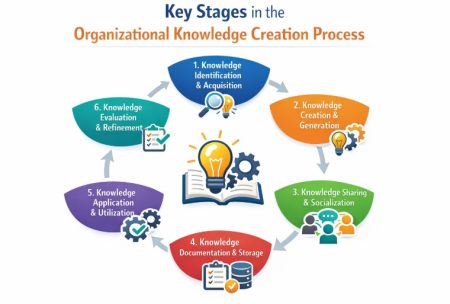
In the field of knowledge management, understanding the distinction between explicit knowledge and tacit knowledge is fundamental to effectively managing and utilizing intellectual resources. Explicit knowledge refers to information that is formal, structured, and easily communicated or documented. It is the kind of knowledge that can be written down, stored in manuals, shared through lectures, or saved in digital databases. Because of its clear and systematic nature, explicit knowledge is commonly used in academic, professional, and organizational settings to ensure consistency, training, and standardization.
In contrast, tacit knowledge is deeply personal, experiential, and difficult to articulate. It encompasses an individual’s intuition, insights, experiences, and know-how that are often acquired through practice rather than formal instruction. Unlike explicit knowledge, tacit knowledge cannot be easily codified or transferred; it is often communicated through demonstration, observation, or shared experiences. For example, leadership ability, craftsmanship, and emotional intelligence are forms of tacit knowledge that are best learned through real-world engagement rather than written instruction. Both types of knowledge are essential-explicit knowledge helps maintain order and structure, while tacit knowledge drives innovation, expertise, and adaptability in dynamic environments. Understanding and balancing these two forms of knowledge is crucial for effective learning, collaboration, and organizational growth.
What is Explicit Knowledge?
Explicit knowledge is a type of knowledge that can be easily articulated, codified, stored, and shared. It is formal, systematic, and structured, often communicated through language, numbers, charts, or diagrams. Because it is easily expressed, explicit knowledge can be written down, spoken, or digitized for broad dissemination. This makes it ideal for documentation, instruction, training, and reference purposes in both academic and organizational contexts.
For example, a textbook explaining the laws of physics, a company’s employee handbook outlining workplace policies, or a step-by-step user manual for operating a printer are all forms of explicit knowledge. These materials present information in a clear and organized way, enabling others to learn and apply the knowledge without needing direct experience from the original source. Other examples include legal codes, financial reports, technical specifications, and research publications-all of which can be systematically stored in libraries, databases, or online repositories for easy access.
In organizational settings, explicit knowledge supports activities such as onboarding new employees, maintaining quality control, and ensuring regulatory compliance. It is a crucial resource for knowledge preservation and knowledge transfer, especially in structured environments where consistency and repeatability are important. However, while explicit knowledge is powerful, it is most effective when complemented by tacit knowledge, which provides context, judgment, and experience-based insight.
What is Tacit Knowledge?
Tacit knowledge refers to the personal, intuitive, and experience-based knowledge that individuals carry within themselves. Unlike explicit knowledge, it is difficult to articulate, formalize, or document. Tacit knowledge is deeply rooted in an individual’s actions, experiences, values, beliefs, emotions, and insights, often acquired over time through hands-on practice rather than through formal instruction. Because it is not easily expressed in words or symbols, tacit knowledge is usually shared through observation, imitation, social interaction, or mentorship rather than written documents or presentations.
For example, the ability of a skilled carpenter to judge the right amount of pressure needed while chiseling wood, or a nurse’s instinct to detect subtle changes in a patient’s condition before any obvious symptoms appear, are expressions of tacit knowledge. Similarly, a chef’s unique way of balancing flavors, a teacher’s knack for managing classroom dynamics, or a manager’s capacity to motivate a team during a crisis all rely on knowledge that is intuitive and context-specific. These abilities cannot be fully captured in a manual or taught through a lecture; they must be observed and learned over time.
Tacit knowledge plays a crucial role in creativity, innovation, decision-making, and problem-solving. In organizational environments, it is often the foundation of expertise and competitive advantage, although it is challenging to capture and transfer. Encouraging collaboration, mentorship, and a culture of knowledge sharing can help organizations unlock and benefit from the rich potential of tacit knowledge.
Difference Between Explicit Knowledge and Tacit Knowledge
In the study of knowledge management and organizational learning, understanding the distinction between explicit knowledge and tacit knowledge is essential. These two types of knowledge represent different ways in which individuals acquire, store, and share information. Explicit knowledge is formal, structured, and easily communicated-it can be written down, recorded, and transmitted through documents, manuals, books, or digital media. On the other hand, tacit knowledge is personal, intuitive, and experience-based-deeply embedded in individual skills, insights, and actions, and often difficult to articulate or transfer.
While explicit knowledge is commonly used in formal education, documentation, and standardized processes, tacit knowledge is more relevant in practical situations, decision-making, creativity, and interpersonal communication. Both forms of knowledge are equally important and complement each other in various academic, professional, and organizational contexts. Recognizing the differences between them helps in designing better learning systems, fostering collaboration, and enhancing knowledge-sharing practices within institutions and workplaces.
| Aspect | Explicit Knowledge | Tacit Knowledge |
|---|---|---|
| Nature of Knowledge | This refers to knowledge that is formal, objective, and structured. It includes facts, concepts, rules, and procedures that can be systematically expressed and processed. Because it follows a logical structure, explicit knowledge is often associated with academic learning and formal documentation. | In contrast, tacit knowledge is subjective, informal, and deeply rooted in personal experience. It is often described as “know-how” rather than “know-what.” This type of knowledge is intuitive and arises from personal insights, cultural background, and emotional intelligence, making it hard to define or systematize. |
| Mode of Expression | It can be clearly expressed using language, symbols, diagrams, numbers, or formulas. For instance, a step-by-step instruction manual on how to use software or a research article detailing experimental methods exemplifies how explicit knowledge is articulated. | This type of knowledge is primarily non-verbal and often remains unspoken. It manifests through behaviors, gestures, habits, and practical actions. For example, the instinctive decision-making of an experienced nurse or the creative flair of an artist cannot be fully explained in words—they must be experienced or observed. |
| Ease of Transfer | Because of its structured and documented form, explicit knowledge can be easily shared and distributed. It can be taught in classrooms, disseminated via emails, uploaded to databases, or included in training modules. | Transferring tacit knowledge is more complex. It typically requires personal interaction, mentorship, and observation. For example, a master chef may teach a student through demonstration and guided repetition, allowing them to gradually absorb the subtle techniques involved. |
| Storage and Documentation | One of the main strengths of explicit knowledge is its ability to be stored systematically. Organizations keep it in the form of policy documents, procedural handbooks, wikis, and knowledge management systems. These records help ensure continuity and standardization. | Tacit knowledge cannot be easily documented or stored. It resides within the minds and experiences of individuals. When such individuals retire or leave an organization, their tacit knowledge may also be lost unless it is actively transferred or captured through mentoring or job-shadowing initiatives. |
| Acquisition Process | It is usually acquired through formal education, reading, or structured training. Learners receive the information through lectures, textbooks, or digital resources and internalize it through memorization or examination. | This knowledge is acquired informally through real-life experience, trial-and-error, hands-on practice, and reflective learning. For example, a carpenter perfects his skills through years of working with different types of wood and tools, developing a sense of precision and craft that cannot be taught through a book alone. |
| Examples | Examples include mathematical equations, software programming instructions, scientific procedures, government laws, organizational policies, and technical reports. These are universally understood and widely applicable. | Examples include riding a bicycle, intuitively managing a team, resolving a conflict, or developing a unique artistic style. These skills are highly personal and often context-specific. |
| Level of Consciousness | Individuals are generally fully aware that they possess explicit knowledge and can explain or demonstrate it when asked. For example, a teacher can recite a formula or explain a historical event on demand. | Individuals may not be fully conscious of their tacit knowledge. They often “just know” how to do something without being able to explain how or why. For example, an experienced mechanic may diagnose a problem by listening to an engine, relying on intuition built from years of exposure. |
| Context Dependence | It is typically decontextualized and can be applied in a wide range of settings. A mathematical formula, for instance, works the same way regardless of location or background. | This knowledge is deeply influenced by context, including cultural, social, and environmental factors. It is often tailored to specific situations and does not always transfer effectively to different environments without adaptation. |
| Role in Organizations | Within organizations, explicit knowledge supports efficiency, standard operating procedures, and compliance. It helps in training new employees, ensuring consistent quality, and documenting lessons learned. | Tacit knowledge is vital for innovation, strategic decision-making, and solving complex problems. It underpins leadership, customer service, and expertise that cannot be replicated through manuals alone. Organizations that value tacit knowledge encourage collaboration, mentoring, and experience-sharing among employees. |
| Method of Sharing | Shared via formal communication channels such as memos, presentations, manuals, websites, or online courses. It can be accessed on demand and reused multiple times. | Shared informally through storytelling, job-shadowing, coaching, and one-on-one interaction. The transfer process requires trust, time, and close working relationships between the knowledge holder and the learner. |
While explicit knowledge provides a solid foundation for structure, consistency, and scale, tacit knowledge fuels creativity, adaptability, and human insight. Both forms are essential for organizational success and should be managed in a complementary way. The challenge for individuals and institutions lies in recognizing, capturing, and nurturing both types of knowledge to foster continuous learning and innovation.