
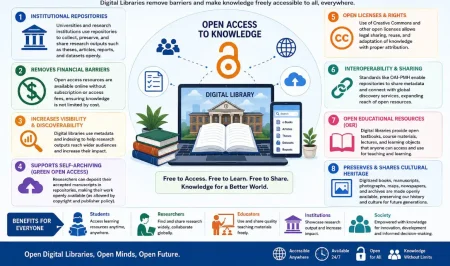
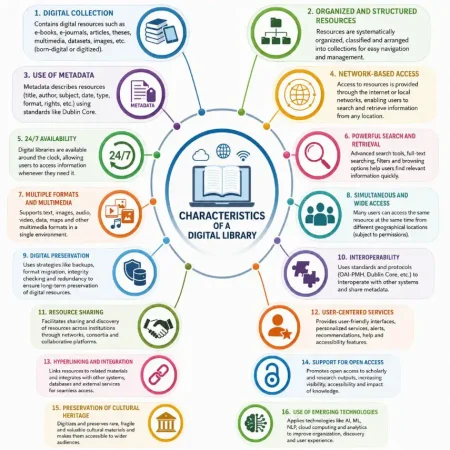
A digital library is an organized online collection of electronic documents and resources that users can access through computers, smartphones, or other digital devices connected to the internet. Unlike traditional libraries, which store physical books and journals, a digital library provides digital versions of materials such as e-books, e-journals, theses, images, videos, and audio recordings. For example, platforms like Project Gutenberg, Google Books, and HathiTrust Digital Library offer free or open-access digital books, while institutional repositories, such as DSpace at North South University (NSU Library), preserve and provide access to the university’s scholarly works, theses, and research publications.
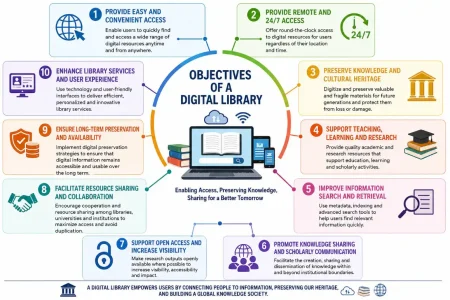
Digital libraries enable faster and more efficient information retrieval by allowing users to search full-text databases, access journals from publishers such as Elsevier, Taylor & Francis, and Sage, and download materials remotely at any time. They also play a vital role in preserving rare and fragile materials through digitization projects, such as the World Digital Library or the Central Digital Library of Bangladesh, ensuring long-term access to cultural and academic heritage. In the academic setting, digital libraries support research, teaching, and learning by offering a wide range of resources that are accessible from anywhere, often integrated with tools such as OpenAthens, Research4Life, or Zotero for managing citations and facilitating remote access.
However, despite these advantages, digital libraries face several challenges. These include data security risks, copyright and licensing restrictions, and technological dependency, which can limit access in areas with poor internet infrastructure. Nevertheless, digital libraries continue to transform the way knowledge is stored, shared, and preserved- bridging the gap between traditional collections and the digital future of global information access.
The advantages and disadvantages of a digital library
A digital library provides a modern and innovative approach to storing, managing, and accessing information, offering numerous advantages as well as certain limitations. One of its most significant advantages is easy and instant access to vast collections of information from anywhere in the world, at any time. Users can conveniently search and retrieve materials such as e-books, research articles, images, and multimedia files without being physically present in the library. For instance, platforms such as Google Scholar, HathiTrust, and JSTOR enable students and researchers to instantly explore scholarly resources. Digital libraries also save physical space and costs, as they eliminate the need for large buildings and printed materials, while ensuring preservation of rare and fragile resources through digitization. Additionally, they enhance collaborative research and learning, offering tools for citation management, remote access through systems like OpenAthens, and integration with global knowledge networks.
Despite these benefits, digital libraries also face notable disadvantages and challenges. Issues such as technical problems, software maintenance, and dependency on reliable internet connectivity can hinder accessibility, especially in developing regions. Copyright and licensing restrictions often limit the availability of certain digital resources, while data security and privacy concerns pose risks to both users and institutions. Moreover, some users still prefer physical books for deeper engagement and may find digital reading less comfortable or effective. The digital divide, where some users lack access to necessary devices or digital literacy skills, also remains a concern.
Advantages of the Digital Library
In the era of rapid technological advancement, the digital library has emerged as a revolutionary platform for accessing, managing, and sharing information. Unlike traditional libraries that rely on printed books and physical infrastructure, digital libraries provide electronic access to vast collections of knowledge through computers, smartphones, and other digital devices. They have transformed the landscape of education, research, and information dissemination by making learning materials more accessible, cost-effective, and sustainable. Below is a detailed discussion of the key advantages of digital libraries, highlighting their growing importance in today’s knowledge-based society.
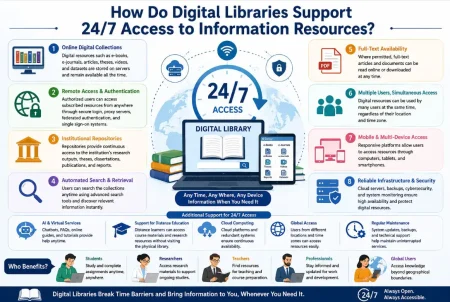
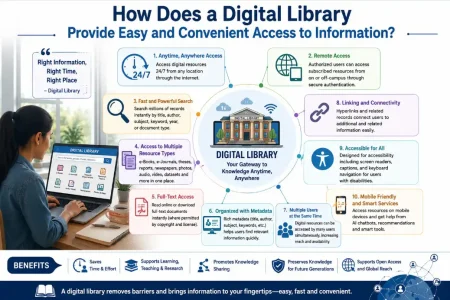
- Instant and Remote Access: One of the most remarkable advantages of digital libraries is their 24/7 accessibility. Users can access books, journals, images, videos, and research databases from anywhere in the world, eliminating the limitations of time and distance. This is particularly beneficial for students, teachers, and researchers who may not have access to well-equipped physical libraries. Platforms like Google Books, HathiTrust, and Project Gutenberg enable users to access and read millions of texts from various disciplines, supporting both formal education and independent learning.
- Time-Saving and Efficient Search Features: Digital libraries offer advanced search capabilities that enable users to locate information instantly using keywords, authors, or subjects. Unlike traditional libraries, where finding a specific book or article may take considerable time, digital platforms allow users to retrieve relevant materials within seconds. Databases such as JSTOR and ScienceDirect offer powerful search and filtering tools that enable faster, more accurate, and more productive academic research.
- Cost-Effective and Space-Saving: A major benefit of digital libraries is their economic efficiency. Traditional libraries require extensive physical space, staff, and high maintenance costs, whereas digital libraries store information electronically, thereby reducing operational expenses. Institutions save money by minimizing printing, storage, and building maintenance costs. Moreover, a single server can host millions of resources that can be accessed simultaneously by multiple users, ensuring both efficiency and convenience.
- Preservation of Rare and Fragile Materials: Digital libraries play an essential role in preserving historical and rare documents. Many libraries around the world have digitized valuable manuscripts, photographs, and cultural records that are too delicate to handle physically. Digitization not only prevents deterioration but also allows global audiences to access these materials. Initiatives such as the World Digital Library and Bangladesh National Digital Library (NDL) are excellent examples of how digital preservation safeguards cultural heritage for future generations.
- Environmental Sustainability: Another noteworthy advantage of digital libraries is their positive environmental impact. By reducing the need for paper, printing, and transportation of books, digital libraries help conserve natural resources and reduce carbon emissions. They promote eco-friendly learning by allowing users to read online or download soft copies instead of relying on printed materials, aligning with global efforts toward environmental sustainability.
- Enhanced Research and Collaboration: Digital libraries encourage collaborative research and academic communication. They allow users to share documents, co-author papers, and access shared digital repositories. Integration with citation management tools such as Zotero, Mendeley, and EndNote helps researchers organize references efficiently and avoid plagiarism. Moreover, systems like OpenAthens and EZproxy enable off-campus access to subscription-based databases, thereby facilitating continuity of research for students and faculty members.
- Inclusive and Equitable Access: Digital libraries ensure equal access to information for all users, including individuals with disabilities. Features such as text-to-speech, adjustable fonts, and screen-reader compatibility enhance accessibility for visually impaired users. Additionally, digital libraries often provide multilingual collections, enabling people from different linguistic and cultural backgrounds to access knowledge without barriers.
- Continuous Availability and Reliability: Unlike physical collections, which may be damaged by wear, theft, or natural disasters, digital libraries provide reliable and continuous access to resources. Backup servers and cloud storage ensure that information is preserved securely and can be retrieved even in the event of an emergency. This permanence enhances the stability and reliability of academic and institutional archives.
The advantages of digital libraries extend far beyond convenience—they represent a fundamental shift in the way knowledge is produced, preserved, and shared. With their accessibility, cost efficiency, sustainability, and inclusivity, digital libraries empower learners and researchers to explore information without limitations. They have become essential tools in advancing global education, supporting academic excellence, and ensuring that knowledge remains freely accessible to all. As technology continues to evolve, the digital library will remain a cornerstone of learning in the modern information age.
Disadvantages of the Digital Library
While digital libraries have revolutionized the way people access and share information, they are not without limitations. Despite their convenience, accessibility, and efficiency, digital libraries also present several technical, economic, and social challenges that can affect both users and institutions. Understanding these disadvantages is essential for developing strategies to overcome them and ensure equitable access to digital resources. The following discussion explores the main disadvantages of digital libraries in detail.
- Dependence on Technology: One of the primary disadvantages of digital libraries is their heavy reliance on technology. Users need access to computers, smartphones, or other digital devices, along with a stable internet connection. In regions with limited technological infrastructure or poor internet connectivity, accessing digital resources can be challenging or even impossible. Power failures, outdated software, and hardware limitations can further limit users’ ability to fully benefit from digital library services.
- High Initial Setup and Maintenance Costs: Although digital libraries reduce long-term operational expenses, the initial cost of establishment and maintenance can be quite high. Institutions must invest in servers, software, high-speed internet, and skilled technical staff to manage digital systems. Regular updates, system upgrades, and data backups also add to ongoing expenses. For smaller institutions or developing countries, these financial demands can be a major barrier to adopting digital library systems.
- Copyright and Licensing Issues: Another major challenge faced by digital libraries involves copyright and intellectual property laws. Many e-books, journals, and other digital materials are protected by licensing agreements, limiting how they can be accessed, shared, or reproduced. Libraries must often pay subscription fees or negotiate rights with publishers, which can be costly and restrictive. This issue can sometimes result in limited access for users, particularly in institutions with tight budgets.
- Data Security and Privacy Risks: Digital libraries store vast amounts of user and institutional data, making them vulnerable to cyberattacks, hacking, and data breaches. Unauthorized access or system failure can result in loss of valuable digital collections and compromise user privacy. Without robust cybersecurity measures and regular monitoring, digital libraries can become vulnerable to data theft or manipulation, thereby putting sensitive information at risk.
- Digital Divide and Inequality: The digital divide remains a serious concern, especially in developing regions. Not all users have equal access to digital devices, internet connectivity, or computer literacy. Those who lack these resources are excluded from the benefits of digital libraries. This creates a gap between urban and rural populations, as well as between rich and poor communities, and between technologically skilled and unskilled users, limiting the inclusive potential of digital education and research.
- Lack of Physical Interaction and Reading Experience: For many readers, the experience of reading a printed book cannot be replaced by a digital screen. Physical libraries offer a social and academic environment that fosters concentration, collaboration, and community interaction. Digital libraries, on the other hand, lack the tactile experience and quiet atmosphere that traditional libraries provide. Extended screen time can also cause eye strain, fatigue, and reduced reading comprehension for some users.
- Technical Problems and System Downtime: Digital libraries are susceptible to technical failures, including slow loading times, software errors, and system crashes. Network disruptions or server maintenance can temporarily block users from accessing materials. Additionally, compatibility issues between file formats, browsers, or operating systems can create difficulties for users who lack technical expertise.
- Quality and Authenticity Concerns: Unlike traditional libraries, where materials are carefully selected and catalogued, digital libraries often face challenges in maintaining quality control and authenticity. The vast amount of online content increases the risk of encountering outdated, inaccurate, or plagiarized information. Without proper verification and peer review processes, users may unknowingly rely on unreliable or non-academic sources.
- Limited User Skills and Digital Literacy: Many users, especially older generations or those from non-technical backgrounds, struggle with digital literacy. Navigating digital platforms, using search tools effectively, or managing downloaded materials may be difficult without training. This lack of technical proficiency can hinder the full utilization of digital library resources and limit their effectiveness as learning tools.
While digital libraries have made information more accessible and convenient, they also face significant challenges related to technology, security, cost, and user capability. The reliance on internet connectivity, copyright restrictions, and data risks highlights the need for careful management and continual improvement. To maximize their benefits, libraries and educational institutions must invest in digital literacy training, robust infrastructure, and secure systems. By addressing these limitations, digital libraries can evolve into more inclusive, reliable, and user-friendly platforms that truly serve the global knowledge community.
Reference Article:
- Patra, C. (2010). Digital repository in ceramics A Metadata study. Retrieved from: http://hdl.handle.net/10603/212642


6 Comments
Hi, Wonderful information get it …Please send me in email. Sir…
My pleasure..
Wonderful information nation send it to me
Thank you for your kind words! I’m glad you found the information valuable. Have a great day!”
Thanks for helping me
Thanks for the information Ive abstracted from you.