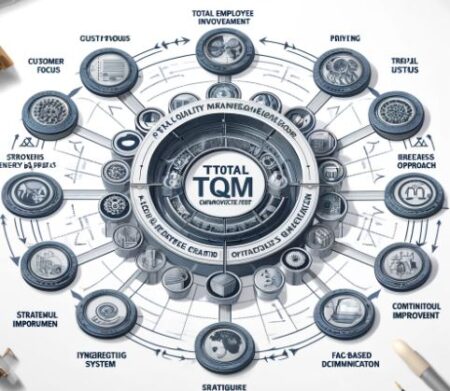
Total Quality Management (TQM) is a comprehensive management approach focused on improving the quality of an organization’s processes, services, and products. It emphasizes a continuous effort to improve performance at every level of the organization, fostering a culture of quality, customer satisfaction, and long-term success. In the context of libraries, TQM can be applied to enhance the quality of library services, resource management, staff performance, and user experiences.
In library settings, TQM focuses on ensuring that all services—such as circulation, reference, cataloging, and user support—are performed efficiently and meet or exceed the expectations of library users. By adopting TQM, libraries aim to streamline operations, minimize errors, optimize resource usage, and create a user-centered approach to service delivery. TQM in libraries involves all staff members in the decision-making process, with an emphasis on teamwork, continuous training, and data-driven decision-making. By implementing TQM principles such as customer focus, process improvement, and employee involvement, libraries can foster an environment that not only meets but anticipates the evolving needs of their users. Additionally, feedback from library patrons becomes a valuable tool for identifying areas for improvement and ensuring that services remain relevant and high quality.
The application of TQM in libraries also aligns with the increasing demand for efficiency and innovation in the digital age. It provides a framework for adapting to technological advancements, optimizing workflows, and maintaining high standards in both physical and digital library services. With a focus on continuous improvement, TQM helps libraries provide an enhanced and seamless experience for their users, contributing to their academic and research success.
What is Total Quality Management (TQM)?
Total Quality Management (TQM) is a comprehensive management approach focused on enhancing the overall quality of an organization’s processes, products, and services. TQM is built on the idea that quality should be an ongoing, collective effort involving all members of the organization, from top management to front-line employees. Rather than being restricted to a specific department or function, TQM is a holistic strategy that integrates quality improvement into every aspect of the organization’s operations. The core principle of TQM is continuous improvement, ensuring that all processes and systems are regularly evaluated and refined to achieve higher standards of quality.
One of the foundational elements of TQM is customer focus. Organizations must prioritize understanding and meeting the needs and expectations of their customers, as their satisfaction is a key indicator of success. TQM emphasizes the importance of employee involvement, encouraging all staff members to actively participate in identifying areas for improvement, sharing ideas, and working together to solve problems. Another critical aspect of TQM is the process approach, which ensures that the organization views processes as interconnected systems that can be continually optimized for better results. TQM also stresses the importance of data-driven decision-making, encouraging organizations to base their strategies on objective analysis and empirical evidence rather than assumptions or intuition.
In practice, TQM encourages leadership commitment, with senior management playing a pivotal role in driving the culture of quality throughout the organization. By fostering a culture that values quality, collaboration, and continuous learning, TQM ensures that improvements are not just one-time efforts but are sustained over time. It is a dynamic approach that helps organizations stay competitive, innovative, and responsive to changing demands. Whether in manufacturing, healthcare, education, or libraries, TQM is widely applicable, offering a framework for organizations to enhance their services and achieve long-term success.
How Total Quality Management (TQM) Enhances the Overall Effectiveness of Library Services
In today’s rapidly changing information landscape, libraries face the challenge of delivering high-quality services that meet the evolving needs of their users. Total Quality Management (TQM) offers a strategic approach that can significantly enhance the overall effectiveness of library services. By focusing on continuous improvement, customer satisfaction, employee involvement, and data-driven decisions, TQM helps libraries optimize their operations and provide an exceptional user experience. Here is how TQM can enhance the efficiency, quality, and impact of library services.
- Customer Focus: Tailoring Services to User Needs
At the heart of TQM lies the principle of customer focus, which emphasizes understanding and meeting the needs and expectations of users. In a library context, this translates to providing services and resources that align with user preferences and requirements. By actively engaging with library patrons through feedback mechanisms such as surveys, suggestion boxes, and focus groups, libraries can identify areas for improvement and make necessary adjustments. For instance, if users express a need for more digital resources or faster response times to queries, libraries can prioritize these areas for development.
Customer satisfaction surveys and regular evaluations help libraries track how well they are meeting user needs. By incorporating this feedback into their service development, libraries can enhance user satisfaction and stay relevant in an ever-evolving environment. With TQM, libraries can create a dynamic, responsive service environment where the user’s voice drives improvements. - Continuous Improvement: Refining Library Processes
TQM is centered on the idea of continuous improvement, which means that library processes are constantly evaluated and refined to ensure better outcomes. Library management can apply this principle to streamline various processes such as book circulation, cataloging, resource acquisition, and reference services. By reviewing these processes regularly, libraries can identify inefficiencies, eliminate waste, and improve the speed and accuracy of service delivery.
For example, libraries might implement a more effective system for processing new book acquisitions, speeding up the time it takes for resources to be available to users. Similarly, adopting better methods for cataloging materials or automating routine tasks through technology can free up valuable staff time, allowing them to focus on more complex user needs. Continuous improvement also extends to the use of emerging technologies, ensuring that libraries adapt to changes such as digital databases, e-books, and new online learning platforms. - Employee Involvement: Empowering Staff for Success
In TQM, employee involvement is a key principle that significantly impacts the effectiveness of services. When library staff members are encouraged to contribute to decision-making and quality improvement initiatives, they become more engaged and motivated. TQM fosters a culture where everyone, from top management to front-line staff, takes responsibility for quality outcomes.
In a library setting, this means that staff members at all levels are empowered to suggest improvements, share ideas, and collaborate on solving challenges. For instance, library clerks might suggest improvements in the checkout process, while reference librarians could identify opportunities to enhance the user experience with new tools or technologies. Empowering staff increases job satisfaction and leads to more creative solutions that benefit library users.
TQM emphasizes ongoing professional development for staff. By providing continuous training and development opportunities, libraries ensure that staff are equipped with the skills and knowledge needed to deliver high-quality services. This is particularly important as libraries increasingly adopt digital tools and resources, requiring staff to stay current with new technologies and methodologies. - Data-Driven Decision Making: Making Informed Choices
One of the key features of TQM is its emphasis on data-driven decision-making. Libraries can collect and analyze data related to library usage, resource availability, user satisfaction, and staff performance to make informed decisions that drive improvements. By monitoring key performance indicators (KPIs), libraries gain valuable insights into the effectiveness of their services and identify areas where adjustments are needed.
For example, data collected from library management systems can help libraries track the frequency with which specific books or resources are checked out. If certain resources are underutilized, the library may decide to promote them more actively or replace them with more relevant materials. Similarly, feedback from users regarding their experience with library facilities or digital tools can guide the development of user-friendly websites or apps. Through data analysis, libraries can ensure that their resources are well-aligned with user demand, improving the quality and relevance of the services provided. - Standardization and Consistency: Ensuring Quality Across All Services
TQM promotes the standardization of processes and procedures to ensure that high-quality service is consistently delivered across all aspects of library operations. Whether it’s handling circulation, responding to reference queries, or providing access to online resources, libraries can develop standardized procedures that ensure every service is executed to the same high standards. This consistency not only improves efficiency but also helps in setting clear expectations for users.
By developing and adhering to established standards for library operations, libraries can maintain a high level of reliability and minimize errors. For example, standard operating procedures for book returns, user registration, or conducting library tours can ensure that all users receive the same high-quality service regardless of the time or staff member involved. Standardization also helps libraries identify areas where improvements can be made, providing a structured approach to implementing changes. - Fostering a Culture of Quality: Building Long-Term Success
The success of TQM in libraries ultimately depends on creating a culture of quality that is embedded in the library’s mission and values. When quality is a priority at every level of the organization, it becomes part of the library’s identity, influencing how staff interact with users, how services are delivered, and how new technologies are adopted.
Libraries that implement TQM benefit from a sustained commitment to excellence, where quality improvements are continuously assessed, and the entire team works toward shared goals. By focusing on long-term success rather than short-term fixes, libraries can maintain their position as essential community resources, contributing to educational, cultural, and informational development.
Total Quality Management (TQM) plays a crucial role in enhancing the overall effectiveness of library services by creating a framework for continuous improvement, user satisfaction, employee involvement, and data-driven decision-making. Libraries that adopt TQM principles can refine their operations, better meet user needs, and adapt to an ever-changing information landscape. In doing so, they not only enhance the quality of their services but also position themselves as vital, dynamic institutions that serve the needs of their communities with excellence.
Key Principles of Total Quality Management (TQM) in the Context of Library Management
Total Quality Management (TQM) is a holistic approach to improving the quality of services, processes, and products within an organization. In the context of library management, TQM focuses on delivering high-quality services, enhancing user satisfaction, and ensuring continuous improvement in operations. By adhering to the core principles of TQM, libraries can streamline their operations, increase efficiency, and provide users with a superior experience. Here are the key principles of TQM as they apply to library management and the benefits they bring to library operations.
- Customer Focus: The fundamental principle of TQM is customer focus, which, in the case of libraries, means understanding and addressing the needs of library users. Libraries are not just repositories of books and resources—they are service-oriented institutions that exist to serve the needs of their users. By focusing on the users’ requirements, libraries can design services and systems that are tailored to meet specific demands. Gathering user feedback through surveys, interviews, or suggestion boxes allows libraries to assess user satisfaction and identify areas for improvement. Whether it’s providing more digital resources, improving the user interface of the library’s catalog, or enhancing library hours to accommodate different schedules, a customer-focused approach ensures that library services are relevant, accessible, and meet the evolving needs of users.
- Continuous Improvement: TQM stresses the importance of continuous improvement in all aspects of an organization’s operations, and this is equally applicable to library management. Libraries are dynamic environments where change is constant, whether due to technological advancements, shifts in user needs, or new trends in information delivery. By embracing a philosophy of continuous improvement, libraries ensure that they always adapt, optimize, and enhance their services. This might involve improving the efficiency of cataloging procedures, upgrading technology infrastructure, or refining user education programs. It also includes fostering a culture where every library employee, regardless of their role, is encouraged to suggest improvements, solve problems, and find innovative ways to enhance library services.
For instance, if users are facing challenges in accessing online resources, the library could introduce new systems for user authentication, improve website navigation, or integrate new tools to support digital access. The commitment to ongoing improvements enhances operational efficiency and ensures that libraries can stay relevant in an ever-evolving information landscape. - Employee Involvement: One of the key aspects of TQM is involving all employees in the quality management process. In libraries, every staff member—from circulation desk personnel to technical services staff—plays an important role in delivering high-quality services. Engaging library staff in decision-making and problem-solving processes fosters a sense of ownership and responsibility. When employees are actively involved in identifying problems and implementing solutions, they become more motivated and committed to achieving the library’s quality goals.
By creating a collaborative work environment, libraries encourage employees to share ideas, suggest improvements, and contribute to innovation. Staff training and development are also critical components of this principle, ensuring employees have the skills and knowledge required to deliver quality service. When employees feel valued and empowered, they are more likely to take pride in their work, leading to a more productive and positive library environment. - Data-Driven Decision Making: Data-driven decision-making is another essential principle of TQM. Libraries collect a wealth of data on various aspects of their operations, such as resource usage, circulation patterns, user behavior, and feedback. Library managers can make informed decisions that enhance service delivery and optimize resource management by analyzing this data. For example, circulation data can reveal which books or materials are most in demand, allowing libraries to make informed decisions about future acquisitions.
Similarly, data on user satisfaction and service quality can help identify areas for improvement. If feedback indicates that patrons are struggling to find resources in a specific subject area, libraries can adjust their collection development strategy or provide additional user support. Data-driven decision-making helps libraries prioritize initiatives, allocate resources effectively, and continually improve their services in a way that meets the needs of their users. - Process Approach: In TQM, processes are seen as interconnected systems that can be continuously optimized. In libraries, this principle applies to the various workflows and procedures that are essential to library operations. Whether it’s the process of checking out materials, cataloging new books, handling interlibrary loans, or providing reference services, libraries can improve the efficiency and effectiveness of each process to enhance the overall user experience.
By analyzing and streamlining processes, libraries can eliminate inefficiencies, reduce wait times, and provide more seamless services. For example, implementing self-checkout stations or automating cataloging tasks can significantly speed up routine procedures and free up staff to focus on more complex user needs. A process-oriented approach ensures that library operations are both efficient and adaptable, allowing libraries to respond to changing user demands and operational challenges. - Standardization: TQM emphasizes the importance of standardizing processes to ensure consistency and maintain high levels of service quality. For libraries, standardization involves developing clear procedures and protocols for common tasks such as user registration, book checkouts, handling reference queries, and processing acquisitions. Standardizing these processes ensures that library services are reliable and predictable, regardless of the time of day or the staff member involved.
By having standardized procedures, libraries can also minimize errors, reduce variability, and improve staff training. New employees can be quickly trained on standardized workflows, which helps to maintain service quality during periods of staff turnover. Standardization also makes it easier to identify areas where improvements can be made, allowing libraries to implement best practices across all departments and services. - Leadership Commitment: The success of TQM in libraries hinges on strong leadership commitment. Library leaders must not only support but actively promote the principles of TQM across all levels of the organization. This involves setting clear quality objectives, providing necessary resources, and ensuring that the library’s strategic goals align with its commitment to continuous improvement. Library leaders must also champion a culture of quality by setting an example, encouraging staff participation, and prioritizing quality management initiatives.
Leadership commitment includes investing in staff development, supporting technological upgrades, and ensuring that the library has the resources it needs to implement TQM effectively. Strong leadership also helps to foster a work environment where quality is seen as everyone’s responsibility, creating a sense of shared purpose and accountability.
Total Quality Management (TQM) is a powerful framework for enhancing the quality of library services and operations. By focusing on customer needs, continuous improvement, employee involvement, data-driven decisions, process optimization, standardization, and strong leadership, libraries can provide high-quality services that meet the ever-changing demands of their users. The principles of TQM foster a culture of excellence, ensuring that libraries continue to be vital, responsive, and effective resources in the communities they serve. Through TQM, libraries can build a sustainable foundation for future success, constantly adapting to technological advancements and the evolving needs of their users.
Measuring the Success of TQM Initiatives in Libraries
Total Quality Management (TQM) is a comprehensive and strategic approach to improving the quality of services, processes, and operations in an organization. In the context of libraries, TQM focuses on ensuring that services meet or exceed user expectations, promoting continuous improvement, and involving all staff members in the quality enhancement process. However, for TQM to be effective, libraries must have a clear framework for measuring the success of their initiatives. Here are some ways libraries can measure the success of their TQM initiatives:
- User Satisfaction and Feedback: One of the most straightforward ways to measure the success of TQM initiatives is through user satisfaction. Since libraries exist to serve their users, assessing their experiences is critical. Libraries can collect feedback through:
-
- Surveys: Regular user surveys allow libraries to gather data on various aspects of service delivery, such as resource availability, ease of access, and overall satisfaction with the library environment.
- Focus Groups: By engaging a small group of users in discussions, libraries can gain deeper insights into their needs and expectations.
- Online Feedback: Digital feedback forms and social media interactions provide an easy way for patrons to voice their opinions and suggest improvements.
High levels of satisfaction indicate that the library’s TQM initiatives, such as improving service delivery or expanding digital resources, are meeting user expectations. Conversely, identifying areas of dissatisfaction allows the library to make data-driven decisions to refine its services.
-
- Service Utilization and Performance Metrics: Libraries can measure the success of their TQM initiatives by tracking service usage and performance metrics. Quantitative data offers an objective view of how well services are functioning. Some key metrics to track include:
-
- Circulation Statistics: Monitoring the number of items borrowed over time can help gauge the relevance and appeal of the library’s collection. An increase in circulation could indicate that recent acquisitions or collection improvements are successfully meeting user needs.
- Digital Resource Usage: Libraries can track the usage of e-books, databases, and other digital resources. If these resources are being used extensively, it suggests that the library’s investment in digital content and accessibility has been successful.
- Website Analytics: Analyzing traffic on the library’s website, including searches, page views, and user interactions, helps measure the effectiveness of online services. Libraries can assess whether their online presence meets users’ needs and make necessary adjustments.
These performance metrics help libraries evaluate how well they are meeting the demand for their resources and services. Consistently high or improving numbers in these areas suggest that TQM initiatives focused on user satisfaction, resource availability, and digital integration are successful.
-
- Staff Engagement and Performance: TQM relies heavily on the active involvement of library staff at all levels. Therefore, measuring staff engagement is a critical component of assessing the success of TQM initiatives. Libraries can evaluate staff involvement and performance through:
-
- Employee Satisfaction Surveys: These surveys measure how engaged and satisfied library staff are with their roles, the work environment, and their involvement in TQM processes. High employee satisfaction often translates to higher productivity and a greater commitment to quality initiatives.
- Staff Retention Rates: Low turnover and high staff retention rates indicate a positive work environment and satisfaction with the quality management system.
- Staff Performance Metrics: Tracking individual and team performance helps libraries understand how well staff are contributing to the success of TQM initiatives. This could include the time it takes to fulfill user requests, the number of resources processed, or how well staff follow new procedures introduced as part of TQM.
When staff members are actively engaged and motivated to participate in quality improvement efforts, they contribute directly to the success of TQM initiatives by enhancing service delivery and operational efficiency.
-
- Resource Management and Cost Efficiency: Another key measure of TQM success is how efficiently a library manages its resources. TQM encourages libraries to optimize the use of both human and material resources to minimize waste and maximize value. Libraries can measure resource management success through:
-
- Cost Per Service: Evaluating the cost of providing specific services, such as cataloging, circulation, and reference assistance, helps determine whether resources are being used efficiently. Lowering the cost per service without sacrificing quality indicates successful process improvements.
- Budget Allocation and Utilization: Libraries can assess whether funds are being allocated effectively to the areas that need the most attention, such as acquiring new materials, investing in technology, or training staff. Proper allocation of resources ensures that the library is operating at peak efficiency.
- Operational Costs: A reduction in operational costs (e.g., through process optimization or automation) without a decline in service quality demonstrates the effectiveness of TQM initiatives in driving efficiency.
Efficient resource management indicates that the library is operating cost-effectively and that its TQM initiatives have led to improvements in how resources are allocated and used.
-
- Quality of Service and Process Improvement: TQM emphasizes continuous improvement in all areas of library operations. To measure success, libraries can assess the quality of service provided to patrons and the effectiveness of process improvements. This can be done through:
-
- Service Delivery Standards: Establishing clear service standards for areas like response times to reference queries, interlibrary loans, or book check-outs allows libraries to measure whether these standards are being consistently met. Regular audits can assess the degree to which service delivery aligns with these standards.
- Error Reduction: Tracking the number of errors or issues that arise in processes like cataloging, circulation, or digital resource management provides insight into the success of process improvements. A decrease in errors over time indicates that TQM practices, such as process optimization and training, are working effectively.
- Process Efficiency: Libraries can analyze workflow efficiency in tasks like cataloging, acquisitions, and reference services. Reducing time spent on repetitive tasks through automation or improved procedures reflects the success of TQM in enhancing operational efficiency.
The overall improvement in the quality and speed of service delivery is a clear indicator that TQM processes are being successfully implemented.
-
- Benchmarking and Comparisons: Libraries can also measure the success of their TQM initiatives by comparing their performance against industry benchmarks or peer libraries. Benchmarking allows libraries to assess how they stack up in terms of user satisfaction, resource utilization, service delivery, and overall operational efficiency. Libraries can use national or regional library standards or even compare themselves to similar institutions to identify areas of improvement and recognize where they are excelling. Benchmarking provides external validation of the library’s performance and can highlight areas for further development.
Measuring the success of TQM initiatives in libraries requires a multi-faceted approach that includes assessing user satisfaction, monitoring service utilization, tracking staff engagement, evaluating resource management, and continuously improving service quality. By using a combination of quantitative metrics, such as performance data and cost efficiency, alongside qualitative assessments, such as user and staff feedback, libraries can ensure their TQM initiatives have a tangible and lasting impact. Through effective measurement, libraries can continuously refine their services, processes, and operations to meet the evolving needs of their users and maintain high standards of quality and excellence.
Challenges Libraries Face When Implementing TQM Strategies
Total Quality Management (TQM) is a strategic approach that focuses on improving the quality of services, processes, and overall operations within an organization. Adopting TQM strategies can lead to significant improvements in service delivery, resource management, and library user satisfaction. However, like any organizational change, implementing TQM in libraries presents a range of challenges. These obstacles can stem from a variety of sources, including resistance to change, resource constraints, and the complexity of measuring quality. Below are some key challenges libraries may face when implementing TQM strategies:
- Resistance to Change: One of the most significant challenges libraries face when implementing TQM is resistance to change. Staff members, especially those accustomed to traditional practices, may be hesitant to embrace new methods and processes introduced through TQM. This resistance can stem from fear of the unknown, concerns about increased workload, or uncertainty about how the changes will affect their roles within the organization. Overcoming this challenge requires strong leadership and clear communication. Library management must emphasize the benefits of TQM, involve staff in the planning and decision-making process, and offer reassurance that the changes are aimed at improving both service quality and staff working conditions.
- Lack of Resources: Implementing TQM often requires significant resources, including financial investment, time, and personnel. Libraries, especially those operating with limited budgets, may find it difficult to allocate the necessary resources for training, technology upgrades, and process improvements. Additionally, many libraries already operate with understaffed teams, which can make it challenging to dedicate time to TQM initiatives while maintaining regular library services. To address this issue, libraries can prioritize TQM initiatives based on their immediate needs and long-term goals. They can also explore external funding options, such as grants or partnerships with other institutions, to support their TQM efforts.
- Staff Training and Development: TQM requires that all staff members, from librarians to support staff, are well-trained and fully engaged in the quality improvement process. However, training staff on TQM principles and how to apply them effectively can be challenging, especially in libraries with diverse staff roles and varying levels of expertise. Ensuring that everyone is equipped with the necessary knowledge and skills requires a structured approach to training and professional development. Regular workshops, online training modules, and team-based learning sessions can help staff stay informed and committed to the TQM process. Continuous professional development is crucial to ensuring that TQM strategies are implemented effectively across all areas of library operations.
- Maintaining Consistency Across Services: For TQM to be successful, libraries must deliver consistent, high-quality services across all areas of operation. This consistency can be difficult to achieve, especially in large libraries with multiple departments and a wide range of services. Variability in service delivery can result from differences in staff performance, workflow processes, and the application of quality standards. Standardizing procedures, implementing regular audits, and using performance metrics to track service quality can help ensure consistency across services. It is also essential to encourage collaboration among departments to create unified strategies that support consistent service delivery.
- Aligning Staff with TQM Goals: Another significant challenge is aligning staff with the overall goals of TQM. While TQM aims to improve library services, all staff members are required to be fully involved and committed. This can be difficult if staff members are not fully convinced of the benefits of TQM or are unclear on how their individual roles contribute to the library’s quality objectives. Ensuring staff alignment with TQM goals requires strong communication, setting clear expectations, and involving staff in decision-making and feedback processes. Providing regular updates on the progress of TQM initiatives and celebrating small successes can help staff feel more engaged and motivated to contribute to the overall quality improvement efforts.
- Measuring Success and Defining Metrics: Measuring the success of TQM initiatives can be complex, particularly when it comes to assessing intangible aspects such as customer satisfaction or service quality. While libraries can track quantitative metrics like circulation statistics and resource usage, evaluating the impact of TQM on overall user experience and service quality requires more nuanced approaches. Developing clear, measurable goals for TQM and utilizing tools such as user surveys, feedback forms, and performance reviews can help libraries assess their progress. Additionally, libraries may need to implement systems for tracking and analyzing data on user behavior, service interactions, and operational efficiency. Without proper measurement tools, it becomes challenging to determine whether TQM strategies are effectively improving library services.
- Balancing Short-Term Pressures with Long-Term Goals: Libraries often face pressures to deliver immediate results, especially when it comes to meeting the expectations of library users, stakeholders, and funding bodies. TQM, however, is a long-term strategy that requires sustained effort and commitment. Balancing the need for short-term results with the long-term goals of TQM can be a challenge. Libraries may feel pressure to cut corners or rush the implementation of TQM initiatives to meet immediate demands. To avoid this, libraries should create a realistic timeline for TQM implementation, break down long-term goals into manageable steps, and communicate the value of investing time and resources into quality improvement.
- Integration of Technology: In the digital age, TQM often integrates new technologies that improve library services, such as automated cataloging systems, digital resources, and self-service kiosks. However, integrating new technologies can present challenges, including technical difficulties, staff training requirements, and the need for ongoing maintenance. Additionally, some staff members may be resistant to new technology or may lack the skills to use it effectively. Successful implementation of TQM requires libraries to carefully plan technology integration, provide adequate training, and ensure that new systems align with the library’s overall service objectives.
- User Expectations: With the rise of digital technologies and the increasing availability of information, users now have higher expectations for library services. They expect fast, easy access to resources, efficient service, and personalized experiences. Meeting these expectations while adhering to TQM principles can be difficult, especially in libraries with limited resources or outdated systems. To succeed, libraries need to stay agile and responsive to user feedback, continuously adapt to changing technologies, and innovate to provide services that meet the growing demands of their users.
While the implementation of TQM in libraries can lead to significant improvements in service quality and operational efficiency, it is not without its challenges. Overcoming resistance to change, securing adequate resources, providing staff training, and measuring success are just a few of the hurdles libraries must navigate. By addressing these challenges with strong leadership, clear communication, and a commitment to long-term quality goals, libraries can successfully implement TQM strategies that benefit both staff and users. The result is a more efficient, responsive, and high-quality library that is better equipped to meet the needs of its community.
How TQM Helps Libraries Adapt to Changing User Needs and Technological Advancements
Total Quality Management (TQM) plays a crucial role in helping libraries adapt to the ever-evolving needs of their users and the rapid pace of technological advancements. By emphasizing continuous improvement, customer satisfaction, and employee involvement, TQM enables libraries to remain responsive and proactive in meeting user expectations and leveraging new technologies. TQM encourages libraries to regularly assess and refine their services, ensuring they remain relevant and effective in an environment that is constantly changing.
One of the key ways TQM helps libraries adapt is by focusing on customer (user) feedback. Libraries that embrace TQM actively seek input from users, which helps them identify shifting needs, preferences, and expectations. Whether through surveys, focus groups, or informal feedback channels, libraries can stay attuned to user demands, such as the growing preference for digital resources or the need for more personalized services. This feedback is essential for making informed decisions about resource allocation, service design, and program offerings. For example, if a library observes a rise in demand for e-books or online journals, it can adjust its collection development strategy accordingly.
TQM also promotes continuous improvement in all library processes, which is vital for staying ahead of technological advancements. As new technologies emerge—such as automated systems, AI-powered cataloging, or digital library platforms—TQM encourages libraries to integrate these innovations into their services. By continuously evaluating and refining workflows, libraries can adopt and implement new technologies that enhance user experience, improve operational efficiency, and broaden access to resources. Furthermore, TQM ensures that library staff are equipped with the necessary skills and training to effectively use and manage these technologies, which is essential for successful adaptation.
Another aspect of TQM that aids in adaptation is employee involvement. Library staff are often the first to recognize changes in user behavior or technological trends. TQM empowers them to share their insights and ideas for improvements. By fostering a collaborative culture, libraries can quickly respond to emerging trends or technologies, ensuring they are implemented in ways that meet user needs. For instance, staff may identify the need for mobile applications to provide easier access to library services or recommend changes to the user interface of digital resources to improve accessibility.
In conclusion, TQM helps libraries remain flexible and responsive to the challenges posed by changing user needs and technological advancements. By focusing on continuous improvement, actively seeking user feedback, and empowering staff to participate in decision-making, libraries can successfully adapt to an ever-changing landscape. TQM provides libraries with the tools and processes necessary to ensure they stay relevant, innovative, and capable of providing high-quality services that meet the demands of their communities.
How Libraries Can Implement a Culture of Quality in Their Everyday Operations
A library’s success hinges on its ability to provide high-quality services, resources, and experiences that meet the needs of its users. One of the most effective ways to achieve this is by fostering a culture of quality throughout all aspects of the library’s operations. A culture of quality goes beyond isolated improvements; it is a commitment to continuous enhancement, user satisfaction, and staff engagement in all areas of service delivery. By implementing this culture in everyday operations, libraries can ensure that every facet of their service is designed with excellence, leading to better outcomes for staff and patrons.
- Promote Strong Leadership Commitment: The foundation of a culture of quality begins with strong leadership. Library management must set the tone for quality at all levels of the organization. Leaders should communicate the importance of quality and model the behaviors and attitudes they expect from their staff. This involves providing clear quality goals, allocating resources to support quality initiatives, and consistently reinforcing the idea that quality is everyone’s responsibility.
For instance, leaders can regularly share the library’s vision for quality improvement, outline the specific objectives for achieving those goals, and ensure staff have the necessary tools and support. Leadership involvement in the TQM (Total Quality Management) process empowers staff, inspires confidence, and fosters a shared commitment to achieving the library’s quality objectives. - Establish Clear Quality Standards and Metrics: To implement a culture of quality, libraries must define what quality looks like in their operations. Clear quality standards and measurable metrics should be established for every key area of library services. This includes user experience (e.g., response times to reference queries), service delivery (e.g., resource availability and circulation processes), and internal procedures (e.g., cataloging and inventory management).
These standards guide staff in delivering consistent, high-quality service while providing a framework for assessing performance. Regularly reviewing and refining these standards ensures they remain relevant and aligned with user expectations and library goals. For example, a library might define “quality service” as delivering user requests within 15 minutes or ensuring that library materials are available for checkout 95% of the time. - Foster Staff Involvement and Ownership: A culture of quality is only successful if all staff members feel personally responsible for maintaining high standards. Libraries can achieve this by involving staff at all levels in the quality improvement process. Empowering employees to contribute ideas for improving service delivery not only enhances motivation but also taps into the valuable insights of those who interact most with users and services.
Staff should be encouraged to take ownership of their roles in maintaining quality, whether it’s through suggesting new workflows, improving resource access, or finding creative solutions to user challenges. Regular staff meetings, collaborative projects, and feedback sessions are key opportunities for employees to actively participate in decision-making and problem-solving. - Invest in Ongoing Training and Professional Development: To ensure staff are equipped to provide high-quality service, libraries must invest in continuous training and professional development. Regular training sessions help staff stay up-to-date with industry best practices, new technologies, and emerging trends in library services. This includes areas such as new library management systems, emerging digital tools, and customer service skills.
Moreover, ongoing training fosters a culture of learning, encouraging staff to continually refine their skills and knowledge. Offering training in areas like leadership, technology, and specialized library functions ensures that staff members feel confident in their ability to contribute to quality service, which in turn boosts job satisfaction and performance. - Monitor Performance and Provide Constructive Feedback: Monitoring performance is crucial to maintaining a culture of quality in everyday library operations. Regular assessments of both individual staff performance and overall service delivery help libraries identify areas where improvements are needed and recognize areas of excellence. Performance metrics such as circulation statistics, user satisfaction surveys, and the number of resolved reference inquiries provide insight into how well services are being delivered.
Constructive feedback is essential for staff development. Rather than focusing solely on weaknesses, feedback should identify opportunities for growth and reinforce positive behaviors. Recognizing achievements and celebrating milestones in service delivery creates a positive feedback loop, motivating staff to continue striving for excellence. - Encourage Collaboration and Communication: A key component of a quality-driven library is fostering collaboration across departments and staff members. Effective communication ensures that library operations run smoothly and that staff members are aligned with the same goals and objectives. Libraries can facilitate collaboration through regular team meetings, cross-departmental projects, and open channels for sharing ideas and concerns.
Encouraging collaboration also enhances problem-solving, as different staff members bring unique perspectives and expertise to the table. For example, technical services staff can collaborate with reference librarians to optimize access to digital resources, ensuring that all users have a seamless experience. - Utilize User Feedback for Continuous Improvement: User feedback is one of the most valuable tools libraries can use to sustain a culture of quality. Libraries must actively seek feedback from users about their experiences with library services, both online and in person. This feedback can be gathered through surveys, suggestion boxes, focus groups, or informal conversations. Analyzing this feedback helps libraries identify user needs, areas of satisfaction, and potential service gaps.
By responding to user concerns and incorporating their feedback into service design, libraries ensure that they remain responsive to patron needs and that service improvements are aligned with user expectations. This continual feedback loop fosters an environment where quality is always evolving in response to real-world demands. - Leverage Technology to Support Quality Services: Technology plays an essential role in supporting the delivery of quality library services. From automated checkouts and online catalogs to digital resource management systems, technology helps libraries streamline operations, reduce errors, and improve user access. Implementing and maintaining the right technological tools can significantly enhance efficiency and the quality of service provided.
For example, implementing self-service kiosks or digital signage in libraries can improve the user experience by offering faster access to materials and more convenient ways to find information. Libraries must stay proactive in adopting new technologies to enhance service delivery while providing adequate training to ensure staff are equipped to use these tools effectively. - Celebrate Success and Recognize Achievements: A culture of quality thrives when achievements are celebrated and successes are recognized. Acknowledging the contributions of individual staff members and teams reinforces the importance of quality and motivates others to uphold high standards. Whether through formal awards, informal shout-outs, or public recognition during staff meetings, celebrating successes helps create a positive, quality-focused work environment.
Recognition also encourages staff to continue striving for excellence, reinforcing the idea that high-quality work is valued and rewarded.
Implementing a culture of quality in everyday library operations is a dynamic and ongoing process that requires strong leadership, clear quality standards, staff engagement, and continuous improvement. Libraries that foster this culture can deliver exceptional service to users, improve internal processes, and maintain a high standard of excellence across all operations. Through a combination of clear communication, training, collaboration, and regular feedback, libraries can ensure that quality is embedded in every facet of their daily work, leading to improved outcomes for both staff and patrons.
Reference Articles:
- Beer, M. (2003). Why Total Quality Management Programs Do Not Persist: The Role of Management Quality and Implications for Leading a TQM Transformation. Decision Sciences, 34(4), 623–642. https://doi.org/10.1111/j.1540-5414.2003.02640.x
- Eraghi, G. F., & Atharinejad, S. E. Y. (2019). A New Approach Based on Total Quality Management (TQM) for Improving Academic Libraries Quality Service. https://agris.fao.org/search/en/providers/125417/records/67bdb2c6e27dfa12518a63d9
- Goetsch, D. L., & Davis, S. B. (2016). Quality management for organizational excellence: Introduction to total quality. Pearson. https://thuvienso.hoasen.edu.vn/handle/123456789/12433
- Jorge-García-Reyes, C. (2022). Libraries as centers of excellence: Quality management as inducer of libraries’ social impact. In Boosting the Knowledge Economy: Key Contributions from Information Services in Educational, Cultural and Corporate Environments (pp. 63–76). Scopus. https://doi.org/10.1016/B978-1-84334-772-9.00014-2
- Oakland, J. S. (2003). Total Quality Management: Text with Cases. Routledge.
- Ross, J. E. (2017). Total Quality Management: Text, Cases, and Readings, Third Edition (3rd ed.). Routledge. https://doi.org/10.1201/9780203735466
- Toke, L. K., & Kalpande, S. D. (2020). Total quality management in small and medium enterprises: An overview in Indian context. Quality Management Journal, 27(3), 159–175. https://doi.org/10.1080/10686967.2020.1767008
- Williams, C. A. (2024). Benchmarking for Library and Information Services. In Encyclopedia of Libraries, Librarianship, and Information Science, First Edition, Four Volume Set (Vol. 3, p. V3:177-V3:184). Scopus. https://doi.org/10.1016/B978-0-323-95689-5.00080-8