What Is Knowledge Management and Why Is It Important in Modern Libraries?
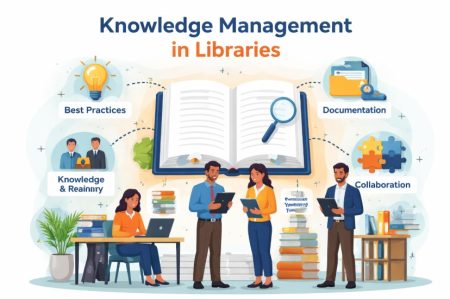
Knowledge Management (KM) refers to the systematic process of identifying, capturing, organizing, sharing, and applying knowledge to improve organizational effectiveness and decision-making. In modern libraries, KM extends beyond the traditional management of physical and digital collections to include both explicit knowledge—such as library policies, user guides, catalog records, institutional repositories, and subscribed databases—and tacit knowledge, such as the professional expertise of librarians, problem-solving skills developed through experience, and best practices in user support. For example, documented procedures for cataloguing, circulation, or database access represent explicit knowledge, while a reference librarian’s ability to guide a student through an advanced research query reflects tacit knowledge that can be shared through training sessions or internal knowledge bases.
Knowledge Management is especially important in contemporary library environments due to rapid technological change and increasing user expectations. Libraries now support digital scholarship, remote access to e-resources, research data management, and information literacy instruction. Through KM practices, libraries can record frequently asked reference questions, develop standardized research guides, and create internal manuals to help staff deliver consistent, high-quality services. For instance, maintaining a shared knowledge repository of troubleshooting solutions for database access issues or citation tools reduces response time and improves user satisfaction.
Knowledge Management helps libraries preserve institutional memory and support continuous improvement. When experienced staff retire or change roles, their knowledge can be retained through documented workflows, recorded training sessions, or mentoring programs. KM also enables libraries to analyze user feedback and interaction data to refine services, such as improving research support programs or redesigning digital platforms. By fostering knowledge sharing, collaboration, and innovation, Knowledge Management allows modern libraries to function effectively as dynamic knowledge hubs that support teaching, learning, and research in an evolving academic and information landscape.
Types of Knowledge Managed Within Library Environments: Tacit and Explicit Knowledge
Libraries manage diverse forms of knowledge to support their operational activities, user services, and institutional goals. Broadly, this knowledge can be categorized into explicit knowledge and tacit knowledge, both of which are essential for effective library functioning. Knowledge Management practices in libraries aim to capture, organize, and utilize these two types of knowledge systematically and in a complementary manner.
- Explicit knowledge refers to knowledge that is formalized, documented, and easily communicated or stored. In library environments, explicit knowledge includes written policies and procedures, cataloguing standards, classification schemes, user manuals, training materials, research guides, institutional repositories, and digital databases. For example, circulation rules, database access guidelines, OPAC user instructions, and digitization workflows are all forms of explicit knowledge. Similarly, subject guides, frequently asked questions (FAQs), and instructional videos created by librarians to support research and information literacy represent explicit knowledge that can be reused by both staff and users. Because explicit knowledge is codified, it can be easily shared across departments, updated when necessary, and preserved over time.
- Tacit knowledge, on the other hand, is personal, experience-based, and often difficult to formalize. In libraries, tacit knowledge resides in the skills, insights, and professional judgment of library staff. Examples include a reference librarian’s ability to interpret vague research queries, a cataloger’s expertise in resolving complex classification issues, or a systems librarian’s practical understanding of troubleshooting access problems. Tacit knowledge is also reflected in interpersonal skills, such as effective user communication, instructional strategies for information literacy sessions, and decision-making based on past experiences. Libraries manage tacit knowledge through informal knowledge sharing, mentoring, staff training, collaborative work, and communities of practice.
Effective library Knowledge Management recognizes that tacit and explicit knowledge are interdependent. Tacit knowledge can be transformed into explicit knowledge by documenting best practices, creating manuals, or recording training sessions, while explicit knowledge becomes more valuable when applied through staff experience and expertise. By managing both types of knowledge, libraries enhance service consistency, preserve institutional memory, and support continuous learning and innovation within the library environment.
Libraries as Knowledge Creation and Knowledge-Sharing Institutions
Libraries function not only as repositories of information but also as active knowledge creation and knowledge-sharing institutions within academic and research communities. Through a combination of curated resources, professional expertise, collaborative spaces, and digital platforms, libraries play a central role in transforming information into usable knowledge and facilitating its dissemination among users and stakeholders.
As knowledge creation institutions, libraries support the generation of new knowledge by enabling research, learning, and scholarly communication. They provide access to scholarly books, journals, databases, and digital repositories that form the foundation for academic inquiry. Libraries also contribute directly to knowledge creation by supporting research processes such as literature review, data management, citation support, and research ethics guidance. Institutional repositories, for example, preserve and disseminate theses, dissertations, faculty publications, and conference papers, allowing locally produced research to become part of the global knowledge ecosystem. In addition, libraries organize information literacy programs, research workshops, and training sessions that help users develop critical thinking and research skills, thereby empowering them to create new knowledge effectively.
Libraries also function as knowledge-sharing institutions by facilitating the exchange of information and expertise among individuals and communities. Through reference services, research consultations, subject guides, and online help desks, librarians share professional knowledge to support users’ academic and research needs. Digital platforms such as library websites, discovery tools, online catalogs, and learning management system integrations enable continuous access to shared knowledge regardless of time or location. Furthermore, libraries promote knowledge sharing among staff through internal documentation, collaborative workflows, training programs, and communities of practice, ensuring that institutional knowledge is retained and consistently applied.
By integrating physical spaces, digital infrastructure, and human expertise, libraries create environments that encourage collaboration, dialogue, and intellectual exchange. Group study areas, seminars, exhibitions, and scholarly events further enhance opportunities for knowledge sharing and co-creation. In this way, libraries move beyond their traditional role as information custodians and emerge as dynamic hubs that actively support the creation, dissemination, and sustainable use of knowledge in modern society.
How Knowledge Management Is Applied in Academic Libraries on a Daily Operational Level
Academic libraries operate in dynamic environments where information resources, user expectations, and technologies are constantly evolving. In this context, Knowledge Management (KM) plays a crucial role in ensuring that libraries function efficiently, deliver consistent services, and continuously improve their support for teaching, learning, and research. Rather than being a separate or occasional activity, KM is embedded in the daily operational practices of academic libraries, shaping how knowledge is captured, shared, and applied across services and staff.
- Managing Operational Knowledge and Documentation: One of the most visible applications of Knowledge Management in academic libraries is the systematic management of operational knowledge. Daily activities such as circulation, cataloging, acquisitions, and digital resource management rely on clearly documented policies, procedures, and workflows. Libraries maintain written guidelines for book lending, database access, classification standards, and repository submissions, which are regularly updated and shared through internal portals or staff manuals. This documentation ensures service consistency, reduces operational errors, and allows new or temporary staff to quickly adapt to their roles.
- Knowledge Management in Reference and Research Support Services: KM is deeply integrated into daily reference and research support activities. Librarians continuously accumulate knowledge through user interactions, research consultations, and problem-solving experiences. Common research queries, effective search strategies, and frequently encountered challenges are often recorded in shared knowledge bases, FAQs, or internal reference logs. Subject librarians transform their expertise into research guides, tutorials, and instructional materials, allowing individual knowledge to become institutional knowledge that benefits a wider academic community.
- Staff Collaboration and Knowledge Sharing: Daily knowledge sharing among library staff is a critical component of Knowledge Management. Team meetings, informal discussions, mentoring, and peer learning enable librarians to exchange tacit knowledge related to user behavior, emerging research trends, and system-related issues. When staff members encounter unique challenges or develop innovative solutions, these insights are often shared during briefings or training sessions and later documented for future use. Such collaborative practices help preserve institutional memory and promote a culture of continuous learning within the library.
- Technology as a Knowledge Management Enabler: Technology supports KM in academic libraries by providing platforms to store, retrieve, and analyze knowledge. Integrated library systems, discovery platforms, institutional repositories, and digital help desks are used daily to manage and disseminate knowledge resources. Libraries also collect and analyze usage statistics, feedback, and system logs to identify service gaps and improve workflows. For example, repeated access issues with electronic resources may result in updated troubleshooting guides or improved user instructions, demonstrating how operational data is transformed into actionable knowledge.
- Supporting Service Improvement and Decision-Making: Knowledge Management also informs daily and strategic decision-making in academic libraries. By analyzing documented experiences, user feedback, and performance indicators, libraries can refine services, allocate resources more effectively, and respond proactively to user needs. Daily KM practices help libraries adapt to changes such as new academic programs, evolving research requirements, or technological upgrades, ensuring that services remain relevant and responsive.
In academic libraries, Knowledge Management is not a separate system but an ongoing operational practice embedded in everyday activities. Through systematic documentation, collaborative knowledge sharing, technology-enabled processes, and continuous learning, KM supports efficient operations and high-quality services. By applying Knowledge Management on a daily operational level, academic libraries strengthen institutional memory, enhance staff performance, and reinforce their role as essential partners in teaching, learning, and research.
The Role of Library Professionals in Capturing and Sharing Organizational Knowledge
Library professionals play a central role in capturing and sharing organizational knowledge, as they serve both as knowledge workers and knowledge facilitators within library environments. Their daily activities generate valuable insights related to user behavior, service delivery, system management, and problem-solving. By consciously identifying and recording this knowledge, library professionals help transform individual experience into institutional assets that support consistency, efficiency, and continuous improvement.
One of the primary responsibilities of library professionals is the capture of tacit knowledge gained through experience. Reference librarians, for example, develop practical expertise in handling complex research queries, understanding user needs, and navigating subject-specific resources. When this experiential knowledge is documented through research guides, FAQs, service manuals, or training materials, it becomes explicit knowledge that can be reused by other staff members. Similarly, catalogers and systems librarians contribute by documenting classification decisions, metadata standards, troubleshooting procedures, and system configurations that are critical for daily operations.
Library professionals also play a key role in knowledge sharing and dissemination within the organization. Through staff meetings, mentoring, workshops, and informal discussions, they exchange insights, best practices, and lessons learned. Senior staff often guide junior colleagues by sharing institutional memory and professional judgment, while collaborative teamwork encourages cross-departmental learning. Digital platforms such as intranets, shared drives, and internal knowledge bases further enable library professionals to make organizational knowledge accessible across the institution.
In addition, library professionals act as knowledge intermediaries between the library and its user community. They gather feedback, identify emerging information needs, and translate user experiences into actionable knowledge that informs service design and policy development. By fostering a culture of documentation, collaboration, and continuous learning, library professionals ensure that organizational knowledge is preserved, updated, and effectively applied. Their active involvement in capturing and sharing knowledge strengthens institutional memory, enhances service quality, and supports the strategic development of modern libraries.
How Libraries Document and Preserve Institutional Knowledge and Best Practices
Libraries document and preserve institutional knowledge and best practices to ensure service continuity, operational efficiency, and long-term organizational learning. Institutional knowledge includes policies, procedures, professional experiences, and lessons learned through daily operations. By systematically capturing this knowledge, libraries reduce dependence on individual staff members and safeguard organizational memory, especially during staff transitions or technological changes.
One of the primary ways libraries document institutional knowledge is through formal documentation. Policies, standard operating procedures (SOPs), workflow manuals, and service guidelines are regularly created and updated for core functions such as circulation, cataloging, acquisitions, reference services, and digital resource management. These documents provide clear instructions for routine tasks and reflect best practices developed over time. Libraries often store such documentation in shared digital repositories or internal intranet systems to ensure easy access for all staff members.
Libraries also preserve institutional knowledge by converting tacit knowledge into explicit knowledge. Experienced library professionals document their expertise through training materials, checklists, troubleshooting guides, and case-based examples. For instance, solutions to recurring technical problems, effective strategies for handling complex user queries, or optimized workflows for digitization projects are recorded and shared. Regular training sessions, workshops, and mentoring programs further reinforce this process by transferring experiential knowledge to newer staff.
Technology plays a crucial role in documenting and preserving best practices. Integrated library systems, institutional repositories, and knowledge bases store operational data, reports, and digital content that reflect how services are delivered and improved over time. Libraries also analyze user feedback, service statistics, and performance reports to identify successful practices and areas for improvement. By embedding documentation into everyday workflows and fostering a culture of knowledge sharing, libraries ensure that institutional knowledge remains current, accessible, and actionable, supporting sustainable growth and continuous service enhancement.
How Digital Repositories Are Used as Knowledge Management Tools in Libraries
Digital repositories serve as powerful Knowledge Management (KM) tools in libraries, enabling the systematic capture, organization, preservation, and dissemination of institutional knowledge. Rather than serving only as storage platforms, repositories support the entire knowledge lifecycle—from knowledge creation to long-term reuse—thereby strengthening the library’s role as a knowledge hub within academic and research environments.
One of the primary KM functions of digital repositories is capturing and organizing explicit knowledge produced by an institution. Libraries use repositories to collect theses, dissertations, faculty publications, conference papers, reports, learning objects, and other scholarly outputs. Through standardized metadata, controlled vocabularies, and classification practices, libraries ensure that this knowledge is well-structured, searchable, and interoperable. This organization transforms dispersed research outputs into a coherent institutional knowledge base that can be easily accessed and reused.
Digital repositories also support knowledge sharing and dissemination. By providing open and persistent access to scholarly works, repositories enable students, researchers, and external audiences to discover and use institutional knowledge beyond physical and temporal boundaries. This sharing function aligns closely with KM objectives by promoting collaboration, increasing research visibility, and preventing knowledge loss. For example, a repository allows future researchers to build upon earlier studies, thereby supporting cumulative knowledge creation.
In addition, repositories play a vital role in preserving institutional memory and best practices. Libraries store policy documents, research guidelines, project reports, and historical records that reflect how knowledge has evolved within the institution. These preserved resources help maintain continuity during staff turnover, curriculum changes, or system upgrades. Repositories also generate usage statistics and impact data, which libraries analyze to improve services, inform decision-making, and refine knowledge strategies.
By integrating technology, metadata standards, and professional expertise, digital repositories enable libraries to manage knowledge systematically and sustainably. As Knowledge Management tools, they not only safeguard intellectual output but also enhance learning, research support, and organizational effectiveness, reinforcing the strategic value of libraries in the digital age.