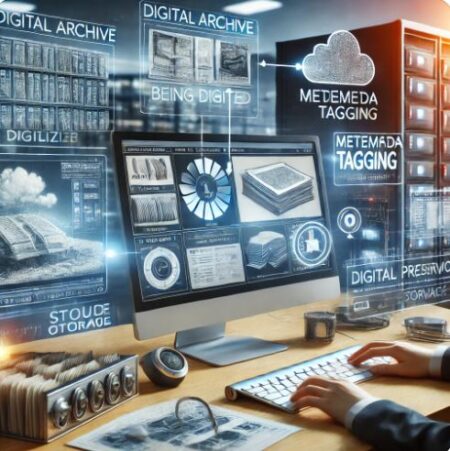
Digital archives are collections of materials that have been digitized from physical formats or created directly in digital form. These materials include a wide range of resources, such as manuscripts, historical documents, audio recordings, videos, images, and other multimedia content. Unlike traditional archives, which rely on physical storage and are often confined to specific locations, digital archives are stored electronically, making them accessible through digital platforms such as websites, databases, and cloud services. This transformation has been a pivotal development in the world of information storage and retrieval, significantly enhancing the way research and scholarship are conducted.
The importance of digital archives cannot be overstated, as they have revolutionized the way scholarly resources are accessed and shared. Scholars, researchers, and students now have the ability to access a vast array of primary and secondary sources from anywhere in the world, eliminating geographic and time-related barriers that once restricted research. Whether it is accessing rare historical manuscripts, academic journals, or multimedia files, digital archives provide immediate, on-demand access to materials that were previously difficult to obtain. This accessibility democratizes information and fosters greater collaboration across institutions and disciplines, enabling a more inclusive and global scholarly community. Through the development of digital archives, the process of knowledge-sharing and research has become more efficient, transparent, and expansive, marking a significant shift in the landscape of modern scholarship.
Digital Archives and Their Role in Modern Scholarship
Although invaluable, traditional archives have limitations—such as space constraints, physical degradation of materials, and geographical access barriers—that hinder widespread use. Digital archives overcome these obstacles by storing materials in digital formats that are easy to access from virtually anywhere. With the development of sophisticated digitization technologies, physical records and manuscripts are converted into electronic files, and entirely new materials are created in digital formats. This digital transformation makes it possible to preserve and protect precious documents, allowing researchers to explore them without fear of damaging the originals.
An excellent example of this is the Internet Archive, which hosts millions of books, websites, audio recordings, and videos that have been digitized for public access. Scholars can access texts, some of which are out of print or otherwise difficult to obtain, opening new avenues for research and scholarship. This access has also contributed to the digitization of older materials, allowing scholars to re-examine sources that may have been underused or inaccessible for decades. Let’s delve into the role of digital archives in modern scholarship, highlighting their impact on research, education, interdisciplinary collaboration, and the preservation of knowledge.
- Transformation of Research Access and Efficiency: One of the most significant impacts of digital archives is the transformation of how researchers access scholarly materials. Before the advent of digital archives, scholars often had to physically visit libraries or archives to access primary sources and academic publications. This process was time-consuming and restricted by geographical barriers. However, digital archives have eliminated many of these challenges by providing remote access to a vast array of resources. Researchers can now access rare manuscripts, academic journals, and primary sources without leaving their desks, opening up a world of information at their fingertips.
A prominent example is JSTOR, a digital archive that provides access to academic journal articles, books, and primary sources across various disciplines. Scholars researching in fields such as the humanities, social sciences, and natural sciences can easily access millions of journal articles and books, dramatically reducing the time and effort required for literature reviews. The HathiTrust Digital Library, another example, offers a wealth of digitized books, including rare and out-of-print works, enabling scholars to conduct comprehensive research in a fraction of the time it would have taken previously. - Advancing Interdisciplinary Research and Collaboration: Digital archives make research more efficient and foster interdisciplinary collaboration. By making diverse collections of scholarly materials available, digital archives encourage scholars from different fields to engage with each other’s work. For example, a historian researching World War II can access primary sources such as government documents, photographs, letters, and newspapers from various disciplines, such as political science, sociology, and media studies, all housed within digital archives. This cross-pollination of ideas and resources often leads to new research perspectives and methodologies.
Platforms like Europeana serve as an excellent example of how digital archives encourage interdisciplinary research. Europeana is a digital platform that aggregates content from museums, galleries, libraries, and archives across Europe. It provides access to millions of digitized items, including paintings, books, photographs, and sound recordings. This variety of resources allows researchers from various disciplines, such as art history, cultural studies, and linguistics, to work together and gain insights from different fields, fostering interdisciplinary collaboration and advancing scholarship. - Expanding Access to Underrepresented and Global Perspectives: Digital archives have been especially impactful in making underrepresented and global perspectives more accessible. Historically, access to scholarly resources has been limited by geographical location, institutional affiliation, and economic constraints. Digital archives have helped to overcome these barriers by providing open or affordable access to important scholarly materials. In doing so, they promote equity in scholarship and allow voices from marginalized regions or communities to be heard.
The Digital Public Library of America (DPLA) is an example of how digital archives can democratize access to knowledge. DPLA aggregates digitized content from libraries, museums, and archives across the United States, providing free access to millions of books, photographs, manuscripts, and more. This platform helps ensure that even those in remote or underfunded regions can access critical scholarly materials. Moreover, it facilitates the study of American history and culture from diverse perspectives, including those of indigenous peoples, immigrant communities, and African Americans, who have historically been underrepresented in traditional archives. - Preservation and Sustainability of Scholarly Materials: Another vital role that digital archives play in modern scholarship is in the preservation of knowledge. Many physical materials, such as historical manuscripts, books, and photographs, are vulnerable to deterioration due to factors such as age, climate, and handling. By digitizing these materials, archives ensure that they can be preserved and accessed for future generations without the risk of physical degradation.
For example, the Library of Congress in the United States has been digitizing important historical materials to safeguard them from deterioration. The library has made collections of historical newspapers, letters, and photographs available online, preserving critical elements of American history for researchers, students, and the public. This type of digital preservation ensures that valuable historical records are accessible and remain intact long after the physical originals may have deteriorated beyond repair. Furthermore, digital archives provide a sustainable solution for storing and sharing large volumes of information. Unlike physical archives, which require significant space and resources for storage, digital archives can store vast amounts of content in electronic form, making them more environmentally and financially sustainable in the long run. The National Digital Archive of DSpace is an example of an institutional repository used by universities to store and share scholarly works, dissertations, and research papers, ensuring the sustainability of these materials while providing easy access for future scholars. - Enhancing Research and Education with Open Access: Open access has become a central tenet of modern scholarship, and digital archives are at the forefront of this movement. Open-access digital archives provide free access to scholarly content, removing the paywall barriers that often restrict access to academic resources. This open-access model aligns with the goal of making scholarly work more inclusive and transparent, allowing anyone, regardless of location or institutional affiliation, to access valuable knowledge.
For instance, PubMed Central (PMC) is a digital archive that offers free access to a wealth of research articles in the field of life sciences and medicine. This open-access repository has revolutionized the way scholars and practitioners access medical research, facilitating faster dissemination of important scientific discoveries and ensuring that life-saving knowledge reaches a broader audience. Open-access archives benefit not only researchers but also students, educators, and the general public, who can freely access the latest research without having to rely on institutional subscriptions or costly journal fees. - Challenges and Future Directions: While digital archives have brought about significant advancements, they are not without challenges. One major concern is the issue of digital preservation. As technologies evolve, there is a risk that digital formats may become obsolete, leaving important materials inaccessible. Archivists must ensure that materials are regularly updated and migrated to new formats to ensure long-term accessibility. Additionally, copyright issues and ethical concerns related to digitization continue to be a point of contention. Some materials, especially older works, maybe in the public domain, but others are still under copyright, which can limit the extent to which they can be shared freely in digital archives. Archives must navigate these complexities to maintain both access and respect for intellectual property rights.
Looking forward, the integration of artificial intelligence (AI) and machine learning (ML) into digital archives will enhance their functionality. AI tools can improve the organization of digital content, making it easier for researchers to find relevant materials. Furthermore, AI can assist in the digitization process by automating tasks such as text recognition and metadata generation, reducing the workload of archivists.
Digital archives have become a cornerstone of modern scholarship by transforming access to research, preserving scholarly materials, and promoting global collaboration. They provide researchers with unprecedented access to a vast range of materials, support interdisciplinary research, and ensure the preservation of valuable knowledge for future generations. Despite challenges such as digital preservation and copyright concerns, the ongoing development of digital archives promises to enhance their role in advancing scholarship further, fostering open access, and ensuring the sustainability of knowledge. As technology continues to evolve, digital archives will play an even greater role in shaping the future of research and academic inquiry.
Enhancing the Research Process Through Digital Archives
Digital archives have significantly transformed the research process for scholars and students, offering numerous advantages that enhance accessibility, efficiency, and collaboration. One of the primary benefits is the immediacy of access to a wide array of resources. Researchers no longer need to travel to physical archives or wait for materials to be mailed or transferred. Instead, they can instantly access digitized primary and secondary sources from anywhere in the world. For instance, the Internet Archive provides open access to millions of digitized books, films, and audio recordings, enabling researchers to explore a vast range of materials at their convenience without geographical constraints.
Searchability is a key advantage offered by digital archives. The use of metadata, indexing, and advanced search functions allows users to locate specific materials quickly. Unlike traditional physical archives, where researchers may need to sift through boxes or shelves to find relevant documents, digital archives provide sophisticated search tools that streamline the process. For example, databases like JSTOR and Google Scholar offer robust search options that help scholars find specific journal articles, research papers, or books related to their topics of interest, making literature reviews and data collection more efficient.
Digital archives also enable interdisciplinary research by providing access to diverse materials across various fields of study. Researchers can access a broad spectrum of resources—from historical documents to modern academic publications—without the need to seek materials from multiple physical libraries or institutions. This is particularly valuable for students and scholars working in interdisciplinary fields, such as environmental history or digital humanities. Europeana, for instance, aggregates digitized content from museums, libraries, and archives across Europe, offering materials ranging from art and literature to social science data, all in one place. Additionally, digital archives play a crucial role in preservation and sustainability, ensuring that valuable resources are safeguarded for future generations. Historical documents, rare manuscripts, and out-of-print books that might otherwise be lost or damaged are now preserved in digital formats, making them accessible long after the physical originals may have deteriorated. The Library of Congress has digitized a significant portion of its collection, providing long-term access to crucial American historical records, while ensuring that these materials remain protected from environmental hazards.
Finally, collaboration and open access are enhanced through digital archives. Many digital archives are open-access platforms, allowing scholars, researchers, and students to freely share and access academic materials. For example, PubMed Central offers free access to a vast collection of research articles in the life sciences, making it easier for researchers to collaborate on global health issues or medical innovations. The open-access nature of these platforms not only democratizes access to knowledge but also facilitates the sharing of ideas across institutions and geographical boundaries, encouraging greater academic cooperation.
The Transformation of Access to Primary and Secondary Sources Through Digital Archives
The advent of digital archives has profoundly transformed how researchers worldwide access primary and secondary sources, reshaping the landscape of academic research and scholarship. By digitizing vast collections of documents, manuscripts, images, audio recordings, and videos, digital archives have made once inaccessible materials readily available to scholars regardless of geographical location. This shift has not only enhanced the speed and efficiency of the research process but has also democratized access to crucial scholarly resources that were previously locked behind physical, economic, and logistical barriers.
- Overcoming Geographical and Physical Barriers: One of the most significant ways that digital archives have transformed research access is by eliminating the geographical and physical barriers that traditionally limit access to certain primary and secondary sources. In the past, researchers often had to travel to specific libraries, archives, or institutions to access rare or specialized materials. This could be expensive and time-consuming, especially for those living far from the physical archives or in regions with limited access to scholarly resources.
For example, HathiTrust, a comprehensive digital archive of millions of digitized books, provides researchers with access to an enormous range of texts, including rare and out-of-print books, from anywhere in the world. Researchers no longer need to travel to distant libraries or wait for interlibrary loans—everything they need is available at the click of a button. This global accessibility ensures that scholars from all backgrounds can access the same materials, leveling the playing field and fostering a more inclusive research environment. - Enhancing Searchability and Efficiency: The searchability provided by digital archives is another key transformation in accessing primary and secondary sources. Traditional archives, often organized physically, require researchers to browse shelves or sift through boxes of materials, which can be a slow and inefficient process. In contrast, digital archives leverage advanced metadata, indexing, and keyword search functions to enable users to quickly locate specific documents, images, or articles relevant to their research. This enhanced search capability significantly speeds up the research process, allowing scholars to focus on analysis rather than searching for materials.
Databases like JSTOR, which houses thousands of academic journal articles, provide users with sophisticated search features that enable quick access to relevant secondary sources. For instance, a historian researching the effects of the Industrial Revolution can easily search for articles that focus on specific regions, industries, or periods, refining the search results with just a few clicks. Similarly, Project MUSE, a digital archive offering scholarly journals and books in the humanities and social sciences, allows researchers to quickly access relevant content through precise search terms, making literature reviews and data gathering much more efficient. - Supporting Interdisciplinary Research: Digital archives have also facilitated interdisciplinary research by offering researchers access to various primary and secondary sources spanning multiple disciplines. In the past, accessing materials across different fields often required visiting several different libraries or archives. Now, with the digitization of collections, scholars can easily access cross-disciplinary resources in one place.
Platforms like Europeana aggregate digital content from various institutions across Europe, offering access to millions of items from fields such as art, history, literature, and science. A researcher studying the cultural impacts of World War II, for example, can access military documents, literary works, visual art, and audiovisual materials all in one location, enriching their research and fostering interdisciplinary approaches. - Preservation and Long-Term Access: The preservation of primary and secondary sources is another key advantage of digital archives. Physical materials, especially those that are old or fragile, are prone to damage from environmental factors, handling, and the passage of time. Digital archives, by converting physical materials into electronic formats, help protect these valuable sources from degradation.
For example, the Library of Congress, one of the largest libraries in the world, has digitized many of its rare and historical collections, ensuring that these materials are preserved for future generations. Documents such as letters from the founding fathers, historical maps, and photographs from major events are all made available online for researchers and the public. Digitization allows these resources to be accessed without risking the physical wear and tear that often occurs with constant handling. Moreover, digital archives provide long-term access to materials that might otherwise be inaccessible. Physical libraries and archives face space limitations and must occasionally discard or restrict access to certain materials. Digital archives, however, can store vast quantities of content in electronic formats, ensuring that research materials remain accessible indefinitely. - Open Access and Global Collaboration: One of the most transformative aspects of digital archives is the open access they provide to many academic and scholarly resources. In the past, many primary and secondary sources were restricted by institutional subscriptions or geographic location. Today, numerous digital archives offer open-access content, allowing anyone with an internet connection to access valuable scholarly materials for free.
The Digital Public Library of America (DPLA) is an excellent example of how digital archives foster global collaboration by providing free access to millions of digitized items from libraries, museums, and archives across the United States. Researchers can access materials that reflect a variety of perspectives and topics, from rare historical manuscripts to contemporary works. Open-access platforms like PubMed Central, which provides free access to a vast repository of medical and life sciences literature, further enable global collaboration in research by making key sources readily available to scholars worldwide.
Digital archives have fundamentally transformed the way researchers access both primary and secondary sources, opening up a world of scholarly resources to those who might otherwise face barriers to access. By overcoming geographical constraints, enhancing searchability, supporting interdisciplinary approaches, preserving historical materials, and promoting open access, digital archives have democratized research and made knowledge more accessible than ever before. As technology continues to advance, the role of digital archives in supporting global scholarship will only continue to grow, providing researchers worldwide with the tools they need to explore, analyze, and contribute to the body of human knowledge.
Impact of Digital Archives on the Accessibility of Rare or Out-of-Print Scholarly Materials
Digital archives have had a profound impact on the accessibility of rare and out-of-print scholarly materials, revolutionizing the way researchers and students engage with historical and academic works that were once difficult or even impossible to access. Traditionally, rare books, manuscripts, journals, and other scholarly resources were confined to specific libraries or institutions, making them inaccessible to most people due to geographical, financial, or institutional limitations. However, with the advent of digital archiving, these materials have been digitized and made available online, ensuring broader access and preservation for future generations.
One of the key advantages of digital archives is that they allow rare and out-of-print materials to be preserved and shared with a global audience. Many scholarly works, particularly those published in the early 20th century or before, were not widely distributed, and their physical copies have become scarce or deteriorated over time. Digital archives, such as the HathiTrust Digital Library, have digitized millions of books, including rare and out-of-print works, making them accessible to anyone with an internet connection. Scholars researching niche topics can now access texts that may have been previously restricted to a few institutions, ensuring that valuable academic resources are not lost to time or limited to physical locations.
For example, Google Books has made a significant contribution to digitizing out-of-print books and academic journals. By scanning materials from libraries around the world, Google Books has created a vast repository of texts that are now searchable and downloadable, including many that were never available in digital form before. This has expanded access to books and journals that were previously unavailable due to copyright restrictions or simply because they were no longer in print. Researchers in fields like history, literature, and the sciences can now find rare works that may have been forgotten, enabling a more comprehensive understanding of their subjects.
Digital archives ensure that fragile and deteriorating materials are protected from further damage. Many rare texts, especially those that were printed on materials like parchment or early paper, are susceptible to environmental damage, handling wear, or even loss due to the fragility of the materials. Through digitization, archives can preserve these documents in digital formats, allowing them to be studied and shared without putting the original materials at risk. The Library of Congress, for example, has digitized many historical documents, including early American newspapers and photographs, safeguarding them from further degradation while making them available to researchers worldwide.
Digital preservation ensures that these rare materials are not lost over time. As physical libraries and archives face space limitations and funding challenges, important resources are at risk of being discarded or forgotten. By digitizing these resources, archives guarantee that materials remain accessible even if the physical originals are no longer available or are difficult to maintain. This is particularly critical for materials that are not widely circulated or may not have been included in more mainstream collections.