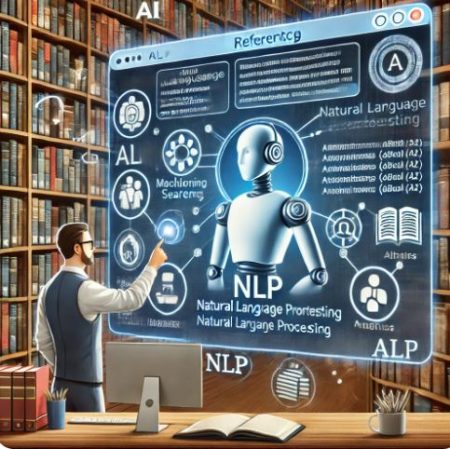
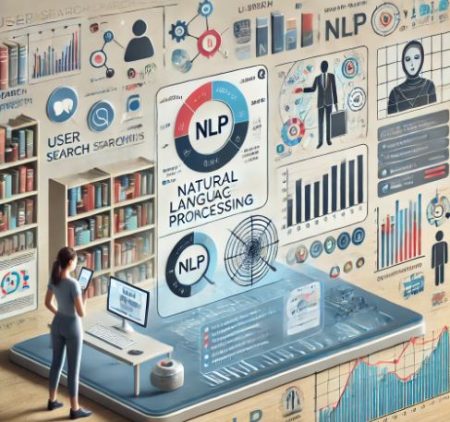
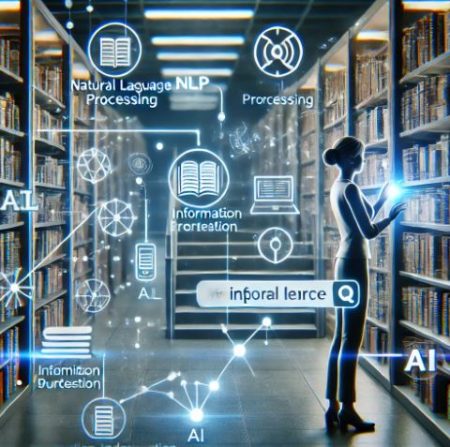
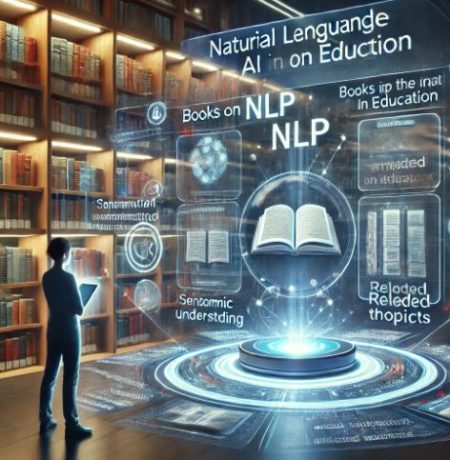
Natural Language Processing (NLP) is a subfield of artificial intelligence (AI) and linguistics that focuses on enabling computers to understand, interpret, and generate human language. By combining computational techniques with insights from linguistics, NLP allows machines to bridge the gap between structured computer data and the unstructured, often ambiguous nature of human language.
NLP powers various applications, from voice-activated assistants like Siri and Alexa to real-time language translation tools, sentiment analysis systems, and even predictive text features. It plays a vital role in transforming vast amounts of textual or spoken data into actionable insights, making it indispensable in industries like healthcare, finance, customer service, and education.
Core tasks in NLP include tokenization (breaking down text into meaningful units), part-of-speech tagging, named entity recognition, sentiment analysis, and text summarization. With advancements in machine learning and deep learning, modern NLP techniques have reached impressive levels of sophistication, as demonstrated by transformer-based models like BERT and GPT, which can generate human-like text and understand nuanced context. Despite its remarkable progress, NLP still faces challenges, such as handling linguistic ambiguity, context, and multilingual data. Nevertheless, its potential continues to grow, revolutionizing how humans interact with machines and how information is processed and understood in the digital age.
What Is Natural Language Processing (NPL)?
Natural Language Processing (NLP) is a fascinating and dynamic field that explores the interaction between computers and human language. At its core, NLP aims to teach machines how to process, analyze, and even generate natural language in a way that mirrors human communication. This involves understanding not just the literal meaning of words but also their context, nuances, and the underlying intent behind them. For example, when someone says, “It’s raining cats and dogs,” NLP systems must determine that this is an idiomatic expression for heavy rain rather than a literal description.
The applications of NLP are vast and impactful, ranging from everyday tools like virtual assistants, chatbots, and search engines to more specialized uses such as language translation, sentiment analysis, and text summarization. In healthcare, NLP helps extract valuable insights from medical records, while in customer service, it powers systems that analyze feedback and improve user experience. These technologies are increasingly shaping how people interact with devices and access information.
Despite its progress, NLP faces ongoing challenges. Human language is inherently complex, filled with ambiguities, idioms, and cultural nuances that are difficult for machines to fully grasp. Moreover, maintaining fairness and avoiding biases in NLP systems is critical, as they are often trained on large datasets that may reflect societal prejudices. Another challenge lies in enabling systems to handle multiple languages and dialects effectively.
As machine learning and deep learning technologies advance, the field of NLP continues to evolve, unlocking new possibilities and addressing old challenges. It remains a vital area of research and application, promising to revolutionize the way humans and machines understand and communicate with each other.
How Does NPL Work?
Natural Language Processing (NLP) works by combining linguistic principles, computational algorithms, and machine learning techniques to enable computers to understand, interpret, and generate human language. The process begins with acquiring raw input, such as text or speech, which is then preprocessed to make it usable for analysis. Preprocessing involves steps like tokenization (splitting text into words or sentences), normalization (standardizing text formats), and removing stopwords (common but uninformative words like “the” or “and”). Once the data is cleaned, linguistic analysis is performed to understand the structure and meaning of the language. This includes syntactic analysis (examining grammar and sentence structure), semantic analysis (interpreting meaning in context), and identifying named entities like names, dates, or locations.
After linguistic analysis, machine learning models, often powered by advanced neural networks like transformers, analyze patterns and context in the data to extract insights or perform tasks. For example, models like BERT or GPT process text in a non-linear way, allowing them to capture nuanced meanings and generate human-like responses. The system then uses this understanding to execute tasks such as sentiment analysis, text summarization, translation, or question answering. Finally, the output is delivered in a form tailored to the application, whether it’s a chatbot response, a translated text, or a sentiment score. By integrating these processes, NLP enables machines to handle the complexity of human language and provides a foundation for a wide range of applications in communication, automation, and data analysis.
What Are the Fundamental Tasks Involved in Natural Language Processing (NLP)?
Natural Language Processing (NLP) involves several fundamental tasks that enable machines to process, understand, and generate human language. These tasks can be broadly categorized into basic language processing, linguistic analysis, and higher-level applications. Here are the key tasks:
- Text Preprocessing: Text preprocessing is the initial step in NLP, which involves cleaning and preparing raw text data for analysis. Tokenization splits text into smaller units, such as words or sentences, making it easier to analyze. For instance, the sentence “Natural Language Processing is amazing!” can be tokenized into [“Natural,” “Language,” “Processing,” “is,” “amazing”]. Normalization ensures consistency, such as converting all text to lowercase or correcting misspellings (e.g., “nlp” becomes “NLP”). Stopword removal filters out common words like “the” or “and,” while stemming and lemmatization reduce words to their root forms, like “running” and “ran” both becoming “run.”
- Syntactic Analysis (Parsing): Parsing analyzes the grammatical structure of sentences. Part-of-Speech (POS) tagging assigns labels to words based on their grammatical roles, such as “John is running” where “John” is a noun, “is” a verb, and “running” a verb. Dependency parsing maps relationships between words, such as identifying “John” as the subject and “running” as the action. This is crucial in applications like grammar checkers.
- Semantic Analysis: Semantic analysis delves into the meaning of language. Named Entity Recognition (NER) identifies and categorizes entities, such as in the sentence “Google was founded in California in 1998,” where “Google” is an organization, “California” a location, and “1998” a date. Word sense disambiguation resolves ambiguity in words with multiple meanings, like understanding “bank” as a financial institution versus a riverbank. Coreference resolution tracks when different words refer to the same entity, such as in “John said he would arrive soon,” where “he” refers to “John.”
- Text Classification: Text classification assigns categories to text. For example, sentiment analysis determines if a review like “The movie was fantastic!” is positive, neutral, or negative. Topic modeling identifies themes in a collection of documents, such as grouping articles into topics like “sports” or “technology.” Similarly, spam detection filters emails into spam and non-spam categories based on text patterns.
- Language Modeling: Language modeling predicts or generates text. Next word prediction suggests the next word in a sequence, like typing “I am” in a search bar and receiving suggestions like “happy” or “tired.” Text generation produces coherent and contextually relevant text, as seen in applications like OpenAI’s GPT, which can write essays or create stories based on prompts.
- Machine Translation: Machine translation converts text from one language to another. For instance, translating “How are you?” into Spanish as “¿Cómo estás?” requires the system to understand grammar and context in both languages. Applications like Google Translate rely on sophisticated NLP techniques for accurate translation.
- Speech Recognition and Synthesis: Speech-related NLP tasks include converting spoken language to text (speech-to-text) and generating speech from text (text-to-speech). For example, when you ask a virtual assistant like Siri, “What’s the weather today?” it converts your speech into text, processes the query, and responds with synthesized speech.
- Question Answering (QA): QA systems extract precise answers to user queries. For instance, given the query “Who is the president of the United States?” and a passage about US presidents, the system identifies and returns “Joe Biden” as the answer. This is the backbone of search engines and virtual assistants.
- Information Extraction: This task involves extracting structured data from unstructured text. For example, from a news article, an NLP system might extract facts like “Tesla launched a new electric car in 2025.” Such systems are used in data mining and knowledge graph construction.
- Text Summarization: Text summarization condenses lengthy text into concise summaries. Extractive summarization selects important sentences directly from the text, while abstractive summarization generates new sentences that convey the same meaning. For instance, summarizing a research paper might produce a few sentences highlighting the study’s purpose, methods, and conclusions.
- Sentiment and Emotion Analysis: This task evaluates the emotional tone of the text. For example, analyzing a tweet like “I love the new iPhone!” might classify it as a positive sentiment. Emotion analysis goes deeper, identifying specific emotions such as joy, anger, or sadness in the text.
- Dialogue Systems and Chatbots: NLP enables machines to engage in human-like conversations. For example, a customer service chatbot might understand the query “I want to check my account balance” and provide the appropriate response. Systems like Alexa and Google Assistant use NLP to process user inputs, retrieve relevant information, and generate responses.
How Does NLP Enable Machines to Process and Understand Human Language?
Natural Language Processing (NLP) enables machines to process and understand human language by bridging the gap between the structured, rule-based logic of computers and the complex, ambiguous nature of human communication. It achieves this through a combination of linguistic rules, statistical models, and advanced machine-learning techniques. The process begins with text preprocessing, where raw language data is cleaned and organized into manageable units. Tasks like tokenization, normalization, and stemming break down text into words or sentences, standardize formats, and reduce words to their root forms, making it easier for machines to analyze language.
Once preprocessed, NLP systems use syntactic analysis to understand the grammatical structure of sentences and semantic analysis to interpret the meaning behind words and phrases. For example, parsing can identify the subject, verb, and object in a sentence, while semantic analysis can resolve ambiguities, such as distinguishing between “bank” as a financial institution and “bank” as a riverbank. Machine learning models, particularly neural networks like transformers (e.g., BERT and GPT), play a crucial role in enabling machines to recognize patterns, capture context, and learn the nuances of language from vast datasets. These models are trained to handle complex tasks like sentiment analysis, text summarization, and machine translation, allowing machines to infer meaning and generate human-like responses.
By incorporating contextual understanding, NLP also allows machines to grasp subtleties like idioms, sarcasm, and cultural references, further enhancing their ability to process and respond to human language effectively. This combination of linguistic principles and AI-powered algorithms underpins applications like virtual assistants, chatbots, and translation tools, revolutionizing human-computer interaction and making it more intuitive and meaningful.
Applications of NLP in Everyday Life
Natural Language Processing (NLP) is a transformative technology that bridges the gap between human language and computers. By enabling machines to understand, interpret, and generate natural language, NLP powers many tools and applications we use every day. From virtual assistants to spam detection, NLP is deeply integrated into modern life, making our interactions with technology more intuitive and efficient. Let’s explore the main applications of NLP in everyday life.
- Virtual Assistants and Chatbots: Virtual assistants like Siri, Alexa, and Google Assistant use NLP to interpret spoken or typed commands and provide appropriate responses. These systems can answer questions, control smart devices, set reminders, and perform searches based on user queries. For example, when you ask, “What’s the weather like today?” the assistant uses speech-to-text to process the input, applies semantic analysis to understand the intent, and retrieves the weather information from a database. Chatbots, commonly used in customer service, rely on NLP to provide instant support, handling tasks like tracking orders, resolving issues, or answering FAQs, all while simulating natural conversation.
- Machine Translation: NLP powers machine translation tools like Google Translate and DeepL, which convert text or speech from one language to another. These tools analyze grammar, sentence structure, and context in the source language before generating translations that make sense in the target language. For instance, translating “I’m going to the bank” into Spanish as “Voy al banco” requires the system to recognize “bank” as a financial institution, not a riverbank. Machine translation facilitates communication across languages for travel, business, and education.
- Search Engines: Search engines such as Google and Bing rely heavily on NLP to interpret and process user queries. When you type a search like “best coffee shops near me,” the engine uses NLP to identify the intent behind the query, retrieve relevant results, and rank them based on their importance. Features like autocomplete and voice search enhance the user experience by predicting queries or processing spoken commands, while advanced NLP ensures the results are contextually accurate and helpful.
- Text Prediction and Autocorrect: Text prediction features, such as those in smartphone keyboards or email platforms like Gmail’s Smart Compose, use NLP to anticipate what you’re about to type. For instance, as you start typing “I’ll meet you at,” the system might suggest “the office” or “the park” based on context. Similarly, autocorrect uses NLP to identify and fix spelling or grammatical errors in real time, improving communication clarity and efficiency.
- Sentiment Analysis: NLP-driven sentiment analysis tools are widely used to evaluate opinions and emotions in text. For instance, social media platforms and businesses analyze customer reviews or tweets to determine whether the sentiment is positive, negative, or neutral. A review like “The product quality is excellent, but delivery was slow” might be flagged as mixed sentiment. This helps companies understand customer satisfaction, make data-driven decisions, and address concerns effectively.
- Content Recommendation: Platforms like Netflix, Spotify, and Amazon use NLP to analyze user preferences and recommend personalized content. These systems predict what users might enjoy by examining text-based interactions, such as search queries, reviews, or playlist titles. For example, if you frequently watch action movies, Netflix’s recommendation engine may suggest similar titles. NLP enhances personalization, making experiences more relevant and engaging.
- Voice Recognition and Speech-to-Text: NLP powers voice recognition systems like Apple’s Siri Dictation and Google’s Speech-to-Text, which convert spoken language into written text. For instance, dictating “Send a message to John saying I’ll be late” prompts the system to process your speech, transcribe it into text, and execute the command. These tools are widely used for hands-free texting, transcription services, and accessibility features, enabling seamless communication across devices.
- Spam Detection and Email Filtering: Email services like Gmail use NLP to analyze the content and structure of emails to detect spam or phishing attempts. For example, emails containing phrases like “urgent money transfer” or suspicious links may be classified as spam and redirected to the spam folder. Additionally, NLP categorizes emails into folders like “Primary,” “Promotions,” or “Social,” ensuring users can focus on important messages.
- Text Summarization: NLP is used to condense lengthy content into concise summaries. News aggregation apps like Inshorts or tools like Pocket summarize articles by extracting key points or generating short, coherent summaries. For example, a 1,000-word research paper could be summarized into a few sentences highlighting its purpose, findings, and conclusions, making it easier for readers to grasp the main ideas quickly.
- Social Media Monitoring: Social media platforms use NLP to moderate content, identify hate speech, and combat misinformation. For example, NLP algorithms analyze text for offensive language or hate speech and flag it for review. Similarly, platforms like Twitter and Facebook employ NLP to detect and limit the spread of fake news by analyzing patterns in posts and verifying their credibility, fostering a safer online environment.
- Healthcare Applications: In healthcare, NLP helps extract insights from unstructured medical records, enabling doctors to make better decisions. For instance, systems like IBM Watson Health analyze patient notes and clinical data to suggest diagnoses or treatments. Chatbots equipped with NLP provide preliminary health advice or mental health support by analyzing symptoms described in natural language, improving accessibility to healthcare resources.
- Customer Feedback Analysis: NLP allows businesses to analyze large volumes of customer feedback from surveys, reviews, or social media. For example, sentiment analysis can identify common complaints about a product or service, like delays in shipping or poor customer support. By categorizing and summarizing feedback, businesses gain valuable insights into customer satisfaction and areas for improvement.
- Language Learning and Tutoring: Language learning apps like Duolingo and Babbel use NLP to make learning new languages interactive and effective. NLP helps in providing personalized lessons, offering real-time corrections, and understanding context. For instance, if a learner types “He is go to school,” the system identifies the grammatical error and suggests “He is going to school,” facilitating better learning outcomes.
- Legal and Financial Document Processing: NLP automates the review of legal contracts and financial documents by extracting critical information and summarizing content. For example, systems can scan contracts for clauses about termination or payment terms, saving significant manual effort. In financial services, NLP analyzes large datasets like earnings reports or news articles to assist in decision-making and risk assessment.
- Accessibility Tools: NLP plays a key role in accessibility by powering tools like screen readers and real-time captioning. For individuals with visual impairments, screen readers convert text to speech, enabling them to navigate digital content. Real-time captioning tools convert spoken language into text, helping individuals with hearing impairments understand conversations or videos and making technology more inclusive.
NLP’s applications touch almost every aspect of our daily lives, making communication, learning, and interactions more intuitive and efficient. From simplifying complex tasks like document processing to enhancing entertainment and accessibility, NLP has become an essential component of modern technology, continuously improving how we interact with the world.
Reference Articles:
- Atallah, M. J., McDonough, C. J., Raskin, V., & Nirenburg, S. (2001). Natural language processing for information assurance and security: An overview and implementations. Proceedings of the 2000 Workshop on New Security Paradigms, 51–65. https://doi.org/10.1145/366173.366190
- Bender, E. M. (2022). Linguistic Fundamentals for Natural Language Processing: 100 Essentials from Morphology and Syntax. Springer Nature.
- Chopra, A., Prashar, A., & Sain, C. (2013). Natural Language Processing. 1(4).
- Chowdhary, K. R. (2020). Natural Language Processing. In K. R. Chowdhary (Ed.), Fundamentals of Artificial Intelligence (pp. 603–649). Springer India. https://doi.org/10.1007/978-81-322-3972-7_19
- Demner-Fushman, D., Chapman, W. W., & McDonald, C. J. (2009). What can natural language processing do for clinical decision support? Journal of Biomedical Informatics, 42(5), 760–772. https://doi.org/10.1016/j.jbi.2009.08.007
- Fanni, S. C., Febi, M., Aghakhanyan, G., & Neri, E. (2023). Natural Language Processing. In M. E. Klontzas, S. C. Fanni, & E. Neri (Eds.), Introduction to Artificial Intelligence (pp. 87–99). Springer International Publishing. https://doi.org/10.1007/978-3-031-25928-9_5
- Jensen, K., Heidorn, G. E., & Richardson, S. D. (2012). Natural Language Processing: The PLNLP Approach. Springer Science & Business Media.
- Joseph, S. R., Hlomani, H., Letsholo, K., Kaniwa, F., & Sedimo, K. (2016). Natural Language Processing: A Review. Applied Sciences, 6(3).
- Kang, Y., Cai, Z., Tan, C.-W., Huang, Q., & Liu, H. (2020). Natural language processing (NLP) in management research: A literature review. Journal of Management Analytics, 7(2), 139–172. https://doi.org/10.1080/23270012.2020.1756939
- Kao, A., & Poteet, S. R. (2007). Natural Language Processing and Text Mining. Springer Science & Business Media.
- Liddy, E. D. (n.d.). Natural Language Processing.
- Mihalcea, R., Liu, H., & Lieberman, H. (2006). NLP (Natural Language Processing) for NLP (Natural Language Programming). In A. Gelbukh (Ed.), Computational Linguistics and Intelligent Text Processing (Vol. 3878, pp. 319–330). Springer Berlin Heidelberg. https://doi.org/10.1007/11671299_34
- Nadkarni, P. M., Ohno-Machado, L., & Chapman, W. W. (2011). Natural language processing: An introduction. Journal of the American Medical Informatics Association, 18(5), 544–551. https://doi.org/10.1136/amiajnl-2011-000464
- Yim, W., Yetisgen, M., Harris, W. P., & Kwan, S. W. (2016). Natural Language Processing in Oncology: A Review. JAMA Oncology, 2(6), 797–804. https://doi.org/10.1001/jamaoncol.2016.0213