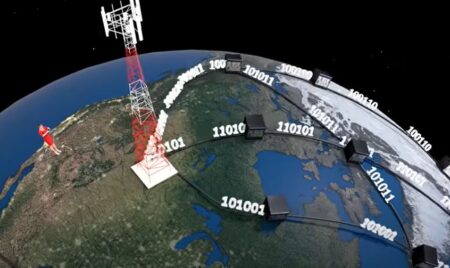
In an era of global connectivity and instantaneous communication, a Wide Area Network (WAN) emerges as a cornerstone of our modern digital landscape. Unlike its more localized counterparts, a WAN stretches its digital tendrils across vast geographical expanses, connecting not only cities but entire countries and continents. The very essence of a WAN lies in its ability to bridge immense distances, creating a virtual infrastructure that facilitates seamless data transmission and resource sharing on a scale that defies physical boundaries.
At its core, a Wide Area Network represents the convergence of technology and ambition, enabling organizations, businesses, and individuals to communicate, collaborate, and exchange information regardless of physical separation. A WAN emerges as the conduit that fuels the engines of progress in a world that thrives on real-time decision-making, global interactions, and rapid access to resources. Whether it’s a multinational corporation orchestrating operations worldwide, a student accessing educational resources from a distant institution, or a researcher collaborating on a global scale, the WAN stands as the linchpin that fosters the interconnectedness defining our contemporary age.
1.1 What is a Wide Area Network (PAN)?
A Wide Area Network (WAN) is a computer network that spans a large geographical area, often encompassing regions, countries, or even continents. Unlike Local Area Networks (LANs) and Personal Area Networks (PANs), which have a more limited scope and cover smaller areas, WANs are designed to connect multiple LANs and other network segments over long distances.
The primary purpose of a WAN is to facilitate communication and data exchange between distant locations, allowing organizations, individuals, and businesses to connect and share resources regardless of their physical separation. WANs enable the seamless transmission of data, voice, video, and other forms of information across extended distances, making them essential for global connectivity and collaboration.
WANs are built using various technologies, including leased lines, satellite links, fiber optics, and wireless connections. They often involve using routers, switches, and other networking equipment to establish and manage data flow between network segments. The internet is a prime example of a WAN, as it interconnects millions of networks and devices worldwide, enabling global communication and access to information.
Due to their extensive reach and complex infrastructure, WANs require careful planning, management, and security measures to ensure reliable and secure data transmission. They are used in various applications, from corporate networks connecting branch offices to cloud computing services, online banking, remote collaboration, and more.
1.2 What is the purpose of a WAN connection?
A Wide Area Network (WAN) connection enables seamless communication, data exchange, and resource sharing between geographically distant locations. WANs serve as the digital highways that connect organizations, individuals, and entities across regions, countries, or even continents. Here are some key purposes of a WAN connection:
- Global Connectivity: WANs enable entities in different parts of the world to connect and communicate effectively. They provide the infrastructure for international collaboration, ensuring that information and resources can be shared regardless of geographical separation.
- Remote Access: WANs allow remote access to resources and services. Employees working from different locations can access company databases, applications, and files on-site, facilitating remote work and telecommuting.
- Centralized Resources: Organizations often centralize data centers, servers, and applications. WAN connections ensure that users at remote locations can access these resources efficiently and securely.
- Data Sharing: WANs facilitate sharing of large amounts of data between different locations. This is crucial for businesses that must exchange information for decision-making, reporting, and analysis.
- Disaster Recovery: WAN connections support disaster recovery strategies by enabling data replication and backup between different sites. In case of a failure at one location, data and services can be restored from another.
- Branch Office Connectivity: Organizations with multiple branches or offices can use WANs to interconnect their locations. This ensures consistent communication, data sharing, and resource access across the entire organization.
- Cloud Services: Many cloud-based services rely on WAN connections to deliver resources, applications, and storage to users worldwide. Users can access cloud services seamlessly, regardless of their physical location.
- Online Services: WANs provide the backbone for various online services, including e-commerce, social media, video streaming, and online banking. Users can access these services from anywhere with an internet connection.
- Global Communication: WANs support real-time communication tools like video conferencing and VoIP (Voice over Internet Protocol). This enables people in different locations to communicate as if they were in the same room.
- Research and Collaboration: WANs enable researchers, scientists, and experts from different institutions to collaborate on projects that require the sharing of data, simulations, and research findings.
- Education and E-Learning: WANs facilitate e-learning by allowing students to access educational resources, lectures, and online courses from institutions located elsewhere.
- International Business: International trade and commerce companies rely on WAN connections to communicate with partners, suppliers, and clients worldwide.
In essence, the purpose of a WAN connection is to break down the barriers of distance, making it possible for people, organizations, and systems to connect and interact globally. WANs are a critical infrastructure that underpins the interconnected nature of our modern world.
1.3 How is a WAN different from a LAN?
A Wide Area Network (WAN) and a Local Area Network (LAN) are two distinct types of computer networks that serve different geographical areas and have varying purposes. Here are the key differences between a WAN and a LAN:
- Geographical Scope:
- LAN: A LAN is a network that covers a small geographical area, typically confined to a single building, office, or campus. It connects devices within proximity, such as computers, printers, and servers.
- WAN: A WAN, on the other hand, covers a large geographical area that can span cities, countries, or even continents. It connects multiple LANs and remote locations, facilitating communication over long distances.
- Size and Coverage:
- LAN: LANs are relatively small in size and cover limited areas. They are designed to provide high-speed communication within a confined space.
- WAN: WANs are much more prominent in coverage, allowing for communication across expansive distances. They link multiple LANs and can include many devices and networks.
- Speed and Bandwidth:
- LAN: LANs typically offer higher data transfer speeds and greater bandwidth due to their limited coverage area. This makes them suitable for tasks that require rapid data exchange, such as file sharing and real-time communication.
- WAN: WANs may have lower data transfer speeds compared to LANs due to the longer distances data needs to travel. However, advancements in technology have improved WAN speeds significantly over time.
- Ownership and Control:
- LAN: LANs are usually owned and controlled by a single organization, business, or institution. They directly control the network’s configuration, security, and management.
- WAN: WANs often involve collaboration between multiple organizations or service providers. They require coordination between different entities to establish and maintain connections.
- Topology:
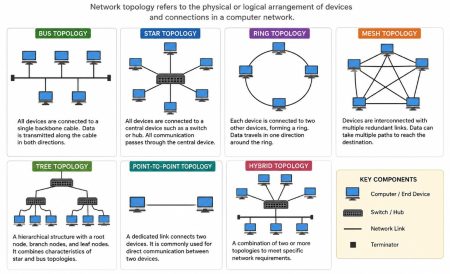
- LAN: LANs can have various topologies, such as star, bus, or ring, depending on the organization’s requirements and network design.
- WAN: WANs often follow a hub-and-spoke topology, where central hubs connect to multiple remote locations. This helps manage data traffic and connectivity efficiently.
- Distance and Latency:
- LAN: LANs have low latency and minimal delay in data transmission due to their small geographical coverage. This is important for real-time applications and local communication.
- WAN: WANs have higher latency and longer delays in data transmission due to the longer distances data must travel. This can impact real-time applications and interactive communication.
- Connectivity Medium:
- LAN: LANs primarily use wired connections like Ethernet cables for data transmission. Wireless technologies like Wi-Fi are also standard for LANs.
- WAN: WANs use wired and wireless connections, including leased lines, fiber optics, satellite links, and microwave connections, to cover extended distances.
- Cost and Complexity:
- LAN: LANs are generally less complex to set up and manage than WANs. They have lower costs due to their smaller scale.
- WAN: WANs can be complex to establish and maintain, often requiring specialized networking equipment, configurations, and cooperation with service providers. They can involve higher costs due to the infrastructure needed for long-distance communication.
In summary, LANs are designed for local communication within a limited area, offering high-speed and low-latency connections. On the other hand, WANs connect multiple LANs across vast distances, providing the ability to communicate over long ranges but often with higher latency and more complex infrastructure.