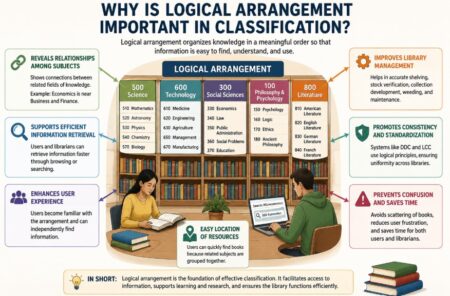
Classification is one of the fundamental operations in library and information management, serving as a systematic method for organizing knowledge and information resources. Its primary purpose…
Classification is one of the fundamental operations in library and information management, serving as a systematic method for organizing knowledge and information resources. Its primary purpose…

Library classification is essential for facilitating information retrieval by organizing knowledge in a systematic and logical way. It groups materials on similar subjects together and assigns…

Library classification is essential for organizing materials on library shelves in a systematic way according to their subject content. Instead of arranging books randomly or by…
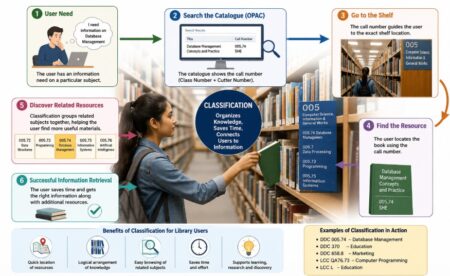
Library classification is essential for helping users find resources quickly and efficiently by organizing library materials based on their subject content. Rather than simply arranging books…
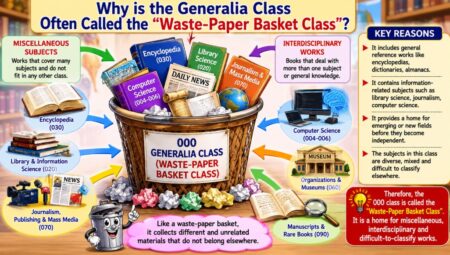
The Generalia Class (000–099) in the Dewey Decimal Classification (DDC) system is often referred to as the “Waste-Paper Basket Class.” This term reflects its role as…

What is Library Classification? Library classification is the process of organizing library materials based on their subject matter and assigning specific class numbers or symbols. This…
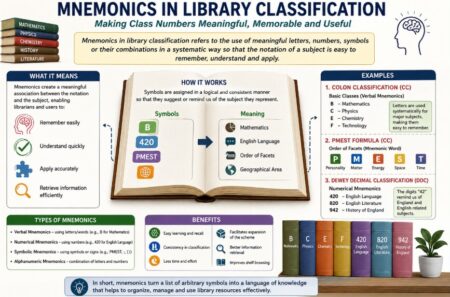
Mnemonics in Library Classification Mnemonics in library classification refer to techniques or devices used to make classification notations easier to remember, understand, and apply. The term…

Information Services in Modern Libraries Information services in modern libraries encompass a variety of activities, facilities, and support systems designed to help users effectively access, retrieve,…

In today’s information age, we are surrounded by a vast amount of content generated through books, journals, websites, social media platforms, databases, and artificial intelligence tools…

Concept of Information Resources Information resources refer to the various sources and materials through which information is created, stored, organized, and communicated to users. These resources…