A library catalogue is a vital tool for organizing and accessing information within a library. It serves as a systematic guide that enables users to identify, locate, and select library materials such as books, journals, and digital resources. By providing bibliographic details like author, title, subject, and call number, the catalogue acts as a bridge between the user and the library’s collection, ensuring efficient information retrieval. For instance, a student searching for a textbook on biotechnology can use the catalogue to find the exact title, its author, and the shelf location within the library.
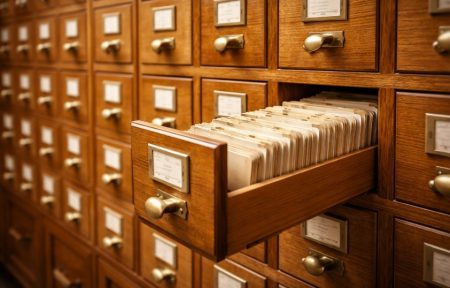
Over time, the concept and structure of library catalogues have evolved in response to changes in information organization practices and technological advancements. Traditionally, catalogues were maintained in physical formats, such as books and card catalogues. Users would once browse through wooden drawers filled with catalogue cards arranged alphabetically. In contrast, modern libraries rely heavily on digital systems like the Online Public Access Catalogue (OPAC), where users can simply type in keywords like “library automation” and instantly retrieve a list of relevant resources, often including materials from outside the library.
In the study of library cataloguing, it is essential to understand that catalogues can be examined from two distinct but interconnected perspectives: the inner form and the outer (physical) form. The inner form refers to the intellectual arrangement of entries within the catalogue, determining how information is organized and retrieved. For example, in an alphabetical catalogue, a user may search for a book by entering the author’s name, such as “Ranganathan.” In a classified catalogue, the same book would be found under a specific subject class, such as library science, within a classification system like the Dewey Decimal Classification. On the other hand, the outer form relates to the physical or technological format through which the catalogue is presented to users. The same catalogue may exist as a printed book, a set of cards in drawers, or a computerized interface accessible via a library website. Understanding these two forms is crucial for appreciating how catalogues function both as intellectual tools and as physical systems of information access.
Therefore, this article aims to explore the inner and outer forms of library catalogues, highlighting their characteristics, differences, and significance in the effective organization and retrieval of library resources.
Concept of Forms of Library Catalogue
The concept of forms of library catalogue refers to the different ways in which a catalogue can be understood, designed, and presented to users for effective information retrieval. In library and information science, the term “forms” does not simply mean physical appearance; rather, it encompasses both the intellectual arrangement of bibliographic entries and the physical or technological format through which those entries are made accessible. This dual perspective is essential because a catalogue is not only a list of resources but also a structured system that guides users in locating information efficiently. For instance, when a student searches for a book on economics, the way the information is organized (by author, subject, or classification number) and the medium through which it is accessed (card drawer or computer screen) both influence how easily the book can be found.
Broadly, the forms of a library catalogue are divided into two major categories: inner form and outer (physical) form. The inner form refers to the intellectual or logical arrangement of catalogue entries. It determines how information is organized within the catalogue and how users approach their search. For example, in an alphabetical catalogue, entries are arranged by author names or titles, allowing a user to quickly locate a known item, such as a book by a specific writer. In contrast, a classified catalogue organizes entries according to subjects using systems like the Dewey Decimal Classification, where books on similar topics are grouped together, making it easier for users to explore a subject area in depth.
On the other hand, the outer form of a catalogue refers to its physical or technological presentation. It describes how the catalogue is produced and used in practice. Traditional examples include book catalogues, which are printed volumes listing library holdings, and card catalogues, where individual entries are recorded on cards arranged in drawers. In modern libraries, the outer form has largely shifted to digital systems such as the OPAC, where users can search for resources through computers or mobile devices. For example, instead of manually flipping through cards, a user can type a keyword into an OPAC and instantly retrieve a list of relevant materials along with their availability status.
Understanding the concept of forms of library catalogue is important because it highlights the relationship between organization and accessibility. The inner form ensures that information is logically structured, while the outer form ensures that it is conveniently accessible to users. Together, these forms determine the overall effectiveness of a catalogue in meeting user needs, supporting research, and enhancing the efficiency of library services.

1. Inner Form of Catalogue:
The inner form of a catalogue refers to the intellectual or logical arrangement of bibliographic entries within a library catalogue. It focuses on how information is organized and structured to facilitate efficient retrieval by users. Unlike the outer (physical) form, which deals with the medium (such as cards or digital systems), the inner form is concerned with the principles of arrangement, determining how users search for and access library materials. A well-designed inner form ensures that users can locate information easily, whether they are searching for a specific item or exploring a subject area.
Based on this arrangement, the inner form of a catalogue is broadly divided into three main types: Alphabetical Catalogue, Classified Catalogue, and Alphabetico-Classed Catalogue. Each type follows a different principle of organization and serves different user needs.
i. Alphabetical Catalogue: An alphabetical catalogue arranges entries in alphabetical order based on author names, titles, or subjects. It is one of the simplest and most user-friendly forms of catalogue arrangement.
In this type, users can directly search for a known item if they have prior information such as the author’s name or the title of the book. For example, if a user is looking for a book written by “Ranganathan,” they can go to the alphabetical position under “R” and find the entry easily. This form is especially useful for quick and direct searches, but it may not effectively show relationships between subjects.
Common types of alphabetical catalogue include:
-
- Author catalogue
- Title catalogue
- Subject catalogue
ii. Classified Catalogue: A classified catalogue arranges entries according to a systematic classification scheme, grouping materials by subject. This form emphasizes the organization of knowledge rather than simple alphabetical order.
In this system, books on similar subjects are placed together under specific class numbers using systems like the Dewey Decimal Classification. For example, all books related to library science or biotechnology will be grouped under their respective classification numbers, allowing users to browse a subject area comprehensively.
This type of catalogue is particularly useful for research-oriented users who want to explore a topic in depth. However, it may be more complex for beginners who are not familiar with classification systems.
3. Alphabetico-Classed Catalogue: The alphabetico-classed catalogue is a hybrid form that combines features of both alphabetical and classified catalogues. In this system, subject headings are arranged alphabetically, but each entry is also connected to a classification number.
This approach provides the simplicity of alphabetical access along with the systematic organization of classified arrangement. For example, a subject like “Environmental Science” may appear in alphabetical order, but it will also include a class number that helps users locate related materials within the classification system. This type is useful because it balances ease of use and subject organization, making it suitable for a wide range of users.
The three main types of inner forms of catalogue—alphabetical, classified, and alphabetico-classed—represent different methods of organizing information within a library catalogue. Each type has its own strengths: alphabetical catalogues are simple and direct, classified catalogues provide systematic subject organization, and alphabetico-classed catalogues combine the advantages of both. Together, they demonstrate how the inner form of a catalogue plays a crucial role in facilitating effective information retrieval.
2. Outer (Physical) Form of Library Catalogue:
The outer (physical) form of a catalogue refers to the physical or technological format in which a library catalogue is presented and used. Unlike the inner form, which deals with the intellectual arrangement of entries, the outer form focuses on the medium or structure through which catalogue information is accessed by users. In simple terms, it answers the question: “In what form does the catalogue exist?” This may include printed books, cards, loose sheets, or digital systems. The outer form has evolved significantly over time, moving from traditional manual formats to modern computerized systems, reflecting technological advancement and changing user needs.
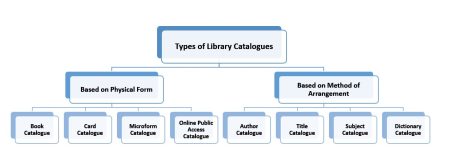
These forms have evolved from traditional manual systems to modern digital platforms. The main types include Book Catalogue, Card Catalogue, Sheaf Catalogue, and Online Public Access Catalogue (OPAC).
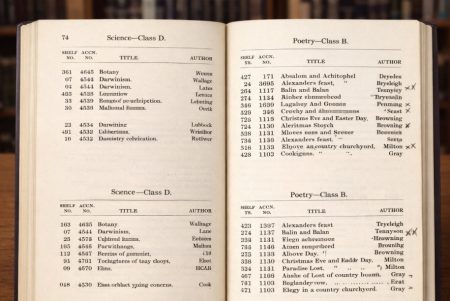
1. Book Catalogue: A book catalogue is one of the earliest and simplest forms of library catalogues. It is presented as a printed and bound book that contains a list of all or selected holdings of a library. In this format, bibliographic entries are systematically compiled and arranged—either alphabetically by author, title, or subject, or according to a classified arrangement—depending on the specific organization adopted by the library. Users can consult the catalogue like a reference book, turning pages to find information about specific materials. For example, a university library may publish a printed catalogue listing all its books, allowing students to look up an author’s name or a subject heading to find relevant titles along with their call numbers and publication details.
The book catalogue offers several advantages, particularly in terms of portability and ease of use, as multiple copies can be distributed and consulted without the need for special equipment. It also provides a consolidated view of the library’s collection at a specific point in time. However, its major limitation is the difficulty of updating; whenever new books are added or records are modified, the entire catalogue must be revised and reprinted, which can render it outdated quickly. As a result, while book catalogues played an important role in the development of library services, they have largely been replaced by more flexible and easily updatable forms, such as computerized catalogues. Nonetheless, they remain historically significant as a foundational step in the evolution of modern cataloguing practices.
2. Card Catalogue: A card catalogue is a traditional and widely used type of library catalogue where each bibliographic record is written or printed on a separate card and organized systematically in drawers or cabinets. Each card typically includes essential details about a library item, such as the author’s name, title of the work, subject headings, publication information, and call number. Standard catalogue cards are usually of a uniform size—most commonly about 7.5 cm × 12.5 cm (3 × 5 inches)—which allows for easy handling, filing, and organization within specially designed catalogue drawers.
The cards are arranged according to a specific format, most often in alphabetical order by author, title, or subject. This arrangement enables users to locate materials by manually browsing through the cards. For example, if a user is searching for a book by “Ranganathan,” they would go to the drawer labeled with the relevant alphabetical range and flip through the cards under the letter “R” until they find the desired entry.
The card catalogue was very popular in libraries for many decades due to its flexibility and ease of updating. New books could be added simply by inserting new cards in their correct positions, and outdated records could be removed without disturbing the entire system. This made it more practical than a book catalogue, which required complete reprinting for updates.
However, the card catalogue did have several limitations. It required considerable physical space for cabinets, and searching could be time-consuming, especially in large libraries with extensive collections. Additionally, it was accessible only within the library and did not support remote access. Despite these limitations, the card catalogue remains an important part of library history and served as a foundation for the development of modern computerized cataloguing systems.
3. Sheaf Catalogue: A sheaf catalogue is a type of library catalogue where bibliographic entries are recorded on loose sheets of paper, which are fastened together in binders, files, or folders. These sheets are typically of uniform size and are arranged systematically—either alphabetically or according to a classified order—based on the organization preferred by the library. The sheets are held together using clips, rings, or screws, allowing for easy insertion, removal, or replacement when necessary. For example, in a small library, new book entries can be added by simply inserting new sheets into the appropriate position within the binder, rather than having to rewrite or reprint the entire catalogue.
The sheaf catalogue acts as an intermediate form between the book catalogue and the card catalogue, combining some advantages of both. Like the book catalogue, it keeps entries in a consolidated, bound format, making it relatively easy to handle and consult. At the same time, it offers more flexibility than the book catalogue because individual sheets can be updated without needing to change the entire system. However, it is less flexible than the card catalogue, as inserting or rearranging sheets can be more cumbersome than handling individual cards. Additionally, the sheaf catalogue is less durable; frequent handling can damage the sheets or bindings over time. Due to these limitations and the rise of more efficient cataloguing systems, the sheaf catalogue is not widely used in modern libraries, though it remains significant as a transitional stage in the evolution of library catalogue forms.
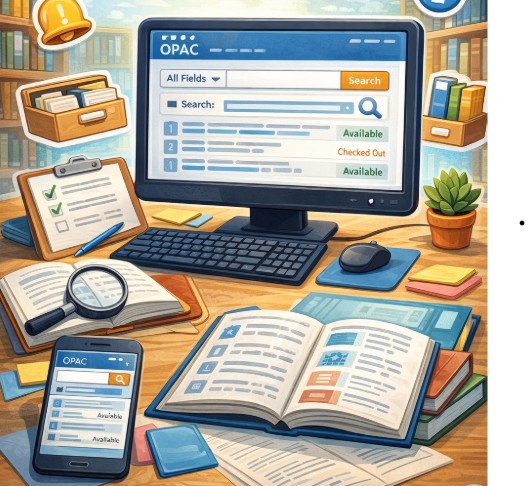
4. Online Public Access Catalogue (OPAC): An Online Public Access Catalogue (OPAC) is a modern form of library catalogue that provides users with electronic access to the library’s collection through computers or the internet. Unlike traditional catalogues, OPAC is a digital system where bibliographic records are stored in a database and can be searched quickly using various access points such as author, title, subject, keyword, or even ISBN. It represents a major shift from manual cataloguing methods to automated and user-friendly information retrieval systems. For example, a student searching for books on “biotechnology” can simply type the keyword into an OPAC interface and instantly retrieve a list of relevant resources, along with details such as location, availability status, and call numbers.
One of the key advantages of OPAC is its speed, flexibility, and accessibility. Users can perform complex searches using filters, combine multiple search terms, and refine results based on publication date, format, or subject. In many cases, OPAC systems are accessible remotely, allowing users to search the library catalogue from home or mobile devices without physically visiting the library. Additionally, OPAC can integrate with other library services, such as user accounts for placing holds, renewing borrowed items, or accessing digital resources like e-books and databases.
Despite its many advantages, OPAC also has some limitations. It requires proper technological infrastructure, including computers, servers, and internet connectivity, and users must have basic digital literacy to use it effectively. System maintenance and regular updates are also necessary to ensure accurate and reliable access. Nevertheless, OPAC has become the standard form of catalogue in modern libraries, significantly improving the efficiency of information retrieval and transforming how users interact with library collections.
The outer forms of catalogue show how catalogue information is physically or digitally presented to users. While traditional forms like book, card, and sheaf catalogues were widely used in the past, modern libraries now rely on OPAC systems for faster, more efficient, and user-friendly access to information.