What Is a Traditional Library Catalogue?
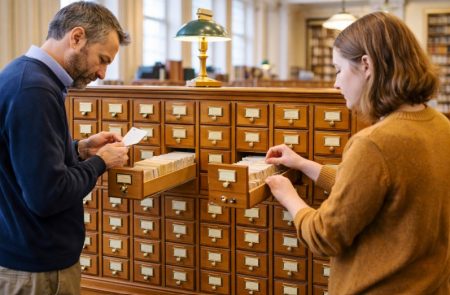
A traditional library catalogue is a manual system that libraries used to organize and provide access to information about the materials in their collections before computerized catalogues became commonplace. It served as a systematic index, informing users about the resources the library owned, who authored them, what they were about, and where they could be found on the shelves. The most common form of a traditional catalogue was the card catalogue, which consisted of small bibliographic cards arranged in drawers according to specific filing rules. Each card represented a single item in the library and included essential details such as the author’s name, title, edition, publication information, physical description, subject headings, and call number.
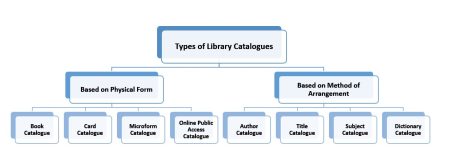
Traditional catalogues were organized in various ways depending on the library’s cataloguing system. In many libraries, cards were arranged alphabetically by author, title, or subject, which is known as a dictionary catalogue. In other cases, materials were organized according to classification systems such as the Dewey Decimal Classification or the Colon Classification, where subject-based arrangement played a central role. For example, under the Dewey system, books on Library and Information Science are classified in the 020 category, while books on Computer Science fall within the 004–006 range. If a user is looking for books on cataloguing, they might consult subject cards under “Cataloguing” to find several related works grouped together, each with a call number guiding them to the appropriate shelf location.
The traditional library catalogue functioned as the “gateway” to the library’s collection. If a reader wanted a specific book by a known author, they would search alphabetically under the author’s surname. If they were researching a specific topic, they would look under a subject heading to discover all related materials. This system not only helped users locate specific books but also encouraged subject-based exploration and discovery. Although modern libraries now use Online Public Access Catalogues (OPACs), the principles of bibliographic description, subject analysis, classification, and standardized filing rules that underpin digital catalogues were originally developed for traditional manual systems. Thus, a traditional library catalogue represents both a historical tool for information retrieval and a foundational model in the development of modern library organization.
Methods of Organizing a Traditional Library Catalogue
A traditional library catalogue was meticulously organized using systematic methods to help users easily find books and other materials. Before computerized systems were developed, libraries depended on clearly defined manual arrangements and filing rules to maintain order and consistency. The organization of a traditional catalog was not arbitrary; instead, it followed established cataloguing principles, classification schemes, and standardized filing practices. The main methods for organizing a traditional library catalogue are discussed below.
- Alphabetical Arrangement (Dictionary Catalogue Method): One of the most common methods was alphabetical arrangement, often known as the dictionary catalogue method. In this system, all entries, authors, titles, and subjects were arranged together in one single alphabetical sequence, just like words in a dictionary. For example, entries for “Rahman, A.K.,” “Research Methods,” and “Robotics” would all be filed in alphabetical order within the same set of drawers.
This method allowed users to search in a simple and straightforward manner. If a reader wanted a book written by Muhammad Yunus, they would look under “Yunus” in the catalogue. Similarly, a book titled Principles of Management would be found under “Principles.” Articles such as “A,” “An,” and “The” were usually ignored in filing; therefore, The History of Libraries would be filed under “History.” - Author Arrangement: In the author catalogue, cards were arranged alphabetically by the surname of the author. This method was particularly useful when users knew the name of the writer but not the exact title of the book. For instance, if a user searched for works by Rabindranath Tagore, they would go directly to the “Tagore” section to find all his works listed together.
Author arrangement grouped all works of a particular writer in one place, making it easier to view an author’s complete contributions available in the library. - Title Arrangement: In the title catalogue, entries were arranged alphabetically according to the first significant word of the title. For example, a book titled Introduction to Library Science would be filed under “Introduction,” not “to” or any article if present. This method was useful when the user remembered the title but not the author.
- Subject Arrangement: In the subject catalogue, materials were organized under specific subject headings. All books related to a particular topic were grouped together. For example, books on “Digital Libraries” would be filed under that subject heading. A user researching “Research Methodology” could look under that subject heading and find multiple relevant books, each with its call number.
Subject arrangement encouraged thematic exploration and was particularly helpful for academic research. - Classified Catalogue Method: Another important method was the classified catalogue, where entries were arranged according to a classification system such as the Dewey Decimal Classification or the Colon Classification. In this system, books were grouped according to subject categories represented by numbers or symbols.
For example:-
- 020 – Library & Information Science
- 330 – Economics
- 500 – Natural Sciences
A book on cataloguing might carry the call number 025.3, placing it under the broader class of Library Science. In a classified catalogue, entries followed numerical order rather than alphabetical order, reflecting subject relationships more clearly.
-
Traditional library catalogues were organized using structured methods such as alphabetical order, author listings, title arrangements, subject classifications, and divided categories. These methods provided logical organization, systematic access, and efficient retrieval of information in a pre-digital environment. Although modern libraries now use Online Public Access Catalogues (OPACs), the fundamental principles of traditional catalogue organization still form the foundation of contemporary cataloguing and information retrieval systems.