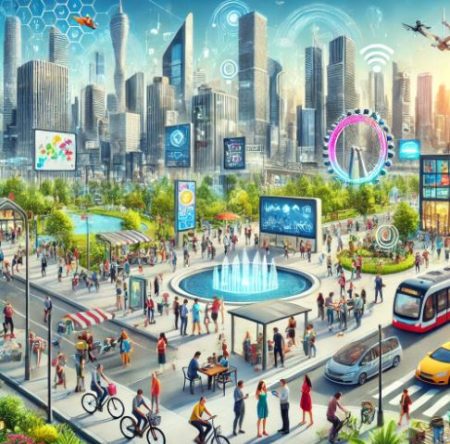
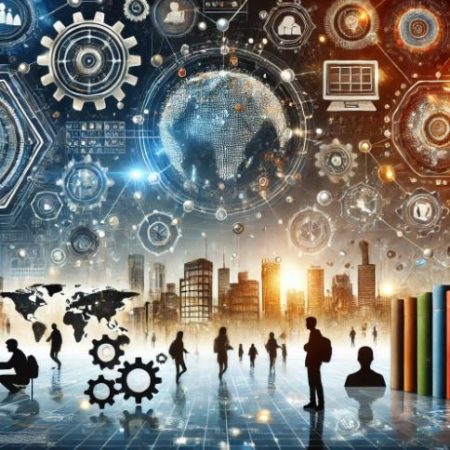
In today’s rapidly evolving world, we are increasingly living in what is known as a Knowledge Society—a society where information, innovation, education, and technology form the foundation of economic and social progress. Unlike traditional societies that were primarily based on agriculture or industrial manufacturing, Knowledge Societies thrive on the power of ideas, intellectual capital, and technological advancements. In these societies, the creation, sharing, and utilization of knowledge are key drivers of productivity, development, and global influence. Educational systems, research institutions, and digital technologies play pivotal roles in nurturing and disseminating knowledge, ultimately shaping how economies operate and how people interact with the world around them.
This shift toward knowledge-driven economies raises an important question: How does the transformation from traditional industries to knowledge-based economies influence global cooperation and competition? In a world where access to information and innovation has become the currency of progress, nations, industries, and even individuals are experiencing both opportunities for collaboration and intense rivalry.
Take, for example, the global response to the COVID-19 pandemic. The rapid development of vaccines was not just a testament to medical and scientific knowledge but also to international collaboration. Countries and corporations worldwide shared data, research, and resources to combat the virus. However, at the same time, the race to produce and distribute vaccines created competition, with nations scrambling for limited doses to secure their own populations’ health. Similarly, the race for dominance in artificial intelligence (AI) is another clear example of how knowledge drives competition. The United States, China, and the European Union are all investing heavily in AI research, striving to lead in this transformative field while navigating the complexities of cooperation in global tech standards and regulations.
In this context, understanding how a Knowledge Society influences global cooperation and competition is crucial to grasping the new dynamics shaping our world. The very nature of the global landscape is being rewritten by the interconnected forces of knowledge sharing and the competitive drive to control the most advanced innovations.
The Rise of the Knowledge Society
The rise of the Knowledge Society represents a significant shift from traditional economic models centered on agriculture and manufacturing to those based on intellectual resources, information, and technological innovation. In a Knowledge Society, knowledge becomes the most critical factor of production, driving economic growth, social development, and global influence. This transformation is fueled by advances in information technology, the growth of educational institutions, and the increasing importance of research and development across various industries.
At the heart of this shift is the information revolution that has radically transformed the way we communicate, learn, and work. The advent of the internet, mobile technology, and digital platforms has allowed for the rapid spread of information across the globe, making knowledge more accessible than ever before. This has led to the creation of new industries, such as the tech sector, and the disruption of traditional industries like manufacturing and retail. Companies like Google, Amazon, and Apple are prime examples of how knowledge and technology have become the pillars of modern business models, driving both innovation and economic power.
Education and research play vital roles in a Knowledge Society, as they serve as the breeding grounds for the ideas and technologies that fuel progress. Higher education institutions and research organizations are the epicenters of this knowledge-driven economy, developing the next generation of leaders, scientists, engineers, and entrepreneurs. For instance, universities such as MIT in the United States, the University of Cambridge in the UK, and Tsinghua University in China have produced groundbreaking research and contributed to technological advancements that have had global implications, from AI developments to renewable energy solutions.
Another defining feature of the Knowledge Society is the increasing emphasis on innovation. In these societies, it’s no longer enough to rely solely on traditional forms of capital; intellectual capital, including patents, copyrights, and specialized knowledge, has become just as valuable. The global pharmaceutical industry provides a clear example, with companies racing to innovate and patent life-saving drugs and medical technologies. The rapid development of vaccines for COVID-19, through collaborations between pharmaceutical companies and research institutions worldwide, highlighted the potential of innovation to solve global problems.
The rise of the Knowledge Society has redefined how economies function and how societies grow. As information, education, and technology become central to economic and social advancement, the world is witnessing the emergence of a new kind of global competition and cooperation—one driven by knowledge rather than resources or manufacturing prowess. This paradigm shift is shaping everything from policy and business practices to cultural exchange and international relations.
Global Cooperation in a Knowledge Society
In an era where knowledge is the primary driver of economic growth, social progress, and technological innovation, the concept of a Knowledge Society has reshaped how nations, industries, and individuals collaborate on a global scale. No longer confined to geographic or political boundaries, global cooperation is now fueled by the exchange of ideas, research, and technology. The rise of knowledge-driven economies has opened up new pathways for collaboration across borders, allowing the world to tackle pressing challenges collectively. From scientific discoveries to international treaties on climate change, global cooperation in a Knowledge Society has become essential for addressing the complex issues facing humanity today.
- The Role of Information and Technology in Global Cooperation: At the heart of global cooperation in a Knowledge Society is unprecedented access to information and technology. In the past, global cooperation was often hindered by physical distance, communication barriers, and limited access to data. However, the advent of the digital revolution has eliminated many of these obstacles. With the proliferation of the internet, mobile communication, and advanced computing technologies, nations, organizations, and individuals can now share knowledge instantaneously, regardless of location.
This interconnectedness has enabled global collaboration on a scale that was once unimaginable. Whether it’s scientific research, healthcare, or climate change, the ability to exchange information in real-time has accelerated progress and deepened international partnerships. Collaboration is no longer limited to formal government-to-government exchanges; today, universities, research institutions, NGOs, and even private companies are engaged in cooperative efforts that cross national borders. - Scientific Collaboration: A Prime Example of Global Cooperation- One of the most compelling examples of global cooperation in a Knowledge Society can be seen in the realm of scientific research. In a world where scientific knowledge is rapidly expanding, international collaboration is crucial for pushing the boundaries of discovery and innovation. A notable example of this is the Human Genome Project, a landmark international scientific endeavor that mapped the entire human genome. This project, which involved scientists worldwide, led to groundbreaking insights into genetics and paved the way for developments in personalized medicine, biotechnology, and gene therapy. The success of the Human Genome Project underscores the power of global cooperation in pursuing knowledge and technological advancement.
Similarly, the global response to the COVID-19 pandemic demonstrated the importance of knowledge-sharing and cooperation among nations. Pharmaceutical companies, governments, and research institutions worked together to develop vaccines at an unprecedented pace. The rapid development of COVID-19 vaccines by companies like Pfizer, Moderna, and AstraZeneca was only possible through collaboration and information exchange across borders. Research findings, clinical trial data, and technological expertise were shared among countries, helping to bring an end to the pandemic faster than many had anticipated. The pandemic highlighted how global cooperation, fueled by knowledge and innovation, can save lives and address crises that transcend national borders. - Global Health: Working Together to Solve Global Challenges- *In the realm of global health, cooperation is vital for addressing issues that affect the entire planet. The World Health Organization (WHO) and other international bodies coordinate efforts to prevent the spread of infectious diseases, improve healthcare systems, and promote public health worldwide. Global health initiatives, such as the Global Fund to Fight AIDS, Tuberculosis, and Malaria, rely on the collective efforts of governments, private foundations, and non-governmental organizations to provide resources, research, and expertise to tackle these global health crises.
The recent developments in global vaccination programs also exemplify the importance of international collaboration. Through initiatives like Gavi and the Vaccine Alliance, countries and organizations have worked together to ensure equitable access to vaccines in low-income regions. Knowledge sharing, financial support, and logistical coordination have been essential to reaching populations in remote or underserved areas, further demonstrating the power of global cooperation in the Knowledge Society. - Global Environmental Cooperation: Another area where global cooperation is essential is climate change. As the planet faces unprecedented environmental challenges, nations must come together to find solutions to mitigate the impacts of climate change and transition to a sustainable future. The Paris Agreement of 2015 is a prime example of how international cooperation can address global environmental issues. Nearly every country in the world signed the agreement, committing to reduce greenhouse gas emissions and limit global warming to below 2°C. The success of the Paris Agreement depends on continued cooperation and the sharing of knowledge, technology, and best practices to combat climate change.
In addition to international treaties, governments, businesses, and individuals are increasingly working together to develop green technologies and sustainable practices. Innovations in renewable energy, carbon capture, and electric vehicles are transforming industries and helping nations reduce their carbon footprints. Collaborative efforts in clean energy research, such as the International Solar Alliance, demonstrate how countries can pool resources and knowledge to develop technologies that benefit the global good. - Technological and Educational Collaborations: Technological and educational exchanges are also key drivers of global cooperation in a Knowledge Society. Universities and research institutions around the world are increasingly working together on joint research projects, sharing data and findings, and hosting international conferences. Initiatives like Erasmus+ in Europe, which facilitates student and staff exchanges between countries, are helping to create a global network of scholars and researchers who collaborate on a range of topics, from social sciences to engineering. Furthermore, global initiatives in artificial intelligence (AI) and cybersecurity are helping to set international standards and ensure that emerging technologies are used ethically and responsibly. The Global Partnership on Artificial Intelligence (GPAI), for example, brings together countries, academic institutions, and the private sector to foster collaboration in AI research and policy development. This ensures that AI technologies are developed in a way that benefits all of humanity rather than just a few nations or corporations.
- Challenges to Global Cooperation: While the rise of the Knowledge Society has opened up numerous opportunities for global cooperation, it has also presented challenges. Issues such as data privacy, intellectual property, and the digital divide must be addressed to ensure that cooperation is inclusive and fair. Additionally, geopolitical tensions and national interests can sometimes hinder the free flow of information and impede collaborative efforts.
Despite these challenges, the benefits of global cooperation in a Knowledge Society far outweigh the obstacles. The ability to share knowledge and work together on shared global issues is essential for addressing the complex challenges of the 21st century. By continuing to promote open communication, collaboration, and the sharing of knowledge, nations can build a more interconnected and prosperous world.
In a Knowledge Society, global cooperation is not only possible but essential. Whether addressing public health crises, advancing scientific research, combating climate change, or developing cutting-edge technologies, nations must work together to tackle challenges that affect the entire planet. The power of shared knowledge and collaboration is transforming how we approach global issues, offering new hope for a more sustainable, equitable, and interconnected world. As the world continues to embrace the potential of a knowledge-driven future, global cooperation will remain the key to solving the challenges of tomorrow.
Global Competition in a Knowledge Society
The transition from an industrial-based economy to one driven by knowledge has significantly reshaped global competition in the modern era. A Knowledge Society—where information, innovation, education, and technology form the backbone of economic and social development—has led to a new type of rivalry among nations, corporations, and individuals. Knowledge, now considered a key economic asset, has become the most crucial factor in determining success, power, and influence on the global stage. As countries increasingly compete to harness intellectual capital, the stakes in this global race are higher than ever.
- The Importance of Knowledge in Global Competition: Economic growth no longer depends solely on natural resources or labor-intensive industries in a Knowledge Society. Instead, it relies on the ability to create, manage, and use knowledge effectively. Countries that excel in fostering innovation, research, education, and technology are better positioned to lead the world economically and politically. Knowledge-based industries—such as information technology, biotechnology, pharmaceuticals, and clean energy—have become the new battlegrounds where nations vie for dominance.
The rise of intellectual property (IP)—patents, trademarks, copyrights, and trade secrets—has further fueled global competition. Nations that can protect their intellectual assets and foster an environment conducive to innovation hold significant competitive advantages. This shift has led to fierce competition for market share, technological supremacy, and access to high-value intellectual capital. - The Race for Technological Dominance: One of the most visible manifestations of global competition in a Knowledge Society is the technological race. Nations and corporations are constantly striving to innovate and develop cutting-edge technologies in fields like artificial intelligence (AI), quantum computing, 5G networks, and biotechnology. The global race for technological supremacy has far-reaching economic and geopolitical consequences, as the nation that leads in these domains can exert significant influence over global markets, security, and standards.
Take artificial intelligence as an example. AI is transforming industries ranging from healthcare to finance, transportation, and defense, and countries are in a race to develop the most advanced AI technologies. The United States, China, and the European Union are the leading players in this field, each investing heavily in research, development, and talent acquisition. For instance, China has made AI a key part of its national strategy, aiming to become the global leader in AI by 2030. This ambition has sparked a competitive response from the U.S., where tech giants like Google, Microsoft, and Amazon are leading the charge in AI research. The competition between these two nations has implications for economic growth and national security, as AI is increasingly viewed as a strategic asset with military applications.
The race for 5G technology provides another example of how global competition in knowledge-driven industries can shape international relations. 5G is expected to revolutionize communication by offering faster internet speeds and enabling the growth of the Internet of Things (IoT). Countries and companies are competing to build the infrastructure and establish dominance in the global 5G market. China’s Huawei has been a major player in this race, challenging Western companies like Ericsson and Nokia, leading to political debates over national security and technological dependence. - Talent Wars: Competing for Skilled Workers- As knowledge becomes the central economic driver, competition for highly skilled individuals—scientists, engineers, data analysts, and technologists—has intensified. Nations are vying to develop cutting-edge technologies and competing to attract and retain the brightest minds in the world. This competition for talent has led to what is often referred to as the “brain race.”
Countries with robust educational systems, attractive research environments, and competitive salaries can attract top talent, giving them a distinct advantage in the global economy. The United States, with its world-leading universities and innovation hubs like Silicon Valley, has long been a destination for skilled workers. However, other nations, particularly China, India, and the European Union, have also stepped up efforts to foster homegrown talent and retain their brightest minds.
China, for instance, has made significant investments in science and technology education, aiming to become a global leader in research and development (R&D). The government has implemented policies to attract expatriate talent, offering high salaries and research grants to returnees and foreign experts. This “talent war” is driving countries to reform their education systems and create environments conducive to research and development. - Intellectual Property and Economic Competition- As the importance of intellectual property grows in a Knowledge Society, countries are also competing to establish themselves as leaders in patenting and protecting new technologies. Intellectual property (IP) has become one of the most valuable assets a country can possess, providing the legal protection necessary for companies and researchers to profit from their innovations.
Nations with robust intellectual property laws are better able to attract investment, as companies feel confident that their innovations will be protected. Conversely, countries that fail to enforce IP rights may find themselves at a disadvantage in the global competition for innovation. The World Intellectual Property Organization (WIPO) plays a key role in setting global standards for IP protection, and countries with strong patent systems—such as the U.S. and Japan—hold an edge in the global competition for technological leadership. - The Digital Divide and Global Inequality: While some nations race ahead in the knowledge economy, others are struggling to catch up. This digital divide has created a stark contrast between countries that have access to advanced technologies and those that do not. Developing nations, in particular, face significant challenges in competing in the knowledge economy due to limited access to technology, education, and research infrastructure.
The divide between high-income countries and low-income nations is evident in various industries. For example, while countries like the U.S., South Korea, and Germany are leading in AI research, many developing countries lack the resources to invest in research and development. As a result, there is growing concern about the widening gap between the “haves” and the “have-nots” in the global knowledge economy. Closing this digital divide and ensuring equitable access to knowledge and technology is crucial for fostering more inclusive global competition. - Geopolitical Implications of Knowledge-Based Competition: The competition for knowledge-based dominance is not just an economic issue—it also has significant geopolitical implications. As nations vie for leadership in emerging technologies, their rivalries often spill over into international politics. The ongoing tension between the United States and China is a prime example of how competition in the knowledge economy is influencing geopolitical relations. From trade wars to disputes over technology standards, the race for dominance in sectors like AI, 5G, and cybersecurity has become a key area of global rivalry.
In addition to the U.S.-China competition, there is growing concern about the control of global data. As the world becomes increasingly interconnected through digital platforms, countries are racing to establish data governance policies that will allow them to control the flow of information and protect their economic interests. This has sparked debates over data privacy, cybersecurity, and the regulation of multinational tech companies, further complicating international relations.
Global competition in a Knowledge Society is reshaping the landscape of international relations, economic power, and technological innovation. As nations compete for dominance in knowledge-driven industries, the race for technological supremacy, talent, intellectual property, and economic leadership is intensifying. While this competition can potentially drive innovation and progress, it also raises significant challenges—such as the digital divide, geopolitical tensions, and the risk of economic inequality. As the world becomes more interconnected, it will be crucial for nations to find ways to balance competition with cooperation to ensure that the benefits of the Knowledge Society are shared equitably and sustainably.
Interplay Between Cooperation and Competition
The interplay between cooperation and competition in a Knowledge Society is a dynamic and complex relationship that shapes global interactions in profound ways. In a world where knowledge, innovation, and technological advancements are central to economic, social, and political power, nations, corporations, and individuals are constantly balancing the need to cooperate on shared goals while competing for leadership and influence in specific fields. This duality is not necessarily contradictory but instead represents the way modern global systems function—where collaboration and rivalry coexist and often complement each other.
On one hand, cooperation is essential in addressing global challenges that transcend national borders, such as climate change, pandemics, and international security. Many of these problems require collective action, as no single country or entity can solve them alone. For instance, the global response to the COVID-19 pandemic demonstrated how international collaboration, through efforts like COVAX, the World Health Organization (WHO), and multinational vaccine research, can bring countries together to share knowledge, resources, and strategies for a common cause. Similarly, climate change is another area where cooperation is vital. Agreements like the Paris Agreement showcase how nations set collective targets to reduce emissions and collaborate on developing green technologies to mitigate environmental impacts. In these contexts, cooperation is driven by the recognition that the solutions to global issues require pooling resources, knowledge, and expertise across borders.
However, alongside cooperation, there is a constant undercurrent of competition. As nations collaborate on shared global issues, they also compete fiercely for technological leadership, economic dominance, and political influence. The competition for leadership in emerging technologies like artificial intelligence (AI), 5G networks, and renewable energy exemplifies this tension. While countries may work together to create international standards or share research, each country also seeks to outpace its rivals in developing and deploying these technologies to secure economic advantages, geopolitical power, and access to future markets. For instance, the United States and China are involved in a race for technological supremacy in AI, which involves both collaborative research efforts and competitive strategies to dominate the global tech landscape.
This interplay between cooperation and competition can sometimes lead to a paradox. While nations may cooperate to create global frameworks, trade agreements, or scientific research consortia, they are also constantly vying for the intellectual property and economic benefits that come with leading innovations. Countries may support global initiatives in areas like cybersecurity, sharing knowledge to address global threats, while simultaneously competing to develop the most advanced technologies that will provide them with a strategic advantage in the digital economy. The digital divide exemplifies this tension, where wealthier nations, with access to better technologies and infrastructure, can not only cooperate but also maintain a competitive edge over developing nations.
At times, competition can even drive further cooperation. For example, when nations face intense competition in certain sectors, it can lead to the establishment of international frameworks or institutions that foster collaboration while maintaining competitive standards. In the race for space exploration, countries like the U.S., Russia, China, and India have advanced their own space programs, but at the same time, they cooperate on certain missions through initiatives like the International Space Station (ISS). This cooperation allows countries to pool resources and expertise for large-scale projects while still competing for leadership in the overall field of space exploration.
Ultimately, the interplay between cooperation and competition in a Knowledge Society is a defining characteristic of the modern global landscape. It underscores how interconnected yet competitive the world has become in the pursuit of knowledge, technology, and global power. In some cases, cooperation leads to shared benefits, while in others, competition pushes nations to innovate, driving progress and transformation. Understanding how to navigate this balance—ensuring that cooperation enhances competition rather than stifling it—is essential for nations to thrive in the knowledge-driven economy of the 21st century.
The Role of Knowledge Economies in Shaping Global Power
The role of knowledge economies in shaping global power is increasingly becoming one of the defining features of the modern world. As nations transition from traditional, resource-based economies to knowledge-driven economies, the nature of global influence and power is being redefined. In a knowledge economy, intellectual capital—comprising education, information, technology, and innovation—becomes a primary driver of economic prosperity, political influence, and global competitiveness. This shift from manufacturing and resource extraction to the utilization and production of knowledge is fundamentally changing how countries, businesses, and even individuals wield power on the global stage.
- The Rise of Intellectual Capital as a Driver of Power: In the 21st century, knowledge is not just an asset but a currency that dictates a nation’s economic and geopolitical strength. Countries that invest in education, research, and technological innovation are better positioned to lead in the global economy. Nations that can create, protect, and commercialize knowledge—through intellectual property (IP) rights, for example—hold a distinct advantage over others. Intellectual property laws protect the innovations of businesses and individuals, allowing countries to assert their dominance in industries such as pharmaceuticals, technology, and engineering.
For instance, the United States and China, as two of the largest economies in the world, have been at the forefront of building knowledge-based economies. Both countries have made significant investments in R&D and education, fostering innovation ecosystems that produce groundbreaking technologies. The U.S. has long been a leader in Silicon Valley, where technology and innovation fuel economic growth, while China’s Made in China 2025 initiative demonstrates its commitment to becoming a global leader in high-tech industries such as artificial intelligence, biotechnology, and robotics. These technological advancements and the intellectual property that accompanies them are crucial factors in the nations’ global power. - Innovation and Technological Leadership: Key Components of Global Power- One of the most significant aspects of knowledge economies is the centrality of innovation. Countries that lead in technological innovation not only achieve economic growth but also gain political and strategic advantages. Technological leadership provides the foundation for military power, economic dominance, and soft power, making it a crucial component of national strength.
The technological arms race—whether in artificial intelligence (AI), 5G telecommunications, or quantum computing—is a prime example of how knowledge economies shape global power dynamics. Nations that are leading in these fields control critical technologies that will define the future of the global economy. For example, China’s dominance in 5G technology, driven by Huawei, allows it to influence the global telecommunications market, while the United States’ dominance in AI research and development gives it an edge in military, commercial, and geopolitical strategy.
Moreover, the knowledge economy directly influences military power. Nations that lead in technological innovation often have access to advanced defense technologies, such as autonomous drones, cyber defense systems, and missile defense technologies. The ability to innovate and control the cutting-edge technologies that shape modern warfare gives these nations an upper hand in maintaining global security and strategic influence. - The Global Talent Race and its Impact on Power: Another crucial factor in shaping global power is the competition for human capital. In a knowledge economy, skilled individuals—scientists, engineers, researchers, and innovators—become a valuable resource. Nations that can attract, retain, and nurture talent in fields such as STEM (Science, Technology, Engineering, and Mathematics) gain a competitive advantage. The flow of talent and ideas is central to fostering innovation and maintaining global leadership in the knowledge economy.
The United States, for example, has long attracted top talent from around the world to its universities and tech hubs. Universities like MIT, Harvard, and Stanford are recognized as global leaders in research, producing innovations that shape industries worldwide. Additionally, U.S. technology giants like Google, Apple, and Microsoft are led by some of the brightest minds, which is why the country remains a powerful player in global markets.
In contrast, China has been actively working to bolster its homegrown talent. Through significant investment in higher education, research, and government policies like the Thousand Talents Program, China has aimed to attract scientists and engineers from abroad, thereby reducing its dependence on foreign talent and further consolidating its position as a global tech leader. - The Impact of Knowledge Economies on Soft Power: In addition to economic and military power, knowledge economies play a significant role in shaping a nation’s soft power—the ability to influence and attract others through culture, diplomacy, and ideas. Nations with strong knowledge economies can use their expertise to exert influence in global affairs, shape international policies, and set global standards.
For example, countries with advanced educational systems and globally recognized universities (e.g., the U.S., the U.K., and Canada) wield significant soft power. The prestige associated with studying at top universities creates cultural influence, attracting international students, scholars, and talent. Furthermore, nations that lead in the production of knowledge—through the publication of research, innovations in green technologies, or leadership in AI ethics—gain the ability to shape global policy agendas and become arbiters of international standards.
The U.S., with its dominance in higher education, tech innovation, and cultural exports (e.g., Hollywood, Silicon Valley), has used its knowledge economy to enhance its global soft power. Similarly, the European Union’s efforts to set international standards for data privacy and AI governance are examples of how knowledge and regulatory influence can shape the global order. - Global Trade and Economic Power: Knowledge as a Competitive Advantage- A knowledge economy also redefines how global trade operates. Nations with robust knowledge-based industries often dominate global markets by creating products that are difficult to replicate. Intellectual property plays a central role in trade negotiations as nations seek to protect their innovations and gain competitive advantages through patents, trademarks, and copyrights. Trade agreements increasingly focus on the flow of knowledge and technology as intellectual property becomes a key asset in global commerce.
Countries that lead in sectors like biotechnology, pharmaceuticals, or information technology are better equipped to establish themselves as major players in international trade. For instance, the pharmaceutical industry in countries like Switzerland, the U.S., and Germany has become a powerful tool for economic influence, with countries dominating drug production and medical innovations holding significant sway in global trade negotiations.
In conclusion, knowledge economies are increasingly pivotal in shaping global power. As nations harness the potential of education, technology, innovation, and intellectual property, they are not only driving economic growth but also positioning themselves as global leaders in a variety of sectors. In this new era, a nation’s power is no longer solely determined by its natural resources or military strength but by its ability to innovate, create, and manage knowledge. As the global competition for knowledge intensifies, the countries that lead in research, technology, and human capital will continue to define the future of global power. In a world where knowledge is power, those who can create, protect, and apply it will ultimately shape the global order.