
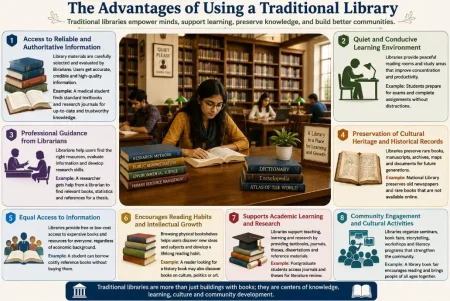
The Advantages of Using a Traditional Library Traditional libraries provide numerous benefits that make them essential institutions for education, research, and lifelong learning. One of their…
The Advantages of Using a Traditional Library Traditional libraries provide numerous benefits that make them essential institutions for education, research, and lifelong learning. One of their…
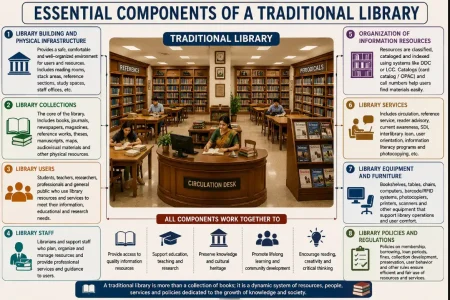
The Essential Components of a Traditional Library A traditional library is a well-structured institution where various interrelated components work together to provide effective access to knowledge,…
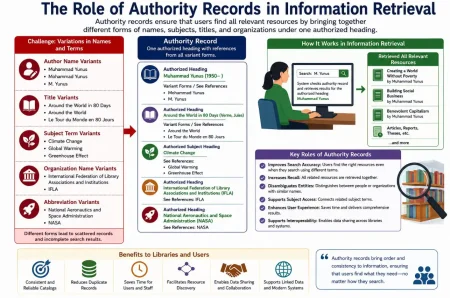
The Role of Authority Records in Information Retrieval Authority records are essential for effective information retrieval, enabling users to find relevant resources accurately, consistently, and efficiently.…
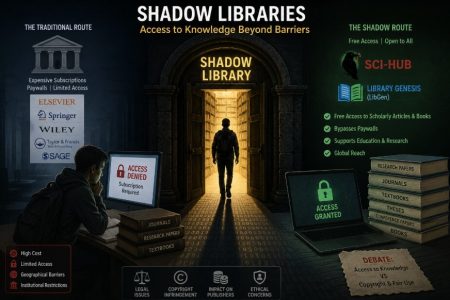
What Is a Shadow Library? A shadow library is an online repository that provides free access to digital copies of books, scholarly articles, journals, and other…
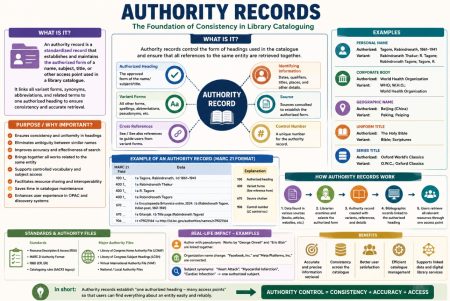
What Is an Authority Record in Library Science? An authority record is a standardized metadata record used in library cataloging. Its purpose is to establish and…
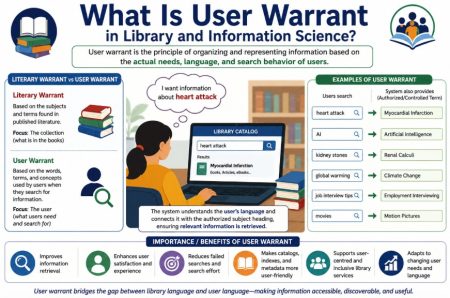
What Is User Warrant in Library and Information Science? User warrant is a principle in Library and Information Science (LIS) that emphasizes the organization, description, and…
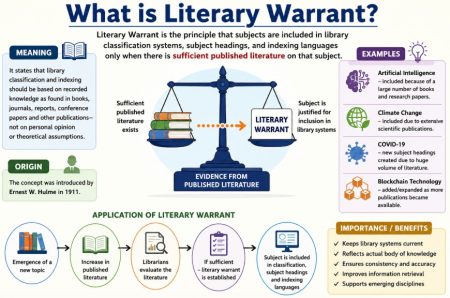
What Is Literary Warrant? Literary warrant is a fundamental principle in Library and Information Science (LIS) that asserts the organization, classification, and indexing of knowledge should…
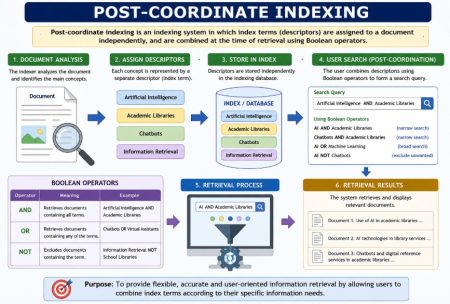
What Is Post-Coordinate Indexing? Post-coordinate indexing is a method of indexing in which individual terms or descriptors that represent the subject content of a document are…
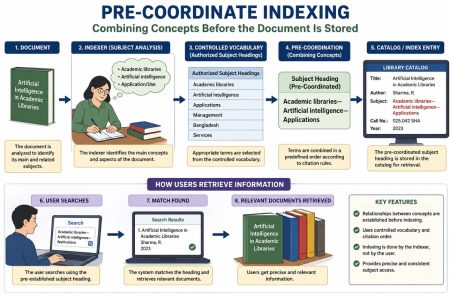
What Is Pre-coordinate Indexing? Pre-coordinate indexing is a subject indexing technique in which two or more indexing terms are selected, arranged, and combined into a predetermined…
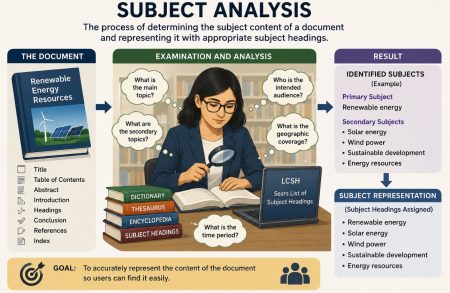
Subject Analysis in Library and Information Science Subject analysis is a fundamental process in Library and Information Science (LIS) that involves examining the intellectual content of…