
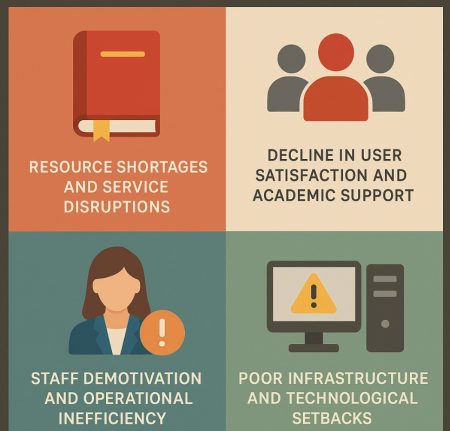
Poor budget management in the context of library operations refers to the ineffective planning, allocation, and utilization of financial resources that hinder a library’s ability to…
Poor budget management in the context of library operations refers to the ineffective planning, allocation, and utilization of financial resources that hinder a library’s ability to…

A performance audit is a systematic and independent examination designed to assess how efficiently, effectively, and economically an organization, program, or activity operates. Unlike traditional audits…

Metadata refers to the structured details that describe and give meaning to books, articles, and digital resources. In libraries and digital platforms, it plays a vital…
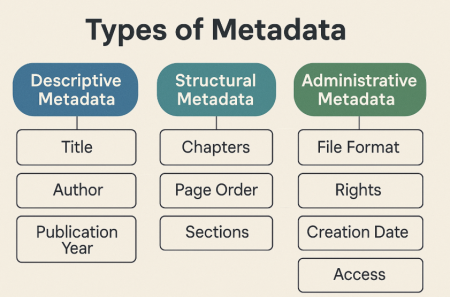
Metadata is often described as “data about data,” but in practice, it is much more than a simple label. It provides the contextual information that makes…
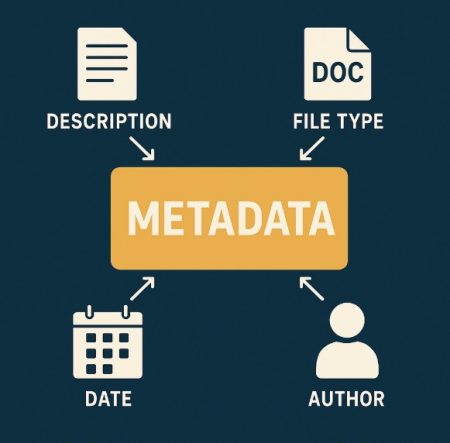
Metadata can be described as “data about data,” a structured way of describing and providing context to information so that it can be better understood, organized,…

Intellectual Property Rights (IPR) in the context of libraries refers to the legal protections and ethical considerations surrounding the use, distribution, and preservation of creative and…

Intellectual Property Rights (IPR) refer to the legal rights granted to creators and owners of intellectual works, such as books, research papers, inventions, artistic creations, software,…

Circulation service ensures the smooth flow of library resources to users by functioning as the central mechanism through which materials are borrowed, renewed, reserved, and returned.…

Classification in libraries plays a vital role in arranging books systematically, making it easier for both users and librarians to locate and manage resources. By assigning…

Classification numbers play a crucial role in helping users locate books and other resources within a library. These numbers, often referred to as call numbers, are…