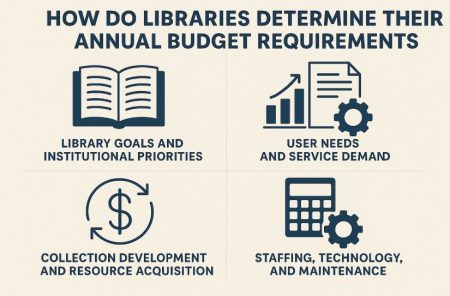
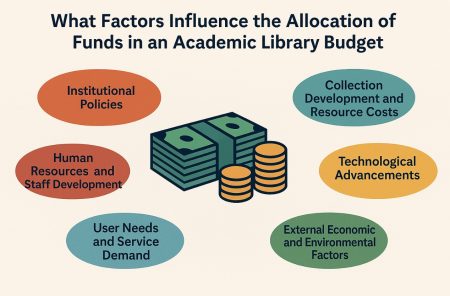
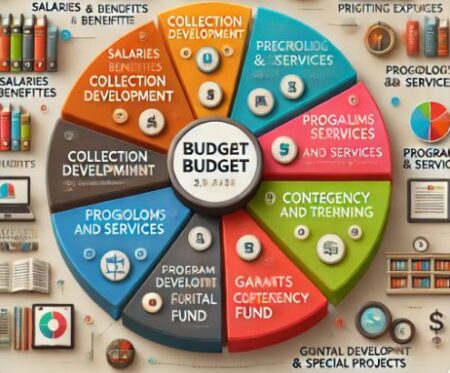
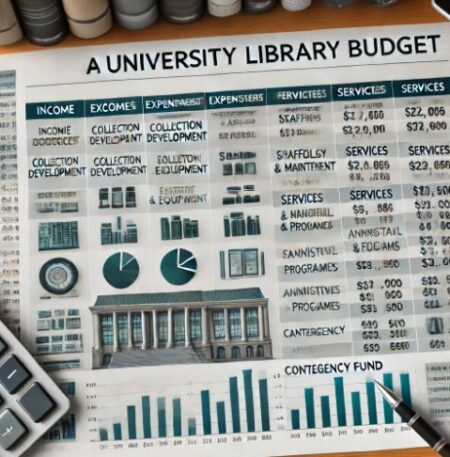
The budgeting process plays a vital role in supporting a library’s mission and goals by ensuring that financial resources are strategically planned, allocated, and managed to achieve organizational priorities. A well-structured budget acts as both a financial roadmap and a management tool, linking the library’s daily operations with its long-term vision. For example, when a university library allocates funds for subscription databases like JSTOR or IEEE Xplore, it directly supports academic research and enhances student learning. Similarly, budgeting for the acquisition of new printed books and ebooks ensures users have access to up-to-date knowledge across disciplines. The budget also allows libraries to invest in technology upgrades, such as automated self-check systems, RFID-based book circulation, and digital repositories and initiatives that streamline services and improve user experience. Allocating funds for staff development, such as training in research support tools like Zotero or Turnitin, strengthens the library’s capacity to provide expert guidance to students and faculty. By planning resources for community outreach programs, literacy initiatives, and orientation sessions, libraries remain proactive in engaging and educating their users. Through these deliberate financial decisions, supported by careful evaluation and adjustment based on user needs, the budgeting process fosters innovation, accountability, and service excellence- ultimately reinforcing the library’s mission to ensure equitable access to information, promote lifelong learning, and support academic and intellectual growth.
How Is the Library’s Budget Aligned with Its Overall Mission, Vision, and Strategic Plan?
A library’s budget is far more than a financial statement; it is a strategic instrument that transforms the institution’s mission, vision, and long-term goals into actionable outcomes. Budget alignment ensures that every expenditure directly contributes to the library’s broader objectives, whether that means promoting access to information, advancing academic excellence, fostering lifelong learning, or supporting innovative research. The process involves thoughtful planning, continuous assessment, and collaboration among library leadership, staff, and institutional administrators to ensure that the library’s financial decisions strengthen its strategic direction.
To begin with, aligning the budget with the library’s mission means directing resources toward the services and programs that fulfill its core purpose. For example, if a university library’s mission emphasizes equitable access to knowledge, the budget might prioritize digital resource subscriptions such as Scopus, Taylor & Francis, and Research4Life, allowing students and faculty to access research materials from anywhere. Similarly, a public library focused on community learning may allocate funds for literacy programs, children’s reading corners, or digital literacy workshops. Every financial decision, from purchasing materials to organizing outreach programs, reflects the library’s fundamental purpose.
In connection with the vision, the budget serves as a roadmap to guide the library toward its desired future state. A vision statement often highlights innovation, inclusivity, and excellence in service delivery. To achieve this, libraries may dedicate part of their budgets to technology adoptions, such as implementing RFID self-check systems, automated book drops, or AI-powered chatbots for user support. These initiatives not only modernize library operations but also align with a forward-thinking vision that seeks to redefine how users interact with information. Additionally, investing in staff training, professional development, and research support services enables the library to evolve in tandem with emerging academic and technological trends.
Furthermore, the budget directly supports the library’s strategic plan, which outlines measurable goals and performance indicators. Each year’s budget cycle should align financial allocations with the specific objectives outlined in the plan, such as improving resource accessibility, enhancing user experience, or strengthening digital preservation initiatives. For instance, if the strategic plan includes the development of an institutional repository using DSpace, the budget must include funding for server infrastructure, software customization, and staff training. Likewise, if outreach and engagement are strategic priorities, resources should be earmarked for marketing campaigns, workshops, and collaborative events that enhance the library’s visibility and impact.
An effective alignment between budgeting and strategic planning also promotes accountability and evaluation. By linking each budget line item to measurable outcomes — such as user satisfaction, database usage statistics, or the number of workshops conducted — the library can assess how well financial investments translate into mission-driven results. This not only ensures fiscal responsibility but also strengthens the case for continued institutional support and external funding.
In What Ways Does the Budgeting Process Reflect the Library’s Short-Term and Long-Term Goals?
The budgeting process is a vital component of library management, acting as a bridge between planning and implementation while ensuring that both short-term and long-term goals are effectively supported. In the short term, budgeting allows the library to maintain smooth daily operations by allocating resources for essential activities such as acquiring new books, renewing journal subscriptions, maintaining digital databases, managing staff salaries, and ensuring the upkeep of facilities. For example, an academic library may allocate a portion of its annual budget to renew subscriptions to key databases, such as ProQuest or IEEE Xplore, thereby ensuring continuous access to scholarly materials. Similarly, funds may be allocated for organizing workshops on citation management tools, such as Zotero or EndNote, to help students and researchers enhance their academic writing skills. The budgeting process also enables libraries to respond to immediate user needs—for instance, extending library hours during exam periods or upgrading study areas based on user feedback—thereby reflecting the library’s commitment to providing high-quality, user-centered services.
Beyond day-to-day operations, the budgeting process plays a crucial role in advancing the library’s long-term strategic goals. Long-term objectives often include digital transformation, resource diversification, open access initiatives, and continuous professional development for library staff. To achieve these ambitions, libraries plan multi-year investments in infrastructure, technology, and innovation. For example, a library intending to establish a digital institutional repository using DSpace or EPrints must allocate funds for server procurement, software customization, metadata management, and staff training. Likewise, implementing RFID-based circulation systems or AI-powered chatbots for user support requires sustained financial commitment for installation, maintenance, and future system upgrades. These strategic investments align with the library’s mission to modernize services, enhance accessibility, and promote innovation in information management.
The budgeting process also serves to balance immediate needs with long-term aspirations through careful prioritization and phased implementation. While maintaining existing print collections and user services, libraries often allocate a portion of their budget for expanding digital resources and upgrading their technological infrastructure. Regular budget reviews and assessments help evaluate whether financial allocations are producing the desired outcomes, allowing adjustments to keep expenditures aligned with evolving goals. Moreover, by linking every financial decision to measurable objectives such as user satisfaction, collection usage, or service quality, libraries ensure accountability and transparency in the use of funds. This not only reinforces institutional trust but also supports the continuity of programs and initiatives critical to the library’s mission.
What Role Do Strategic Priorities Play in Determining Budget Allocations for Library Programs and Services?
Strategic priorities play a central role in shaping how a library allocates its budget, ensuring that financial resources are used effectively to advance the institution’s mission, vision, and long-term objectives. Rather than simply distributing funds across departments or functions, a strategic approach to budgeting allows libraries to make informed decisions that align with their most critical goals. These priorities help determine which programs and services receive funding, guide investment in innovation and infrastructure, and promote accountability and sustainability in library management.
To begin with, strategic priorities provide direction and focus for budget planning and allocation. Every library operates within a unique mission framework, whether it emphasizes academic excellence, equitable access to information, or community engagement, and these guiding principles influence financial decision-making. For instance, an academic library prioritizing research support may allocate significant funds toward database subscriptions, such as Scopus, SpringerLink, or Taylor & Francis Online, enabling students and faculty to access up-to-date scholarly materials. On the other hand, a public library focused on community development might allocate a greater portion of its budget to literacy programs, outreach initiatives, and children’s reading activities. In both cases, strategic priorities ensure that resources are allocated to areas that yield the greatest impact in fulfilling the library’s purpose.
Furthermore, strategic priorities enable libraries to balance immediate operational needs with long-term growth objectives. While part of the budget is reserved for essential daily functions, such as staffing, facility maintenance, and print acquisitions, funds are also set aside for forward-looking projects. For example, if a library’s strategic plan includes digital transformation, the budget may allocate money for developing institutional repositories, integrating RFID-based circulation systems, or deploying AI-powered chatbots to enhance user support. Similarly, if staff development is a strategic focus, resources will be dedicated to training programs, professional workshops, and participation in conferences. This approach ensures that the library continues to evolve, adapt, and innovate while maintaining stability in its core services.
Strategic priorities also promote data-driven and evidence-based budgeting decisions. By linking financial allocations to measurable goals, such as user engagement, database usage statistics, or attendance at library workshops, administrators can evaluate the effectiveness of spending. For instance, if analytics reveal that online database usage has significantly increased after promotional campaigns, it justifies continued or expanded investment in digital resources. This practice not only strengthens accountability but also provides a clear rationale for future funding requests to university administration or external donors. Moreover, aligning budget allocations with strategic priorities fosters collaboration and transparency within the library and across the institution. When staff members, administrators, and stakeholders understand how financial decisions connect to overarching goals, it builds a shared sense of purpose and ownership. Regular communication about budget distribution, especially when tied to strategic outcomes, enhances trust and ensures that all departments work collectively toward institutional success.