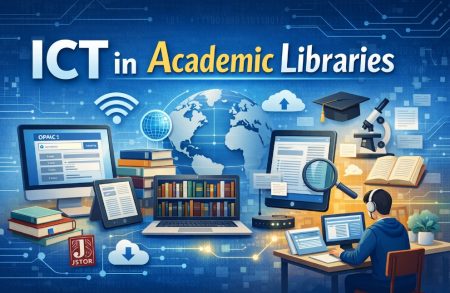
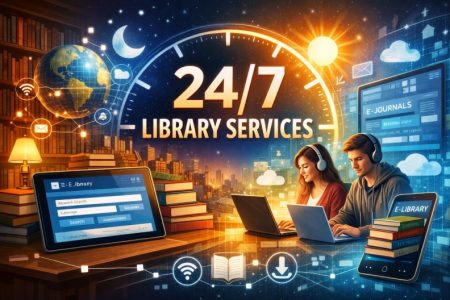
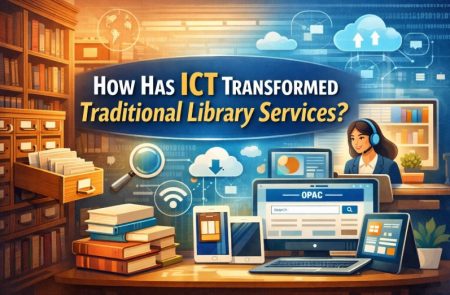
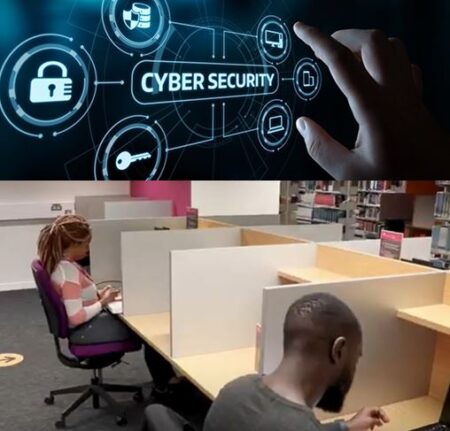
Information and Communication Technology (ICT) has significantly transformed the way libraries provide services to their users. ICT-based user services refer to the use of digital tools and technologies to deliver, manage, and improve library services efficiently and effectively. These services enhance access to information, improve user experience, and support remote and on-demand learning.
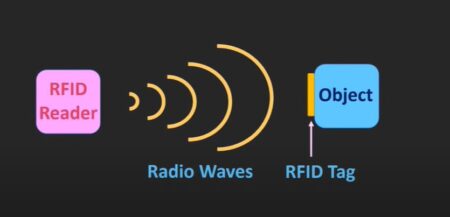
Modern libraries now offer a wide range of ICT-enabled services. For example, Online Public Access Catalogues (OPAC) allow users to search for books and other resources from anywhere via the internet. Digital libraries provide access to e-books, e-journals, and databases, enabling users to access academic content 24/7. Automated circulation systems speed up book lending and returning processes, while RFID technology helps in inventory management and self-checkout services.
Other examples include virtual reference services, such as live chat or email support, which assist users in real-time. Library websites and mobile apps serve as hubs for accessing services like book renewals, reservations, and digital collections. Additionally, institutional repositories allow users to view research publications, theses, and dissertations in digital formats.
Understanding ICT-Based User Services in a Library
ICT-based user services in a library refer to the integration and use of Information and Communication Technology to improve and modernize the way libraries provide access to information and interact with users. These services utilize digital tools and platforms to make library operations more efficient, user-friendly, and accessible, especially in a technology-driven world. For example, the use of Online Public Access Catalogs (OPAC) allows users to search and locate books or materials from anywhere with internet access. Digital libraries provide users with 24/7 access to e-books, e-journals, and online databases, supporting remote learning and research. Additionally, services such as automated circulation systems, RFID-based self-checkout, and virtual reference desks (like live chat or email help) streamline user support and reduce manual workload. Some libraries also use mobile applications that allow users to renew books, receive notifications, or access digital collections on the go. These examples highlight how ICT tools enhance user convenience and enable libraries to serve a wider audience more effectively, making information more democratic and easily available.
How ICT Tools Support Library User Services
Information and Communication Technology (ICT) has dramatically transformed the way libraries provide services to their users. Gone are the days when libraries were solely physical spaces with printed materials and manual cataloging systems. In today’s digital age, libraries are embracing advanced ICT tools to enhance their services, providing users with more efficient, accessible, and flexible ways to access resources and interact with library staff. From digital catalogs and automated systems to virtual reference desks and mobile apps, ICT tools play a central role in improving the library experience.
- Digital Access to Library Resources: One of the most significant ways ICT tools support library user services is by facilitating remote and anytime access to library resources. Online Public Access Catalogs (OPAC) allow users to search for books, journals, e-books, and multimedia materials from their computer or mobile device, eliminating the need for in-person visits to the library. Additionally, digital repositories and online databases provide users with 24/7 access to academic research, articles, e-books, and more, making it possible for students, researchers, and the general public to engage with library collections from anywhere in the world.
- Automation of Library Operations: Library management systems powered by ICT tools have streamlined traditional library operations such as cataloging, circulation, and inventory management. Automated circulation systems allow users to check out and return materials with ease using self-service machines, reducing wait times and freeing up staff for more personalized assistance. Systems that integrate Radio Frequency Identification (RFID) technology are used to track library materials efficiently and reduce human error. This automation also enables real-time updates of library records, ensuring that users always have access to accurate and up-to-date information about the availability of resources.
- Virtual Reference Services: ICT tools have revolutionized how libraries provide reference services. Through virtual platforms, libraries are now able to offer virtual reference services such as live chat, email support, and even video consultations. This means that users no longer need to visit the library physically to get answers to their questions. Librarians can assist users remotely with research, provide book recommendations, or offer help with navigating digital resources, thus extending library services to those who cannot physically visit or prefer online interaction. Chatbots powered by artificial intelligence (AI) have further enhanced these services by providing instant responses to commonly asked questions.
- Mobile Applications for Convenience: Mobile technology has further expanded the accessibility of library services. Many libraries have developed mobile apps that allow users to search the catalog, reserve books, check due dates, renew loans, and receive notifications about library events or overdue items, all from their smartphones. This convenience encourages more interaction with the library, even when users are on the go. Mobile apps also provide access to e-books and digital media, making it easy for users to read and borrow materials from anywhere.
- Personalized User Experiences: ICT tools enable libraries to offer more personalized services tailored to individual user needs. Library management systems can track user preferences and borrowing history, allowing the system to suggest books or resources based on past usage. Notifications, such as reminders for upcoming due dates or new arrivals that match a user’s interests, are sent via email or mobile app. Personalized services help improve user satisfaction and ensure that library users get the most relevant resources for their research or leisure reading.
- Improving Library Accessibility: ICT tools also play a significant role in making libraries more inclusive and accessible. Features such as screen readers, text-to-speech programs, and adjustable interfaces help users with disabilities navigate the library’s digital resources with ease. Many libraries now offer digital literacy training, either in-person or through online tutorials, to help users of all ages develop the necessary skills to access digital resources effectively. By making libraries more accessible, ICT tools ensure that all users, regardless of ability or technological expertise, can benefit from library services.
- Better Communication with Users: Communication between libraries and their users has become faster and more efficient with the help of ICT tools. Libraries can send SMS alerts, emails, or push notifications to inform users about overdue books, upcoming events, new acquisitions, or any changes to library hours. Additionally, social media platforms effectively allow libraries to engage with users, share resources, and gather feedback. This enhances community engagement, allowing libraries to stay connected with users and foster an ongoing dialogue.
ICT tools have become indispensable in modern libraries, allowing them to provide more efficient, accessible, and responsive services. From digital catalogs and virtual reference services to mobile apps and personalized experiences, technology is making it easier for users to interact with libraries and access the information they need. As technology continues to evolve, the role of ICT in libraries will only expand, enabling libraries to better meet the needs of a tech-savvy and information-hungry society. By embracing these tools, libraries are ensuring their relevance and continued importance in the digital age.
The Role of Online Public Access Catalogues (OPAC) in ICT-Based Services
Online Public Access Catalogues (OPAC) play a critical role in enhancing ICT-based services in libraries by providing a digital interface that allows users to search, locate, and access library resources with ease and efficiency. OPACs have replaced traditional card catalogs, offering an interactive and user-friendly online platform where users can search for books, journals, multimedia materials, and other library resources from anywhere with internet access. This convenience empowers users to explore library collections 24/7, making it unnecessary for them to physically visit the library just to check for resource availability. Additionally, OPACs are often integrated with other library services, such as user account management, allowing individuals to view the status of their borrowed materials, renew items, place holds, or even reserve resources. Modern OPAC systems provide more than just basic search functions; they often offer advanced features such as filtering, keyword searches, and sorting options to enhance the accuracy and relevance of results. OPACs also contribute to better library management by automating cataloging processes and providing real-time information on resource availability. Overall, OPAC systems are fundamental to the digital transformation of libraries, making library services more accessible, efficient, and user-friendly.
How Digital Libraries and Institutional Repositories Serve Users
Digital libraries and institutional repositories are vital ICT-based services that play a crucial role in serving the needs of library users, particularly in an increasingly digital and research-driven world. Digital libraries offer users access to a vast array of electronic resources, including e-books, e-journals, databases, and multimedia content. By providing 24/7 access to these resources, digital libraries ensure that users can retrieve and engage with information remotely without the need for physical presence in the library. This is especially beneficial for students, researchers, and academics who require continuous access to scholarly materials for study or research. Institutional repositories, on the other hand, are collections of digital content that are typically created and maintained by academic institutions. These repositories often include research papers, theses, dissertations, publications, and other institutional outputs. They serve users by providing a central, accessible location for an institution’s scholarly work, fostering greater visibility, dissemination, and long-term preservation of academic resources. Both digital libraries and institutional repositories empower users by making information readily available, supporting lifelong learning, facilitating research, and improving overall access to academic and scholarly materials. Through the use of these services, users can quickly discover, download, and engage with a wealth of information that may not be available through traditional physical library collections.
ICT Tools Used for Virtual Reference Services
Virtual reference services are essential to modern library offerings, enabling libraries to assist users remotely with their information needs. A variety of Information and Communication Technology (ICT) tools are utilized to facilitate these services, ensuring that users can access support regardless of their location. One of the most common tools is live chat software, which allows librarians to engage with users in real-time, answering queries instantly and providing personalized assistance. Email support is another widely used tool, allowing users to send questions or requests and receive detailed responses from librarians. Some libraries also employ chatbots, powered by artificial intelligence (AI), to provide immediate, automated responses to frequently asked questions or basic inquiries, which can be especially useful during off-hours. For more complex queries, video conferencing tools such as Zoom or Skype can be used for face-to-face consultations, allowing librarians to guide users through research processes, help with resource discovery, or offer instructional support. Additionally, reference management software and online databases are often integrated into virtual reference services, allowing librarians to share links, resources, and documents directly with users in real-time. Together, these ICT tools make virtual reference services highly effective, ensuring that library users have continuous, convenient access to expert support, no matter where they are located.
The Benefits of Using Library Mobile Apps for Users
In today’s fast-paced world, where smartphones are ubiquitous, mobile apps have become vital for simplifying everyday tasks. Libraries have embraced this shift by developing library mobile apps that offer users a convenient and accessible way to interact with library services from anywhere, at any time. These apps play a key role in enhancing user experience by providing easy access to library resources, streamlining operations, and promoting continuous engagement. Below, we explore the various benefits library mobile apps offer users.
- Convenient Access to Library Resources: One of the most significant benefits of library mobile apps is the ability to access library resources on-the-go. Users can search the library catalogue and browse for books, e-books, journals, and other materials, all from their mobile devices. Gone are the days of needing to physically visit the library or sit at a computer to find information. Whether at home, on the commute, or even in a café, users can explore library collections, check availability, and reserve items directly from their smartphone or tablet.
- Renewals and Book Reservations Made Easy: Library mobile apps make managing loans much easier. Users can instantly view the status of their borrowed books and materials, and they can renew items directly from their app before they are due, preventing late fees. Moreover, users can place holds or reservations on books and other resources, even if those items are currently checked out. Notifications sent via the app will alert users when their reserved materials are available for pickup, ensuring they don’t miss out on their reading materials.
- Notifications and Alerts: Mobile apps allow libraries to communicate directly with their users through push notifications and alerts. These messages can inform users about overdue items, upcoming due dates, library events, new book arrivals, and important updates. This proactive communication ensures that users are well-informed and can stay on top of their library activities, making the whole process much more efficient. Additionally, apps can notify users about new resources or updates in their areas of interest, providing personalized and relevant information.
- Streamlined User Experience: A well-designed library mobile app simplifies the user experience, making it easier for users to interact with library services. Features such as barcode scanning allow users to quickly check book availability by scanning the ISBN or barcode of a book they are interested in. The app also often integrates seamlessly with other library systems, so users can manage their accounts, request items, or even pay fees directly through the app, all from a single interface.
- Access to Digital Content: Library mobile apps often provide access to e-books, audiobooks, and other digital media that users can borrow and enjoy directly on their devices. This is especially beneficial for users who prefer reading digital content, as they can instantly download or stream materials without having to visit the library in person. Many apps are compatible with e-readers or audiobook platforms, ensuring that users can enjoy a wide variety of digital resources anytime, anywhere.
- Encouraging Library Engagement: By providing users with easy access to services and information, library mobile apps foster increased engagement with library resources. They encourage regular visits to the library, whether virtual or physical, by making it more convenient for users to interact with their library on a daily basis. Additionally, mobile apps often include social sharing features or allow users to participate in library events, book clubs, and challenges, helping to build a sense of community and engagement around library activities.
- Improved Accessibility for All Users: Mobile apps are particularly beneficial for users who may have difficulty accessing traditional library resources. For users with disabilities, many apps include features like text-to-speech or adjustable font sizes to make content easier to read. Additionally, mobile apps can be designed with a user-friendly interface, making navigation simple for people of all ages and technological backgrounds. The accessibility of library services on smartphones ensures that everyone, including people with limited mobility or those who cannot easily visit the library in person, has access to the library’s offerings.
- Enhancing Learning and Research Opportunities: For students and researchers, library mobile apps offer a wealth of opportunities for continuous learning and research. Many apps provide access to academic databases, journals, and research materials that users can consult while on the go. Whether they’re in a study group, at a café, or traveling, students can access scholarly articles, books, and other academic content to aid their research. This level of convenience supports a more flexible and dynamic approach to studying.
Library mobile apps are transforming the way users interact with libraries, making services more accessible, efficient, and user-friendly. They enable users to browse, borrow, renew, and reserve materials with ease while also offering digital content, personalized notifications, and improved accessibility features. By providing a seamless connection between users and library resources, these apps help promote lifelong learning, enhance engagement, and ensure that libraries continue to meet the needs of their tech-savvy patrons in an increasingly mobile world.
How ICT Has Transformed User Access to Library Resources
Information and Communication Technology (ICT) has revolutionized the way users access library resources, making it faster, more convenient, and more efficient than ever before. Traditionally, users had to physically visit the library to search for books, check availability, or borrow materials. This process was often time-consuming and required users to be present during the library’s operating hours. However, with the advent of ICT, libraries have transitioned to digital platforms, significantly enhancing user access to resources.
One of the most notable transformations is the development of Online Public Access Catalogs (OPAC), which allow users to search the library catalog remotely, from anywhere and at any time. This eliminates the need for users to visit the library just to check for the availability of resources, making it easier to find and reserve books or other materials online. Additionally, digital libraries and institutional repositories have expanded access to e-books, academic journals, research papers, and other digital resources, which users can download or read online without stepping foot in the library.
ICT has also facilitated virtual reference services, allowing users to get assistance from librarians remotely via email, live chat, or even video calls. These services enable library patrons to access help or guidance without needing to be physically present. Furthermore, mobile applications now give users the flexibility to manage their library accounts, renew books, place holds, and receive notifications on overdue items or new arrivals—all from their smartphones or tablets.
Through ICT, libraries have become more inclusive and accessible, reaching a broader audience. Users no longer need to be geographically close to a physical library to access its resources, making libraries available to people in remote or underserved areas. In this digital age, ICT has truly transformed library services, enabling greater accessibility, convenience, and flexibility in how users engage with library resources.
The Impact of ICT on Library User Satisfaction and Engagement
The integration of Information and Communication Technology (ICT) in libraries has had a significant positive impact on user satisfaction and engagement. Traditionally, users relied on physical visits to libraries to access resources, often resulting in limited access to materials and the time-consuming process of locating and borrowing items. However, ICT has transformed library services by offering convenient, remote access to a wide array of digital resources such as e-books, journals, databases, and multimedia content. This immediate access to information—through online catalogs, digital repositories, and mobile apps—has greatly increased user satisfaction by making library resources available 24/7, regardless of geographic location.
ICT tools such as live chat, email, and AI-driven chatbots have enabled libraries to offer virtual reference services, providing users with quick responses to their questions and enhancing engagement by making support available at all times. Furthermore, the use of automated systems, including RFID technology and self-service kiosks, has streamlined library operations, making book checkouts and returns faster and more efficient, reducing wait times, and improving the overall user experience. The ability to manage library accounts, place holds, and receive personalized notifications via mobile apps has further strengthened user engagement, allowing individuals to interact with the library seamlessly, even while on the move. With these technological advancements, libraries have evolved into dynamic spaces that foster continuous interaction, enhance the user experience, and build a stronger sense of community among users, resulting in higher levels of satisfaction and a more engaged user base.
How ICT-Based Services Help Users in Remote or Rural Areas
ICT-based services have proven to be a game-changer for library users in remote or rural areas, overcoming traditional barriers to accessing library resources. In these areas, physical libraries may be scarce, and the resources they can offer are often limited. However, with the implementation of ICT tools such as digital libraries, online catalogs, and e-books, users in these regions can access a vast array of information and resources without the need to travel long distances to a library. Online Public Access Catalogs (OPAC) enable users to search for and reserve materials from any location with internet access, ensuring that they can still engage with library content even if they are far from a physical branch.
Virtual reference services like live chat, email support, and AI-powered chatbots provide users with real-time assistance, offering expert guidance on research, resource discovery, and general inquiries. By offering 24/7 access to digital repositories and academic databases, ICT-based services also help users in remote areas stay connected to educational and research resources, enabling them to continue their studies or professional development without having to travel. Mobile apps further contribute by allowing users to manage their accounts, renew materials, and receive notifications from their smartphones. These services bridge the digital divide and empower rural and remote users by providing them with the tools and resources they need to continue learning and engaging with library services, ultimately enhancing their educational opportunities and quality of life.
Challenges of Implementing ICT-Based Services in Libraries
The integration of Information and Communication Technology (ICT) into libraries has revolutionized the way library services are offered, improving accessibility, efficiency, and user engagement. However, despite the numerous benefits, implementing ICT-based services in libraries is not without its challenges. Libraries, especially those in developing regions or smaller communities, face a variety of obstacles when incorporating new technologies into their operations. Below are some of the key challenges that libraries encounter when implementing ICT-based services.
- High Initial Costs and Budget Constraints: One of the most significant challenges faced by libraries in adopting ICT-based services is the high initial cost of acquiring and implementing technology. Library management systems, digital catalogs, e-book licenses, and software for virtual reference services all require substantial financial investment. In addition to purchasing hardware like computers, servers, and mobile devices, libraries must also pay for ongoing software maintenance, upgrades, and staff training. Many libraries, particularly those in underfunded or rural areas, struggle with budget constraints, which can hinder their ability to invest in the latest technologies or maintain existing systems. Without adequate funding, libraries may not be able to provide the full range of ICT-based services, limiting the potential benefits these tools can bring.
- Technological Infrastructure Limitations: Implementing ICT-based services also requires a robust technological infrastructure, including reliable internet access, computer networks, and sufficient bandwidth. Libraries in remote or rural areas, where internet connectivity may be slow or unstable, face considerable barriers to implementing effective ICT services. Without fast, reliable internet, users cannot access digital resources such as e-books, online catalogs, or virtual reference services efficiently. Additionally, some libraries may struggle with outdated hardware and software, which can make it difficult to run modern library management systems or provide smooth access to online resources. In such cases, upgrading or replacing infrastructure can be costly and time-consuming, delaying the implementation of ICT-based services.
- Staff Training and Technical Expertise: For libraries to effectively use and maintain ICT-based services, library staff must be adequately trained in the use of new technologies. However, training staff on how to use advanced systems and tools can be a major challenge. Staff members may lack the necessary technical skills to manage and troubleshoot ICT systems, leading to frustration and inefficiency. Additionally, as technology evolves rapidly, libraries must continuously invest in training to ensure that staff stay up-to-date with the latest tools and best practices. Without proper training, libraries may face difficulties in managing digital collections, providing virtual reference services, or troubleshooting issues for users. This lack of expertise can undermine the success of ICT-based services and impact user satisfaction.
- Resistance to Change: Another common challenge is resistance to change from both library staff and users. For some library staff, the transition from traditional, manual processes to ICT-based systems may be difficult or uncomfortable, especially if they are unfamiliar with new technologies. Similarly, library users who are accustomed to traditional services may be hesitant to embrace new technologies. This resistance can hinder the adoption of ICT services and make the integration process slower and more complicated. Libraries need to develop strategies to overcome this resistance, such as providing training, offering clear communication about the benefits of ICT, and involving staff and users in the decision-making process.
- Digital Divide and Access Inequality: While ICT-based services can enhance access to information, they can also inadvertently exacerbate the digital divide. Not all users have equal access to the technology required to use library digital services, particularly in low-income or rural areas. For example, users may lack access to personal devices like smartphones, tablets, or computers, or they may struggle with unreliable or expensive internet connections. Furthermore, certain groups, such as older adults or those with disabilities, may face challenges in using technology, creating barriers to library access for these individuals. Libraries must be mindful of these disparities and find ways to ensure that ICT-based services remain accessible to all users, regardless of their technological abilities or socioeconomic status.
- Privacy and Security Concerns: As libraries increasingly collect and store user data for the purpose of providing personalized services (e.g., user accounts, borrowing history, and preferences), they must address privacy and security concerns. Protecting users’ personal information from breaches or misuse is a critical issue in the digital age. Libraries need to ensure that their ICT systems are secure, that they comply with data protection regulations, and that users’ privacy is respected. This requires investing in secure systems, regularly updating security protocols, and educating users about safe online practices. Without proper attention to security, libraries risk compromising the trust of their users and exposing them to potential threats like identity theft or data breaches.
- Maintaining Digital Content and Resources: Finally, libraries face challenges in maintaining digital content and resources over time. Digital materials, such as e-books, journals, and databases, often require regular updates, subscription renewals, and proper archiving to ensure they remain relevant and accessible. As content is digitized, libraries must also address issues related to digital preservation and long-term access to materials. Unlike physical books, which can last for many years, digital resources can become obsolete or inaccessible due to changing formats, broken links, or the expiration of licenses. Libraries need to allocate resources for the ongoing management and preservation of digital collections to ensure they continue to serve users effectively.
While ICT-based services bring numerous benefits to libraries and their users, implementing these services presents several challenges. High initial costs, technological infrastructure limitations, staff training requirements, resistance to change, the digital divide, privacy concerns, and the need for ongoing maintenance are all obstacles that libraries must overcome to realize the full potential of ICT. However, by addressing these challenges thoughtfully and strategically, libraries can create more accessible, efficient, and user-centered services that improve the overall library experience for all patrons. Despite the challenges, the continued adoption of ICT in libraries will ultimately help them remain relevant and better serve the needs of modern users.
Ensuring Equal Access to ICT-Based Services in Libraries
Libraries have a responsibility to ensure that ICT-based services are accessible to all users, regardless of their background, socioeconomic status, or technological abilities. One of the key ways libraries can promote equal access is by providing open access to digital devices and reliable internet connections within library spaces. Many individuals, particularly those in low-income or rural areas, may not have personal access to computers, smartphones, or high-speed internet. By offering free access to such resources, libraries help bridge the digital divide and allow users to take full advantage of ICT-based services, such as digital catalogs, e-books, and online reference support.
Libraries can support users with digital literacy training, helping patrons of all ages and skill levels learn how to navigate digital tools and platforms. This training ensures that everyone, including older adults or those with minimal exposure to technology, can benefit from the library’s digital services. Libraries should also focus on making their websites, apps, and other digital resources user-friendly and accessible to individuals with disabilities, incorporating features such as screen readers, adjustable text sizes, and voice commands. Furthermore, to support users who may not have regular access to the library or digital tools, libraries can explore offering mobile-friendly services that allow people to access library resources from their smartphones, ensuring that access is not restricted to physical spaces or specific devices. By prioritizing inclusivity, offering training, and adapting services to meet the diverse needs of their community, libraries can ensure that all users have equal opportunities to engage with ICT-based services, promoting greater educational and informational equity.
Reference Articles:
- Ahmed, S. M. Z. (2014). The use of IT-based information services: An investigation into the current status of public university libraries in Bangladesh. Program, 48(2), 167–184. https://doi.org/10.1108/PROG-08-2012-0048
- Akintunde, S. A. (n.d.). Libraries as Tools for ICT Development.
- Essien, F. K., Lu, Z., Abredu, P., & Zotoo, I. K. (2022). Effect of ICT Use on Library Service Delivery: A Comparative Approach from Two Universities. Open Access Library Journal, 9(5), Article 5. https://doi.org/10.4236/oalib.1108653
- Faizan, M., & Munshi, S. A. (2025). Enhancing academic access: Evaluating integrated ICT-based library services at IIT from users’ perspectives. Performance Measurement and Metrics, 26(1), 49–70. https://doi.org/10.1108/PMM-07-2024-0032
- Fidelis, A. (2018). Usage of information and communication technology to support innovative library services in universities: A case of the University of Dar es Salaam Wilbert Chagula Library. University of Dar Es Salaam Library Journal, 13(2), Article 2.
- Haruna, B., Kiran, K., & Tahira, M. (2017). Modelling web-based library service quality and user loyalty in the context of a developing country. The Electronic Library, 35(3), 507–519. https://doi.org/10.1108/EL-10-2015-0211
- Helen, A. (2024). User perceptions of ICT-based library services in the universities of Bangladesh. Library Management, 45(6/7), 399–415. https://doi.org/10.1108/LM-12-2023-0123
- Hussain, D. A., Khan, M. A., & Zaidi, D. N. F. (n.d.). The ICT based library and Information services: A case study of B-Schools in Delhi and NCR region.
- Islam, S., & Islam, N. (2007). Use of ICT in Libraries: An Empirical Study of Selected Libraries in Bangladesh.
- Kumar, N. (2017). Use of Information Communication Technology (ICT) and Library Operation: An Overview.
- Madhusudhan, M., & Nagabhushanam, V. (2012). Web‐based library services in university libraries in India: An analysis of librarians’ perspective. The Electronic Library, 30(5), 569–588. https://doi.org/10.1108/02640471211275657
- Mairaj, M. I., & Naseer, M. M. (n.d.). Library services and user satisfaction in developing countries: A case study. https://doi.org/10.1111/hir.12038