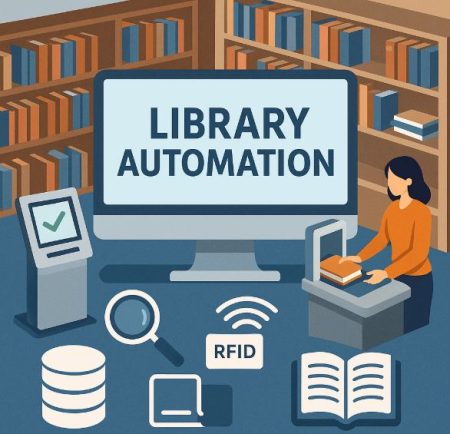
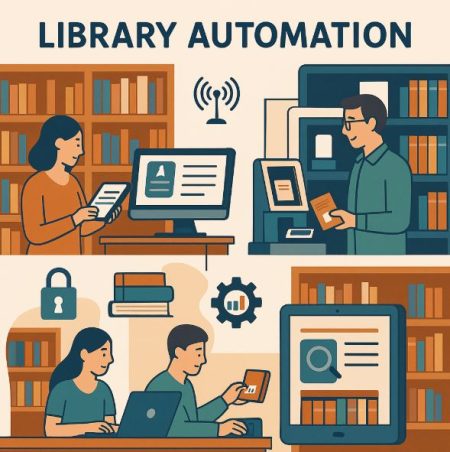
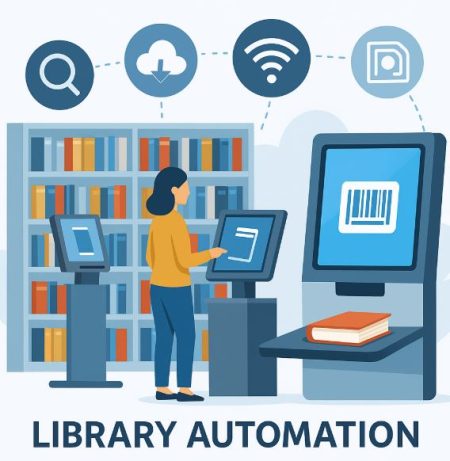
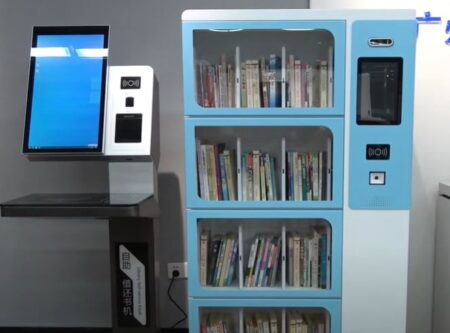
Library automation refers to the use of technology and computer-based systems to streamline and manage the various operations and services within a library. This technological shift involves the application of software and hardware systems to automate traditional library tasks such as cataloguing, circulation, acquisitions, and resource management. The overarching goal of library automation is to improve operational efficiency, enhance user experience, and facilitate easier access to information. Historically, libraries were managed using manual systems, which involved handwritten catalogues, card files, and physical record-keeping. These traditional methods, though effective for their time, became increasingly inadequate as libraries grew in size and complexity, particularly with the rise of digital resources and the growing volume of library materials.
The advent of library automation began in the mid-20th century with the introduction of computers in library management. The early systems were designed to automate the cataloging process and streamline the retrieval of information, making it easier to locate and manage books and journals. By the 1960s and 1970s, libraries began experimenting with computer-assisted cataloging and circulation systems, paving the way for the development of more sophisticated Library Management Systems (LMS) in the following decades. These systems allowed for greater accuracy in record-keeping, reduced human error, and improved access to resources.
As the digital age progressed, libraries embraced automation more widely, incorporating technologies like barcodes, radio frequency identification (RFID), and online public access catalogs (OPACs) to further enhance their services. The shift to digital resources, such as e-books and online journals, necessitated the expansion of automation tools to handle these new forms of information. Today, modern libraries rely on advanced systems for not only managing physical collections but also for providing access to digital and multimedia resources. The integration of automation has enabled libraries to offer more efficient, user-friendly services, helping them keep pace with the demands of the digital age while continuing to serve as vital educational and informational hubs.
What is Library Automation, and Why is it Important for Modern Libraries?
Library automation refers to the use of computer-based systems, software, and technology to manage and streamline various library operations and services. This includes tasks such as cataloguing, circulation, acquisitions, inventory management, user management, and user access to library resources. By replacing manual, paper-based systems with automated processes, libraries are able to enhance efficiency, accuracy, and accessibility. Library automation typically involves the implementation of Library Management Systems (LMS), which allow libraries to track books, journals, digital resources, and patron activities, thereby improving overall service delivery.
The importance of library automation for modern libraries lies in its ability to adapt to the rapid growth and increasing complexity of information resources. With the proliferation of digital content, e-books, online journals, and multimedia, automation becomes essential to managing vast amounts of information efficiently. In addition, library automation facilitates the ease of access for users, allowing them to search for and borrow resources more quickly and easily. Automated systems also enable libraries to handle large volumes of transactions, such as checking in and out materials, renewing resources, and managing memberships, all with greater accuracy and less human error.
Library automation supports the efficient allocation of library staff resources, as automation reduces the need for manual tasks, allowing staff to focus on more value-added activities, such as assisting patrons with research needs and providing educational support. As libraries continue to evolve in the digital age, automation is essential for keeping pace with the increasing demand for immediate access to information, both on-campus and remotely.
The Need for Library Automation
The need for library automation has become increasingly evident as libraries strive to manage the growing volume and complexity of resources, both physical and digital. With the advent of digital technologies, libraries face an evolving landscape where traditional manual systems are no longer sufficient to handle the demands of modern users. Automation plays a pivotal role in addressing the challenges faced by libraries, and it is essential for improving operational efficiency, accuracy, and user access to resources. Here are some of the reasons why libraries must embrace automation to meet the demands of the modern era.
- Managing Growing Volumes of Resources: One of the primary reasons for the need for library automation is the vast increase in the volume and diversity of resources available in modern libraries. Libraries now house a wide array of materials—physical books, digital texts, multimedia content, databases, and more. This growing complexity of resources demands a system capable of organizing, categorizing, and tracking them efficiently. Traditional manual systems simply cannot handle the scale and diversity of contemporary collections.
Automated systems such as Library Management Systems (LMS) help to manage resources effectively by cataloging, classifying, and maintaining accurate records. These systems allow libraries to keep up with large collections and ensure that resources are easily accessible. For example, when new materials are added to a library’s collection, automated systems can instantly assign them to the correct categories, update records, and track their availability. This reduces the need for manual record-keeping and minimizes the chances of human error. - Improving Operational Efficiency: Libraries face increasing pressure to operate more efficiently in order to meet the growing needs of users. Automation is key to improving operational efficiency by streamlining tasks such as cataloguing, circulation, and acquisitions. Manual processes, such as checking out books or searching for materials in large databases, can be time-consuming and prone to error. In contrast, automated systems perform these tasks swiftly and accurately, freeing up valuable time for library staff to focus on more specialized and interactive tasks, such as assisting patrons with research inquiries.
For instance, self-checkout stations powered by RFID technology enable users to check out books independently, reducing wait times and improving the overall user experience. Automated circulation systems can track borrowed materials, renewals, and returns in real-time, ensuring that resources are efficiently managed and that records are consistently updated. Such efficiencies are vital in large libraries with high user traffic, where managing materials manually would be impractical and inefficient. - Enhancing User Access and Experience: One of the most significant benefits of library automation is its ability to enhance user access and improve the overall experience. In today’s digital age, users expect immediate access to information. Whether they are searching for physical books, digital articles, or multimedia content, users want fast and easy access to resources. Library automation supports this expectation by enabling online catalogs, digital lending services, and remote access to databases and e-resources.
For example, automated systems like Online Public Access Catalogs (OPACs) allow library patrons to search for resources from anywhere at any time. This is particularly important in academic libraries, where students and faculty members need 24/7 access to research materials, especially for remote learning. Furthermore, remote access systems like OpenAthens enable users to connect to digital resources without being on the library premises, making it possible to access scholarly articles, journals, and e-books from home or other locations. Automation ensures that users can interact with library resources on their own terms, improving accessibility and convenience. - Reducing Human Error and Enhancing Accuracy: Manual systems are susceptible to human error, especially in large libraries with extensive collections and numerous transactions. From misplaced books to incorrect data entry, human mistakes can compromise the accuracy of records, making it difficult to track resources and serve users effectively. Automation helps to eliminate many of these errors by standardizing processes and reducing the need for manual intervention.
Automated systems are designed to track materials with precision, ensuring that all records are up-to-date and accurate. For instance, RFID tags on books allow libraries to monitor circulation more accurately and track the location of materials in real-time. When users check out a book or return it, the system automatically updates the library’s inventory, reducing the chances of lost or misplaced items. This level of accuracy is crucial for maintaining the integrity of the library’s collection and improving user satisfaction. - Supporting Resource Sharing and Interlibrary Loans: Interlibrary loans (ILL) and resource sharing have become increasingly important as libraries strive to provide users with access to a wider range of materials. Automation plays a vital role in facilitating these activities by connecting libraries across networks and enabling quick, seamless resource sharing. Automated interlibrary loan systems allow libraries to request and lend resources with minimal effort, ensuring that users can access materials not available in their home library.
For example, if a student at one library needs a book that is located at a partner institution, automation allows for an instant search of the book’s availability across a network of libraries. Once the book is located, the system can automatically generate a loan request, track the borrowing process, and notify the user when the item is ready for pickup. This efficiency in resource sharing enables libraries to offer a broader array of materials to their users, even if the items are not part of the local collection. - Data Management and Decision-Making: Effective data management is essential for libraries to make informed decisions about acquisitions, budgets, and resource allocation. Library automation provides robust tools for generating reports on circulation statistics, usage patterns, and user preferences. By automating the data collection process, libraries can gain valuable insights into which resources are most in demand and which areas of the collection may need expansion.
For example, an automated system can track which books are borrowed most frequently, enabling the library to focus on acquiring additional copies or related materials. It can also identify underutilized resources, which might suggest areas where resources are being underfunded or where more outreach efforts are needed. Automated data collection helps library administrators make strategic decisions that align with user needs and institutional goals. - Cost-Effectiveness and Resource Optimization: While the initial investment in library automation can be significant, the long-term cost savings far outweigh the initial expenses. By automating repetitive tasks, libraries can reduce the need for extensive staffing and minimize operational inefficiencies. Automation also optimizes the use of resources by providing libraries with better insights into their collections and helping them allocate funds more effectively.
For instance, automated systems allow libraries to reduce the cost of manual cataloging and inventory management, which would otherwise require considerable staff time and resources. Automated systems also reduce the likelihood of errors that could result in wasted resources, such as lost materials or incorrect data. In the long run, the efficiency and accuracy of automated systems can significantly reduce operational costs, making libraries more financially sustainable.
The need for library automation is undeniable in the context of today’s rapidly changing information landscape. With the growing volume of resources, increasing user expectations, and the need for efficient operations, automation has become an essential tool for modern libraries. By improving resource management, enhancing user access, reducing human error, and supporting interlibrary cooperation, automation allows libraries to better serve their communities and meet the demands of the digital age. As libraries continue to evolve, automation will remain a key component in ensuring that they remain relevant, efficient, and responsive to the needs of their users.
Purposes of Library Automation
Library automation plays a pivotal role in modernizing the way libraries operate, manage resources, and interact with users. With the increasing complexity of library collections and the growing demands of users, automation helps to streamline processes, reduce human error, and enhance efficiency. Below are some of the key purposes of library automation:
- Efficient Cataloguing and Classification: One of the primary purposes of library automation is to improve the efficiency and accuracy of cataloguing and classification systems. Traditionally, libraries used manual methods, such as card catalogues, to organize resources. However, with the growing volume of materials, these methods became increasingly inefficient. Automated systems, such as Library Management Systems (LMS), allow libraries to categorize and classify books, journals, and other materials quickly and consistently. When new resources are added, these systems automatically assign classification numbers and update the catalogue. This not only ensures that materials are accurately classified but also allows for faster retrieval, ensuring that users can easily find what they are looking for.
- Enhancing Circulation and Improving User Access: Automation plays a critical role in the circulation process, which includes checking books in and out, managing renewals, and keeping track of borrowed items. Automated circulation systems significantly reduce the time it takes to check out and return materials, which enhances the user experience by reducing wait times and improving service speed.
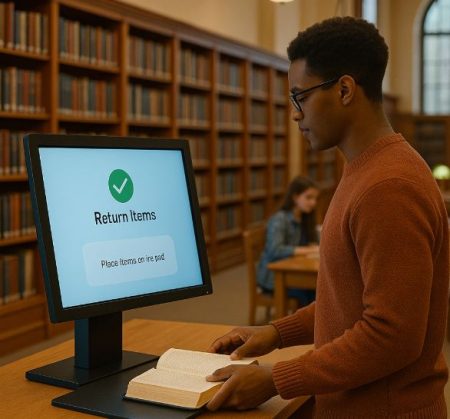
Self-checkout machines, which use RFID or barcode technology, allow patrons to check out books independently without the need for library staff. This speeds up the process and increases the overall efficiency of the library. Additionally, automated systems can manage overdue items, issue fines, and send notifications for overdue materials, reducing the administrative workload for library staff. - Enhancing User Experience and Accessibility: Another key purpose of library automation is to enhance user access to resources and improve the overall experience for library patrons. Automated systems provide users with 24/7 access to library catalogues, allowing them to search for books, check availability, and reserve items online. For example, Online Public Access Catalogues (OPACS) allow library users to search for and request materials remotely, without needing to visit the library physically. This is particularly important for academic libraries, where students and faculty may need to access resources outside of regular hours. Additionally, automation enables libraries to offer remote access to e-books, journals, and databases, ensuring that users can access information from anywhere at any time.
- Supporting Resource Sharing and Interlibrary Loans: Interlibrary loans (ILL) and resource sharing between libraries have become essential for providing users with access to a broader range of materials. Library automation simplifies the process of resource sharing by enabling libraries to quickly locate materials in partner institutions and request loans. Automated systems can check the availability of a requested item in a network of libraries, manage the borrowing process, and track the movement of materials. For instance, if a user requests a book that is unavailable in the local library, the system can automatically search partner libraries, request the item, and notify the user when it is ready for pick-up. This streamlines resource sharing, making it easier for libraries to collaborate and provide users with access to a wider range of resources.
- Data Management and Reporting: Automated systems provide libraries with the ability to collect, store, and analyze data on circulation, user activity, resource usage, and other important metrics. This data helps library administrators make informed decisions about acquisitions, budget allocation, and overall resource management. For example, automated systems can generate reports that show which materials are being used most frequently, helping libraries prioritize future acquisitions and identify gaps in the collection. They can also monitor circulation trends, such as peak borrowing times or popular subject areas, allowing libraries to better align their resources with user needs. By automating data collection and reporting, libraries can improve their decision-making processes and ensure that resources are allocated efficiently.
- Cost Reduction and Operational Efficiency: Library automation helps to reduce operational costs by minimizing the need for manual labor in repetitive tasks such as cataloguing, circulation, and inventory management. Automated systems can manage large volumes of transactions, track materials, and update records with minimal staff intervention, allowing library personnel to focus on more specialized and value-added services. Furthermore, by reducing the risk of human error, automation minimizes the potential costs associated with lost or misplaced items, incorrect data entry, and inefficient processes. In the long term, the increased efficiency and accuracy provided by automation can result in significant cost savings for libraries, enabling them to better allocate their budgets and invest in other areas.
- Managing Digital and Multimedia Content: As libraries increasingly manage digital and multimedia content, such as e-books, journals, and multimedia files, automation becomes essential for organizing, storing, and providing access to these materials. Automated systems help manage the cataloguing, storage, and retrieval of digital resources, ensuring that users can easily find and access them.
For instance, libraries may use Digital Asset Management (DAM) systems to organize multimedia content, including videos, images, and audio files. Automation ensures that these materials are easily searchable and accessible to users, supporting the library’s ability to manage both physical and digital collections in an integrated manner. Furthermore, automation allows libraries to provide users with seamless access to digital resources, including e-books, online journals, and streaming media, both on-site and remotely. - Supporting Remote Access and E-Learning: Library automation supports e-learning initiatives by providing students and faculty with remote access to library resources. Through automated systems like OpenAthens or EZproxy, libraries enable users to access subscribed databases, e-books, and journals from off-campus locations. This is particularly important for academic libraries, where users often need to access resources for research and coursework outside of normal library hours. By offering remote access, libraries ensure that their users have continuous access to essential resources, regardless of their physical location. This is especially valuable for distance learning programs, where students may not be able to visit the library in person.
- Enhancing Library Security: Automated systems also play an important role in enhancing the security of library resources. Technologies such as RFID, barcodes, and security alarms help track materials and prevent theft or loss. Automated security systems can alert library staff when a resource is improperly removed from the library or not checked out correctly, providing an added layer of protection for library collections. Additionally, automated systems can help with inventory management by periodically tracking materials to ensure that they are in the correct location. This reduces the chances of missing or misplaced resources, improving overall security and accountability.
Library automation serves a multitude of purposes, from improving cataloguing and circulation to enhancing user access and facilitating resource sharing. By automating routine tasks and processes, libraries can significantly improve operational efficiency, reduce costs, and provide a better overall experience for users. As libraries continue to expand their collections and services, automation will remain an essential tool in helping them meet the growing demands of modern information management and user expectations.
Primary Reasons for Libraries to Adopt Automation Systems
The adoption of automation systems in libraries is increasingly becoming a necessity rather than a choice, as it allows libraries to adapt to the evolving demands of modern information management. One of the primary reasons for libraries to adopt automation systems is to improve operational efficiency. Traditional manual methods for cataloguing, circulating, and managing resources are time-consuming and prone to errors, particularly as the volume of materials grows. Automation helps streamline these processes, reducing the time required for routine tasks. For instance, automated circulation systems allow for quick check-ins and check-outs of materials, freeing up library staff to focus on more complex tasks like providing research support and assisting users with their queries. This increased efficiency ensures that library resources are better managed and available for users in a timely manner.
Another critical reason for automation is to enhance the user experience. In today’s fast-paced digital age, users expect instant access to library resources and a seamless service experience. Automated systems, such as Online Public Access Catalogues (OPACs), allow users to search for, reserve, and borrow materials from anywhere, at any time, without needing to physically visit the library. Additionally, remote access to digital resources, including e-books, academic journals, and online databases, is made possible through systems like OpenAthens or EZproxy. These systems provide students, faculty, and patrons with the flexibility to access library content from their homes or mobile devices, greatly improving convenience and satisfaction.
Accuracy and the reduction of human error are also key reasons for libraries to adopt automation. Manual processes are prone to mistakes, especially in tasks like cataloguing, inventory management, and tracking borrowed materials. Automated systems ensure that records are consistently accurate and up-to-date, making it easier to track items and manage collections. For example, RFID technology in libraries allows for real-time tracking of materials, which minimizes the risk of lost or misplaced books. This level of accuracy helps libraries maintain their collections in an organized and efficient manner.
In addition to improving operational processes, automation plays a significant role in resource sharing and interlibrary loans. Libraries often collaborate with other institutions to share resources, and the use of automation makes this process smoother and more efficient. Automated interlibrary loan systems allow libraries to quickly locate and request materials from partner institutions, reducing the time required for resource sharing and enhancing access to a wider range of materials. This is particularly valuable in academic libraries, where access to specialized or rare resources is essential for research.
The ability to manage data and generate reports is another compelling reason for adopting automation. Automated systems collect valuable data on user activity, resource usage, and circulation trends, which can be analyzed to improve decision-making. For example, libraries can use this data to identify the most borrowed books or resources, determine which areas of the collection need expansion, and assess the overall usage of library services. This ability to gather actionable insights helps library administrators make informed decisions about budgeting, acquisitions, and staffing. Furthermore, automation in libraries leads to cost reduction and better resource optimization. While the initial investment in automation systems can be significant, the long-term savings are substantial. Automation reduces the need for manual labour in routine tasks, which cuts down on staffing costs and operational inefficiencies. Additionally, automation helps libraries optimize their resources, ensuring that the right materials are available when needed and that resources are used efficiently, which is particularly important in an era of tight budgets.
Security and accountability are enhanced through automation. Automated systems, such as RFID and barcode scanning, help track the movement of materials throughout the library, ensuring that books and other resources are properly checked in and out. This not only helps to prevent theft but also ensures that resources are available when needed. By providing real-time tracking, automated systems also allow libraries to manage their inventories more effectively, further improving the security and accountability of library resources.
The Role of Library Automation in Facilitating Remote Access to Library Resources
As technology continues to shape the way we access information, libraries have had to adapt to meet the evolving needs of their users. One of the most significant shifts in library services over the past few decades is the growing importance of remote access to library resources. Traditionally, libraries were physical spaces where patrons had to be present to access materials. However, the rise of digital resources and the need for convenient, around-the-clock access have made remote access a critical service. Library automation plays a pivotal role in facilitating this shift, enabling libraries to provide seamless access to their collections and services from anywhere, at any time.
- Enabling Access to Digital Resources: One of the core functions of library automation is to streamline access to digital resources, such as e-books, online journals, databases, and multimedia content. These resources have become central to modern libraries, particularly in academic and research libraries, where access to scholarly articles and specialized information is essential for academic success. Through automated systems, libraries can provide remote access to these digital resources without requiring users to physically visit the library.
Automation systems like OpenAthens, EZproxy, and Shibboleth are widely used in academic libraries to enable remote access to subscription-based resources, including academic journals, databases, and e-books. These systems authenticate users via their institutional credentials (e.g., university login), allowing them to access the resources they need from any location, whether they are at home, travelling, or at a remote study site. By automating the authentication process, libraries ensure that users can access premium digital content securely, regardless of their physical location, while maintaining the integrity of licensing agreements and access controls. For example, students and faculty at universities with automated remote access systems can easily access resources like JSTOR, ScienceDirect, or SpringerLink from their laptops or mobile devices. They simply need to log in using their university credentials, and the system grants them access to the library’s digital resources, ensuring that remote users are treated the same as those physically present on campus. - Online Public Access Catalogues (OPACs) for Remote Discovery: In addition to digital content, libraries have increasingly automated their Online Public Access Catalogues (OPACs), which serve as the gateway for users to discover both physical and digital materials in the library’s collection. Automation has revolutionized the OPAC system, transforming it from a simple search tool into a robust discovery platform that allows users to search for books, articles, videos, and more, regardless of their physical location.
Automated OPAC systems provide remote users with the ability to not only search the catalogue but also to reserve, borrow, and renew materials. If a user wishes to borrow a physical book, for instance, they can place a hold on the book through the OPAC system, and the library will make it available for pickup when it becomes available. Some systems also offer direct delivery or allow users to access digital versions of books and articles, further enhancing remote access capabilities. Additionally, these systems enable users to manage their accounts remotely, check their borrowing status, and receive notifications about overdue materials or new acquisitions relevant to their research interests. Automation ensures that these services are available 24/7, accommodating users’ varying schedules and time zones. - Remote Access to Library Services and Support: Library automation extends beyond digital content access—it also facilitates the delivery of library services and support to remote users. Automated systems help libraries offer a range of services online, including reference services, research consultations, and help desks, which can all be accessed remotely.
For instance, many libraries now use automated chatbots powered by artificial intelligence (AI) to provide immediate assistance to users. These AI-driven tools can answer common questions, guide users through library services, and even help them navigate the library’s resources. Automated systems also enable libraries to schedule and manage online consultations with librarians, helping users to get personalized support for their research needs. This is especially crucial for students who may not be able to visit the library in person or for faculty conducting research from distant locations.
In some cases, libraries use web-based learning management systems (LMS) to offer workshops, tutorials, and training sessions on various research tools, citation management, and information literacy. These services can be accessed remotely, allowing users to enhance their research skills from anywhere in the world. - Facilitating Remote Collaboration and Resource Sharing: Another key way automation facilitates remote access to library resources is through resource sharing and collaboration with other institutions. Automated systems have made it easier for libraries to engage in interlibrary loan (ILL) programs, allowing users to borrow books and resources from other libraries remotely. For example, if a book is not available at a local library, an automated system can quickly locate it in a partner library and initiate a loan request.
This automated resource-sharing capability is particularly useful in academic libraries, where access to specialized or rare materials is often needed for research projects. Libraries use systems like WorldCat and OCLC to manage resource sharing, ensuring that users can request materials from any participating institution without leaving their home or campus. The ability to collaborate and borrow materials remotely helps ensure that users have access to a wide variety of resources, even if they are not physically located near a particular library’s collection. - Improved Accessibility for All Users: In addition to benefiting remote users, library automation has a significant impact on improving accessibility for users with disabilities. Automated systems can incorporate features such as text-to-speech, screen reader compatibility, and customizable display settings to ensure that all users, regardless of their physical abilities, can access library resources and services remotely. These accessibility features are critical in making sure that library services are inclusive and available to everyone.
Library automation plays a central role in facilitating remote access to library resources, enabling libraries to meet the needs of modern users who require flexible, around-the-clock access to information. Through automated systems like OPACs, remote authentication tools, and AI-driven support services, libraries can offer users seamless access to digital content, research support, and resource-sharing opportunities, regardless of their location. As libraries continue to embrace automation, remote access will remain a key component of their service offerings, ensuring that users can access vital resources and support no matter where they are. This transition not only enhances the user experience but also helps libraries stay relevant in an increasingly digital and interconnected world.
How Library Automation Improves the Efficiency of Library Operations
Library automation has significantly transformed the way libraries operate, improving efficiency across various tasks. By integrating technology into processes such as cataloguing, circulation, user management, and resource discovery, libraries have streamlined many traditionally manual operations. One of the most notable benefits of automation is in the cataloguing and classification of materials. Automation systems allow for the electronic management of library resources, which reduces human error and ensures accuracy in indexing. These systems make it easier to categorize materials according to standardized classification methods such as MARC or RDA, enabling faster and more accurate retrieval of items by both library staff and patrons.
In terms of circulation and inventory management, automation has revolutionized how libraries track the borrowing and returning of materials. RFID technology, for example, facilitates self-checkout systems, allowing patrons to borrow books without staff assistance, significantly reducing wait times. Furthermore, automated systems help libraries maintain real-time inventories by tracking the location of materials and alerting staff when books are overdue. This not only enhances operational efficiency but also improves the accuracy of records, reducing the need for manual follow-ups and manual inventory checks.
Automation also plays a crucial role in improving the user experience by providing greater access to library resources. With the introduction of Online Public Access Catalogues (OPACs), users can search for and access materials remotely, allowing them to find resources more easily and efficiently. Additionally, automated systems facilitate access to digital content such as e-books and academic journals, further extending the reach of library services beyond the physical premises. Users can access these resources anytime, anywhere, making library services more flexible and user-friendly. Moreover, automation simplifies user management tasks. It automates processes such as user registration, account management, and access control, freeing up staff from performing repetitive administrative duties. Patrons can update their information, reserve materials, or check their borrowing status online, improving their overall interaction with the library. Automated notifications for overdue items and reservations ensure effective communication between the library and its patrons, reducing manual efforts for staff.
Another significant advantage of library automation is the ability to gather and analyze data. Automated systems generate detailed reports on circulation statistics, resource usage, and patron activity, allowing library managers to make data-driven decisions. This information helps libraries identify which materials are in high demand and which are underutilized, allowing them to adjust their acquisitions and resource allocations accordingly. By using data to guide decision-making, libraries can continuously improve their services and better meet the needs of their communities.
In addition to improving operational efficiency, automation also helps libraries reduce costs. By automating repetitive tasks, libraries require fewer staff hours for manual processing, leading to cost savings. These savings can be reinvested into other services or used to enhance the library’s collection. Automation allows libraries to optimize their resources by ensuring that materials and services are aligned with user needs, preventing unnecessary expenditures and improving the overall cost-effectiveness of library operations.