A library catalogue is a fundamental component of any library system and serves as the primary gateway through which users access the library’s vast collection of resources. It is more than just a list of books; it is a well-organized information retrieval tool that connects users with the materials they need for learning, teaching, and research. 
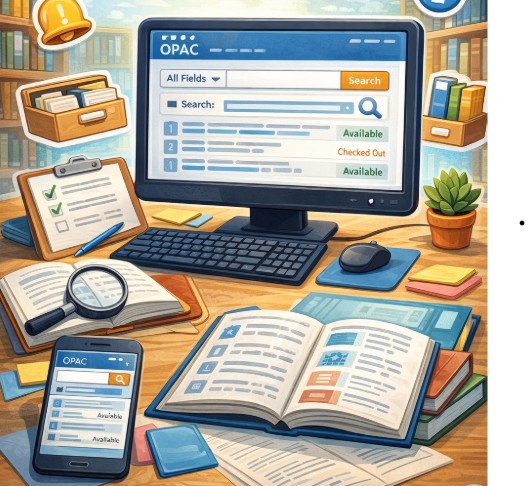
In modern libraries, especially with the development of digital systems like Online Public Access Catalogues (OPACs), the importance of the catalogue has grown significantly, making it an indispensable part of library services. One of its most crucial roles is to systematically organize information. Libraries often contain thousands or even millions of items, including books, journals, reports, and digital resources. Without a proper system of organization, managing and accessing these materials would be extremely difficult. The catalogue arranges resources using standardized bibliographic and classification systems, ensuring that every item has a unique identity and a defined place within the collection.
In addition to organization, the library catalogue facilitates easy and quick access to information. Instead of physically searching through shelves, users can simply enter a title, author name, or keyword into the catalogue and receive immediate results. For example, a student searching for materials on “customer behaviour analysis” can quickly retrieve a list of relevant books and articles along with their locations, saving time and effort. The catalogue also plays a crucial role in the accurate identification and selection of resources, as many items may have similar titles or multiple editions. Providing detailed bibliographic information helps users distinguish among these variations and select the most appropriate resource, especially in academic and research contexts.
The catalogue also supports resource discovery and exploration by allowing users to find related materials through subject headings and classification systems. For instance, while searching for a book on artificial intelligence, a user may discover additional resources on machine learning or data science, encouraging broader learning and deeper understanding. Another important function is providing availability and location information, which informs users whether a resource is available, issued, reserved, or restricted, and guides them to its exact location within the library using call numbers and section details. This feature is particularly valuable in large libraries, where locating a specific item without guidance would be challenging.
Modern library catalogues also enhance their importance by offering access to digital resources and user services. Users can access e-books, online journals, and databases directly through the catalogue, and they can perform actions such as renewing borrowed items, placing holds, and checking borrowing history. These features transform the catalogue into an interactive platform that supports both physical and digital library services. From a management perspective, the catalogue is equally important, as it enables librarians to track resources, manage circulation, and maintain proper organization within the collection.