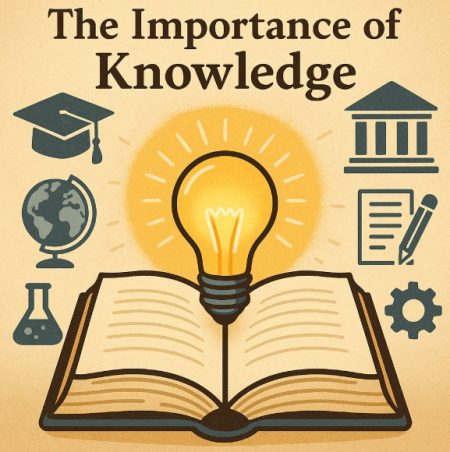
Knowledge is one of the most powerful human assets that shapes our understanding of the world and guides our actions in daily life. It refers not only to the collection of facts, information, and skills acquired through education and experience but also to the wisdom of applying them effectively in real situations. For example, medical knowledge enables doctors to diagnose diseases and save lives, while agricultural knowledge allows farmers to improve crop production and ensure food security. Knowledge helps individuals make informed decisions, solve problems, and adapt to new challenges, such as using financial literacy to manage personal budgets or applying digital skills to navigate modern workplaces. At a broader level, it empowers societies to innovate, progress, and achieve sustainable development. Historical examples, such as the Industrial Revolution fueled by scientific discoveries, or the role of knowledge in social reform movements like the campaign for universal education, show how knowledge has transformed communities. By bridging the gap between awareness and action, knowledge fosters empowerment, allowing people to exercise their rights, uplift others, and contribute meaningfully to the betterment of society. For instance, when citizens are aware of their legal rights, they can resist exploitation and demand justice, demonstrating how knowledge serves as a tool for both empowerment and positive change.
What Does It Mean to View Knowledge as a Tool for Empowerment?
Knowledge is not just a collection of facts or academic learning; it is a powerful tool that can shape lives, build confidence, and bring lasting transformation to individuals and communities. When we view knowledge as a tool for empowerment, we recognize its ability to give people control over their circumstances, help them make informed decisions, and provide the skills needed to overcome social, economic, and cultural barriers. Empowerment through knowledge is therefore both personal and collective, as it enhances individual capacities while also driving broader social and economic development.
- Knowledge as Personal Empowerment: On a personal level, knowledge provides the confidence and skills to live a more independent and fulfilling life. For example, financial knowledge teaches people how to manage income, plan savings, and avoid falling into debt traps. Without this knowledge, many individuals remain vulnerable to exploitation or financial instability. Similarly, digital knowledge allows people to access global opportunities such as online education, freelancing, or remote work, which were previously unavailable. By equipping individuals with these abilities, knowledge reduces dependency on others and fosters self-reliance, enabling people to take charge of their own lives.
- Knowledge as Social Empowerment: Beyond individual growth, knowledge also strengthens communities by creating awareness and solidarity. When people are aware of their rights, they become less vulnerable to injustice and can challenge unfair practices. For example, in many rural communities, health education campaigns about hygiene, safe drinking water, or vaccination have reduced preventable diseases and improved the quality of life. Knowledge also fosters social unity by spreading awareness of shared values and responsibilities. In this way, knowledge empowers groups of people to work collectively, solve local problems, and build stronger, more resilient communities.
- Knowledge and Economic Empowerment: Knowledge is also a driving force in economic empowerment. In the modern world, economies thrive on innovation, technology, and specialized skills. Farmers who receive training in sustainable agriculture techniques can increase crop yields, improve food security, and break the cycle of poverty. Similarly, entrepreneurs who understand business strategies and market trends are better positioned to create successful enterprises that generate employment. Knowledge in science and technology has opened opportunities in industries such as information technology, healthcare, and renewable energy, all of which are crucial for national and global development. Thus, knowledge acts as an engine of growth that uplifts individuals and entire societies economically.
- Knowledge for Positive Change: Perhaps the most powerful aspect of knowledge is its role in driving positive social change. Throughout history, social movements have relied on spreading knowledge to inspire action. For instance, the fight for universal education was built on the belief that literacy empowers people to participate in society and demand their rights. Women’s empowerment movements have also shown how knowledge about gender equality and legal rights can challenge traditional barriers and bring about reform. In today’s world, global campaigns on climate change rely heavily on knowledge-sharing to spread awareness and encourage responsible actions. These examples demonstrate that knowledge not only empowers individuals but also acts as a catalyst for reform and long-term sustainable progress.
To view knowledge as a tool for empowerment means understanding its transformative power to improve lives, strengthen communities, and drive innovation. It is not limited to formal education but extends to practical skills, cultural wisdom, and awareness of rights and responsibilities. Knowledge enables individuals to become independent, equips societies to resist inequality, and fuels economies to grow and prosper. Most importantly, it fosters positive change by inspiring collective action for justice, equality, and sustainability. In this sense, knowledge is not simply power; it is the foundation of empowerment and the key to building a better future.
How Can Knowledge Contribute to Both Personal and Collective Positive Change?
Knowledge is one of the most transformative forces in human life, shaping the way people think, act, and interact with the world around them. Its value extends far beyond academic achievement, as it equips individuals with the tools to navigate life’s challenges while enabling communities and societies to grow, innovate, and progress. By contributing to both personal and collective positive change, knowledge becomes the foundation of empowerment, resilience, and sustainable development.
At the personal level, knowledge helps individuals make informed choices, develop critical thinking, and build confidence. For example, health knowledge allows people to adopt healthy lifestyles, recognize early symptoms, and seek timely medical care. Financial literacy equips individuals to manage income, savings, and investments, helping them avoid poverty and dependence. Similarly, digital literacy opens doors to online education, remote employment, and entrepreneurship, creating opportunities that were previously inaccessible. In this way, knowledge transforms personal lives by fostering independence, self-reliance, and the ability to make wise decisions.
On a broader scale, knowledge drives collective change by building awareness, strengthening communities, and fostering shared responsibility. Communities with access to knowledge are better prepared to address common challenges together. Public awareness programs on sanitation, vaccination, or climate change have significantly improved public health and encouraged sustainable practices. Social knowledge also empowers groups to understand their rights, demand justice, and advocate for better policies. Thus, knowledge generates a ripple effect, where individual learning expands into community development and wider social progress.
Collectively, knowledge is also the driving force behind innovation and economic growth. Societies that invest in education and research often lead in science, technology, and industry. For instance, countries prioritizing STEM education and technological innovation create jobs, improve productivity, and strengthen their economies. At the global level, sharing knowledge has led to breakthroughs in medicine, renewable energy, and environmental sustainability. These developments demonstrate how knowledge not only transforms individual lives but also addresses pressing global challenges that require collective solutions.
Another important role of knowledge lies in its ability to promote justice and equality. Awareness of human rights empowers marginalized groups to resist exploitation and overcome discrimination. Literacy movements around the world have enabled disadvantaged communities to break cycles of poverty by gaining access to education, employment, and political participation. Knowledge of laws and governance also helps citizens hold institutions accountable and demand fairness. In this way, knowledge fosters more inclusive and just societies, where equity and empowerment can flourish.
Why Is Knowledge Often Described as “Power” in the Context of Social Development?
Why Is Knowledge Often Described as “Power” in the Context of Social Development?
The phrase “knowledge is power” has been used for centuries to highlight the transformative role of knowledge in shaping individuals and societies. In the context of social development, this idea becomes even more relevant, as knowledge is the key driver of progress, equality, and empowerment. It allows people to understand their environment, make informed choices, and collectively work toward improving their living conditions. By bridging the gap between awareness and action, knowledge serves as a powerful force that not only uplifts individuals but also reshapes communities and nations.
Knowledge as a Foundation for Informed Decision-Making
One of the primary reasons knowledge is seen as power is that it equips people with the ability to make sound decisions. When individuals are aware of their rights, health practices, or financial management strategies, they are less vulnerable to exploitation and more capable of shaping their futures. For example, communities educated about the benefits of vaccination are better protected from disease, while citizens who understand their legal rights can demand justice. Knowledge, therefore, acts as a shield, providing people with the strength to make informed choices that directly affect their well-being.
- Knowledge and Social Awareness: Knowledge is also powerful because it raises awareness about social issues and challenges. Societies often face inequalities, injustices, and systemic barriers that persist due to ignorance or lack of information. Education and awareness campaigns, such as those promoting gender equality, environmental conservation, or literacy, empower communities to question existing norms and demand change. For instance, knowledge about the harmful effects of child marriage or gender-based violence has led to strong advocacy and reforms in many parts of the world. In this way, knowledge empowers people to challenge injustice and work collectively for social betterment.
- Knowledge as a Driver of Innovation and Development: In the modern era, knowledge fuels innovation, technology, and economic development. Countries that invest in education, research, and information sharing are often more advanced in science, health, and industry. Knowledge in agriculture has helped farmers adopt sustainable practices, reducing hunger and poverty. Similarly, technological knowledge has transformed industries and created new opportunities for employment and growth. These examples show that knowledge acts as power by driving development and improving the quality of life for entire societies.
- Knowledge and Collective Empowerment: Another dimension of knowledge as power lies in its ability to unite people for a common cause. When individuals share knowledge, they can mobilize communities, influence public opinion, and demand reforms. Historical social movements, such as the fight for civil rights, women’s suffrage, or universal education, were driven by the spread of knowledge and awareness. Knowledge empowers citizens to participate actively in governance and hold authorities accountable, making it an essential tool for democratic and inclusive development.
Knowledge is often described as “power” in social development because it equips individuals with the tools to make informed choices, challenges inequality, fuels innovation, and inspires collective action. It transforms ignorance into awareness, vulnerability into strength, and passivity into participation. In every sphere of social progress, whether education, health, economy, or governance, knowledge acts as the driving force behind sustainable and meaningful change. Thus, in the journey of social development, knowledge is not only power but also the foundation upon which empowerment and progress are built.
How Do Libraries and Information Centers Contribute to Knowledge Empowerment?
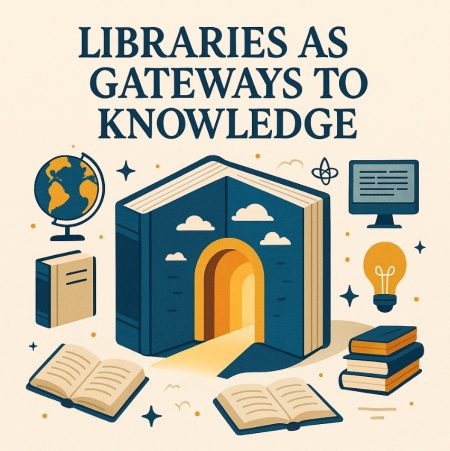
Libraries and information centers have long been recognized as gateways to knowledge, serving as vital institutions that empower individuals and communities through access to information. In today’s information-driven world, their role goes far beyond storing books; they provide opportunities for learning, digital access, skill development, and social inclusion. By democratizing access to knowledge and ensuring that information is available to all, libraries and information centers act as powerful tools for empowerment and positive change.
One of the most significant ways libraries empower people is by offering free and equitable access to information. Through books, journals, databases, and digital resources, individuals gain the knowledge they need for academic, professional, and personal growth. Students depend on libraries to access course materials and research papers, while professionals consult information centers for specialized knowledge. This open access breaks down barriers and ensures that knowledge is not restricted to only privileged groups.
In the modern age, libraries also play a crucial role in promoting digital literacy and bridging the digital divide. Many communities, especially in developing regions, struggle with limited access to technology and the internet. Libraries help bridge this gap by providing computers, internet services, and training programs that build digital skills. Public libraries offering workshops on computer use, online safety, or digital research empower individuals to participate in today’s digital economy and knowledge society. Beyond formal education, libraries foster lifelong learning by encouraging people of all ages to seek knowledge continuously. From literacy programs for children to research assistance for scholars, libraries provide resources and activities that support ongoing growth. Workshops, seminars, and training sessions on topics such as career development, entrepreneurship, or health awareness further help people adapt and thrive throughout their lives.
Another important contribution of libraries is the preservation and dissemination of knowledge and cultural heritage. Archives, manuscripts, rare books, and digital repositories safeguard the intellectual and cultural history of societies. By making these resources accessible, libraries keep communities connected to their heritage while allowing future generations to learn from past experiences. This preservation ensures that knowledge continues to empower across time. Libraries also serve as inclusive spaces where people from diverse backgrounds come together to learn and share ideas. They extend resources and services to marginalized groups, such as women, rural populations, and persons with disabilities, ensuring that no one is excluded from the benefits of knowledge. Community programs such as literacy classes, health awareness campaigns, and career guidance further empower people to improve their lives and contribute to society. By fostering inclusivity, libraries strengthen social bonds and support community development.
For researchers, academics, and professionals, libraries act as engines of innovation. With access to specialized databases, journals, and reference materials, scholars are able to conduct high-quality research, develop solutions, and contribute new knowledge. Academic libraries, in particular, empower faculty and students by providing the tools necessary to advance science, technology, and social development.
How Can Knowledge Help Marginalized Communities Overcome Barriers and Inequalities?
Marginalized communities across the world often face systemic barriers that limit their opportunities in education, employment, healthcare, and participation in decision-making. These inequalities are rooted in social, cultural, and economic structures that exclude certain groups from mainstream development. Knowledge, however, serves as a powerful tool to break down these barriers and empower disadvantaged populations. By creating awareness, building skills, and enabling access to resources, knowledge transforms vulnerability into strength and inequality into opportunity.
- Education as a Pathway to Empowerment: Education is one of the most direct ways in which knowledge helps marginalized communities overcome barriers. Literacy and learning provide individuals with the ability to communicate, access information, and participate actively in society. For instance, literacy programs in rural areas of Bangladesh and India have enabled women to gain employment, start businesses, and advocate for their children’s education. By equipping people with basic and advanced learning opportunities, knowledge reduces dependency, promotes economic independence, and creates pathways to upward mobility.
- Legal Awareness and Rights Protection: Another important dimension of knowledge is awareness of rights and legal frameworks. Many marginalized communities remain vulnerable to exploitation because they are unaware of their rights related to land, wages, healthcare, or political representation. Knowledge of legal protections empowers people to demand fair treatment and hold institutions accountable. For example, awareness campaigns about labor rights have helped informal workers and farmers fight against unfair wages and unsafe working conditions. Similarly, human rights education empowers women and minorities to challenge discriminatory practices and advocate for equality.
- Health Knowledge for Better Living: Access to health-related knowledge plays a critical role in reducing inequalities. Marginalized groups often suffer higher rates of disease and malnutrition due to a lack of awareness about healthcare practices and preventive measures. When communities are educated about sanitation, nutrition, reproductive health, and vaccination, they are better able to protect themselves and improve overall well-being. For instance, health education programs in sub-Saharan Africa have significantly reduced maternal and child mortality rates by teaching mothers about safe childbirth practices and child nutrition. Such knowledge helps break cycles of poor health that reinforce poverty and exclusion.
- Digital Literacy and Inclusion: In the modern world, digital knowledge is an essential tool for empowerment. Many marginalized communities are excluded from opportunities simply because they lack access to digital technology and the skills to use it effectively. Libraries, NGOs, and community centers that provide training in computer literacy, online communication, and digital finance create new opportunities for these populations. For example, initiatives in South Asia that train rural women in digital platforms have allowed them to sell handmade goods online, access financial services, and connect with wider markets. Digital knowledge not only opens economic opportunities but also strengthens social inclusion by giving communities a voice in the digital age.
- Knowledge for Community Mobilization: Beyond individual empowerment, knowledge strengthens collective action within marginalized groups. When communities understand their challenges and the means to address them, they can mobilize and work toward common goals. Knowledge-sharing networks, community education programs, and grassroots campaigns enable people to pool resources and demand systemic change. Movements for land reform, gender equality, or environmental protection often succeed because of widespread awareness and collective knowledge within communities.
Knowledge is one of the most powerful instruments for overcoming barriers and inequalities faced by marginalized communities. Through education, legal awareness, health information, digital inclusion, and collective empowerment, knowledge provides the foundation for justice, opportunity, and social transformation. By turning awareness into action, it enables disadvantaged groups to challenge discrimination, access resources, and create better futures. Ultimately, knowledge transforms marginalized communities from passive recipients of aid into active agents of change, ensuring a more inclusive and equitable society.
How Can Sharing Indigenous or Traditional Knowledge Bring Positive Change in Society?
Sharing indigenous or traditional knowledge can bring significant positive change in society by preserving cultural identity, promoting sustainable practices, and strengthening community resilience. Indigenous knowledge, passed down through generations, embodies a deep understanding of local environments, ecosystems, and social values that modern systems often overlook. For example, traditional agricultural practices, such as crop rotation and organic farming methods used by indigenous farmers, provide sustainable alternatives to modern techniques that heavily rely on chemicals and harm the environment. Similarly, indigenous medicinal knowledge, based on herbs and natural remedies, has contributed to modern healthcare by offering effective treatments and guiding scientific research into new medicines.
Beyond practical benefits, sharing traditional knowledge helps preserve cultural heritage and fosters respect for diversity. Communities that value their indigenous traditions maintain stronger social cohesion and a sense of identity, which are essential for empowerment. For instance, storytelling, folk art, and oral histories not only transmit wisdom but also strengthen intergenerational bonds, ensuring that cultural values are not lost. Moreover, incorporating indigenous perspectives into education and policy-making encourages inclusivity and acknowledges the contributions of marginalized groups.
Traditional knowledge also plays a crucial role in addressing global challenges such as climate change. Indigenous communities, with their long-standing connection to nature, often use practices like water conservation, forest management, and biodiversity protection that align with modern sustainability goals. By integrating such knowledge into national and international strategies, societies can develop more effective and environmentally responsible solutions.
How Can Knowledge of Laws and Rights Empower Citizens to Fight for Justice?
Knowledge of laws and rights is one of the most powerful tools that citizens can use to fight for justice and equality in society. When individuals understand the legal framework that governs their lives, they are better equipped to recognize injustice, resist exploitation, and demand accountability. For example, workers who are aware of labor laws can challenge unfair wages or unsafe working conditions, while women who understand their rights to property, education, or protection from violence are able to seek legal remedies against discrimination. This awareness transforms people from passive victims into active participants in the pursuit of justice.
Moreover, knowledge of laws fosters confidence and encourages civic participation. Citizens who know their constitutional rights, such as freedom of speech, the right to education, or the right to a fair trial, can speak out against corruption and demand transparent governance. Public awareness campaigns about legal rights, such as those addressing domestic violence or child marriage, have empowered many vulnerable groups to take action and seek legal protection. By bridging the gap between authority and ordinary citizens, legal knowledge ensures that power is not concentrated in the hands of a few but is accessible to all.
In addition, awareness of rights promotes social justice by fostering collective action. Communities that understand their legal entitlements often unite to campaign for reforms, whether in education, healthcare, or environmental protection. For instance, grassroots movements led by citizens who are aware of land rights have successfully prevented unlawful evictions and preserved community resources. This collective empowerment strengthens democracy, reduces inequality, and ensures that laws serve the people they are meant to protect.