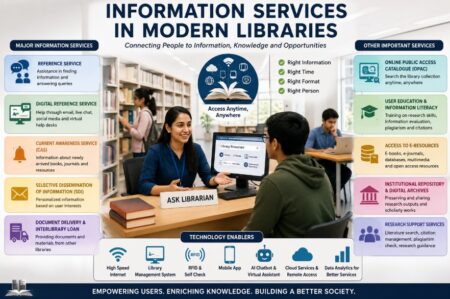
Digital information services in libraries represent a significant shift in how libraries provide access to resources and support user needs. Traditionally, libraries were physical spaces filled with printed materials, such as books, journals, and magazines. However, with the advent of digital technology, libraries have embraced electronic systems and online resources to expand their reach and enhance service delivery. Digital information services encompass the use of technologies like the internet, digital catalogs, electronic databases, e-books, and online reference tools to provide convenient access to information.
These services offer users the ability to access resources remotely and streamline library operations, making information retrieval faster, more efficient, and accessible 24/7. By integrating digital technologies, libraries can serve a wider audience, break down geographical barriers, and provide diverse forms of information, from academic research to multimedia content. In this evolving digital landscape, libraries continue to adapt, embracing innovations that help them fulfill their mission of supporting learning, research, and lifelong education in a digital world.
The Role of Digital Information Services in Modern Libraries
In today’s rapidly evolving information landscape, libraries are no longer confined to the traditional model of physical spaces filled with books and journals. With the advent of digital technologies, libraries have embraced digital information services, transforming into dynamic hubs that provide efficient access to vast arrays of resources. These digital services have revolutionized library operations, making them more accessible, efficient, and inclusive. This article explores the critical role that digital information services play in modern libraries and how they contribute to the transformation of library services in the digital age.
- Expanding Access to Information: One of the most significant roles of digital information services in modern libraries is expanding access to information. Traditionally, library users had to visit physical spaces to access resources such as books, journals, and other materials. However, with the rise of digital technologies, libraries have been able to provide access to digital collections, including e-books, e-journals, multimedia files, and academic databases. Digital information services allow users to access these resources remotely, at any time and from anywhere, breaking down barriers posed by geographical location, time constraints, or limited library hours.
Online Public Access Catalogs (OPACs) and digital catalogs have become essential tools for users to search for and access library materials. Through these systems, library users can conduct searches, place holds, and even check the availability of resources without needing to visit the library physically. As a result, information that was once confined to physical collections is now available on demand, ensuring that users can access critical information regardless of their location. - Remote Access to Library Resources: Another important feature of digital information services is the facilitation of remote access. With the integration of systems like OpenAthens, VPNs, and other authentication technologies, libraries can extend access to their digital collections beyond the physical campus. This is particularly beneficial for academic institutions where students, faculty, and researchers need to access resources for research, coursework, and personal study. Remote access ensures that users can continue their work from home, on the go, or during off-peak hours, eliminating the need for on-site visits to access critical resources.
The ability to access information remotely allows libraries to serve a broader audience, including distance learners, researchers in remote locations, and users who may have physical disabilities that make it difficult for them to visit the library in person. By offering these services, libraries can ensure inclusivity and equal access to information for all users, regardless of their physical location or personal circumstances. - Streamlining Library Management: Digital information services also play a key role in improving the efficiency of library operations. Traditional library management processes, such as cataloging, tracking resource usage, and managing circulation, were often time-consuming and labor-intensive. However, digital tools and systems such as Integrated Library Management Systems (ILMS) have streamlined these operations. These systems allow library staff to catalog resources electronically, track book loans, manage reservations, and maintain records more accurately and efficiently. By utilizing digital tools, libraries can also automate certain administrative tasks, freeing up staff to focus on more critical functions such as user support, resource development, and community engagement. This improves operational efficiency and enhances the overall user experience, as patrons can easily access resources and services without unnecessary delays or complications.
- Supporting Academic and Research Endeavors: Digital information services have become indispensable for academic and research support in libraries. Libraries offer access to specialized digital databases, academic journals, and other online resources that are crucial for research and scholarly activity. Resources like JSTOR, Scopus, PubMed, and other subject-specific repositories provide users with comprehensive access to peer-reviewed articles, research papers, and scholarly publications that are essential for academic and professional development. Moreover, libraries are increasingly maintaining institutional repositories where scholarly work, including theses, dissertations, and faculty research, is stored digitally. These repositories ensure that academic contributions from the institution are preserved and can be accessed by future generations of scholars, researchers, and students. This digital infrastructure enhances the quality of academic research by providing easier access to essential information and supporting the collaborative nature of scholarly work.
- Ensuring Digital Preservation: In addition to providing access to digital resources, libraries play a crucial role in digital preservation. Many libraries have digitized rare books, historical documents, manuscripts, and other materials to ensure their long-term preservation and continued accessibility. Digital preservation not only safeguards these resources from deterioration but also makes them accessible to a broader audience, especially in the case of materials that are too fragile or rare to be frequently handled in physical form.
Digital archiving also plays an important role in preserving the academic output of universities and institutions. Through institutional repositories, libraries can ensure that faculty research, student theses, and institutional publications remain accessible for years to come, contributing to the continuity of academic scholarship. - Enhancing User Engagement and Support: Digital information services also enhance user engagement and support through online reference services, chatbots, virtual consultations, and email support. These services allow users to ask questions, seek help with research, and resolve issues without having to visit the library in person. Virtual reference desks and digital support services make library staff more accessible to users and provide immediate assistance to resolve their queries, improving the overall user experience. Furthermore, the implementation of AI-powered tools such as chatbots has allowed libraries to provide instant, 24/7 support to users. These intelligent systems can help users navigate the library’s resources, recommend relevant materials, and even answer common questions about library policies and services. By integrating such digital tools, libraries are better equipped to meet the growing expectations of tech-savvy users.
Looking ahead, digital information services will continue to evolve as new technologies emerge. Libraries are likely to adopt even more sophisticated tools, such as artificial intelligence (AI) for resource management and personalized recommendations, big data for advanced analytics, and cloud computing to provide seamless access to resources across platforms. The continued integration of these technologies will further enhance library services, making them more responsive, user-friendly, and accessible.
Digital information services have become an integral part of modern libraries, playing a key role in enhancing access to information, improving operational efficiency, supporting academic research, and engaging users in meaningful ways. As libraries continue to embrace digital technologies, they will remain at the forefront of information access and knowledge dissemination, ensuring that they meet the evolving needs of their communities in an increasingly digital world.
How Digital Information Services Improve Access to Library Resources for Users
Digital information services have dramatically transformed the way library resources are accessed, offering users unprecedented levels of convenience and flexibility. By integrating digital technologies into their operations, libraries can now provide access to vast resources that were once confined to physical locations, making them more accessible to a broader range of users. These services facilitate easier, faster, and more efficient access to materials, overcoming many of the limitations associated with traditional library systems.
One of the most significant ways digital information services improve access is by enabling remote access to library resources. Users no longer need to be physically present in the library to access materials. Through systems like OpenAthens, VPNs, and online platforms, users can access e-books, academic journals, databases, and other digital resources from any location with an internet connection. This flexibility is especially valuable for students, researchers, and faculty members who need access to academic materials while working remotely or traveling.
Another key improvement is the implementation of online catalogs and advanced search tools, which make it much easier for users to search and locate specific resources. Traditional card catalogs have been replaced by Online Public Access Catalogs (OPACs), which allow users to search for books, articles, and multimedia resources using keywords, author names, or topics. These systems streamline the search process and help users find the materials they need quickly and efficiently, without needing to physically browse shelves or wait for library staff to assist them.
Digital information services also provide users with 24/7 access to resources. Unlike physical materials that require users to visit the library during operating hours, digital content—such as e-books, academic papers, and online journals—can be accessed at any time, from anywhere. This round-the-clock availability ensures that users can engage with library resources at their convenience, whether they are working late into the night, studying over the weekend, or in different time zones. The ability to access resources on demand supports flexible learning and research, catering to users with different schedules and needs. Moreover, digital information services enhance resource discovery through personalized recommendations and advanced filtering options. Many library systems now incorporate algorithms that suggest resources based on a user’s past searches or areas of interest, making it easier for users to find relevant materials. Filtering options allow users to narrow their search results by resource type, subject, or access restrictions, which helps them quickly pinpoint the most useful content for their research or studies.
The integration of digital archives and institutional repositories has expanded the scope of available materials. Libraries now provide access to digital collections that include not only contemporary resources but also historical documents, rare manuscripts, and archival materials that would otherwise be difficult to access. These repositories ensure that valuable academic work and historical records are preserved digitally and made available to a wider audience, thereby enriching the diversity and depth of resources accessible to users. User-friendly interfaces in digital information services make it easier for individuals to navigate library resources. Whether accessing an e-book, searching for a research article, or browsing multimedia materials, the simplified and intuitive design of many digital platforms reduces barriers to access, ensuring that users, regardless of their technological expertise, can effectively use the library’s digital tools. These interfaces are designed to provide clear navigation, streamlined searches, and efficient resource management, further enhancing the user experience.
Digital information services have greatly improved access to library resources by enabling remote access, enhancing search capabilities, providing 24/7 availability, and offering user-friendly platforms. These advancements make information more readily available and help libraries serve a larger, more diverse audience. As digital technologies evolve, these services will likely become even more integral to how libraries operate, further improving access to knowledge and resources for all users.
Types of Digital Resources Typically Offered Through Library Digital Information Services
With the rapid advancement of technology, libraries have evolved from traditional repositories of printed materials into dynamic centers offering a wealth of digital resources. These resources are made available through digital information services that enhance the accessibility, flexibility, and scope of library collections. By leveraging online platforms and digital tools, libraries can now offer a diverse range of materials that can be accessed remotely, anytime, and from anywhere. Below are some of the most common types of digital resources offered through library digital information services:
- E-books: E-books are one of libraries’ most widely offered digital resources. These digital versions of traditional print books can be accessed on various devices such as computers, e-readers, tablets, and smartphones. Libraries typically offer e-books across a wide range of genres, including fiction, non-fiction, academic texts, and reference materials. Access to e-books allows users to read books without needing a physical copy, allowing for flexibility in terms of location and time.
- E-journals: E-journals are digital versions of academic and scholarly journals that can be accessed through library databases. These digital publications provide access to peer-reviewed articles, research papers, case studies, and other scholarly materials. By offering e-journals, libraries enable researchers, students, and faculty to stay up-to-date with the latest developments in various fields, without the limitations of physical copies or restricted access. Popular platforms for e-journals include JSTOR, SpringerLink, and Elsevier’s ScienceDirect.
- Online Databases: Online databases are essential digital resources offered by libraries, providing access to a wide variety of information, including academic research, statistical data, industry reports, and other specialized content. Databases are often subject-specific, allowing users to access materials related to specific disciplines such as medicine, engineering, law, or business. Examples include PubMed for health and life sciences, IEEE Xplore for engineering and technology, and ProQuest for general academic research.
- Digital Archives and Institutional Repositories: Digital archives and institutional repositories house collections of digitized historical documents, manuscripts, theses, dissertations, and other research outputs. These resources preserve valuable academic and cultural materials, ensuring that they remain accessible for future generations. Institutional repositories also serve as platforms for storing and disseminating the scholarly works of a university’s faculty and students. Examples include DSpace and Fedora systems used by many universities to host their repositories.
- Multimedia Resources: Libraries also offer access to multimedia resources, which include digital videos, audio recordings, images, and interactive content. These resources can be useful in a variety of educational contexts, providing users with access to instructional videos, documentaries, podcasts, and visual media. Many libraries offer digital collections of historical films, public lectures, and music archives, providing a richer learning experience.
- Digital Reference Materials: Digital reference materials are specialized resources designed to assist with research and information discovery. These include digital encyclopedias, dictionaries, handbooks, manuals, and guides. Libraries offer access to a range of online reference tools such as Oxford English Dictionary, Britannica Online, and Cambridge Handbook series, which provide authoritative information across various fields of study.
- Online Course Materials and Open Educational Resources (OER): Many libraries offer access to open educational resources (OER), which are freely available educational materials that can be used, modified, and shared by educators and students. These materials may include textbooks, lecture notes, quizzes, and interactive learning modules. Libraries may also host online courses or provide links to Massive Open Online Courses (MOOCs) from platforms like Coursera, edX, or Udemy.
- Digital Newspapers and Magazines: Digital subscriptions to newspapers and magazines are another valuable resource provided by libraries. Access to online newspapers such as The New York Times, The Guardian, or The Washington Post, as well as digital magazines like Time, National Geographic, and The Economist, allows users to stay informed with current events, research, and industry trends. Libraries may offer access to digital versions of publications through platforms like PressReader or EBSCOhost.
- Statistical and Government Data: Libraries often provide access to digital collections of statistical data and government publications. These resources can include national statistics, economic data, demographic reports, and policy documents. Libraries typically subscribe to databases like Statista, World Bank Data, and United Nations Data, enabling users to access reliable and up-to-date statistical information for research and analysis.
- Software and Research Tools: Many libraries provide access to software and research tools to support academic work. This may include software for statistical analysis, such as SPSS or R, citation management tools like EndNote or Zotero, and specialized research software for fields like data science, graphic design, or engineering. Access to these tools through library digital information services provides users with the resources they need for academic and professional success.
Digital information services have greatly expanded the range of resources libraries offer to users. From e-books and e-journals to online databases, digital archives, and multimedia materials, these services provide users with instant access to a wide variety of information across numerous disciplines. The ability to access these resources remotely, at any time, and from any device, enhances the flexibility and convenience of library services, supporting the research, learning, and informational needs of diverse user groups. As technology continues to advance, libraries will likely continue to expand their digital offerings, further enhancing their role as critical centers for learning and knowledge dissemination.
Ensuring Equitable Access to Digital Information Services for All Users, Including Remote Users
Ensuring equitable access to digital information services for all users, including remote users, is a critical function of modern libraries. As libraries increasingly rely on digital resources, removing barriers preventing access for all individuals, regardless of location, socioeconomic status, or technological proficiency, is essential. One of the most important ways libraries can ensure equitable access is by offering remote access to digital resources such as e-books, e-journals, and online databases. Through platforms like OpenAthens and VPNs, libraries enable users to access subscription-based resources from anywhere, overcoming the need to physically visit the library. In addition to remote access, libraries provide comprehensive user support through virtual help desks, online tutorials, and live chat services, ensuring that users can troubleshoot and navigate digital platforms, especially when they encounter technical difficulties.
Addressing the digital divide is another key consideration. Many users, particularly those in underserved communities, may lack reliable internet access or personal devices. Libraries can mitigate this gap by offering technology access in the form of loaned devices such as laptops, tablets, and Wi-Fi hotspots, which users can borrow to access resources from home. Furthermore, libraries continue to provide public access to computers and internet services at their physical locations, ensuring that those without home access can still benefit from digital services. To be truly inclusive, libraries must also ensure their digital services are accessible to individuals with disabilities. This can be achieved by adopting accessible platforms and providing assistive technologies such as screen readers and text-to-speech software, enabling individuals with visual impairments to fully engage with library resources.
Ensuring equitable access also requires libraries to provide free and open access to resources, particularly for those who cannot afford subscription-based services. Libraries can enhance this by offering open-access resources and promoting materials available in the public domain. Additionally, libraries should focus on providing digital literacy training to help users navigate digital platforms effectively. Many users, especially from lower-income or older generations, may lack the skills to use these tools proficiently. Offering workshops, training sessions, and one-on-one support allows libraries to empower users and equip them with the skills they need to engage with digital resources.
Libraries also play a key role in promoting multilingual services to reach diverse populations. By offering resources in multiple languages, libraries can ensure that non-native speakers or communities with linguistic diversity can access the same digital services and materials as everyone else. Finally, libraries can collaborate with community organizations to increase awareness of digital resources and extend their reach to underserved populations. Through partnerships, libraries can better understand the specific access needs of their community and develop programs that provide tailored support.
How Digital Information Services in Libraries Support Research and Academic Work
Digital information services in libraries play a pivotal role in supporting research and academic work by providing users with convenient and efficient access to a wide range of resources and tools. These services enable researchers, students, and faculty members to access scholarly materials that are essential for academic success. One of the most significant ways digital information services support research is through the provision of online databases and e-journals. Libraries offer access to a vast array of academic journals, peer-reviewed articles, and research papers, which are crucial for staying updated with the latest developments in specific fields of study. Platforms like JSTOR, PubMed, ScienceDirect, and ProQuest give users the ability to search, access, and download relevant articles and publications, which are integral for producing high-quality research and academic work.
In addition to research articles, e-books and digital reference materials are increasingly being offered as part of library digital services. These resources include textbooks, scholarly books, and encyclopedias that are available in digital formats, making them more accessible and easier to search compared to traditional print versions. By offering e-books and digital reference materials, libraries support academic work by providing researchers with immediate access to comprehensive resources, often with features like keyword search and digital annotations that enhance the research process.
Institutional repositories and digital archives are crucial elements of library digital information services supporting research. Libraries often maintain repositories of theses, dissertations, faculty research, and other academic works that are freely accessible to students, faculty, and researchers. These digital archives preserve valuable scholarly contributions and make them available for wider dissemination, allowing others in the academic community to build upon existing knowledge. This creates a culture of open research and collaboration, where academic work can be shared and easily accessed by a global audience.
Digital information services also support research through remote access to library resources. Researchers and students can access digital resources from anywhere in the world, whether they are on campus or working remotely. Tools like VPNs, OpenAthens, and web-based library systems enable users to access subscription-based databases and other library materials without being physically present in the library. This flexibility enhances the ability of academic users to conduct research without time or geographical constraints, making academic work more efficient and accessible. Furthermore, digital information services provide researchers with access to specialized research tools that facilitate the research process. Many libraries offer access to citation management software like EndNote, Mendeley, or Zotero, which help researchers organize their sources and manage citations. These tools are essential for maintaining proper citation practices and ensuring academic integrity in research. Additionally, libraries may provide access to data analysis software, statistical tools, and other specialized programs that are necessary for processing and analyzing data, enhancing the research process across a wide range of disciplines.
Digital information services in libraries are fundamental to supporting research and academic work. By providing access to a wide variety of digital resources, including e-journals, e-books, institutional repositories, and specialized research tools, libraries enable researchers to access the materials they need quickly and efficiently. The ability to access resources remotely, combined with the tools and support provided by libraries, fosters a productive research environment that enhances academic achievement and promotes scholarly collaboration. As technology continues to evolve, libraries will continue to play a crucial role in supporting and advancing research and academic work.
How Libraries Manage and Organize Digital Resources to Facilitate Easy Retrieval by Users
As libraries increasingly move into the digital age, managing and organizing digital resources has become a fundamental task to ensure that users can easily find, access, and utilize a wealth of information. Libraries are tasked with organizing a vast array of digital materials, including e-books, journals, multimedia files, and other scholarly resources, in ways that maximize accessibility and retrieval efficiency. To achieve this, libraries employ a combination of advanced technologies, strategic classification systems, and user-centered approaches that allow for smooth and effective searching and retrieval. Let’s explore libraries’ methods and tools to manage and organize their digital collections.
- Online Public Access Catalogs (OPACs): The heart of digital resource management in libraries is the Online Public Access Catalog (OPAC). OPACs are web-based systems that allow users to search for and access library materials, including digital resources like e-books, journal articles, and multimedia files. These catalogs offer powerful search functionalities that allow users to filter results based on keywords, author names, publication dates, and more. By using metadata—descriptive information about each resource—OPACs help libraries categorize and index digital content in a way that makes it easy for users to find the resources they need. Metadata includes crucial details like the title, author, subject, publication year, and format of digital items, enabling users to conduct simple or advanced searches for the materials most relevant to their needs.
- Classification Systems and Taxonomies: To further organize and streamline access to digital resources, libraries apply classification systems such as the Dewey Decimal Classification (DDC) or Library of Congress Classification (LCC). These systems group resources based on subject areas, helping to categorize digital collections in a way that makes sense to users. By organizing materials into broad subject categories (e.g., science, literature, history) and subcategories, these classification systems make it easier for users to browse and discover related content. For example, if a user is researching a specific topic like “quantum physics,” the library’s digital resources on the subject can be organized under the science section, enabling the user to locate related materials efficiently. Classification systems are applied consistently to both physical and digital collections, providing a familiar framework for users and ensuring seamless navigation across diverse resources.
- Digital Asset Management (DAM) Systems: In addition to traditional cataloging and classification methods, libraries increasingly rely on Digital Asset Management (DAM) systems to manage digital resources, particularly multimedia materials like images, videos, and audio files. DAM systems provide a centralized platform for organizing, storing, and retrieving various types of digital assets. These systems are equipped with sophisticated features for tagging, categorizing, and indexing digital content, making it easy for users to search and filter assets based on specific attributes like file type, resolution, or subject matter. Libraries that house large collections of multimedia materials, such as art galleries, historical photo archives, or video recordings, often use DAM systems to ensure these resources are well-organized and easily accessible.
- Institutional Repositories and Digital Archives: Libraries also manage scholarly content through institutional repositories and digital archives, which store academic work produced by faculty, students, and researchers. These digital repositories house a range of materials, including theses, dissertations, research papers, and conference proceedings, providing an accessible platform for both the institution’s academic community and the broader public. These repositories often use specialized software, such as DSpace or Fedora, to store and organize these materials. Content is typically indexed and organized by discipline or department, making it easier for researchers to locate relevant works in their field. Furthermore, digital archives preserve historical documents, rare books, manuscripts, and other valuable materials, ensuring they remain accessible and protected for future generations.
- Digital Rights Management (DRM) Systems: While organizing digital content is vital, protecting it is equally important. Digital Rights Management (DRM) systems help libraries manage access to licensed digital resources, such as e-books, e-journals, and multimedia content. DRM technologies enable libraries to control the usage and distribution of digital materials, ensuring compliance with copyright laws and licensing agreements. These systems may include features like restricting the number of downloads, printing, or sharing permissions, helping libraries maintain secure access while preventing unauthorized distribution of copyrighted content. DRM plays an important role in balancing accessibility with the protection of intellectual property, ensuring that digital resources are used appropriately and in accordance with library agreements.
- User-Friendly Interfaces and Search Features: Another critical aspect of managing digital resources is providing user-friendly interfaces that facilitate easy navigation and retrieval. Modern library websites and digital platforms are designed with intuitive interfaces that allow users to browse, search, and access digital resources without the need for extensive technical knowledge. Features such as advanced search options, filters, and personalized user accounts make it easy for users to find the resources they need. For example, advanced search tools allow users to filter results by publication year, subject, author, or resource format (e.g., e-books, articles, videos), while recommendation systems suggest relevant materials based on previous searches. By providing these tools, libraries make digital resources more accessible to a wider audience, improving the overall user experience.
- Cloud Storage and Distributed Systems: To manage the increasing volume of digital content, libraries often turn to cloud storage and distributed systems. Cloud-based storage provides libraries with scalable solutions to store vast amounts of digital resources without the limitations of physical space. Cloud platforms also support remote access, ensuring that users can retrieve digital content from anywhere with an internet connection. Distributed systems enable libraries to store content across multiple servers or locations, ensuring redundancy and minimizing the risk of data loss. Cloud storage offers significant benefits in terms of flexibility, accessibility, and cost-effectiveness, making it a preferred solution for managing and organizing large digital collections.
- Continuous Maintenance and Updates: Libraries ensure that digital resources remain organized and up-to-date through continuous maintenance. Regular updates and cataloging processes are crucial to ensure that newly acquired digital resources are added to the library’s collection in an organized manner. This ongoing maintenance helps prevent outdated or broken links, ensures that new metadata is accurately applied, and keeps digital content relevant for users. By regularly updating their systems and content, libraries can guarantee that their digital collections are always accessible and aligned with current academic or research needs.
Libraries use a variety of strategies and technologies to manage and organize digital resources, ensuring that users can easily retrieve and access the information they need. By implementing OPACs, classification systems, DAM systems, and digital repositories, libraries organize their vast digital collections to maximize discoverability and accessibility. The use of DRM systems and cloud storage further enhances the security and efficiency of digital resource management, while user-friendly interfaces and advanced search features improve the overall experience for users. As the volume and variety of digital content continue to grow, libraries will continue to refine their methods of organizing and managing these resources to ensure that they remain valuable and accessible tools for research, learning, and discovery.
How Digital Information Services Are Shaping the Future of Libraries
Digital information services are fundamentally reshaping the landscape of libraries, pushing them beyond their traditional roles and turning them into dynamic hubs of knowledge, collaboration, and digital engagement. As technology continues to evolve, libraries are embracing these innovations, integrating digital tools and services that provide users with enhanced access to information, improved learning experiences, and streamlined management of resources. This digital transformation is about adopting new technologies and rethinking how libraries can best serve their communities in the 21st century.
One of the most significant ways digital information services are shaping the future of libraries is by dramatically expanding access to resources. Traditionally, libraries were constrained by physical space and limited operating hours, but digital services have eliminated many of these barriers. With the rise of digital catalogs, online databases, and e-resources such as e-books, academic journals, and multimedia materials, users can now access library resources 24/7 from anywhere with an internet connection. This has made libraries far more accessible to remote users, students, and researchers who may not be able to visit in person, effectively democratizing access to knowledge and learning opportunities across the globe.
In addition to broadening access, digital information services have paved the way for personalized learning experiences. Libraries now leverage data analytics and machine learning to track user preferences, behaviors, and search patterns, enabling them to recommend resources tailored to individual needs. For instance, based on a user’s previous searches or borrowed items, digital platforms can suggest relevant e-books, articles, and journals, helping users discover valuable content that might otherwise go unnoticed. This level of personalization enhances engagement and improves the efficiency of research, as users are more likely to find the materials that are most relevant to their work or studies.
Digital information services are also fostering collaboration among libraries, researchers, and academic institutions worldwide. Platforms like institutional repositories and open access databases allow for the sharing and preservation of scholarly work, ensuring that research outputs are accessible to a global audience. These collaborative tools help promote open science and knowledge exchange, encouraging a more connected and inclusive academic community. Libraries are also increasingly providing platforms for real-time collaboration, such as virtual workspaces, webinars, and digital reference services, which support teamwork and collective learning, bridging geographical and institutional boundaries.
As libraries continue digitizing their collections, they become increasingly involved in digital preservation, safeguarding valuable cultural and academic materials for future generations. Through digital archives and institutional repositories, libraries can store rare books, manuscripts, historical documents, and research papers in formats that prevent degradation over time. Digital preservation also facilitates wider access to these materials, allowing them to be shared and studied by researchers, students, and the public, even if the physical originals are no longer available or too fragile to handle.
The integration of artificial intelligence (AI) and machine learning is another crucial factor driving the future of libraries. These technologies are enhancing the efficiency of information retrieval by enabling more intuitive search tools that understand natural language queries and provide more accurate, contextually relevant results. Additionally, AI can assist in automating cataloging, metadata creation, and resource management, freeing up library staff to focus on higher-level tasks such as research support and user engagement. As AI capabilities continue to grow, they will likely become even more embedded in library services, creating smarter systems that anticipate user needs and further streamline operations.
Digital information services are helping libraries transition from being primarily information repositories to active centers for digital literacy and lifelong learning. Libraries now offer workshops, tutorials, and resources focused on developing essential digital skills, such as navigating online research databases, using software tools for data analysis, and practicing online safety and security. These services are particularly valuable in underserved communities where access to technology and digital education may be limited. As digital fluency becomes increasingly important in the modern workforce and society, libraries are stepping up to provide the tools and training necessary for users to thrive in a digital world.